
YMS Update: Turning Yards Into Strategic Ground
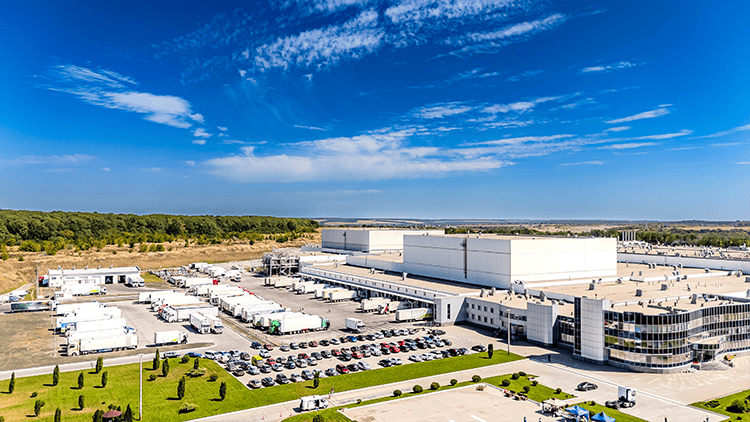
Shippers increasingly recognize the major impact yard operations have on their supply chain—and look to rapidly evolving technology to help.
In the past, yards were often treated as an afterthought, relegated to spending time in the shadows of more high-profile and expensive areas of the supply chain.
Yards ultimately represent a small fraction of the overall spend and too often are viewed as part of either transportation or warehousing, rather than as their own category, says Matt Yearling, founder and CEO of YMX Logistics.
The adoption of yard-related technology that can bolster effectiveness remains relatively low, but Yearling believes companies are beginning to look at yards with fresh eyes and increased focus.
Small Spend, Big Impact
“Yards are still not well understood,” Yearling says. “Yard management is not viewed as being strategic because it’s a small part of the spend. What people don’t understand is the big impact of that small part of the spend and how critical it can be to both warehousing and transportation operations.”
For years, many organizations invested heavily in transportation management, warehouse management, and ERP systems while leaving the yard largely dependent on manual processes, says Derek Pedersen, senior technical product manager, YMS, with Kaleris. That created a blind spot at one of the most important control points in the supply chain.
“When trailers can’t be located, when docks aren’t synchronized, or when assets sit idle waiting for direction, every downstream process slows with them,” Pedersen says. “The reality is simple: If the yard isn’t running efficiently, neither is the rest of the supply chain.”
With that in mind, yard management systems have gone from being a relatively unknown piece of the supply chain to a must-have tool—“almost like connective tissue,” says Colin Mansfield, vice president with Yard Management Solutions.
“The yard is usually the one place that’s still being run on a clipboard, on a spreadsheet, on somebody’s memory or institutional knowledge,” says Mansfield, noting the expensive mistakes that can occur as a result.
“Those mistakes include detention and demurrage, spotter labor, dock doors sitting idle, product spoilage, drivers waiting at a gate,” he says. “If a trailer sits in the wrong spot for a few days, a WMS won’t know that and a TMS probably won’t know that. Nobody really does until somebody walks the yard with a clipboard. A shipper that doesn’t have an effective YMS is not only missing visibility—they’re paying for that gap every day.”
The yard also is typically where carriers most frequently interact with shippers.
“A driver who waits 90 minutes at the gate ends up telling every other driver, leaving a bad Google review, and on and on,” Mansfield says. “Eventually, that can show up in the rates that you are quoted.”
Gabe Vittorio, director of dedicated logistics for Keller Logistics Group, says he has seen a clear increase in the conversations around yard management systems for shippers and how they can prove valuable. AI plays a prominent role in the growing sophistication of YMS solutions and helping make yard management in general more efficient and based on more accurate and meaningful data.
“It’s necessary to have visibility into what’s really going on in the yard and to understand where opportunities lie for improvement,” Vittorio says.
Inbound Logistics caught up with four leaders in yard-related technology solutions to better understand how their products strengthen the way yards operate.
Kaleris: A Unified View of the Yard
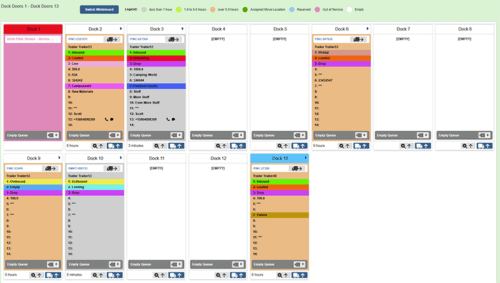
Kaleris YMS helps shippers gain greater control over the movement through their facilities. Users also eliminate manual processes, boost asset visibility, and improve yard efficiency.
Kaleris understands how critical it is to never view the yard as an isolated operation. The Georgia-based supplier of supply chain execution software, including Kaleris YMS, knows the importance of seeing the yard in the context of its clients’ entire supply chains.
“Our customers rely on us to connect information across multiple supply chain nodes, including transportation networks, ports, terminals, rail operations, private fleets, and yard operations,” says Derek Pedersen, senior technical product manager, YMS. “That connectivity gives organizations a more complete picture of their operations.”
As a result, customers can move from reacting to operational disruptions to proactively planning ahead. For many organizations, the greatest value is knowing what’s coming tomorrow and having the time to act on it.
Gaining Greater Control
Kaleris works with manufacturers, retailers, consumer goods companies, logistics service providers, and other organizations with transportation-intensive operations. While their industries may differ, they typically share a common challenge of needing to have greater control over the movement through their facilities.
“We help customers understand what is on-site, what is arriving, and what actions need to be taken to keep freight moving efficiently,” Pedersen says. “By providing a unified view of yard activity and connecting it to the broader supply chain, we enable customers to make decisions earlier, respond to disruptions faster, and maintain smoother operations.”
For instance, Kaleris worked with a major appliance manufacturer that operates multiple production facilities and a large distribution operation on a single campus with hundreds of trailer movements occurring each day. Using Kaleris YMS, the company gained centralized visibility into yard activity and improved coordination between inbound materials, production operations, and outbound shipping.
As a result, the manufacturer achieved a 60% increase in trailer moves per hour across its sites while reducing dwell time by 15%, helping keep materials flowing to production and finished goods moving to customers.
Kaleris customers across industries have achieved similar operational improvements. Westrock Coffee, for example, eliminated 50 to 60 radio calls per driver, per shift by replacing manual communication and task management with automated workflows, while Bob Evans Farms saved 134,000 operational hours through automation and process improvements while reducing trailer idle time by 40%, resulting in approximately $471,000 in fuel and maintenance savings.
“These outcomes reflect Kaleris’ focus on delivering measurable operational improvements, helping customers eliminate manual processes, increase asset visibility, and improve the efficiency of yard operations,” Pedersen says.
One of the strongest differentiators of the Kaleris YMS is its ability to support highly complex operations without forcing customers to redesign the way they work.
Kaleris prioritizes configurability in its approach to yard management. No two supply chains operate exactly alike, and large enterprises often have unique workflows, business rules, and operational requirements. Kaleris YMS is designed to adapt to those realities rather than forcing customers into a predefined process.
“Also, because Kaleris operates across multiple supply chain nodes, we can help customers connect information into their workflows that is traditionally fragmented across systems and teams,” Pedersen says. “That connectivity allows organizations to operate with greater confidence.”
Kaleris is investing in AI and computer vision to continue to improve the accuracy and reliability of yard operations and ensure that customers can leverage automated verification and asset identification to gain greater confidence in what’s actually happening on the ground. Beyond the technology itself, Kaleris strongly emphasizes measurable business outcomes.
“Through our Value Realization Process, Kaleris benchmarks operational performance before implementation and tracks improvements after go-live to quantify the impact of the system rather than relying on generalized promises,” Pedersen says. “For us, the ultimate metric of success is how quickly customers begin realizing value from their investment.”
Keller Logistics Group: Ease of Use and Customization Deliver Results
When Keller Logistics Group decided to develop its own YMS solution, the Ohio-based 3PL knew that it did not want a one-size-fits-all solution. Instead, Keller created its YMS, YardLink, with capabilities to tailor its use to the specific operation of each of its customers, according to Gabe Vittorio, director of dedicated logistics for Keller. The company works with its customers to ensure that the features that clients want to use are in place and ready for them, while putting different measurements in place for customers so they can see—and understand—the metrics that mean the most to them.
“We have a lot of conversations with our customers before we deploy YardLink for them. We make sure that we cater any reporting or specific features or capabilities to what they want, so that it is part of the package as soon as they get it,” Vittorio says. “That means gathering a lot of information and doing legwork beforehand to make sure that our product truly is turnkey and that clients can run it on day one and get exactly what they want from it. That means a lot to them.”
A Flexible and Responsive Approach
 The in-house nature of YardLink’s development means that Keller can be flexible and responsive to the changing needs of YMS users and to the nuanced priorities that drive their operations.
“Being flexible and responsive, and being able to continually cater to our customers, means not only that the YMS will be deployed but it will be meaningful to the site that uses it,” Vittorio says.
Clients new to YardLink appreciate their newfound capabilities to identify inefficiencies and bottlenecks, evaluate driver productivity, and find areas for improvement, he notes.
For instance, one YardLink client began to use the system after formerly using pen and paper for the drivers’ tasks, and using a spreadsheet to track trailer inventory. Clerks were often overburdened with responsibilities and drivers had to wait after finishing a task before getting their next one. Shifts often ran long and service suffered.
With YardLink, the client saw a drastic improvement in the efficiency of assigning tasks to drivers, and clerks were able to make assignments to drivers as soon as they came in. Trailer locations and statuses were quickly updated and easily viewed. The client found that YardLink had reduced their costs related to yard management by 20%, Vittorio says.
A common theme of the feedback that Keller gets from YardLink users is that they appreciate its ease of use. Some clients have never used a YMS before, while others switch from a YMS that they found unsatisfactory, often because of the difficulty in using it, Vittorio says.
Building An Intuitive System
For instance, one new YardLink user had shifted from a YMS that they felt included too many unnecessary steps, dragged out each move, and was not intuitive. The client trained on YardLink one morning and was using it by the afternoon. Users were “ecstatic” about the lack of cumbersome components to the system, Vittorio says.
“The ease of use was a big key when we were developing the YMS before we started to market it and deploy it to our sites,” Vittorio says. “We knew it had to be user-friendly for everyone from the drivers to the clerks to the people in the business that want to see high-level metrics. It has to be easy to use and easy to navigate or it won’t be used. YardLink is always used.”
Yard Management Solutions: Designed for Real-World Conditions
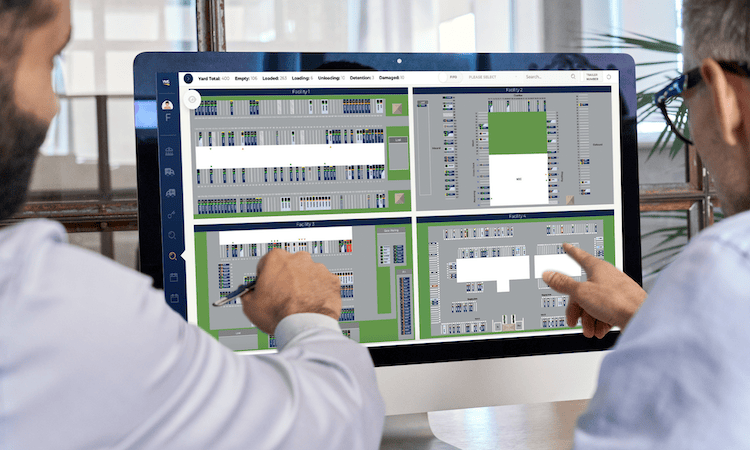
Yard Management Solutions’ YMS includes Eagle View, a digital twin of the yard that gives a live, top-down map of the facility. It also offers a fully autonomous AI gate entry software.
Yard Management Solutions understands that a YMS is valuable only if it is actually used. With that in mind, ease of use is one of the primary advantages of Yard Management Solutions’ YMS.
And it’s a critical advantage, says Colin Mansfield, vice president of the Michigan-based company. He tells the story of training staff in the YMS at a large vehicle manufacturer in Alabama before their shift, and they walked out of training and started using the system immediately.
“If you think about who actually touches a system like ours—a gate guard, a yard jockey in a truck, a shipping clerk working second shift—they’re not typically technical positions,” Mansfield says. “So if it’s not easy to use, then the system just won’t get used.
“I’ve watched competitors’ implementations die for that reason, and a new client comes to us and says, ‘We’re not using this because it’s too complicated.’ In one afternoon, anybody can learn the YMS we built,” he says.
One key feature of Yard Management Solutions’ YMS includes Eagle View, a digital twin of the yard.
“Eagle View is basically a live top-down map of the facility,” Mansfield says. “It’s all real time. You look at it once and you know your yard. It threads the needle of being simple to glance at while also having an incredible depth of detail.”
For enterprise yards, YMS offers a multi-view version, which is a grid of Eagle Views all updated in real time. This allows network directors to look at a dozen sites at once, and immediately see if one is in trouble.
Yard Management Solutions doesn’t just stop at showing the yard. “We actually run it,” Mansfield says. YMS’s automation engine moves the yard while highlighting exceptions, notifying users of potential cost-causing issues before they happen.
YMS also offers AI Eagle Vision, a fully autonomous AI gate entry software that covers everything from data capture to driver check-in and check-out—saving an average of $400,000 annually.
No More Hunting for Trailers
A common theme among YMS’s new clients is that “they come to us because they’re bleeding money but can’t tell where it’s happening,” Mansfield says.
Michelin, a YMS client, saved $450,000 at one site in their first year with the company’s software, Mansfield says. In addition, Michelin’s yard drivers stopped doing extra moves hunting for trailers because the YMS told them exactly where to go. The result was a 50% reduction in jockey driver travel distance, driving up efficiency and driving down emissions.
Another YMS client, BGDC Distribution, a 3PL, serves a leading grocery company. BGDC had a carrier come to their yard, pick up a trailer of meat for the grocery, and then travel from Georgia to Virginia—where it was discovered that the load had spoiled.
The carrier blamed BGDC, but by using the YMS tools, BGDC could demonstrate that the trailer had been set to the right temperature and in good shape when it left the yard. The importance of that kind of verifiable, precise data to a company’s reputation can be incalculable, Mansfield says.
The YMS platform also lets the customer build their business rules in the product. For instance, a customer might say that any reefer that arrives below temperature needs to be flagged and routed to a particular bay and then a certain staff member needs to be alerted via text.
“Those sorts of details really matter,” Mansfield says. “No two yards run the same way. You usually either have to bend your operation to fit software, or you have to pay for custom development and wait. In our case, we hand the customer the keys because we’re big fans of empowering our customers to get done what they need to get done.”
YMX Logistics: A Holistic Approach to Optimization
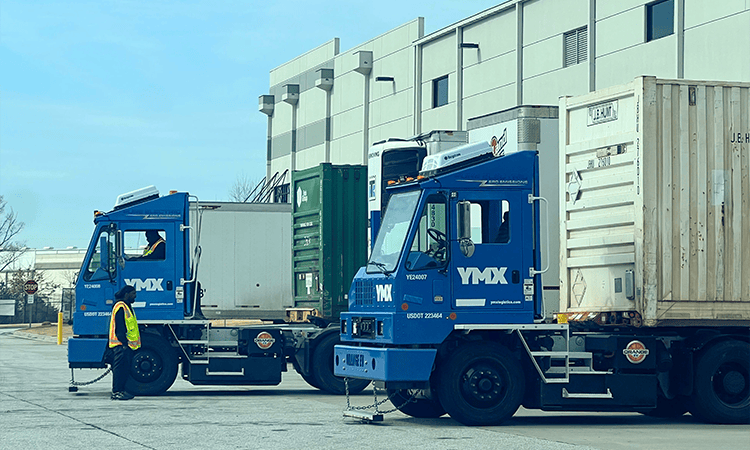
YMX Logistics’ YMS delivers the same precision to yard management that exists within the warehouse. The AI-native solution helps standardize yard operations.
YMX Logistics’ proprietary Yard Operating System is designed to deliver the highest level of service and optimize yard operations through technology and AI-enabled insights and execution. It seeks to bring the sophistication seen in warehouse management to yard management.
“The thesis of what we’re doing—and what the Yard Operating System is—is how do we step back and deliver with the same level of precision inside the four fences what occurs inside the four walls?” says Matt Yearling, founder and CEO of YMX Logistics, a national integrated yard logistics provider. “In this industry, the warehouse operates much more effectively than the yard. So, how can we help shippers step back and really look at the yard differently?”
A Journey to Operational Value
YMX takes its customers on a journey to show them how to drive value across their operations through making small changes in the yard, detailing where the opportunities are.
“A yard operating system is not a software tool,” Yearling says. “This is a holistic way of working that combines our people, process, technology, and assets, which are configured and deployed for each shipper’s unique network.”
YMX creates value at the intersection of operations and technology. “We extract the full value of any technology that a customer has, and then we can augment that with other technology and yard expertise that we bring to the table,” Yearling says. “The intent is to standardize and better execute, get better intelligence, optimize, seek continuous improvement, and then ultimately create value.”
“Value creation is not just about improving how the yard operates—it’s about optimizing the impact of the yard on other aspects of the business that are not as well understood,” he adds.
YMX’s YOS (“YMX OS”) is an AI-native operation, meaning it was built with AI as a core to the system rather than simply as an additional feature. That not only leads to enterprise-level value creation, but it also means that YMX is continually building on that foundation to introduce more automation and decision support for customers to help guide business outcomes.
The YOS approach allows YMX to go “broader and deeper,” Yearling says, with the support and insights it offers its customers, touching on everything from safety and people management to maintenance and theft.
YMX mostly works with large, complex operations where they can drive the most value over time. Often, that means bringing a standardization to yard operations across multiple sites that has been elusive in the past. Yearling points to YMX’s use of yard digital twins as a key way it identifies new opportunities for improvement on an ongoing basis.
YMX frequently works with large shippers on the concept of the “yard of yards,” looking across a network of yards as a whole, Yearling says.
YMX starts working with a customer with a clearly articulated problem that they want addressed, such as safety issues or a need to upgrade service. But with time, YMX becomes more intimate with their operations and identifies more strategic—and hidden—areas for improvement.
In one case, YMX worked with a customer whose yard was at capacity. However, Yearling says, it often is the case that shippers do not have visibility to where all their assets are—and what’s inside those assets—in large yards. YMX identified more than 100 trailer assets that were full of very old items, such as computers from 10-plus years ago, that did not need to continue to be stored and take up critical capacity.
“Companies often don’t fully understand how their yards are being used,” Yearling notes. “When we help them identify these great opportunities, it’s very valuable.”
YMS Tech Evolves
Over the past several years, Yard Management Solutions’ Colin Mansfield has observed several key evolutions in how shippers employ and view yard management tech solutions.
One is that it has gone from a single site project to more of an enterprise program.Instead of one location looking to improve its operations, “now we see a lot more corporate initiatives where they look to standardize on a single platform and roll it out,” he says.
A second major change is a shift from an emphasis by shippers on visibility to execution, looking to technology not just to provide a clear view on operations but to help with how to respond to that view.
Similarly, Derek Pedersen of Kaleris says a major shift in the field is that organizations no longer want a YMS that only manages what happens inside the fence line—they want visibility into what’s coming next.
“Historically, YMS solutions were focused on tracking trailers, automating gate processes, and improving yard execution,” Pedersen says. “Today, customers expect their YMS to become part of a broader operational ecosystem that provides upstream and downstream visibility across the supply chain.”
If an inbound container is arriving through a port, a railcar is moving toward a facility, or a transportation event will impact yard operations tomorrow, organizations want that information available today so they can plan proactively.
“Ultimately, customers are asking how they can make better decisions before a problem reaches their facility,” Pedersen says. “That’s where we’re seeing the market move.”
AI also has transformed from a marketing term into a genuine interest area.
“A few years ago, customers were asking things like, ‘Do you have AI in your system?’ But now we’re being asked to provide predictive analytics. ‘What models are we using? How will it help their bottom line?’” Mansfield says.
“That frankly is a much better conversation,” he adds, “and it favors companies who are constantly building and iterating.”
YMS Leaders
Kaleris | www.kaleris.com
Kaleris’ Yard Management Solution automates gate check-in/out, dock scheduling, and real-time asset tracking within a facility yard. It integrates with transportation, warehouse, and ERP systems to give logistics teams centralized visibility and analytics for reducing costs and improving efficiency.
Keller Logistics Group | www.kellerlogistics.com
Through a yard management system called YardLink, Keller gives customers live visibility into yard operations, including gate check-in/out, dock scheduling, and trailer jockeying at their site. It’s built on Keller Trucking’s own warehouse and shuttle/spotting experience and can be customized per customer.
Yard Management Solutions | www.yardmanagementsoftware.com
Yard Management Solutions’ cloud-based YMS provides real-time yard visibility, automated gate check-in, appointment scheduling, and spotter/shuttle communication across single or multi-site operations. Benefits include reductions in detention fees, lost trailers, and manual administrative work.
YMX Logistics | www.ymxlogistics.com
This yard logistics provider handles gate management, trailer spotting and shuttling, EV yard tractors, and trailer rentals for enterprise shippers, backed by a proprietary yard operating system (YMX OS). YMX serves large manufacturers and retailers across industries like CPG, food and beverage, automotive, and grocery retail.