
What the USPS Bribery Conviction Can Teach the Logistics Industry About Contract Integrity
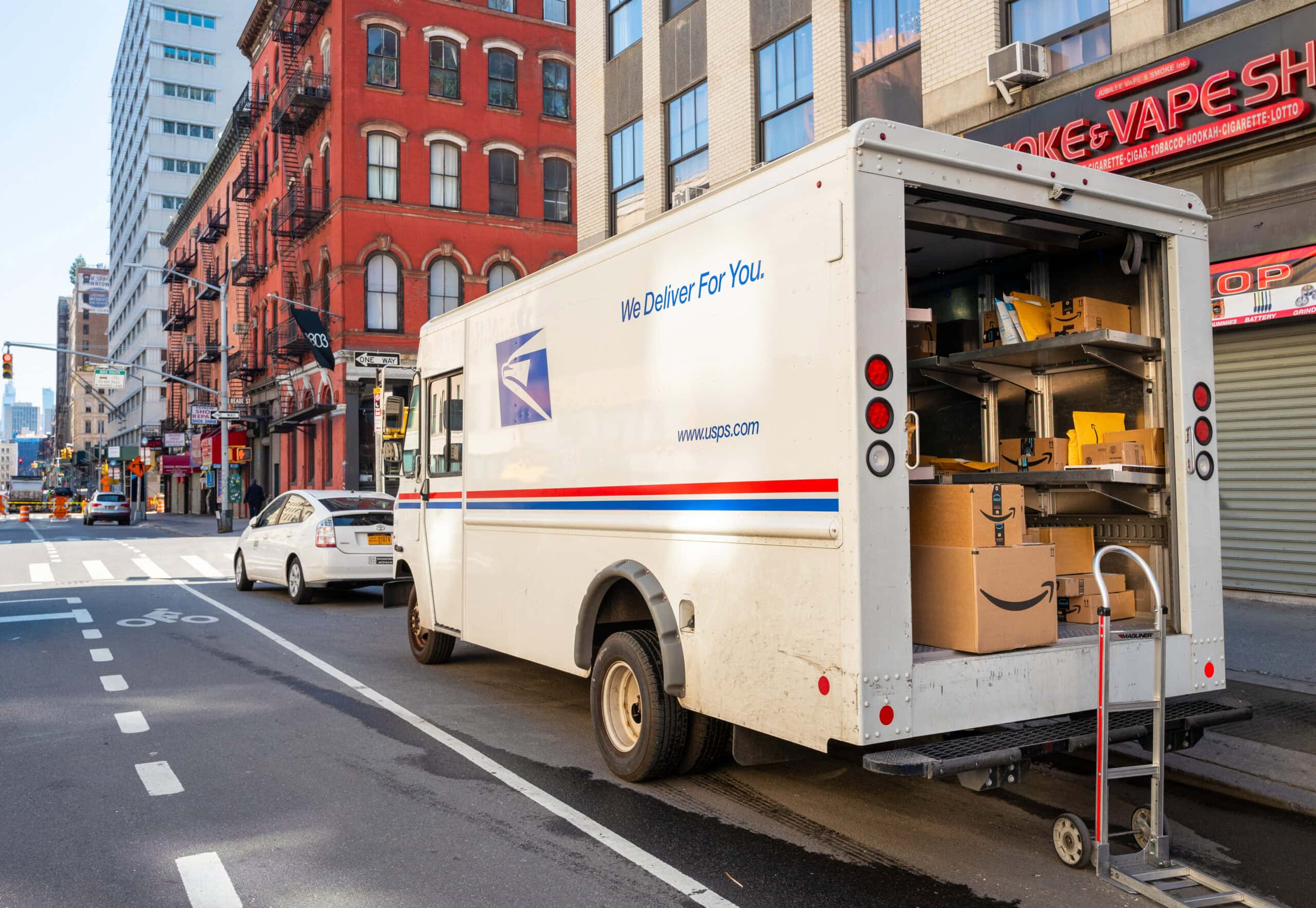
A federal fraud conviction related to USPS transportation contracts—issued around the same time the agency struck a new deal with Amazon—offers a timely blueprint for protecting outsourced logistics networks from the inside out.
By Ashley Prince | April 13, 2026
A federal bribery case tied to USPS transportation contracts wrapped up sentencing at the end of March. At the same time, the Postal Service was working to finalize a deal with Amazon and maintain its largest commercial relationship.
The bribery case offers a detailed look at how fraud takes root inside a major logistics network and what it takes to stop it.
On March 26 and 27, a judge in the Northern District of Texas sentenced four defendants to a combined 99 months in prison, according to the Department of Justice. Court filings show that two former USPS employees, Zechariah Yi and Tai Ryoung Rho, accepted roughly $1.5 million in kickbacks from trucking company owners in exchange for helping those companies secure transportation contracts.
Yi, a former senior network operations analyst at USPS, pleaded guilty to one count of receiving a bribe by a public official. According to DOJ filings, he used his role to assist specific carriers in obtaining transportation contracts in return for payments.
His co-defendants included Rho and two trucking company owners, Wan Yoon and Hong Yoon. All three pleaded guilty to conspiracy to commit honest services wire fraud.
Wan Yoon owned Assured Trucking Inc. and Postal Box Inc. Hong Yoon owned JY Logistics. USPS contracts awarded to these three carriers paid out approximately $15 million over six years, according to the DOJ.
The case took years to build and involved coordinated work between the FBI’s Dallas Field Office and the USPS Office of Inspector General. It resulted in guilty pleas from all four defendants, which points to the effectiveness of the agency’s oversight infrastructure.
“The public must have confidence that Postal Service employees will conduct their work in an honest manner,” said Kevin Cloninger, Executive Special Agent in Charge of the USPS OIG. “When employees commit serious offenses, such as taking bribes, they will be aggressively investigated and prosecuted by Special Agents with the USPS OIG.”
U.S. Attorney Ryan Raybould added that the outcome “should serve as a warning to others contemplating such behavior, that we will hold every person accountable for fraud schemes of this nature.”
An Agency Investing in Oversight at Scale
The USPS OIG has been focused on building out its detection capabilities in order to keep pace with the growing complexity and volume of fraud attempts targeting the agency.
According to the OIG’s most recent Semiannual Report to Congress, the agency has developed data analytics and AI tools that help investigators identify anomalies where fraud may be occurring, enabling them to pinpoint both postal employees involved in schemes and the external parties who recruit them. The results are measurable.
Between mid-2020 and mid-2025, OIG investigations returned more than $2.6 billion to the federal government, including over $400 million directly to USPS. The agency also prevented future fraudulent payments exceeding $1.2 billion, underscoring how utilizing emerging technologies in the fight against fraud can help organizations dial up their prevention efforts.
The agency also noted that USPS and the Postal Regulatory Commission collectively accepted 83% of its audit recommendations between September 2024 and March 2025. The overall acceptance confirms that oversight findings have the potential to create operational change.
The sentencing of Yi, Rho, and the Yoons is part of this larger pattern of accountability.
Major Contract Renewal Puts Stakes in Perspective
The convictions arrived the same week USPS finalized a new delivery agreement with Amazon, its largest commercial customer. The pair went back-and-forth for months, eventually agreeing to a deal that will result in USPS maintaining 80% of its current Amazon deliveries.
According to Amazon’s own account of the negotiations, the company spent more than a year working toward a new long-term agreement. Amazon said its original goal was to increase, not reduce, its volume with USPS.
Despite a 20% reduction in volume, the new deal preserves an important partnership and keeps USPS as a central node in Amazon’s rural delivery strategy, which reads as a vote of confidence in the network’s capabilities.
“Together, we’ve innovated to better support customers, launching services like Sunday delivery that improved the customer experience while generating additional revenue and operational efficiencies for USPS,” an Amazon spokesperson said.
The timing of the convictions and this new agreement highlight the importance of the integrity of the agency’s contracting and partnership infrastructure. These kinds of long-term commercial relationships only last if both parties trust the underlying process.
Lessons Every Logistics Operation Can Use
The mechanics of the USPS bribery case are not unique to government agencies or to postal operations. The same vulnerabilities exist in any operation where a small number of individuals have procurement authority and relationships with vendors who have strong financial incentives.
These same risks are seen across logistics networks, 3PL contracting, carrier procurement, and last-mile outsourcing arrangements of every kind. In the private sector, there are also fewer external checkpoints designed to catch bad actors, upping the stakes even more.
According to court documents, Yi’s position gave him enough influence over the contracting process to make a kickback scheme both possible and profitable. That kind of concentrated access is the common thread in most procurement fraud cases, public or private.
For logistics professionals managing their own outsourced networks, there are a few practical guardrails that can help protect the entire business.
- Rethink bid processes: Competitive processes with documented evaluation criteria reduce the leverage any single employee has over vendor selection.
- Maintain audit trails: When contracts are awarded, it should be easy to determine who participated in each step of the process.
- Focus on transparency: Vendor conflict-of-interest certifications and periodic rotation of procurement personnel are standard tools that can make a real difference.
- Invest in data analytics: Having the ability to flag bidding patterns, invoice irregularities, and vendor concentration is more important than ever.
In the USPS case, the FBI was heavily involved in the investigation because of the agency’s status as a government entity. Private-sector companies don’t have an FBI field office monitoring their carrier contracts, which means the burden of early detection falls on internal compliance systems.
While the defendants in the USPS case are headed to federal prison, the contracting vulnerabilities that made the scheme possible still permeate logistics networks of every kind.