
Supply Chain Insights
A collection of the latest logistics and supply chain management industry whitepapers, eBooks, case studies and more.
FILTER BY CATEGORY
- 3PL
- 4PL & LLP
- Automation
- Barcode & RFID
- Bulk
- Canada Logistics
- Chemical Logistics
- Cold Chain Logistics
- Customs Compliance & Duty Drawback
- Data Analytics
- Data Management
- Demand Planning & Forecasting
- Distribution Center Management
- Drayage
- E-Commerce
- Education
- Finance
- Fleet Management
- Food Logistics
- Freight Forwarding
- Freight Payment, Audit & Billing
- Fulfillment / eFulfillment
- Global Logistics
- Global Trade
- HazMat
- Intermodal
- Labor Management
- Last Mile / Final Mile
- Lift Trucks / Forklifts
- Logistics IT
- Materials Handling
- Moisture & Temperature Control
- Ocean
- Package Delivery
- Packaging
- Parcel
- Ports
- Printers & Labels
- Rail
- Real Estate
- Refrigerated Warehousing
- Retail
- Retail Logistics
- Reverse Logistics
- Risk Management
- Robotics
- Routing, Scheduling & Shipping Technology
- Security Solutions
- Site Selection
- Small Package Services
- Sourcing & Negotiations
- Supply Chain Execution
- Supply Chain Management & Optimization
- Supply Chain Mgmt/Optimization
- Sustainability
- TMS
- Transportation
- Transportation & Freight Management
- Trucking
- Trucking-LTL
- Trucking-TL
- Vendor Compliance
- Visibility
- Warehousing
- Wireless/Mobile Technology
- WMS
- Yard Management
Top 5 Factors to Consider When Choosing a Forklift
To get the best value from their investments, warehouses must carefully weigh the considerations that will help them select the best equipment for their needs. This whitepaper reviews which characteristics companies view as most important when evaluating forklifts for purchase or lease and provides insights on using these factors to improve your ability to meet goals for productivity, efficiency, sustainability and more.

An Executive’s Playbook to Smarter Freight Management
Navigate cost and demand fluctuations, transportation risks, and more with this comprehensive playbook. Learn how automation provides a time-saving framework for freight operations management, based on real-life cases. Discover why integrating BI and data visualization tools may not guarantee the transparency you need and how logistics businesses can anticipate market shifts to navigate the future with confidence.
Spotlight on 3PL Warehouses
What’s trending in the 3PL warehouse industry? According to the new 3PL Warehouse Benchmark Report from Extensiv, the industry is achieving record fulfillment times and maximizing available capacity despite challenges like tightening cash flow and rising labor costs.
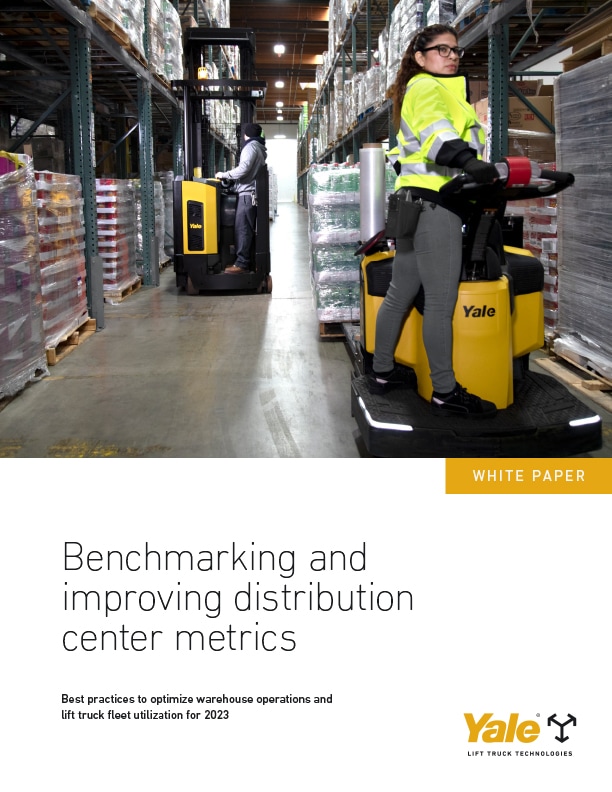
Top Metrics to Measure Your Warehouse Performance
Each year, the Warehousing Education and Research Council (WERC) publishes a report that lists the most important metrics to determine your distribution center’s performance, along with real-world benchmarks. This white paper breaks down the top 12 and provides proven lift truck strategies to help you reach best-in-class.
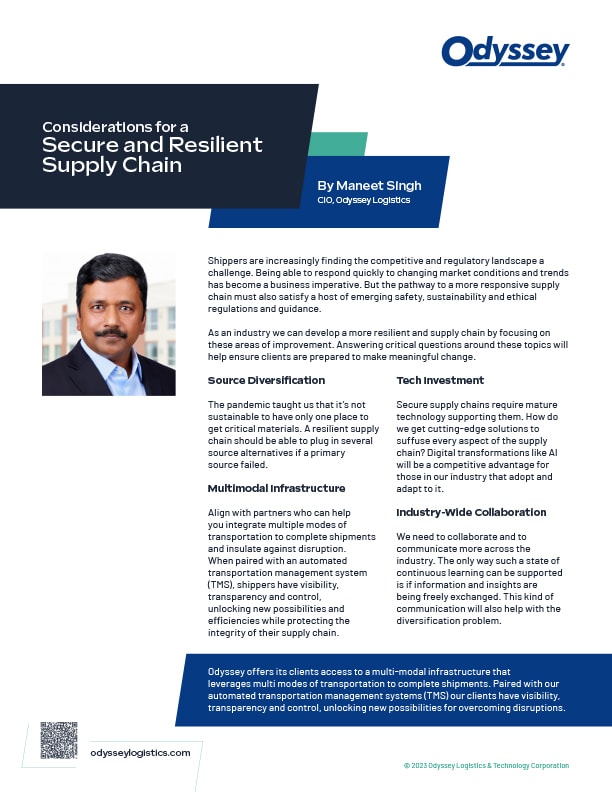
Secure and Resilient Supply Chain
Shippers face challenges in today’s competitive and regulated environment which require a responsive supply chain. Maneet Singh, Chief Information Officer of Odyssey Logistics highlights four key areas where shippers can fortify their supply chain operations. This approach can help ensure adaptability, sustainability, and compliance with emerging safety and ethical regulations while protecting supply chain integrity.

The World Changed
When change happens, Logistics Plus delivers with the experience, the locations, the capabilities and the people. Today’s challenges require A 21st Century Logistics Company™. See how Logistics Plus stands ready to meet the challenge by viewing their latest video.
The Stars at Night are Big and Bright, Deep in the Heart of (Laredo) Texas
Laredo, Texas, strategically located at the U.S.-Mexico border, is the premier port for U.S.-Mexico logistics. Nearly 40% of U.S.-Mexico trade transits through Laredo with 16,000 trailers crossing daily. As global trends shift toward nearshoring, Laredo stands as a nexus of North American trade, primed for further growth in manufacturing and logistics. Learn more in this op-ed piece by Jose Minarro, Managing Director, Sunset Mexico.
2023 State of Drayage Report
Carriers competing in the complex, risky, and highly regulated drayage market have reached a turning point: manual, outdated operations are no longer an option. Drayage carriers must embrace technology and digitize for the modern era to take advantage of new opportunities in the years ahead. Learn more and get your free copy of the report to stay ahead of current trends.

Top Warehouse Technology Trends for 2023
With so many new warehouse automation systems on the market and new vendors spinning up new products, how do you know which technologies will bring the most benefits to your logistics operation? The 3PLs who get ahead of the technology curve and find ways to adopt and implement new technologies have a competitive advantage over those who don’t. This guide from Extensiv offers insight into the emerging technologies that are reshaping the 3PL industry.
No Two Days are the Same
In the world of specialized freight, no two days are ever the same and the challenges are many. Tune in to this video podcast with Inbound Logistics and guest Al Reisman, EVP Specialized Freight Services, at Landstar to get advice and suggestions on how to mitigate disruptions when managing specialized logistics projects.
6 Case Studies from Logistics Plus
Have a supply chain challenge? Here are six case studies from Logistics Plus demonstrating solutions that cover warehousing and fulfillment, business intelligence, air charters, custom TMS software, importing, and project logistics.

Gaining Competitive Ground in Economic Uncertainty
Ready to surpass your competition when markets stabilize? Download this Hai Robotics whitepaper to explore how your company can turn times of economic uncertainty into a period of gain by implementing strategic facility automation. With the help of Automated Storage and Retrieval Systems (ASRS) discover how your business can gain a competitive edge, create business security with minimal capital outlay, and equip itself to outpace the competition.
Uncovering the Total Cost of Ownership
In a recent study, Rinchem discovered through its position in the supply chain and access to various data points, that chemical manufacturers are baking in other costs as they sell their chemistries. In this White Paper, we examine how Rinchem has leveraged its buying power, global network of transportation, and total materials management system to minimize costs, errors, and supply chain issues.
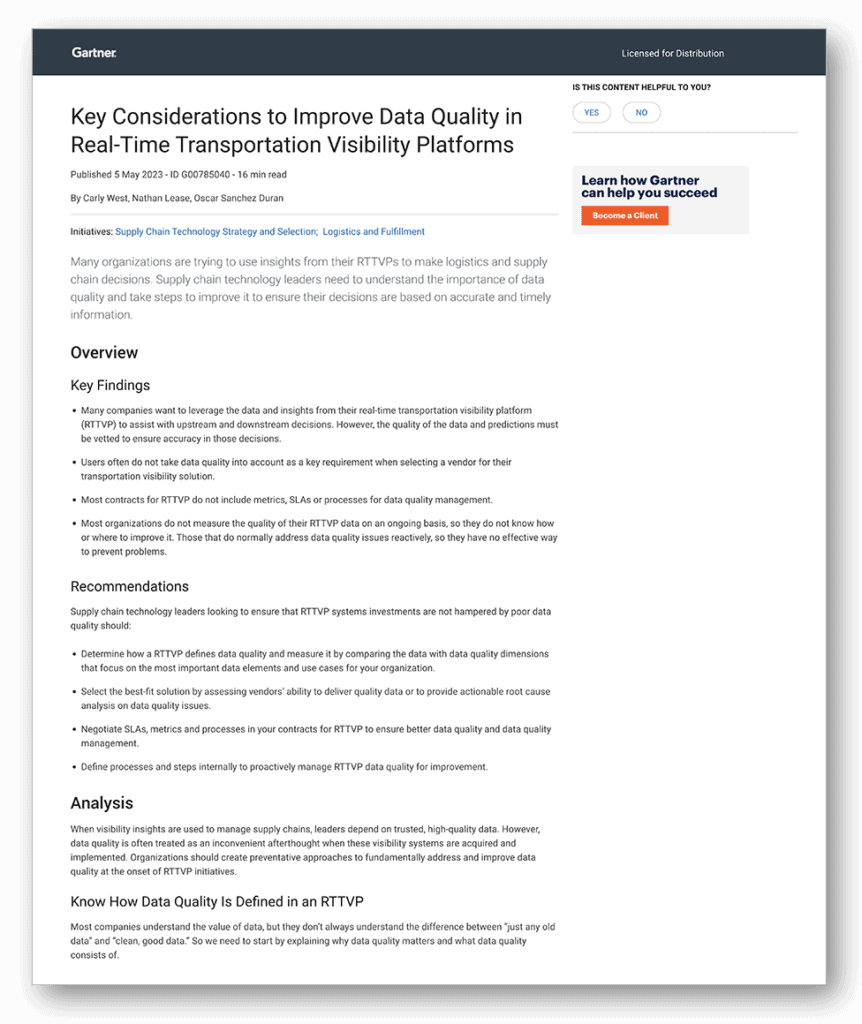
Key Considerations to Improve Data Quality in Real-Time Transportation Visibility Platforms
Can you act on your shipment visibility data? You can collect all the data you want—but if you don’t know HOW to look at it, you won’t know WHAT to do with it. Acting on insights collected from your Real-Time Transportation Visibility Platform (RTTVP) is a start, but if you’re not tracking every step of your shipments in real time—from point of origin to point of delivery—the data you’re acting on might be flawed. Supply chain technology leaders need to understand the importance of data quality, and take steps to improve it—to ensure that decisions are based on accurate and timely information.
This Gartner® research report, “Key Considerations to Improve Data Quality in RTTVP,” explains how organizations can learn to tell the difference between “any old data” and “good, clean data”—and much more.

Freight is a Crazy World!
Shippers face many challenges in the current market, and there are ways they should—and maybe should not—address some of those hurdles. Discover supply chain best practices by joining Inbound Logistics for a video conversation with Tracy Meetre, Chief Commercial Officer of Sunset Transportation.

Unload Faster and Safer with Destuff-it
Your distribution center is only as effective as its workers. Destuff-it™ by Gorbel® contributes to an environment where employees and productivity thrive. From small boxes to larger prefabricated products, Destuff-it™ makes unloading containers more efficient by removing the need for workers to overreach. Safer, less fatigued workers reduce direct labor costs and contribute to retention—two essentials in today’s labor market. Learn more in this informational video.
Supply Chain Integration with Scotts Miracle-Gro
In this episode of the DHL Supply Chain All Business. No Boundaries. podcast, we sit down with Tony Botos, Director of Logistics at The Scotts Miracle-Gro Company, and David DeMarais, Director of Operations at DHL Supply Chain. Listen in as they discuss how warehousing and transportation come together to create a holistic supply chain operation.
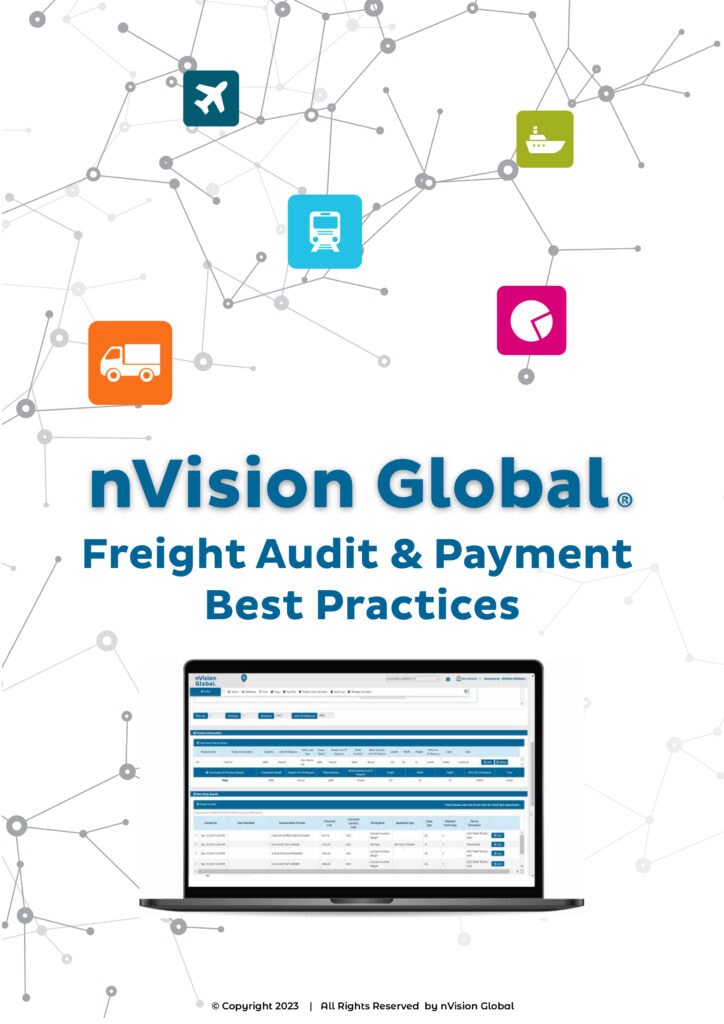
Freight Bill Audit & Payment Best Practices
Are you looking for a reliable freight bill audit & payment provider to handle your logistics invoices? nVision Global offers services that use the latest technologies to ensure accuracy and efficiency in identifying and correcting invalid charges on freight invoices. Get more details by downloading this ebook, which details nVision’s process and technology offerings for its freight bill audit & payment solutions.
Top Trends in Ecommerce Automation
High demand and low labor supply can mean trouble for your fulfillment—unless you’re leveraging automation. With several flavors of automation available to ecommerce companies, where should you look to gain the largest value and how should you implement? In this whitepaper you will access insights on the latest trends in automation and how to secure the right automation tools for your business.
Get Costs Under Control With These Technologies
Leading shippers recognize that the only way to survive—and thrive—in the current climate is through the strategic use of supply chain and transportation technology. Inbound Logistics researched the cost-reducing technologies that shippers should consider, along with a road map to successful implementation. Get actionable, data-driven insights to position your business for optimal profitability in 2023.
How to Max Cube Your Containers or Trailer
It can be difficult to plan what items or units belong in which trucks and routes. That’s where MagicLogic can help. Its solutions use algorithms capable of handling complex load planning challenges. For instance, its CUBE-IQ load optimization software offers advanced truck loading capabilities, mixed palletization, and near-real-time carbonization. Tune in to this video to find out how this solution can optimize your load planning.
How Supply Chain Leaders are Changing the Conversation
In this episode of the DHL Supply Chain All Business. No Boundaries.™ podcast we talk with Katie Date, Leader of the Women in Supply Chain Initiative, MIT Center for Transportation & Logistics and Alicemarie Geoffrion, President of Packaging, DHL Supply Chain. Listen in as they discuss work-life balance and how to navigate a male-dominated industry.
A Look at Supply Chain Operations with Danone and DHL
From Sustainability to Diversity and Inclusion: What to Expect for Supply Chains in 2023
Toward a Zero-Waste Pharma Supply Chain
9 Statistics About 3PLs That Brands Should Know
Lift Truck Technology Gives Operators a Hand
The Future of Local Freight: How Companies Can Save Time With Technology

Prioritizing Partials: Taking Midsize From Overlooked to Always Booked
Midsize freight shippers: Ever find yourself choosing between price, service quality and speed when shipping 10-28 linear feet of freight? You’re not alone. The good news is your partials can: ship faster, incur less damage, and cost less to ship. The solution? Shared truckload. Rather than force you into a trade-off, shared truckload lets you have your cake and eat it too. Learn how your partials can get the priority they deserve.

Expedited Transport: From Dirty Little Secret to Hidden Gem
For far too long, shippers have viewed expedited transport as something to avoid unless absolutely necessary. But when done correctly, expedited brings crucial benefits and can serve as an integral part of your overall transportation strategy. Learn how to use expedited wisely and cost effectively in this report.
Three Layers of Forklift Safety: Promoting Operating Best Practices
Is your operation doing enough to support lift truck operating best practices? The problem is there’s no one-size-fits-all solution. Forklift safety requires a comprehensive, multi-faceted approach that includes training, real-time support, and ongoing monitoring after-the-fact. Not only that, but those elements must evolve over time. Download the white paper to discover how operations can leverage a comprehensive forklift safety strategy, and why this is non-negotiable for high-intensity applications.
Increase Efficiency and Visibility with Analytics
At C3 Solutions, we learn a lot from our customers as their requirements often promote creative ideas that make our software even better applied to real-world applications. Aware that our software solutions aren’t the only answer for companies desiring to become shippers of choice, this case study is a great example of how a small software configuration change made a big difference.
Easily Scale for Peak Season with Warehouse Robots
Faced with exploding customer volumes, increasing business complexity, and industry-wide challenges of the peak season from October to December, iForce needed a flexible and scalable warehouse automation solution that would de-risk their ability to deliver for their clients. Read how the Locus Robotics’ autonomous mobile robots (AMR) solution helped iForce seamlessly scale as demand spiked, doubling the fleet across the two sites during peak, and achieving 1 million picks in just 10 weeks.
How Winit Condensed Storage, Enhanced Efficiencies, and Perfected On-Time Order Delivery with 1 Solution
Download this case study explore how WINIT achieved these competitive advantages and more by turning to Hai Robotics’ intelligent case picking robotic system as the core technology to alleviate labor woes, advance their facility, and create operational resilience that helped propel the company’s international success over the last 2 years.
The Complete Guide to Navigating Peak Season
This 2022 peak season is shaping up to have its own unique set of challenges. Are you handling conditions in the best way possible? Our new ebook, The Complete Guide to Navigating Peak Shipping Season and What It Means for Your Online Business, is a great resource as you move through peak season, suggesting changes that will get you where you need to be.

Exclusion: Your First Line of Defense Against Pests
If you’re tired of pests slipping through the cracks at your warehouse, exclusion techniques are the best way to help keep them out before they drain your mental and financial resources. This free download is filled with expert advice from Orkin Pros that teaches you what exclusion means, gives you a breakdown of best practices and services, and outlines how to help guard your facility against trespassing pests.

Super Charge Your Supply Chain: Removing Barriers to Electrification
This episode of the DHL Supply Chain All Business. No Boundaries.™ podcast features a conversation with Devin Sclater, Business Development Manager, ABB and Stephan Schablinski, Vice President of GoGreen, DHL Supply Chain. Listen in as they discuss the future of electric fleets, the benefits electric trucks could provide and how to overcome barriers to implementation.

The real-time control tower: A critical capability for a connected and agile supply chain
Controlant and PwC business leaders share insights into how the real-time control tower is transforming the pharma supply chain. With IoT to enable decision-making based on real-time insights, the control tower offers significant benefits in operational and strategic returns. A supply chain data repository, no matter how comprehensive, is not valuable until it is presented in a practical framework of actionable insights.
Enhancing Efficiencies in Warehouse Operations
Download this case study to explore how a cross-border eCommerce warehousing operation alleviated labor woes, improved on-time order delivery, and condensed their storage density by turning to an intelligent case picking robotic system.
Calculating ROI for Warehouse Management System Software
Warehouse management system (WMS) software ranked as the most implemented technology in warehouses at 84%, but taking the leap to digitize operations with this type of automation is no small decision. For many, the central challenge of technology adoption is the perceived cost; but many times, this ignores the return on investment (ROI) from implementing new, innovative technologies. Ready to see what a WMS will do for your bottom line?
The Secret to Modern Warehouse Management
ProVision Warehouse Management Systems by Ahearn & Soper enables distributors and 3PLs to reap the benefits of leading-edge technologies, including barcode scanning, wireless networks, voice recognition, RFID, robotics, IoT, cloud computing and links to other software systems.
How to Streamline Your E-Commerce Shipping Strategy
Modern retail runs on e-commerce. Trends show that e-commerce will continue to rise in prominence in the coming years – making now the best time to start streamlining your shipping strategy. You don’t have to do it alone! Our e-book, How to Streamline Your E-Commerce Shipping Strategy, explores how the e-commerce market has evolved in recent years, where it’s headed, and the best strategies to get ahead of the competition.

How to prepare for Black Friday: Tool Kit
Last year, nearly 155 million Americans shopped during Black Friday and retail sales totaled $886.7 billion. Are you ready for Black Friday and Cyber Monday orders? To help ecommerce brands prepare, Extensiv has put together a Black Friday/Cyber Monday Tool Kit packed with handy checklists and tips. We even have some tips on how to optimize your warehouse, logistics, operations, and workflow. If you don’t feel ready for Black Friday, download our Tool Kit today!

Conquering Cross-Border Shipping
With substantial market growth in recent years, many are turning to the international market to expand their e-commerce businesses. But with that growth has come changes that impact brands both small and large–and EasyPost’s suite of shipping APIs are here to help companies optimize their shipping operations domestically and internationally.
6 Practices that Add Confidence and Clarity to the RFP
An RFP is like a moving target, but with the right strategy and analytics, you can bring confidence and clarity into the RFP process. Soon, the bullseye comes into sight and stays within range. The transportation experts at DAT iQ have created a checklist to optimize the RFP process.

The Easiest Way to Reduce Your Company’s Carbon Footprint
The bar for sustainability is continually being raised for businesses – are you equipped to meet your stakeholders’ demands? Find out how supply chain offers one of the most impactful methods for reducing your emissions and how Hub Group can offer the expertise, plans and visibility to keep you ahead of the curve.
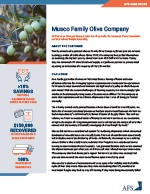
Olive it when you save on transportation – Case Study
To help eliminate waste of hours and cost across multiple modes, AFS implemented its Managed Transportation services for Musco, taking ownership of the entire life cycle of their shipments and converting their manual processes to an automated transportation management system that fully integrated with their enterprise resource planning (ERP).

2022 Peak Season Playbook
With U.S. ecommerce spending expected to surpass $1 trillion for the first time ever by the end of 2022, this year’s peak season is sure to set records. If you are uncertain about what you need to do to prepare for peak season, help has arrived.
A Shipper’s Guide to Freight Management
With Penske’s free Shipper’s Guide to Freight Management, you’ll never wonder if you’re spending too much on freight again. Using helpful cost checklists and featuring expert guidance, Penske spells out exactly what you need for your business. We break it down with no confusion, so you know exactly the right steps to take to keep moving your business ahead.

Need a Demand Planning Checklist?
Demand planning is key to driving profits and maintaining customer satisfaction. It also helps prevent stockouts, excess inventory, and backorders.