
The New Golden Rules: 8 Must-Do Transportation Strategies for Ecommerce Brands
Transportation used to be an afterthought for ecommerce brands. Not anymore. The landscape has changed dramatically, and the brands out front have changed with it.
The last mile can make or break the customer experience. Delivery performance remains one of the biggest drivers of consumer confidence and satisfaction, yet many ecommerce brands still fail to give transportation strategy the attention it deserves.
As customer expectations continue to evolve and supply chains become increasingly complex, staying competitive requires agility, adaptability, and a willingness to rethink traditional approaches. Here are eight transportation best practices that ecommerce brands should prioritize.
1. Make Accurate Delivery Promises
“It’s a misconception that faster delivery equals a good customer experience,” says Sam Coiro, head of ecommerce, commercial business development at A.P. Moller-Maersk. In reality, consumers increasingly prioritize predictability, transparency, and cost control over simply receiving a package as quickly as possible.
Research suggests many consumers are willing to trade speed for certainty. As customers receive more precise information about when a package will arrive, reliability often becomes more valuable than shaving a day off transit time.
It’s not necessarily about how fast or how slow a brand delivers. “It’s more about, ‘Hey, we promised to deliver a package on this day. Did it arrive on that day?’” Coiro says. That’s the question companies should ask themselves.
Amazon has conditioned consumers to view two-day shipping as the gold standard, but for many ecommerce brands, that simply isn’t realistic or even necessary. The right delivery strategy depends on factors such as product type, customer expectations, order volume, and fulfillment infrastructure.
“It’s unrealistic for many brands selling on their Shopify websites to aim for two-day delivery because they might only have enough inventory to put in a single warehouse somewhere,” says Mark Becker, CEO and co-founder of G10 Fulfillment.
Achieving faster delivery to far-flung locations across the country then requires costly expedited shipping or zone skipping involving time-consuming consolidation. Both methods are either impractical or unaffordable.
It’s far wiser to shift focus from speed to reliability. “If a customer knows a package will arrive in three days and then the carrier delivers it in three days, that’s a good experience,” Becker says. Ultimately, brands need to understand what their customers expect and then adopt the shipping mode that lets them meet that standard.
2. Diversify Carriers
There was a time when brands frequently relied on a single parcel carrier to handle the majority of their shipments. Today, however, carrier diversification is increasingly viewed as a competitive advantage rather than a backup plan.
“There is no single carrier that performs the best for every parcel, for every ZIP code, for every service level,” says Coiro. As a result, ecommerce companies should treat last-mile transportation considerations the way financial teams treat portfolios: blend national carriers with regional providers to balance speed, cost, and service performance.
That approach has become easier as the number of viable delivery options has expanded. While FedEx, UPS, DHL, and the U.S. Postal Service once dominated the landscape, the range of last-mile delivery options has expanded, often leveraging gig-worker networks to help move packages efficiently and cost effectively.
These providers continue to improve their visibility and tracking capabilities too, making them increasingly practical for ecommerce brands. The result is greater flexibility and resilience, allowing companies to match each shipment with the carrier best suited for the job rather than relying on a one-size-fits-all solution.
“The biggest mistake we see is relying too heavily on a single carrier,” says Ariane Kemper, co-founder and COO of eGourmet Solutions, a 3PL provider. Having access to a mix of national and regional providers gives brands greater flexibility when disruptions occur and can be especially important for businesses shipping perishable or temperature-sensitive products where delays can directly impact product quality.
3. Power Up with Proximity
For many ecommerce brands, the key to faster delivery isn’t paying for premium shipping. The answer lies in positioning inventory closer to customers. As fulfillment networks evolve, more companies are discovering they can improve delivery times and control costs by strategically locating products near their primary demand centers.
“If you’re strategic in terms of where your products are placed, you can offer a two-day service with regional volume,” says Coiro. Rather than shipping orders coast to coast, it’s far wiser to leverage multiple fulfillment locations and optimize ground networks to reach customers within two or three days without relying on expensive air services.
This strategy is gaining traction as regional carriers expand their reach and capabilities. “The closer you can store your inventory to the end user, the better,” says G10’s Becker. By distributing inventory across a network of warehouses in key geographic regions, brands can shorten transit distances, reduce shipping costs, and improve delivery consistency.
The challenge, however, is finding the right balance. While proximity can be a powerful advantage, it requires careful inventory planning and visibility to ensure the right products are stocked in the right locations. When executed effectively, a local-to-local fulfillment strategy can deliver the speed consumers want without the costs associated with premium shipping.
4. Proactively Communicate
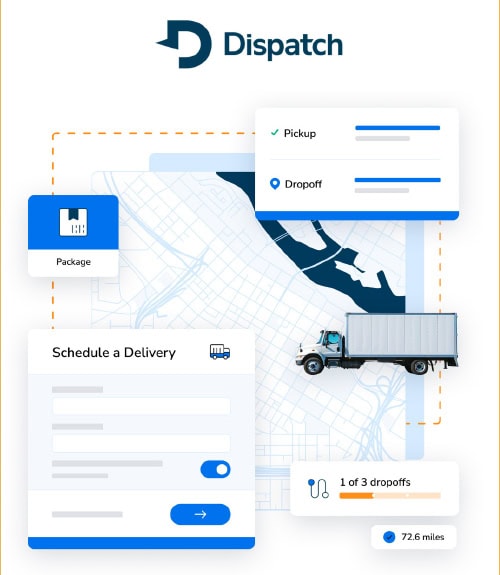
By extending visibility down to the products inside the box, Dispatch helps create a strong customer experience for last-mile delivery.
Prioritizing delivery certainty over delivery speed requires keeping customers informed. Providing real-time tracking, delivery notifications, exception alerts, and status updates helps minimize failed delivery attempts and cuts down on dreaded WISMO (where is my order?) inquiries. “The more informed consumers are , the less likely they are to complain,” says Coiro.
Bits and pieces of information aren’t enough. Customers who receive a carrier notification that a package is on the way but have little context about what is actually being delivered will not be entirely happy. Andrew Leone, CEO and co-founder of last-mile delivery platform Dispatch, sees a great deal of opportunity in extending visibility beyond the shipment itself to the actual products inside the box.
“Often, I buy something online and get notifications from a carrier that my order is on the way. Then I wonder, ‘Great, what’s on the way?’” Leone says. “It’s a fragmented experience.” Passing SKU data on through the shipper directly to the buyer creates a better experience, he says. Customers can validate what’s arriving, verify nothing is missing, and often answer their own questions without having to contact customer service.
5. Right-Size Every Shipment
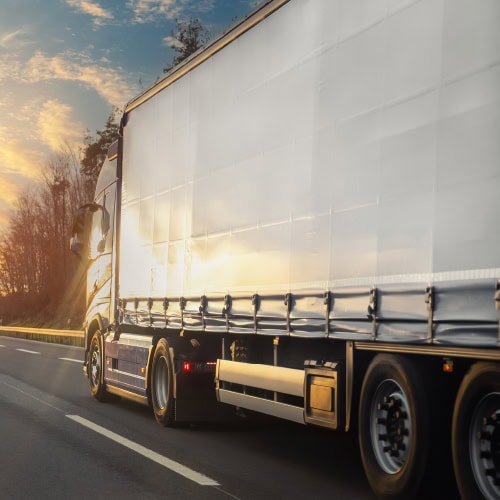
Many ecommerce brands are developing transportation strategies that prioritize predictability, transparency, and cost control over simply sending packages as quickly as possible. Right-sized shipments are also key.
Packaging decisions directly impact transportation costs. It’s helpful if an ecommerce brand has an information management system (IMS) capable of imparting information such as SKUs, dimensions, and weights to last-mile providers either directly or through their carrier, assuming the carrier has the technology to ingest such data and pass it along. “We use that information to figure out cubic space on trucks and to optimize vehicles,” says Leone.
The stakes are significant because carriers and last-mile providers charge based on dimensional weight or DIM weight, a pricing technique that calculates shipping costs based on the amount of space a package occupies, rather than just how much it weighs.
A large box filled with lightweight products may be billed as weighing far more simply because it occupies valuable space in a truck, Kemper explains. For temperature-sensitive shipments, packaging becomes even more complex, with refrigerants, liners, and box sizes all influencing both cost and performance.
Right-sizing packaging should be a priority. By reducing empty space, selecting appropriate materials, and providing carriers with accurate dimensional data, companies can maximize cubic capacity, improve vehicle utilization, and avoid unnecessary transportation costs.
6. Embrace a Data-Driven Approach
The best transportation decisions start with data. Yet many companies fail to regularly analyze information already at their fingertips. “The data is out there,” says Becker. “Companies should understand what zones they’re shipping into and what their average lead times are.”
In fact, some of the most valuable information waiting to be mined involves delivery speed, as in what’s acceptable to customers and what’s not. “Smart shippers approach their SKUs in a segmented way,” says Coiro. “They align the delivery speeds that are available to them based on the product and the choice of the consumer.”
By understanding the data intricacies of their products and the accompanying service-level requirements, brands can tailor their delivery promises and educate customers accordingly.
Ultimately, this results in a more transparent delivery experience, fewer surprises, and a higher customer satisfaction score.
7. Plan for the Return Journey
Companies often focus intensely on getting products into customers’ hands but devote far less attention to what happens when some of those products need to be returned. That’s a mistake. Merchants who treat returns as a core part of the customer experience consistently outperform those who view them as an afterthought, Coiro notes.
Just as customers expect visibility into the status of an outbound shipment, they want transparency throughout the returns process. They want to know where their package is, when it was received, and when they can expect a refund. Providing that level of communication and tracking creates confidence and reduces friction at a critical touchpoint.
Handled thoughtfully, returns can become more than a necessary cost of doing business. They can strengthen customer loyalty, create new promotional opportunities, and generate valuable insights into buying behavior. The brands that plan for returns from the outset are often the ones that turn a potentially negative experience into a reason for customers to come back.
8. Be Nimble
The companies most likely to thrive understand that the transportation landscape for ecommerce is constantly in flux. They’re not afraid to make changes. They conduct research, learn from it, and reach out to the providers who are best suited to service their needs. “Brands don’t just need warehouses and shippers, they need partners that can quickly adapt to ever-changing shopping methods and consumer expectations,” Coiro concludes.
That can take a variety of forms, including renegotiating carrier contracts mid-year, piloting a new last-mile provider in one region before scaling, or quickly onboarding a same-day delivery option in response to a competitor move. The ability to be nimble will only grow in importance as faster delivery expectations and new fulfillment models keep demanding adaptability.
Last-Mile Options Get Environmentally Friendly
Sustainability has become a strategic priority for many of the world’s largest companies. Shippers such as Amazon and UPS and brands including IKEA have invested in electric fleets and other zero-emission transportation initiatives for years. The tougher challenge, however, may be changing consumer expectations, says Melvin Wah, sustainability lead at TYLin, a global engineering and advisory firm specializing in infrastructure solutions.
While consumers prioritize convenience, increasing regulations and sustainability commitments are driving change, Wah notes. The expectation of same-day delivery is simply an ingrained habit that needs to be countered with an awareness of its environmental impact.
Wah is the lead author of TYLin’s Freight Decarbonization Playbook, a resource that examines ways to reduce emissions in the last mile. The report explores a range of solutions, including electric delivery vehicles, e-cargo bikes, and walking delivery/hand carts suitable for urban settings, as well as neighborhood microhubs designed to move goods more efficiently while reducing any environmental impact.
Locker Solutions
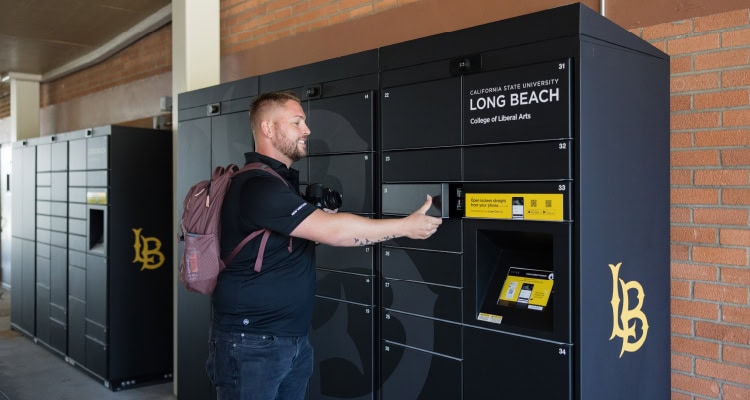
Locker systems like these from Luxer One are one way to counter the high environmental impact of last-mile ecommerce transport.
Because ecommerce is firmly embedded in consumer shopping habits, parcel management has become an increasingly important consideration for apartment communities, university housing, and other high-density destinations. Large numbers of packages arriving daily can create bottlenecks that lead to lost shipments, theft, damage, delivery delays, and increased headaches for property managers.
Smart locker systems have emerged as one solution. The surge in ecommerce that began a decade ago exposed the need for a more organized way to handle package deliveries, according to Josh Middlebrooks, president and CEO of Luxer One. What began as a convenience for residents and property managers has also become a valuable last-mile tool for carriers.
“The main thing that carriers look for is delivery density,” Middlebrooks says. By consolidating deliveries in a single location, drivers can complete more stops in less time while maintaining a full audit trail throughout the process.
Locker systems improve visibility throughout the delivery process. Packages are scanned into the system, assigned to appropriately sized lockers or overflow package rooms, and recipients receive automated notifications when deliveries arrive. The result is an audit trail that helps reduce disputes and improve delivery accuracy.
Integrated parcel management platforms can provide tracking from order placement through final delivery, bringing shipping updates, access notifications, and delivery confirmations together in a single workflow, Middlebrooks notes. For ecommerce companies seeking greater efficiency in the last mile, locker solutions offer a practical way to streamline operations while enhancing the customer experience.