
Preserving the Perishable: Cold Chain Solutions Stay Fresh

With consumers demanding more fresh foods and product integrity at a premium, shippers turn to providers equipped to navigate a volatile and demanding landscape.
The cold chain has long been a critical component of the food supply chain. Today, it is more important than ever. In Lineage’s Cold Chain Insights Survey, which was conducted in fall 2025, 72% of the 1,000 cold supply chain decision-makers within the food industry who participated reported rising demand for refrigerated and frozen goods.
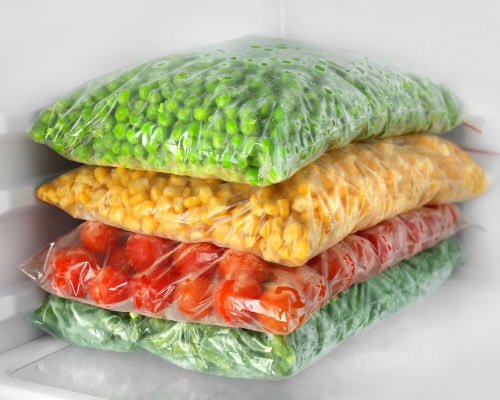
Rising demand for refrigerated and frozen foods has helped to increase the need for sophisticated cold chain services. In addition, improvements in equipment, systems, and processes have made more products available for shipment than ever before. Experienced and accomplished providers such as Americold, Honolulu Freight Service, and Lineage serve as invaluable guides for shippers through this new landscape.
“As more consumers prioritize convenience, freshness, and reduced food waste, the ability to store and transport temperature-sensitive products safely and efficiently has never been more important,” says Tim Blazek, head of business development, East Region, at Lineage, the world’s largest global temperature-controlled warehouse REIT.
Similarly, Jeff Lyskoski, executive vice president of sales and marketing at Honolulu Freight Service (HFS), a multimodal freight forwarder, notes “there’s a far greater emphasis on the freshness of foods going to market, with more natural products and fresh foods being shipped and consumed.”
In addition, he notes, cold chain encompasses other vital categories such as pharmaceuticals, medical products, biotechnology, healthcare, bodily fluids, specialty chemicals and cosmetics, film, specialty laminates, and much more.
Expanding Cold Chain Profile and Prominence
“As more consumers turn to frozen foods for value and convenience, the role of the cold chain extends well beyond transportation and storage,” Blazek says. “It becomes the critical link that makes those choices possible. Preserving product quality and safety from origin to destination enables retailers to keep shelves stocked and consumers to access the frozen and refrigerated foods they rely on.”
Advances in the cold chain have changed the availability of some products. “Products that initially could only be considered for transportation in limited areas or moving short distances due to product integrity being compromised can now move great distances without the risk of losing their viability,” Lyskoski says.
In particular, technology improvements allow a wider variety of goods to be sent to market across more distant stretches of the world. Meanwhile, improvements in mechanical refrigeration methods and their systems, supplemental refrigeration (cold packs, gels, and other media), temperature and shipping environment tracking and management, and protective insulation materials now allow for many types of cargo to be considered for movement that may have never been considered before.
“The evolution of tracking and monitoring systems continues to improve in the industry,” Lyskoski says. “Supplemental portable devices can be added to shipments serving to complement container-mounted refrigeration systems. These devices track, record, and can transmit product and ambient environment data before shipments are tendered, during transit, and after delivery, allowing the ability to track and monitor end-to-end shipment temperature integrity.
“Combined, advancements like these contribute to higher levels of integrity and quality of goods delivered to consumers, and overall a higher level of safety for the transportation industry and consumers alike,” he says.
Possessing and maintaining cold chain infrastructure, the capability to maintain necessary capital investment to sustain it, and having experienced and responsible personnel to execute necessary and required procedures are among the chief cold chain-related challenges today.
“Implementing and keeping up with technology is costly and requires proper supervision and execution where these technologies are being used,” Lyskoski says.
For that reason, working with providers who have the necessary cold chain infrastructure, proven levels of experience in handling these kinds of items, and the financial stability to maintain all of them simultaneously are critical to cold chain handling. “Successfully managing all these elements takes several people within an organization who are dedicated to participating in this type of product handling,” Lyskoski says. “Vet the providers being chosen to include items in the review process such as the proper infrastructure, knowledge and training of the personnel who manage these processes, and history and experience performing the work.”
Here, HFS, Lineage, and Americold share how they work with their clients to excel in an increasingly demanding—and critical—cold chain climate.
Honolulu Freight Service: Cold Chain Shipping in the Pacific
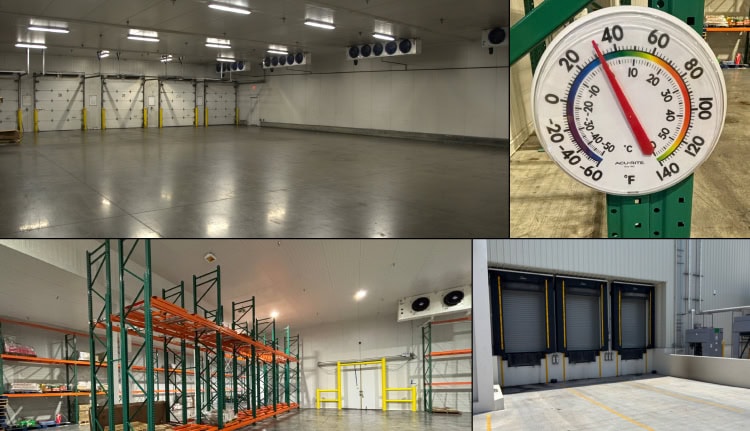
Honolulu Freight Service’s temperature-controlled facilities in Montebello, California (top left) and Honolulu, Hawaii, provide reliable cold chain storage and handling, ensuring temperature-sensitive products remain protected from arrival to final delivery.
In Hawaii and Guam, where many perishable items are imported and the demand for temperature-sensitive products such as food and pharmaceuticals is growing, leading cold chain logistics providers like Honolulu Freight Service (HFS) are pioneering new systems to ensure an unbroken cold chain throughout the life of a shipment.
Cold chain logistics today looks different than it did even 10 years ago. Honolulu Freight Service continues to innovate its services to ensure an unbroken cold chain throughout the islands.
“HFS is well positioned at each of the ports along the U.S. West Coast to transload and consolidate chilled, frozen, and dry temperature-sensitive products, and load them on containers destined directly for each island, all while managing refrigerated needs,” says Jeff Lyskoski, executive vice president, sales and marketing at HFS.
Opening its New Honolulu Headquarters
The company, which is celebrating its 90th year of service under the third generation of ownership and management by the Beidleman family, recently opened its new 92,400-square-foot Hawaii headquarters, allowing the company to streamline and upgrade operations. This includes expanding services such as cold chain, air and ocean interisland transportation, door-to-door trucking, and short-term storage capacity. It is now the most technologically advanced multimodal shipping facility of its kind in Hawaii.
“The benefits and operational efficiencies provided by a single dry, chill, and frozen facility are considerable,” Lyskoski says. “Our goal is to keep shipments moving in a timely manner throughout the islands, and that is particularly critical for temperature-sensitive goods.”
In addition to Honolulu, HFS terminal locations include Tacoma, Washington; Los Angeles and Oakland, California; Portland, Oregon; and Guam. The company’s comprehensive services include less-than-truckload, truckload, intermodal, and multimodal services (steamship, barge, rail, and air) serving all 50 states.
HFS covers chilled (35°F), frozen (0°F to -10°F), and temperature-controlled goods shipments, backed by enclosed reefer dock facilities designed to maintain the cold chain from origin all the way to destination.
The company’s multimodal capabilities give shippers several options for how their refrigerated freight moves, which is useful for businesses whose shipment volumes vary from pallet-sized orders to full containers.
For cargo continuing to neighbor islands in Hawaii, HFS ships under a single company bill of lading and keeps freight fully containerized through drop-off, barge transit, and pickup, rather than shipping loose cargo on open barges exposed to the weather.
The company is also moving forward with technological improvements, replacing and complementing manual processes with new software and automated procedures such as e-signatures and dispatch systems. In addition, HFS is integrating technologies ranging from real-time monitoring and automation to predictive analytics.
“HFS continues to evaluate our processes to create additional efficiencies for our customers,” Lyskoski says. “Temperature-controlled equipment is expensive to operate and requires consistent measurement and monitoring. Making sure equipment monitoring steps are processed and adhered to improves the chances that safe and efficient handling of goods can be executed successfully.”
Lineage: Delivering Resilient Cold Chain Solutions in a Dynamic New World
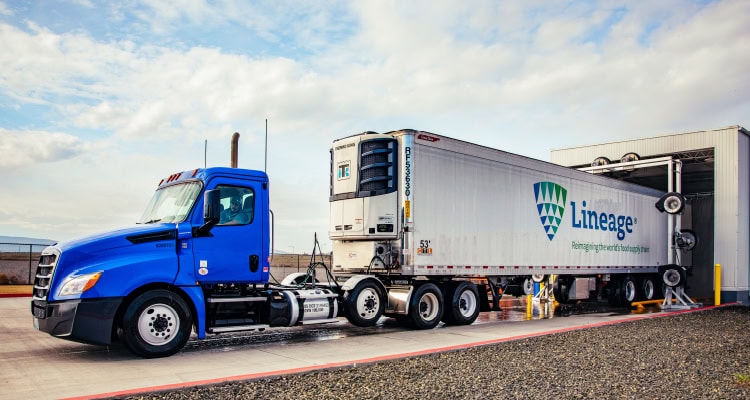
A global leader in cold storage and logistics, Lineage serves food supply chain companies, from multinational food manufacturers and protein producers to frozen food companies, retailers, and importers.
Meeting today’s cold chain demands requires more than storage alone. As supply chains become increasingly interconnected, 41% of companies say they want partners to provide better data to inform planning, help them simplify complexity, and keep products moving when conditions change, according to Lineage’s Cold Chain Insights Survey.
“Lineage delivers an end-to-end cold chain solution by integrating solutions like transportation, warehousing, and customs brokerage into one connected network, helping customers navigate disruption with greater speed and confidence from origin to destination—rather than serving as a standalone warehouse provider,” says Tim Blazek, head of business development, East Region, at Lineage, the world’s largest global temperature-controlled warehouse REIT. “That’s where Lineage differentiates itself.”
Helping Customers Adapt
This integrated approach supports customers across every stage of the cold chain—whether it’s optimizing freight through Lineage’s Velocities® multivendor freight consolidation program, improving flexibility with less-than-truckload (LTL) shipping, streamlining cross-border logistics through customs brokerage, or providing customers real-team visibility into appointments and operations through Lineage Link®.
Every touchpoint, solution, and service is built to work as part of a connected ecosystem rather than in isolation, giving customers more coordinated decision-making and a supply chain that can adapt as conditions evolve.
“At its core, Lineage’s approach is centered on helping customers build stronger, more resilient supply chains,” Blazek says. “Through a world-class network, technology-enabled capabilities and integrated, end-to-end solutions, Lineage helps customers optimize operations and respond more quickly to an ever-evolving market.”
Lineage’s portfolio spans the food supply chain, serving customers from multinational food manufacturers and protein producers to frozen food companies, retailers, and importers—all with unique supply chain needs. Blazek says customers often rely on Lineage to solve challenges related to growth, capacity constraints, trade disruption, and transportation complexity.
For example, when a Canadian frozen food manufacturer was faced with looming tariff changes, Lineage jumped into action to help them navigate.
By coordinating cross-border transportation, strategically locating inventory near the United States border, and integrating warehousing, fulfillment, and real-time visibility, Lineage helped the customer move product into the U.S. in less than a week, avoiding additional costs and keeping inventory flowing to retail partners.
Lineage also helps customers respond when unexpected disruptions occur. During a major East Coast port labor strike, a seafood importer faced losing millions of dollars in frozen inventory stranded at port.
Leveraging port-centric warehousing and coordinated transportation, Lineage rapidly mobilized its network and operational teams to clear and redistribute the product, protecting inventory while minimizing delays and keeping the cold chain moving.
Lineage’s network connectivity and flexibility are vital for customers as supply chains become more dynamic and the ability to adjust their logistics strategies as conditions evolve becomes paramount. Rather than viewing warehousing as a series of standalone facilities, Lineage enables customers to leverage a connected network, consolidating warehousing operations to improve efficiency, or expanding into additional locations to support growth, seasonal demand, or shifting market needs.
Optimizing Operations
Lineage’s customers aren’t locked into a fixed operating model. Paired with end-to-end visibility and integrated supply chain solutions, Lineage’s approach helps customers optimize inventory placement, transportation, and warehouse capacity. This, in turn, supports more informed decision-making, quicker response to disruption, and greater resilience in supply chains.
For customers, this means having a partner that can meet their needs today while empowering their growth for tomorrow, ensuring they can handle whatever comes next.
“What attracts customers to Lineage is its ability to combine an integrated network with technology-enabled, end-to-end supply chain solutions,” Blazek says. “Whether customers are looking to scale their business, navigate trade uncertainty, or respond to unexpected disruptions, Lineage helps customers build flexible, connected supply chains that deliver when it matters most.”
Americold: Innovative, Hands-On Approach Supports Each Customer’s Unique Goals
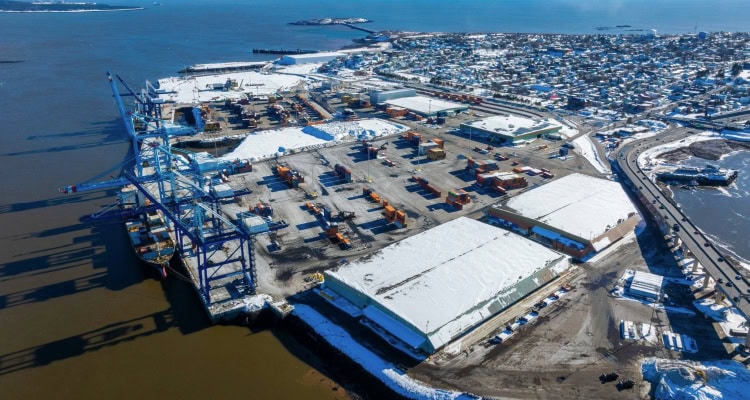
Americold opened an import-export hub facility at Port Saint John in New Brunswick, Canada, through strategic partnerships with CPKC and DP World, creating a connected cold chain solution that links port, rail, and cold storage infrastructure.
Americold, an Atlanta-based global leader in temperature-controlled logistics real estate and value-added services, has operations that span every major node of the cold chain, from harvest to home delivery, giving the company a unique perspective and ability to solve complex supply chain challenges and help customers grow.
With more than 120 years of cold chain experience and a customer-first approach, it’s Americold’s ability to work with customers as a partner, not just a storage provider that truly sets it apart, according to Bryan Verbarendse, president, Americas, Americold.
“Because we operate across every major node of the cold chain, we can help customers improve visibility, optimize food flows, increase efficiency, and create more resilient supply chains,” Verbarendse says. “Within our network, each facility is equipped with the technology and people required in today’s modern cold chain. That combination of innovation and hands-on expertise is a high-tech, high-touch approach that allows us to help customers solve challenges across the supply chain.”
Americold works with a broad range of customers across food production, retail, grocery, proteins, dairy, packaged foods, convenience retail, ecommerce, and emerging temperature-controlled sectors.
Serving as a True Partner
“Customers often come to Americold because they’re looking for a partner with the infrastructure, expertise, and capabilities to support their business as it evolves,” Verbarendse says.
For instance, Good Ranchers, a meat delivery company, needed a cold chain partner that could support rapid growth while maintaining product integrity and customer experience. By leveraging Americold’s infrastructure and ecommerce fulfillment capabilities, Good Ranchers was able to help scale its operations.
Jerónimo Martins, meanwhile, worked with Americold as one of today’s retailers balancing more SKUs, more channels, and higher customer expectations. Americold helped the Portuguese food distribution company with efficient product flow, inventory management, and store replenishment across a complex retail network.
One of the biggest benefits of Americold’s approach is flexibility. Every customer’s supply chain is different, so Americold finds the right combination of infrastructure, technology, expertise, and value-added services to help each customer achieve its unique goals.
“Customers also have access to a broad range of capabilities and value-added services, from production support and ecommerce fulfillment to import-export solutions and retail replenishment,” Verbarendse says. “That flexibility allows us to build solutions around a customer’s needs rather than forcing them into a one-size-fits-all model.”
Supporting the company’s global network is the Americold Operating System (AOS), which helps deliver consistent execution across its facilities.
“Through AOS, we apply standardized best practices and performance measures across everything from food safety and inventory accuracy to service performance and sustainability,” Verbarendse says. “It allows us to combine the scale of a global network with the consistency, accountability, and operational excellence customers depend on to keep their supply chains running smoothly.”
Americold’s ecommerce fulfillment operations and SmarTrakr platform directly address some of the biggest shifts the industry is seeing today, Verbarendse says.
“Customers increasingly manage more dynamic supply chains, with more frequent orders, faster fulfillment expectations, and growing ecommerce demand,” he says. “Our ecommerce capabilities help customers navigate that complexity while maintaining the visibility, speed, and product integrity required for temperature-controlled products. SmarTrakr is our proprietary technology that complements our ecommerce operations by providing real-time visibility and actionable insights that help customers monitor inventory, protect product integrity, and proactively manage disruptions before they impact service.”
Americold’s adoption of sophisticated technology also is improving efficiency in its facilities, and those capabilities are backed by a broader portfolio of solutions, including import-export services, production support, retail replenishment, and supply chain design expertise.
“Together, they help customers create more connected, efficient, and resilient supply chains as their businesses continue to evolve,” Verbarendse says.