
Hazmat Logistics: Handle With Care
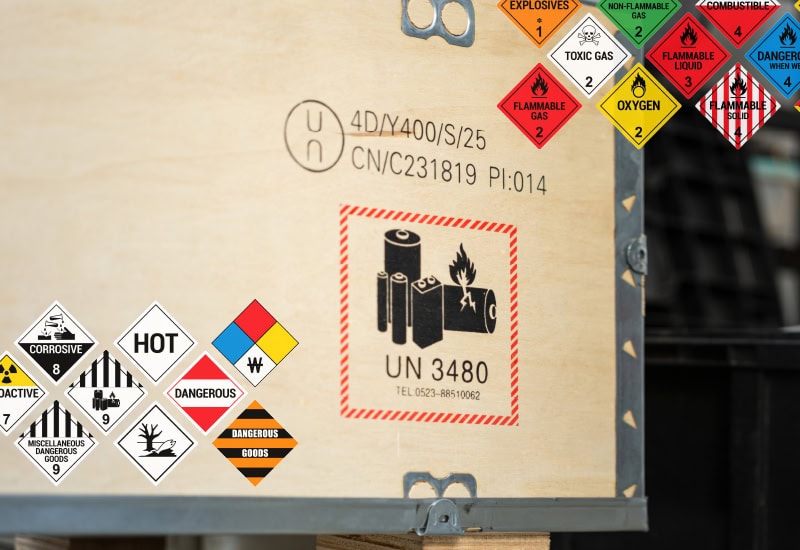
Shipping dangerous goods leaves zero room for error. Both shippers and logistics providers must master regulations, prioritize safety training, and mitigate the massive risks involved.
When moving or handling hazardous materials, “complacency kills,” says Ryan Paquet, president of HazMat Safety Consulting. “If you get complacent with dangerous goods, bad things can happen very quickly.”
In contrast to conventional freight, shipments of hazardous materials or dangerous goods can create risks that impact not only the products and companies involved, but public safety, environmental systems, infrastructure, and emergency-response capabilities, says Ginger Ke, Ph.D., a professor at Memorial University in Newfoundland, Canada. As a result, logistics decisions involving hazardous materials (hazmat) can’t be based solely on cost or transit time.
Safe and effective handling of hazardous materials requires care on the part of shippers and logistics providers alike. Even when shippers engage partners to handle their hazmat shipments, they retain responsibility for the products and need a solid understanding of the risks the products present, as well as the ability to ensure their shipments are classified, handled, packaged, labeled, and shipped correctly.
They also need to confirm that relevant regulations are followed across all steps in the supply chain. “Outsourcing your fulfillment shares the work, but it doesn’t hand off the liability,” says Devin Knight, vice president, transportation and planning with ShipMonk, a fulfillment and logistics company.
So, in addition to conducting their own operations with care, hazmat shippers need to thoroughly vet any logistics partners. “Your compliance is only as strong as the weakest handoff in that chain,” Knight says.
Shipper To-Do List
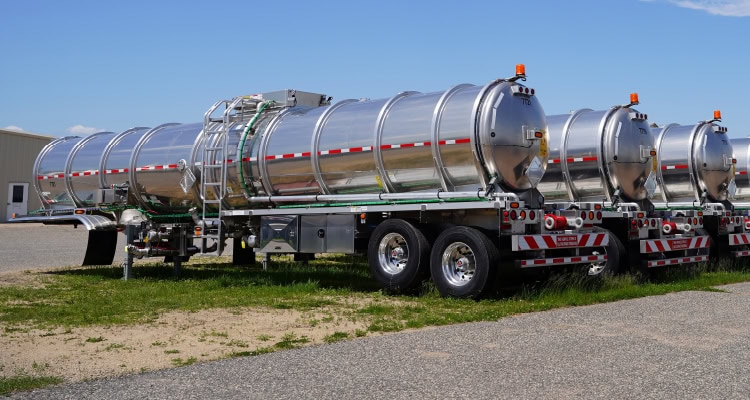
Hazmat shippers must take into account many considerations when selecting a transportation partner. The cost of shipping bulk chemicals, for instance, may also include specialized equipment, such as a pump for unloading. Carriers must also be up to date on hazmat regulations and provide digital tools that ensure supply chain optimization.
As a starting point, shippers need to know which of their products are hazardous. This isn’t always as obvious as it sounds. For example, an entrepreneur might build a business around a gadget with a rechargeable battery, not realizing the product is regulated until a shipment gets rejected or a carrier flags it.
Shippers also should know the risks that might come into play while their goods are in transit, says Brian Cupp, vice president, operations, with Intellitrans, a provider of transportation management solutions. Some products, for instance, contain stabilizing components. If a disruption extends the transit time, the product could begin to transform and possibly release toxic gases.
This type of expertise takes on elevated importance as the transportation environment has become more uncertain. When disruptions impact shipments of dangerous goods, operational problems can quickly escalate into public-safety incidents, Ke explains.
When working with logistics providers, shippers benefit by providing timely, accurate, and thorough transparency.
“The earlier and cleaner the data integration with your 3PL, the better the chance your inventory gets classified, packaged, and routed correctly,” says Kyle Garrett, chief operating officer with Red Stag Fulfillment. For example, if a product being shipped is a new variant with a different battery or chemical makeup, all parties should know this in advance so the fulfillment paths and carrier routing can adapt.
It also helps to understand how pricing calculations can change when a shipment contains hazardous materials. The cost for shipping bulk chemicals might have to cover specialized equipment, such as a pump for unloading, for instance, says Ian Reid, vice president, managed services with Odyssey Logistics.
Evolving Regulations
Staying current with changing hazmat shipping regulations is also crucial. One example: Updated regulations from the International Air Transport Association (IATA) and the International Civil Aviation Organization (ICAO) require that standalone lithium-ion and sodium-ion batteries be charged to no more than 30% of total capacity during shipping.
While the ideal solution is to push compliance upstream and require manufacturers to certify a maximum 30% charge at the factory, fulfillment centers must step in if that documentation is lacking, Garrett explains.
Because the rule applies only to batteries moving by air, blanket testing at the receiving dock is inefficient. Instead, some fulfillment centers are introducing targeted testing at the pack station, isolating the subset of orders flagged for air travel.
Another concern is that the state of charge is not easily identified on many devices, says Richard Saavedra, senior vice president, network operations, with DHL Express U.S. For example, industrial machines and tools powered by lithium-ion batteries often lack an accurate gauge to provide this information.
In addition, as battery-powered products have become more common in ecommerce transactions, some carriers have tightened quantity limits, documentation standards, and contract requirements. “What was once a niche compliance issue is now a routine operational requirement,” Knight says.
Moreover, the regulations governing lithium batteries may change yet again. The Committee of Experts on the Transport of Dangerous Goods, a United Nations group, has proposed breaking miscellaneous hazardous materials into four groups. They are:
1) Environmentally hazardous substances: These generally are substances that are not caustic or corrosive, but are typically transported in bulk, and could ruin plant or animal life if dumped in a body of water.
2) Energy storage devices, like lithium ion batteries
3) Low-hazard energetics, such as airbags
4) Miscellaneous products
The good news? The change should reduce the regulatory burden on many products, Paquet says.
Emerging Concerns
Some government entities are implementing routing restrictions and risk-management policies for transporting hazardous materials, particularly in urban areas and around sensitive infrastructure, Ke says. These can include tunnel restrictions, designated hazmat corridors, and time-of-day limitations. “While these regulations improve public safety, they also increase operational complexity,” she adds.
Risk equity is another emerging concern. This refers to the equitable distribution of transportation risk across communities and regions.
Hazmat traffic has often been concentrated along transportation corridors that are near economically disadvantaged communities, as these routes may appear operationally convenient or lower cost. However, it’s increasingly recognized that transportation planning should minimize total system risk and avoid disproportionately exposing specific populations to hazmat-related risks, Ke explains.
What’s Next: Technology and Resilience
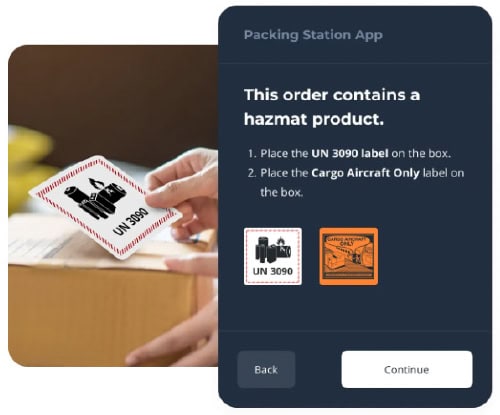
Digital tools like this shipping app from ShipMonk help ensure hazmat shipments are properly labeled. Technology solutions also provide traceability, visibility, and risk- management capabilities.
Technology and digitalization are affecting the logistics of hazardous material shipments, along with most other business functions. Analytical tools powered by artificial intelligence, real-time monitoring systems, and blockchain-enabled traceability solutions can boost visibility and risk-management capabilities across hazmat supply chains, Ke says. At the same time, organizations need to manage the cybersecurity and data-governance issues that these technologies can bring.
Looking ahead, the most resilient hazmat logistics operations will combine operational discipline, a strong culture of safety, advanced digital capabilities, integrated emergency-response planning, transportation resilience, and equitable risk-management strategies, Ke says. And as transportation systems become more connected and complex, the ability to proactively manage uncertainty, disruptions, and societal concerns will become more critical.
Hazardous Materials or Dangerous Goods?
Generally, the terms “hazardous materials” and “dangerous goods” can be used interchangeably, says Ryan Paquet of HazMat Safety Consulting. The United States tends to use hazardous materials, while the rest of the world uses dangerous goods. The reason? When the U.S. Congress wrote the relevant statute, it included the phrase “hazardous materials.” That phrase doesn’t easily translate, so the term “dangerous goods,” tends to be used internationally.
Vetting Logistics Providers

A strong safety culture is crucial when selecting a logistics provider for hazmat shipments.
Because hazmat shippers retain responsibility for their products, they need to carefully evaluate the logistics providers and carriers with whom they partner. While cost remains important, it shouldn’t be the only consideration, especially with dangerous goods. The consequences of an accident or regulatory violation will quickly dwarf any other savings.
Strong logistics partners for hazmat supply chains possess the following attributes:
1. Safety-First Culture
Safety should be incorporated directly into operations. At ShipMonk, for example, its warehouses are built to certified fire protection standards for flammable and combustible liquids. The company has also earned the highest level of BRCGS Storage and Distribution certification, an independently audited benchmark that covers product storage and handling. Technology also helps ShipMonk enhance operational safety. For instance, once employees designate a stockkeeping unit (SKU) as a hazardous material, software ensures that orders containing that SKU can only ship by an approved method. The system also automatically flags these shipments to the carrier, enforcing the rules so a worker can’t accidentally route a regulated product the wrong way. For added safety, a supervisor reviews every hazmat package before it leaves the facility. “Technology catches a lot, but we still want trained eyes on it,” says Ship Monk’s Devin Knight.
Finally, each shipment carries its product identification, hazard class, quantity, and emergency certifications, among other information. “If the paperwork isn’t complete, it doesn’t ship,” Knight says.
2. Emergency Response Capabilities and Regulatory Expertise
A carrier might meet regulatory requirements on paper but still lack solid incident-management capabilities, communication protocols, or the ability to effectively coordinate with local emergency-response agencies, says Professor Ginger Ke. Shippers should evaluate the emergency response protocols potential partners have established.
3. Solid Processes for Vetting Carriers
Shippers also should understand how their logistics providers vet the carriers they choose. Odyssey Logistics, for example, requires its carrier partners to hold a specific level of insurance, to have an established safety record, and to have worked with bulk chemicals for a specified number of years, among other requirements.
4. Thorough and Ongoing Training
The violations most cited by the U.S. Department of Transportation’s Office of Hazmat Safety center around training, including both a lack of documentation and insufficient training. A strong logistics provider prioritizes thorough, accurate, and ongoing training.
Logistics providers should regularly audit their hazmat training efforts to confirm they’re working properly, says safety consultant Ryan Paquet. A job candidate who’s hired into an administrative role, for instance, might not have received training if the job didn’t require handling hazardous materials. However, if the employee shifts to a role that involves hazardous material, they would need training, he notes.
Any training should help employees understand not just the relevant regulatory requirements, but the consequences that can occur when mistakes are made with hazardous materials. As such, training should incorporate scenario-based learning, emergency-response awareness, and a practical understanding of the hazards specific to the materials being transported, Ke says.
Training should also prepare employees for scenarios that are low-probability but high-consequence, such as delays from emergency response teams. “Given the current global operating environment, transportation resilience and contingency planning are becoming increasingly important components of hazmat logistics management,” Ke says.
5. Safeguards Against Contamination
Because bulk products directly touch the tanker barrel, operators must carefully consider cross-contamination and previous cargo compatibility. Whatever chemical or material was previously in a tank can compromise whatever is in it next, potentially causing compliance and safety risks. Properly cleaning the tanker between loads is essential.
Customers who ship general chemicals with industrial applications might simply state that the trailer must be presented for loading in a “clean, dry, and odor-free” manner, says Ian Reid of Odyssey Logistics. That changes for companies shipping specialty chemicals or products that will be consumed by humans or animals, are for personal care, or have pharmaceutical applications. These shippers often have detailed “preloading” sanitization requirements, which likely include specific prior cargo restrictions. “Getting the trailer properly cleaned is only half the battle. You also must ensure that none of the restricted prior cargos were present in the tanker within the past few loads,” he says.
Skimping on these procedures can put the load at risk. “In bulk chemicals, if anything goes wrong, the entire load is gone,” Reid says.
6. Technology to Improve Safety
Digital tools can help both shippers and their logistics partners. For example, software can evaluate content descriptions for keywords that identify goods as dangerous. In addition, X-ray and other screening technologies can be used to semi-automate the identification of hidden dangerous goods. Internet of Things (IoT) sensors and real-time monitoring systems can monitor product temperature and other conditions to provide early warnings before incidents escalate.
Red Stag Fulfillment, for example, uses data visualization to track throughput, quality, and compliance in real time. Its leaders can see when speed and accuracy start to diverge. And AI can help find recurring issues and review data—but classification still depends on properly trained people.
7. Expertise
While technology is essential, it doesn’t eliminate experience. At Red Stag, COO Ian Garrett says roles that involve specialized handling of materials require a long qualification path, adding that employees must demonstrate sustained performance on quality, safety, attendance, and cross-functional work before moving into these positions. “Our experienced specialists are the layer that catches things,” he adds.
8. A Commitment to Accuracy
For all logistics providers, but especially those that handle dangerous goods, a focus on accuracy is essential. In contrast, many logistics conversations center around speed, such as picks per hour or throughput. “With hazmat, that framing gets you in trouble,” Garrett says. “The operations that scale safely are the ones that measure accuracy first.”