
Delivering the Route to a More Efficient Fleet
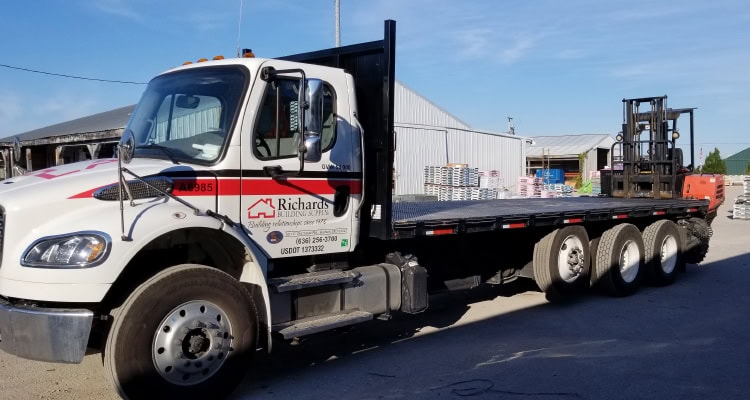
Richard’s Building Supply maintains operations in more than 60 locations across 14 states. Even so, it managed and tracked its fleet of several hundred vehicles via “a paper-process with old-fashioned delivery boards and a GPS system,” says Jenny Vetter, the company’s logistics manager.
The Customer
Richard’s Building Supply Company (RBS) distributes roofing, siding, and other exterior building materials.
The Provider
Descartes Systems Group provides technology that improves logistics and supply chain productivity, performance, security, and sustainability.
The system, which often involved manually shuffling delivery tickets, provided little information beyond indicating which trucks were scheduled to make deliveries to which customers. “We needed better visibility,” Vetter says.
In the construction sector, delivery timeframes can impact the bottom lines of many builders—RBS’s customers. For instance, if the carpenters stationed at a site need a truckload of lumber before they can start work, a late delivery becomes an expensive problem, says Graham Parfeniuk, senior account executive with Descartes.
Accurate routing can reduce late deliveries and the associated costs carried by builders. It also boosts customer service while helping drivers complete their routes more safely.
As Vetter and her colleagues searched for a solution, they saw a presentation about Descartes Route Planner on Demand, a routing software solution that provides visibility and helps build optimized routes, among other capabilities. The solution promised to be “a game changer,” Vetter says.
Mobile and digital workflows can help in several ways when deployed in the building supply sector. At times, workers at a site may move materials from one area to another without alerting anyone else. It then may look like the order was never delivered or delivered only in part. If a supplier can’t show the delivery was made on time and in full, it may decide to rush another shipment.
That increases costs and makes it appear as though the initial order was incorrect, Parfeniuk says. For many building supply distributors, this cost leakage erases between about 1% and 3% of revenue.
Stay Ahead of Problems
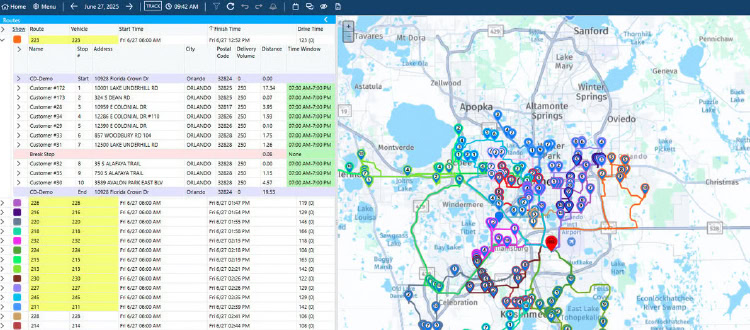
Descartes’ route planning solution combines scheduling, delivery route planning and execution, proof-of-delivery, automated pre- and post-delivery notification services, and imaging functionality into a comprehensive platform that provides real-time visibility into deliveries as they are made—and proof of delivery when customers receive their orders.
With Descartes’ Route Planner on Demand, a driver can capture important information when entering a job site, including a digital set of signatures that confirm delivery, as well as pictures of the delivery site. This information can be sent to the customer, so they know where and when the materials were delivered.
“The data and pictures help the supplier get ahead of any problems,” Parfeniuk explains.
Pictures from the mobile app can also be used to guard against claims that a truck damaged a driveway or other structure when making a delivery. This information can help prevent millions of dollars in false claims against large building suppliers each year, according to Parfeniuk.
Making the Transition
Upgrading from a paper process to a technology-based delivery solution for the first time was a huge change, Vetter says. Among other steps, she and her team helped RBS’s dispatchers learn to create the routes, helped the customer service employees learn how to use the new solution to answer customers’ questions, and helped drivers learn how to execute routes.
In rolling out the solution, RBS dedicated a full-time project manager to the implementation. Vetter also assembled a team of super users and trainers. These steps were key to a successful implementation, she says.
RBS started the implementation with a handful of branches of different sizes, so the teams could work through any glitches before a broader roll out. When working with a location, Vetter and her team made a point to follow up after the initial session.
“If you just walk out of the building, some employees may go back to their old ways, especially if they’re struggling to learn the new software,” she says. Consistent follow-up was one key to success.
While it’s possible to conduct training through video connections, in-person instruction generally works best, Vetter says. The complete roll out took about nine months.
As part of its implementation, RBS developed metrics to determine how well drivers and corporate employees complied with the new solutions. For instance, the metrics measure whether drivers put their routes into the system and complete them. Compliance consistently tops 90%, Vetter says.
One challenge when rolling out the route planning solution was getting accurate delivery addresses. Prior to the implementation, drivers sometimes had to spend valuable time trying to find accurate and complete addresses. Now, the system highlights addresses that look inaccurate or incomplete, so RBS can ask for additional information before drivers are on the road.
“We can spend less time trying to figure out where the address is and go straight to it,” Vetter says.
As orders flow into RBS, they’re entered into the company’s ERP system. From there, they flow to the Descartes route planning software, which builds a safe, efficient route that accounts for constraints such as delivery windows, as well as the availability of different trucks and drivers.
The Payoff
Vetter says she can’t imagine working without the Descartes solutions. Customers receive an email or text notification when an RBS delivery is on its way, with an estimated arrival time. Customers also receive an email or text once their deliveries are complete, so they spend less time calling to ask about the deliveries. “This allows them to run their business more efficiently,” Vetter says.
That’s a dramatic contrast to the previous manual white-board system, which provided little beyond the customer’s name and the truck that would make the delivery. It couldn’t provide information on a truck’s location, nor the number of deliveries the driver had to make before it was expected to arrive at a specific customer. When a customer called to check the status of a delivery, employees would have to manually gather the information.
The Descartes system indicates, among other data, whether a truck has left and the time it’s expected to arrive at a customer’s location. Employees were “blown away” by the ease with which they could access the solution’s range of information, Vetter says. For instance, once employees enter their vehicle information into the Descartes routing system, it flows into the commercial navigation system RBS drivers use.
Manually planning routes, as RBS had been doing, can eat up several hours each day, across each branch. With route planning software, this job often can be completed in about 30 minutes, Parfeniuk says.
The proof-of-delivery notifications available through the system include pictures that drivers take of the materials delivered, including any stickers that contain product information, the number of items delivered, and their condition. The application also prompts drivers to capture pictures of driveways before and after each delivery. These can be used to evaluate any claims that one of the company’s trucks damaged a driveway.
The reporting available through the route planning solution also provides valuable information, including the number of orders on each truck. Early on, RBS noticed some trucks heading out, even though they were under capacity, Vetter says. The analytics help employees assess the reason why any trucks are under capacity, such as a tight delivery time frame. RBS can then determine whether it would have been possible to place more material on a truck, therefore reducing the need to reload.
Cutting Drive Time and Costs
Many companies enjoy a modest reduction in drive times when moving to the route planning system, Parfeniuk says. If a company is using a paper-based process, shifting to the route planning solution typically saves about $1 per delivery, per day, he adds. The system can also reduce any disputes about products going missing from job sites, as well as any claims that a driver damaged a customer’s property.
Vetter and her team at RBS continue to look at other features of the Descartes solution that will enable them to continue to improve the customer experience, create efficiencies, and reduce the cost of deliveries, all within an environment of safety. For example, they’re exploring the Descartes customer engagement platform to further boost the service they can provide.
“Descartes has become a strong partner for us over the years,” Vetter says.
Driving Efficiency
The Challenges: A paper-based, largely manual system for managing RBS’s delivery fleet provided only limited visibility into the locations of the company’s trucks and the products they were carrying, as well as little ability to provide proof of deliveries. Calculating routes and answering customers’ questions about their deliveries also consumed valuable employee time.
The Solution: RBS implemented several solutions from Descartes, including Route Planner On Demand, and Mobile Proof of Delivery.
Results: The solutions allow RBS to efficiently create safe and optimized delivery routes and confirm the timing and accuracy of deliveries. The solutions also provide various delivery metrics, such as the number of orders on each truck, which can help in adjusting future deliveries to boost efficiency and/or service.
Next Steps: RBS is considering additional solutions, such as the Descartes customer engagement platform, that may help it continue to improve the customer experience, create efficiencies, and reduce the cost of deliveries.