
Breaking the Ice: Innovation Reinvents Cold Chain Logistics

As global demand for temperature-sensitive goods surges, a block of innovation—including smart sensors, automation, and solid-state cooling—is reshaping the cold chain, one hand-off at a time.
“Cold is an incredibly complex problem,” says Hanson Li, founder and CEO of Peltier Technology, which develops modular, smart technology cold chain solutions. The reason? Heat is everywhere, he says, noting that homes even in northern climates have refrigerators.
If a company needs to, say, keep a slab of meat in a freezer, that’s generally an easy task. But when that slab must move from a freezer to a truck to a van and then into a store, maintaining its temperature becomes more complicated, Li says. Each hand-off risks breaking the cold chain. The foods or drugs being shipped may fall outside their temperature parameters and no longer be fit for use.
The value of the global cold chain logistics market size was estimated at $341 billion in 2024, Global Market Insights reports.
“It is a massive investment by the world, but there are still kinks in the armor,” says Li, who is an investor in Humphrey Slocombe Ice Cream. He realized the company was spending as much to store its ice cream cold as it did to produce it.
The cold chain industry has largely been using the same solutions for decades, says Brian Bejarano, chief commercial officer with Ember LifeSciences, a global temperature control brand. Roughly 75% of cold chain shipments rely on Styrofoam and ice, or paper and ice to maintain their temperature, he estimates.
Improved refrigeration could save nearly half the 1.3 billion tons of food that is wasted each year across the globe, finds University of Michigan research.
In addition, half of the new medicines that will be launched over the next five years are expected to require cold storage—up from 37% that required cold storage between 2013 and 2017, reports IQVIA.
The cold chain sector is responding to the need for new solutions. “New technologies are broadening options for cold storage refrigeration systems, renewable energy generation, low-emission refrigerated transportation, automation, AI-driven data monitoring systems, and more,” says Sara Stickler, president and CEO with the Global Cold Chain Alliance.
Here’s a look at some cold chain innovations.
» Advanced temperature tracking technologies are changing how the cold chain industry operates at a global level.
Real-time tracking provides end-to-end temperature visibility that not only demonstrates that the cold chain has been continually maintained, but also enables rapid responses to avert potential problems. The granularity and accuracy of the data now available allows operators to identify and mitigate risk points, apply data-driven decision making, optimize routes, and explore predictive analytics.
One example is the SmartSense Voyage solution from Digi International, a provider of connectivity solutions. The sensor, about the size of a credit card, can track a shipment’s location, temperature, and condition in real time, says Guy Yehiav, president of SmartSense by Digi. The system can issue real-time alerts when the condition of a shipment moves outside an established range.
Digitizing Operations
» The digitization of cold chain operations is a game changer in terms of compliance, optimization, and real-time visibility, says Anthony Rizzo, chief commercial officer with Cold Chain Technologies (CCT), which provides temperature-controlled packaging. By using a smart logistics platform, shippers can continuously improve operations and mitigate potential challenges.
For instance, the smart selection engine within CCT’s Smart Solutions platform can recommend packaging solutions for each shipment based on its assessment of relevant parameters. The platform also integrates carrier logistics data, the Internet of Things, real-time thermal modeling, and geofencing technology to develop a precise view of each shipment. Shippers can quickly identify and work to resolve challenges.
In addition, the platform’s intelligent data management capabilities collate information from every shipment so shippers can analyze route performance and monitor thermal behavior, among other factors. “Companies can reduce waste, lower costs, improve reliability and—most importantly—protect product integrity from manufacturer to patient,” Rizzo says.
Automating Facilities
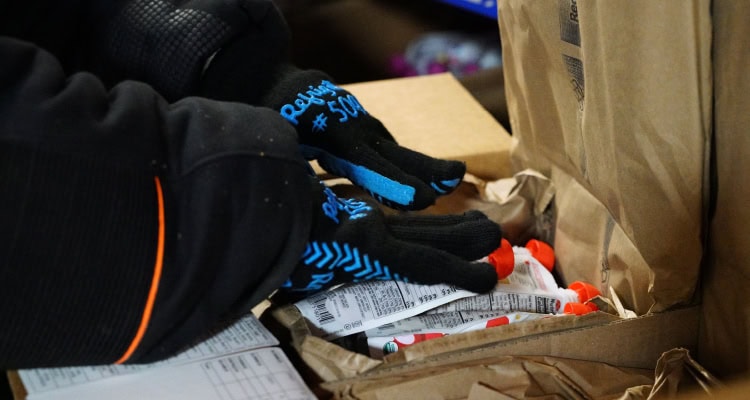
Americold picks and packs ecommerce orders inside a precisely temperature-controlled facility, ensuring every item maintains peak quality from fulfillment to delivery.
» Technology is also enhancing cold storage warehouses and distribution centers. Within an Americold cold storage facility in Russellville, Arkansas, is an automated trailer unloading system that can unload in less than four minutes. “When we unload manually, it is closer to a 30-minute process,” says Bryan Verbarendse, Americold, President, Americas.
As important as the efficiency gains is the system’s ability to maintain the cold chain as products move. Products move in a consistent flow from the manufacturing floor, cutting the likelihood of a backup in the production line.
Within the facility, features such as energy-efficient ammonia refrigeration systems and insulated metal panel construction help cut water use by one-quarter, Americold says. Real-time integration between several systems, including the warehouse management and enterprise resource planning solutions, enable inventory visibility.
WMS Does More
» Modern warehouse management systems (WMS) are no longer just inventory databases. “They are real-time control systems that track every pallet, case, and temperature zone throughout the facility,” says JD Schwefler, chief commercial officer with Arcadia Cold Storage & Logistics.
A WMS can integrate features such as barcode scanning and temperature sensors, and connect to ERP or transportation systems, capturing live data at each handling point. This can enable the use of first-expiry/first-out rotation, so products with the earliest expiration dates are distributed or sold first.
The solutions can also provide immediate visibility into product status and movement, reducing errors and improving compliance.
Technical advances are also boosting energy management efforts, which have become a strategic focus across many supply chain and cold storage operations, not only to lower costs, but also to improve reliability, sustainability, and network resilience, Schwefler says.
Modern energy management systems (EMS) combine automation, analytics, and predictive control to continuously monitor energy consumption across refrigeration, lighting, compressors, and material handling systems, while smart algorithms can automatically adjust loads based on real-time conditions.
As a result, an EMS can reduce power consumption by between 10 and 30%, while maintaining temperature control.
Custom bonded warehouses
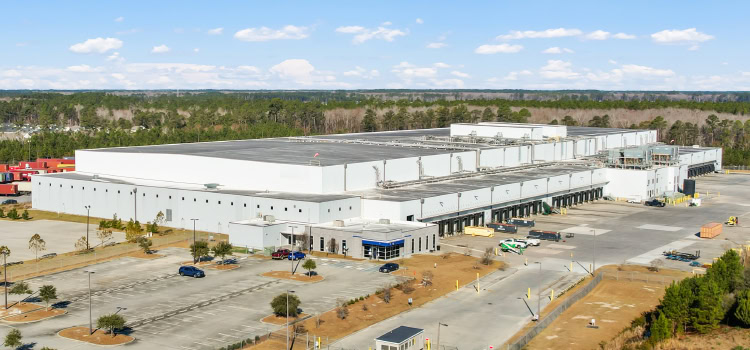
Vertical Cold Storage’s Florida facility operates as a customs bonded warehouse, which helps importers of frozen products better manage risks and control costs.
» Customs bonded warehouses have become more prevalent over the past few years as tariffs and quotas have fluctuated, says Jim Henderson, chief commercial officer with Vertical Cold Storage, whose warehouse in Medley, Florida is fully licensed as a customs bonded warehouse.
The benefit? Importers of frozen foods can hold their inventory in a duty-free status until the products are sold into the U.S. market or re-exported. Importers of frozen products can better manage their risks, costs, and cash flow, while increasing the flexibility of their global supply chain strategies.
If a product is subject to an import quota that resets annually, bonded services allow the importer to store it duty-free until it’s able to enter the domestic market, says Brian Beattie, president, western U.S. operations with Lineage, a global temperature-controlled warehouse real estate investment trust.
Containers Gain Durability, Technology
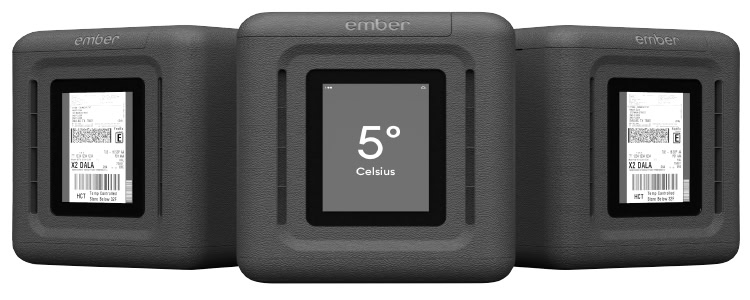
The Ember LifeSciences Cube is a self-refrigerated, cloud-connected shipping box that protects temperature-sensitive medical products using onboard sensors and real-time GPS tracking.
» The growing adoption of multi-use and reusable containers, with the most robust lasting more than 15 years, is another shift in temperature-controlled logistics, Rizzo says. CCT offers a range of reusable thermal packaging solutions and operates a network of 50 regional hubs across 20-plus countries that are located near clusters of pharmaceutical manufacturing and shipping lanes. The hubs make it easy for many shippers to both access and return their packages.
» Recent advances in solid-state cooling are helping it to become more efficient and deployable on a mass scale, Li says.
Solid-state cooling based on the Peltier effect—named after French physicist Jean Charles Athanase Peltier—occurs when an electric current flows through a junction between two different types of materials, causing a temperature difference at the junction. The temperature difference can then be used to cool or heat the junction, depending on the direction of the current.
In addition to eliminating the need for chemical refrigerants, solid-state cooling can work with smaller cooling devices. For some applications, it can shrink to smaller than a cell phone, Li says.
Peltier Totes, for instance, actively monitor temperatures to within one degree; can handle frozen, chilled, and ambient products; are designed to fit into existing fulfillment systems; and are portable. “Cold is no longer big and monolithic,” Li says.
Ember LifeSciences, the company behind the Ember Cube, is also leveraging semi-conductor cooling. The Cube, a self-refrigerated, cloud-based shipping box, is designed to maintain precise temperature control and keep its contents at between two and eight degrees Celsius for more than 72 hours.
The Active Ember Cube, which is in commercial use, leverages semi-conductor refrigeration. The Ember Cube 2, which uses a vacuum-insulated payload compartment combined with reusable gel-packs, is in a pilot program with an anticipated launch in the first half of 2026. Both Cubes can be reused multiple times.
The dashboards for the Cubes show their current locations and ambient temperature, among other information. The software issues alerts when, for instance, a Cube encounters shipping delays or has been opened.
In addition, Ember’s Return to Sender technology automatically generates return shipping labels and schedules carrier pickups. “We’ve made reusability easy,” says Bejarano. Reusability makes the Cubes cost-competitive with many other cooling options.
Ember LifeSciences currently focuses on the pharmaceutical industry. As the company scales, it likely will look at applications within the food sector, Bejarano says.
But even with all these technical advances, establishing effective, efficient, and reliable cold chains requires addressing numerous challenges. Like many sectors, cold chain organizations face ongoing disruptions due to weather events and geopolitical conflict, inflationary pressures, and limited capacity at ports and terminals.
Increasingly complex and lengthy supply chains—many of which span multiple businesses, time zones, and languages—can lead to miscommunication between various links in the chain. Within a cold chain, the result might be not just delays, but potential temperature abuse.
In addition, most food supply chains work at a faster pace than other supply chains, Verbarendse says. That’s especially true when temperature-controlled products are involved.
Establishing consistent cold chain operations requires a high level of coordination and visibility, as well as continuous adaptation to new trade rules, regulations, and external factors like weather and changing demand.
“Protecting the food supply amid complex international trade dynamics is one of the biggest challenges the industry faces today,” Beattie says.
Cold Chain to Grow
The industry appears ready to meet these challenges. The cold chain market is expected to grow to $1.1 trillion+ by 2034, Global Market Insights reports. Multiple factors are driving growth, including demand for fresh and convenience products and expanding international trade, Schwefler says.
While the rate of increase for new cold storage capacity will likely slow, the need for new, modern cold storage capacity will continue to rise, given the aging current infrastructure.
Companies may decide to make greater use of sea transport for temperature-sensitive products. While traditionally considered too risky, technological advancements, such as CCT’s Enshield PCM thermal blankets, make the shift possible, Rizzo says. Shipping by sea, especially for long-haul journeys, is both cheaper and more sustainable than air.
Even as technology and the sector itself evolves, the importance of the cold chain will remain. While it may sound corny, those working in the cold chain should take pride in their roles safely moving and handling the food that ends up on dinner tables, Verbarendse says, adding, “I’m passionate about the role that we play.”
Cold Chain Best Practices
These three guidelines can help shippers effectively manage their cold chain operations.
1. Leverage historical, real-time, and predictive data. “Having clear, timely insights helps shippers make better calls about where to hold inventory, and how and when to move it,” says Brian Beattie of Lineage.
2. Consider the cold chain network a living system. Optimizing the network has to be a continuous effort. “The pivot needs to be part of the plan,” Beattie says. Even if you don’t know exactly how your firm might pivot, it pays to position your cold chain organization to be ready when a need to pivot arrives.
3. Weigh the cost of quality cold chain operations against all costs incurred due to a lack of temperature control. Maintaining an effective cold chain requires an investment of time, effort, and money. Yet, a faulty cold chain can lead to wasted products, as well as the potential for reputational damage and resulting safety implications.
From Ship to Shelf: Moving Cold Cargo Through Port Tampa Bay
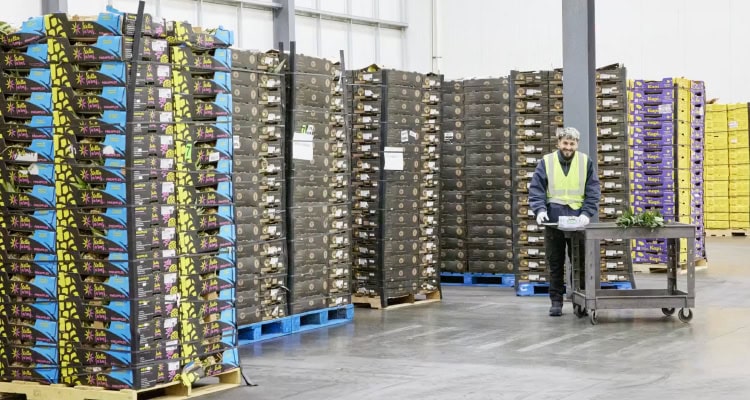
Port Tampa Bay plays a key role in moving temperature-sensitive goods into Florida’s largest and fastest-growing consumer market. With direct access to the Tampa Bay-Orlando I-4 corridor—home to a dense cluster of distribution centers and a booming grocery and food-and-beverage sector—the port supports steady, efficient cold chain operations.
At the center of these operations is a modern refrigerated complex that keeps perishable products moving. The facility includes 135,000 square feet of temperature-controlled space, 6,348 racked pallet positions, and 250 reefer plugs. On-site USDA and Customs inspection areas, radiation portal monitors, and safe glycol-based refrigerant systems help streamline regulatory and food-safety processes.
The facility’s location—directly adjacent to the container terminal and a deep-water berth—adds further flexibility. Mobile harbor cranes support breakbulk and palletized cargo, while on-dock access enables smooth transloading for containerized shipments.
The result is a tightly connected cold chain environment built to move perishables quickly and reliably through Central Florida.