
Supply Chain Data Mistakes to Avoid

When supply chain data is wrong, everything downstream suffers. A connected data strategy can stop mistakes before they start.
For GE Appliances, the ability to access the right data at the right time has been a game-changer. The company reduced the volume of backorders in its aftermarket parts operation by more than 25%, significantly improving availability for customers, thanks to a supplier collaboration agent the company implemented in 2025.
Google Gemini Enterprise, a platform that includes artificial intelligence (AI) and other business tools, powers the agent. It automates routine supplier check-ins, confirms order status, and escalates issues when needed, among other tasks.
“The opportunity is not just more data,” says Marcia Brey, vice president of logistics at GE Appliances. “It is better signals.”
The logistics teams at GE Appliances manage a flow of information across suppliers, transportation, factories, warehouses, service parts, and customer delivery. Information that is late, inconsistent, or incomplete can impact availability and cause manual work and delayed decisions. Artificial intelligence helps the teams identify patterns, anomalies, and early signals that may indicate a disruption, quality issue, or recurring operational problem.

GE Appliances is using data and AI to improve how we see, understand, and act across the logistics network.
Marcia Brey
Vice President of
Logistics, GE Appliances
As a result, employees spend less time gathering data—they manage more than 700 suppliers and approximately 27 million parts and accessories annually—and more time resolving issues. “GE Appliances is using data and AI to improve how we see, understand, and act across the logistics network,” Brey says.
As GE Appliances’ experience shows, an optimized data strategy can streamline operations, enhance customer experiences, and boost productivity.
Conversely, “bad data creates expensive confidence,” says Nicole Brackett, enterprise account executive with TradeBeyond. Partial or inaccurate information can lead organizations to make decisions that result in inventory shortages, delayed shipments, compliance failures, or other budget-busting mistakes. More than one-quarter of the organizations surveyed in a 2025 IBM report estimate that they lose more than $5 million annually due to poor data quality.
One reason is that bad data can needlessly tie up working capital. For example, if demand forecasting isn’t synchronized with supply management and marketing, inventory may sit unsold, leading to price reductions.
In other cases, inventory may be misallocated. Some nodes in a network experience shortages, while others carry excess stock, explains Daniel Wang, director with LIDD, a supply chain consultancy. Those navigating the shortages may overorder, consuming working capital and more facility space than they actually need.
Compliance risks also come into play, says Max Schlichter, a partner with McKinsey. Incorrect data on country-of-origin or hazardous material classifications can lead to customs delays, fines, or shipment holds.
Challenges to meet
Freight may be misrouted or transportation costs inflated because of errors in shipment dimensions, weights, or routing information, Schlichter says. Another challenge is mismatches between what suppliers say they’re shipping and the products that arrive, which can force receiving teams to use inefficient manual reconciliation processes that can create inventory inaccuracies.
As companies shift to automated and AI-enabled supply chains, the risks of data mistakes increase. Organizations that train forecasting models or planning systems on incomplete or inaccurate data risk scaling poor decisions quickly, rather than actually improving performance. These systems are only as effective as the quality of the underlying information, Schlichter says.
Here are 14 supply chain data mistakes to watch out for.
1. Manual Data Entry
In most cases, poor data quality doesn’t result from one dramatic failure, but instead from “death by 1,000 spreadsheets,” Brackett says. Manual entry is one culprit. When teams copy information between systems, email updates, or rely on disconnected tools, mistakes naturally multiply. That can mean decisions are made based on inaccurate information.
2. Data Processes That Lag Operations
Some companies expand sourcing into new regions before they’ve established standard processes for collecting and validating supplier information. That leaves management without a strong handle on its supplier base, notes Brackett.
Similarly, mergers and acquisitions can result in a proliferating number of information systems. The volume makes it difficult to ensure all data in all systems is up to date and accurate.
3. Fragmented Data Flows
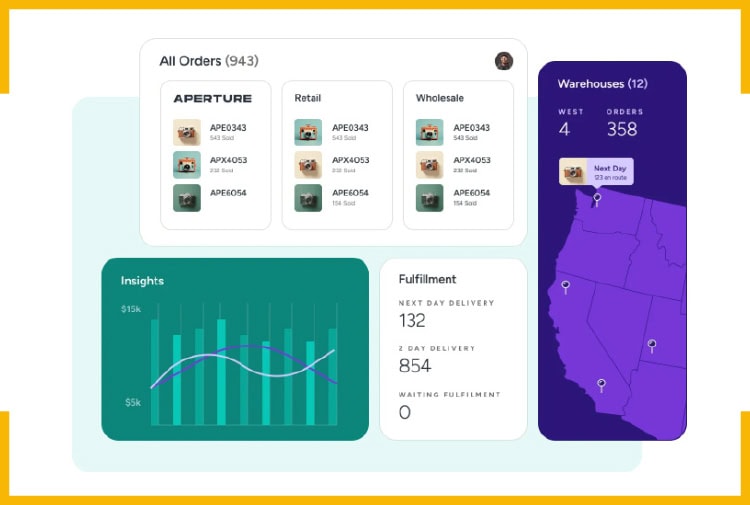
Data discrepancies can undermine fulfillment decisions, customer expectations, and margin performance. Ecommerce solutions like Rithum help automate data collection and reduce risk.
Disparate, fragmented information flows create blind spots across the supply chain, Schlichter says. For instance, information sets around electronic ordering, advanced shipping notices, transportation tracking, inventory, sourcing, and ERP updates, among others, often sit in disconnected systems. Updates are contained in spreadsheets, emails, or other disparate tracking tools, and don’t automatically feed into the ERP, WMS, or other systems. One team might think inventory is available, when another has already allocated it.
In more complex networks, such as those involving marketplace models, challenges around inaccurate data on inventory, product description, order status, and supplier performance can be amplified because data is pulled from multiple systems and partners at once, says Blaine Nielsen, president, retail, with Rithum, a commerce solutions provider. For example, the product content displayed may not match what’s available to sell. Even small discrepancies can undermine fulfillment decisions, customer expectations, and margin performance.
To truly benefit from modern information solutions, the information architecture should be synchronized for the organization as a whole, says Oliver Gritz, founder and chief executive officer with Ontegos Cloud, which offers an operating system for freight forwarders. The goal is a common source of reality for all departments.
4. Not Comparing Data Sets
Reviewing different data sets together can provide valuable insight. Evaluating operational data with fulfillment and performance data, for example, can show where issues are recurring and help vendors identify problems earlier in the process, Nielsen says.
Reviewing both stock and order records, as well as data showing what happens after an order is placed, such as shipment exceptions and reason for returns, can help to set more accurate delivery expectations. It also can help identify which issues are hurting conversion or margin.
5. Insufficient Product Data
The importance of product data such as dimensions, weight, lead times, handling rules, and labeling requirements, is often underestimated, says Kyle Brandt, product marketing manager for SPS Commerce. Yet, this information informs the way in which products are planned, received, stored, fulfilled, and invoiced.
Dimensional and weight data also directly impact shipping costs, as well as the effectiveness of slotting and rack configurations. If product sizes or weight measurements are off, it’s often hard to determine accurate slot sizes, which makes it difficult to understand a facility’s true capacity.
Along with capturing product data, supply chain organizations often need contextual data about the items they’re managing, says Ashley Burkle, director of sales and business development with Identiv, which creates internet of things (IoT) solutions. This could include data on changes in temperature or humidity, or patterns that signal spoilage or loss, which can help organizations understand events happening across an operation. Then they may be able to respond and prevent or mitigate problems.
6. Failing to Speak Up
Employees need to feel comfortable speaking up once they notice data that doesn’t look right. “The faster you catch it, the less of a mess you will have,” says John A. Evans, president and chief executive officer with Evans Distribution. “Everyone involved needs to keep a close eye on their end to communicate discrepancies and solve issues quickly.”
That is especially true when working with large accounts that encompass thousands of orders daily. Data accuracy helps everyone do their part without costly delays, mistakes, or disruptions, and is an important tool for identifying issues and mitigating risk of disruption.
7. Not Confirming That a Logistics Provider Can Maintain Data Visibility
When engaging logistics partners, shippers should confirm that they can provide visibility across the entire transport chain, Gritz says. A company’s own data is only as strong as the data it receives from its partners.
8. Insufficient Supplier Visibility
Many companies know their direct suppliers but lack visibility to their second- and third-tier vendors. As supply chains become more diversified, these blind spots become harder to manage.
9. Data that Doesn’t Reflect Reality

Reliable, accurate sourcing data is crucial for companies expanding their supplier base or sourcing regions. Platforms like TradeBeyond enable data processes that support operations.
The most damaging data mistakes usually aren’t the result of a typo. Instead, they occur when data looks fine in a system but doesn’t reflect operations. For example, records may show that inventory exists, but it’s actually damaged or not available. The organization may make decisions based on the faulty information.
10. Data That Isn’t AI-Ready
As more supply chain organizations implement artificial intelligence, they need data that’s “AI-ready,” says Vasileios Plessas, director analyst with Gartner. Data quality is key.
While nearly all—94%—of supply chain leaders Gartner recently surveyed are willing and trying to integrate AI within their supply chains, only 17% say they’re actually able to scale it. The obstacle, according to about half, is data quality, Plessas says. To truly leverage AI, data needs to be connected and cross-functional, rather than siloed. It also needs enough business context that an AI engine can both see and understand it.
For instance, the same supplier may appear under several different names, leading an AI tool to see one supplier as three, and assume the company’s supply base is more diversified than it actually is.
11. Ignoring Data Governance, Ownership, and Stewardship
Organizations can use technology to clean data, but they can’t correct their way out of bad data, Plessas says. Instead, they need to prevent bad data from recurring.
Strong data governance with protocols and policies can help keep bad data from entering the supply chain. An organization might require duplication checks before allowing new suppliers to be entered into the information system, for instance.
Identifying data owners is also critical. Without a sense of ownership, employees may fail to maintain the integrity of the data, says Bob Patel, managing partner, practice head, supply chain and retail planning with Highspring, a professional services organization.
Often, it’s assumed that IT departments “own” any data. While IT may be stewards of the data, they usually don’t own it, Patel says. Instead, ownership often lies with the business units, such as the supply chain organization. Not only does the data impact how these areas operate, but they’re best positioned to understand how the data will be used.
12. No Data Strategy
Not all data is good data, says Brian Cupp, vice president, operations, enablement, and strategic initiatives with IntelliTrans, a provider of multimodal transportation management solutions. Supply chain leaders need to identify and focus on the data relevant to their operation. A shipper moving freight across North America doesn’t need every GPS ping from every truck. “That quickly becomes noise,” Cupp says.
More helpful is a curated set of signals that lets the shipper anticipate risk and make better decisions, he explains. This could include exception-based location data, so the team is alerted when a load stops somewhere unexpected or dwells too long. Cost and service data at the lane level can help procurement see where they’re paying too much for poor service, so they can look for new providers.
13. Always Seeking Perfection
While it’s important to minimize mistakes, the goal isn’t perfect data for the sake of perfect data. It’s informed decision-making, Wang says, adding that not every decision requires a high level of data accuracy.
For instance, a company working against a tight timeline may need to begin searching for a new facility in parallel with the actual design work. By using rough estimates and making reasonable assumptions on critical factors, such as operational space and the level of automation, it can produce ballpark estimates on building footprints. These can guide its initial search, Wang says.
14. Poor Connection Points
Supply chain data is an enterprise-wide issue, says Susana Gonzalo, managing director and lead of the commercial industry supply chain team with Huron Consulting Group. It can’t be solved by focusing on a single function, as many data issues occur at the connection points between internal functions and external partners. It’s also necessary to watch for gaps in external data, like supplier networks and transportation flows.
“As supply chains become more dynamic, having real-time visibility beyond the four walls is essential for proactive decision-making,” she says.
Spotlight: The Power of Predictive Parts Data
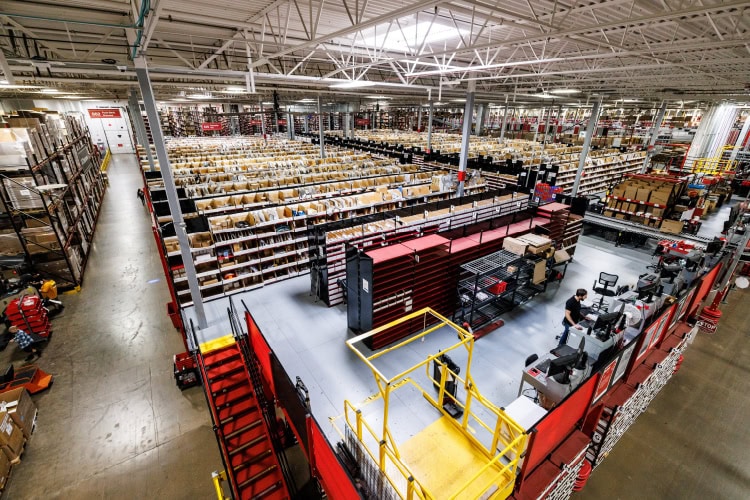
Parts Town Unlimited prioritizes precise, real-time data and works closely with customers and OEM partners to ensure data accuracy and accessibility across its supply chain.
Few legacy information systems were built to support the speed and complexity of today’s supply chain environment, says Emanuela Delgado, group vice president of growth and innovation at Parts Town Unlimited, a provider of replacement parts for foodservice equipment, residential appliances, and HVAC systems. This makes it difficult to maintain synchronized inventory data, accurate parts identification, and up-to-date substitution information across business partners.
As a distributor, Parts Town prioritizes accurate, real-time data for customers and partners, Delgado says. The company invested heavily in improving data accuracy and accessibility across its supply chain by working closely with OEM partners and enhancing its digital infrastructure. One result is PartPredictor. By analyzing data from millions of successful technician repairs, this platform allows service teams to accurately and quickly find the parts they need, minimizing down time.
“Supply chains are becoming increasingly data-driven, and organizations that prioritize accurate, connected, and real-time information will be better positioned to respond quickly and operate more efficiently,” Delgado says.