
What’s Driving Auto Logistics?
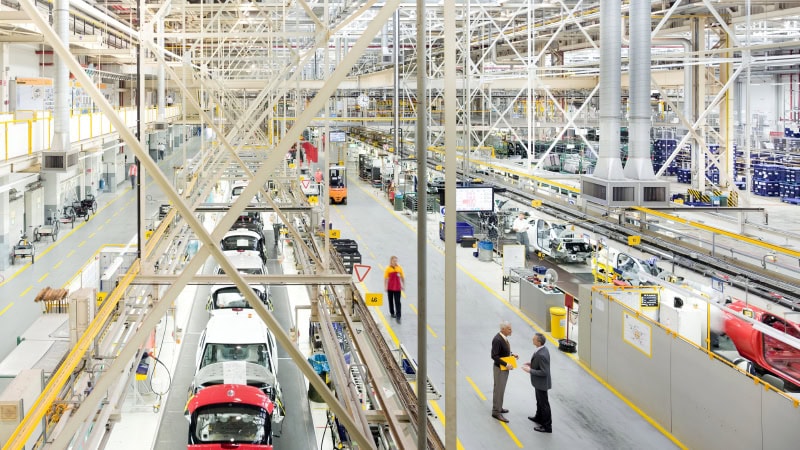
Four major challenges are reshaping how automakers and suppliers move parts and vehicles in a rapidly changing industry.
The typical automobile is composed of about 40,000 different parts. With those parts frequently manufactured all over the globe, getting them all to the right place at the right time for assembly has always been daunting.
It’s an even more daunting task today. Automotive shippers and companies that handle auto logistics now face pressures and challenges that fluctuate almost daily.
“The automotive supply chain is being reshaped by constant change—from tariff shifts and nearshoring to EV complexity, sustainability mandates, and labor shortages,” says Srini Paruchuri, vice president, customer strategy and solutions at Agillence. To stay competitive, original equipment manufacturers (OEMs) realize that “lean logistics principles are essential to manage this growing complexity,” he adds.
Automotive shippers are working side-by-side with their logistics and transportation partners to address this volatile landscape. Here are four challenges they’re focused on solving right now.
1. Tariff and Trade Uncertainty
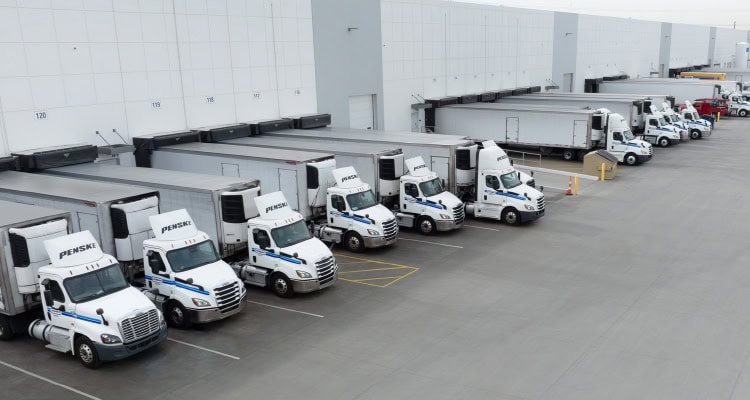
Logistics providers that service automotive manufacturers and suppliers, such as Penske Logistics, must be prepared to help their clients manage frequent supply chain disruptions including shifting tariff policies, regulations, and consumer demand as well as global supply chain complexities.
“We deal with a lot of OEMs, and if a day went by that we didn’t talk about tariffs, I would be shocked,” says Tracy Urbanski, senior vice president of operations for Penske Logistics.
The tariff situation changes constantly and erratically, making it difficult to predict what’s forthcoming. Because many OEMs make decisions with whatever information they have at hand, “there is an element of crystal ball in predicting where things will land,” Urbanski says. “It’s like building a boat while you’re on it.”
This challenge extends upstream to OEM suppliers, particularly those providing critical inputs such as minerals, aluminum, and steel. Because these supply chains are so interconnected, even small disruptions can quickly cascade through multiple tiers.
For example, in October 2025, U.S. automotive assembly plants were just weeks away from shutdowns because of a computer chip shortage. The Chinese government blocked Nexperia, an important supplier of these chips, from exporting from its facilities in China.
“A handful of these chips can literally stop production of a full assembly plant,” Steve Horaney, senior vice president at the Motor and Equipment Manufacturers Association (MEMA), told Bloomberg.
“Ultimately, disruptions roll downhill,” Urbanski adds. “A tier 1 supplier might be fine in the event of a chip shortage, but if a tier 2 supplier runs into trouble, the impact goes through the entire network—and those upstream disruptions become very real.”
Similarly, disruptions involving aluminum coils and semiconductors have a ripple effect. Recently, Ascent Global Logistics helped several automotive customers handle this challenge by moving critical parts and materials that keep production running.
“The core of our business is to respond quickly to industry changes and to unexpected issues,” says Daryl Knight, the 3PL’s chief commercial officer. “Getting parts and products where they need to be without delay involves creative solutions, such as reacting quickly and shifting transportation modes, to limit and mitigate production impacts.”
2. Supply Chain Complexity
The complexity of the automotive supply chain—the number of suppliers, their locations, the multiple tiers involved—is a significant challenge for OEMs.
Agillence offers the example of its client, a global tier 1 manufacturer that supports multiple OEMs with more than 50 plants, 1,200 suppliers, 30,000-plus active part numbers through five crossdocks and 1,500 routes across North America. Agillence worked with the manufacturer to streamline supply chain complexity.
“Originally, the company managed its network through plant-centric logistics, resulting in redundant lanes, fragmented visibility, and higher premium freight,” Paruchuri says. “Transitioning to a crossdock-based, technology-driven model built on optimization and clean master data has delivered measurable impact.”
The switch yielded several benefits for this manufacturer. They saved roughly 10% in annual logistics costs, reduced inventory and premium freight through smarter frequency planning, and gained real-time part- and pallet-level visibility across all plants and suppliers.
“In addition, the company can now re-route material flows in response to tariff changes or disruptions, simulating bonded or cross-border alternatives in hours instead of weeks,” Paruchuri explains. “This represents a fundamental shift from siloed, static planning to digitally enabled lean flow, where optimization and data quality drive resilience and agility.”
For other OEMs, supply chain complexity—along with tariff policies and geopolitical concerns—is driving a move toward repositioning supply networks. “The number-one concern we hear is nearshoring and localizing supply chains,” says Joel Eigege, senior vice president, automotive, aerospace, and industrial for Ryder.
Many OEMS are now investing heavily in U.S.-based production. “But there is still uncertainty where they will land. That transition will take time,” Eigege says.
Automaker Stellantis has committed to $13 billion in investments, Eigege says, “but that is through 2029, so it shows their thinking around timing.”
Ryder and other logistics providers are making similar investments. “We have an extensive network across North America, and will be able to help our customers depending on how things shake out,” Eigege says. “If our customers are building vehicles in Mexico for the Mexican market, they will need a supply chain there.” Ryder already handles about 320,000 cross-border transactions annually.
3. Changing Consumer Demands
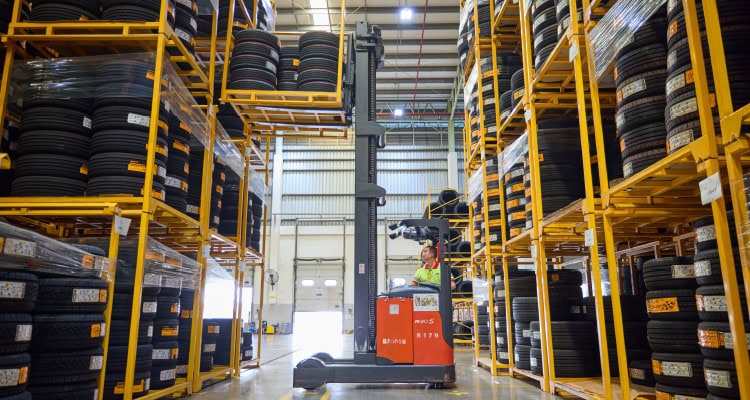
DHL’s high-tech inventory and barcode system offers near real-time tracking and data insights for automotive suppliers including leading tire maker Continental.
The U.S. electric vehicle (EV) market is feeling the effects of shifting consumer sentiment as well as changing incentives. With some federal and state tax credits being scaled back or eliminated, many buyers are rethinking EV purchases, and as a result, automakers are adjusting their offerings, and subsequently, their supply chains.
For example, General Motors recently cancelled its BrightDrop electric delivery van program and ended production at its plant in Ontario, Canada. GM blamed a “slower than expected” commercial EV market, a “changing regulatory environment,” and the elimination of U.S. tax credits.
The situation is different in other parts of the world, however. “EVs will be about 25% of auto sales by 2030, with about 39 million EVs globally,” says Fathi Tlatli, president for global automobility at DHL’s Customer Solutions & Innovation (CSI) team in the Americas. Different engine types—EV, hybrid, internal combustion engine—have different supply chains, and CSI has established 20 EV Centers of Excellence around the world.
“In terms of logistics, we have important requirements for batteries and other parts that are specific to EVs,” Tlatli explains. “The rise of factories producing these batteries adds to the complexity of EV supply chains.”
Given this consumer dynamic, “I don’t envy OEMs having to decide what to build and not build, or where to build,” Urbanski adds.
4. Cost Pressures
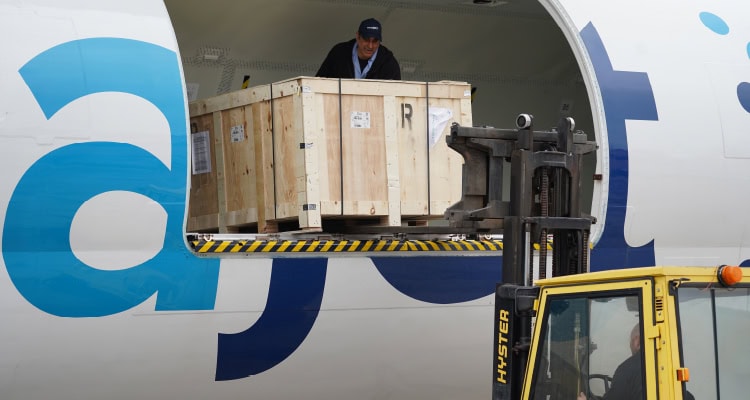
Recent disruptions involving aluminum coils and semiconductors had a ripple effect on the auto supply chaiin. Ascent Global Logistics helped several automotive customers handle this challenge by moving critical parts and materials that kept production running.
Cost pressures are a constant in the automotive industry. Because every vehicle represents a major investment, managing supply chain expenses is essential for all manufacturers. Technology—including artificial intelligence (AI)—plays a growing role in achieving that goal.
“You can’t go through a conversation without mentioning AI,” Eigege says. Specifically, automotive shippers are interested in using AI to “take away some repetitive tasks in the supply chain and to predict, observe, and drive efficiency,” he notes, which ultimately combine to address cost concerns.
“An important role we play is understanding our customers and utilizing technology to develop and implement focused, continuous improvement plans,” Knight says. This helps shippers better respond to supply chain disruptions and unexpected changes with speed and cost in mind.
“In some cases, that might mean changing routing by using technology for more accurate profiling of a particular shipment,” he says. “Or it could be converting expensive air freight into a more cost-effective solution.”
For example, Ascent’s Fast Boat service—a time-critical ocean solution with 8-17 day port-to-port transit—helped an automotive customer move freight from Asia and Europe to North America to offset the high cost of air shipments.
Technology and predictive modeling can help customers “tangibly keep their products moving” with their needs in mind, Knight adds.
Penske is also heavily investing in automation. “That’s not new, but there is renewed energy specifically around AI,” Urbanski says.
For instance, automation can play a role in order processing from entry to invoicing, “the life of an order,” she says. “Technology can help take out as many touch points as possible.”
An order can be taken electronically, then connected to a carrier, and “no one has to touch it,” Urbanski says. “The carrier picks up the load and sends us updates on pick-up and delivery through to load out and invoicing with no human intervention.”
Any time you can use automation, “your employees can work on more valuable tasks,” she adds. “We are all-in to find ways to upskill our people to do more work for our customers and ultimately become more efficient.”
DHL’s Tlatli agrees. “We are in a world, and an industry, where you need to change and reinvent yourself by integrating new technology,” he says. “In spite of all these elements, the human factor is more important than ever in automotive logistics. You need to have people who are able to integrate and transform new trends into relevant solutions and address that in a cost-effective and agile way.”
Partners for the Win
In the face of these challenges and the ever-changing nature of the global supply chain, strategic partnerships are becoming increasingly important for automotive shippers—and their logistics providers.
“There is a recognition that you will win through collaboration versus a more transactional relationship,” Eigege says. “We are starting to see longer-term contracts—five to 10 years versus one to two years—that allow OEMs to invest and drive innovation.
“That gives us a bigger seat at the table, to help customers make decisions earlier and design effective supply chains,” he adds. “We can be responsive, and help reduce costs.”
“The auto industry is moving beyond transactional logistics toward systemic optimization, where every decision supports flow, flexibility, and visibility,” Paruchuri adds. “Technology and lean thinking enable OEMs and suppliers to see the entire value stream as one connected system, shifting logistics from a cost center into a strategic advantage.”
CASE STUDY: Steering Freight Toward Profit

For Automotive Global Solutions (AGS), a mid-market manufacturer of specialty automotive parts, outdated logistics processes were quietly eroding profits. Manual routing guides and legacy systems made it difficult to track costs or performance, leaving teams reactive and overspending.
After a referral from its private equity firm, AGS reevaluated its freight vendors and implemented a more strategic approach to logistics by partnering with KDL Logistics.
By implementing KDL’s automation and visibility tools in phases, the company shifted from manual processes to data-driven decision-making. The new platform provides AGS with real-time shipment insight, transparent cost tracking, and greater operational accountability—helping turn freight from a cost center into a more manageable and strategic part of the business.
“KDL actively engaged in ways to give us a competitive advantage, focused not only on cost, but also on how to make logistics a benefit to the company,” notes Chris Dewey, director of supply chain operations for AGS. “I am accountable for freight spend and on-time shipment, and this technology helps my team perform more effectively.”
Collaboration and clear communication remain central to the approach, he adds.
With these changes, AGS has built a logistics model that reduces costs and supports the company’s competitiveness in an unpredictable automotive market.
Baltimore Bounces Back: Auto Gateway Reclaims Its Strength
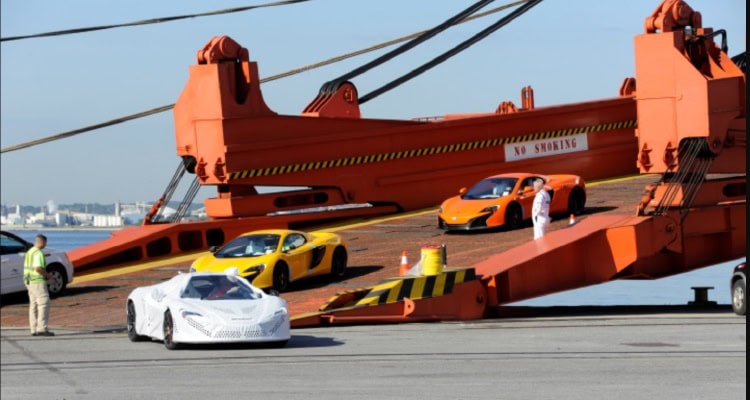
When a container ship struck the Francis Scott Key Bridge in March 2024, the Port of Baltimore—then the nation’s top automobile port—came to a standstill. Nearly 850,000 cars and light trucks had moved through the port the year before, and the sudden shutdown sent shockwaves through an already strained automotive supply chain.
Baltimore’s auto volumes dropped to about 750,000 units, and 5,000 trucks daily were forced onto alternate routes, adding cost and congestion. Fortunately, the broader logistics network proved resilient, and while the bridge collapse created a logistics challenge, it did not trigger a global supply chain crisis.
Nearly two years later, the port is largely recovered. “Our latest cargo volumes show a continued rebound following a challenging 2024,” says Richard Scher, communications director for the Maryland Port Administration. “Key commodities including autos, containers, machinery, paper, and breakbulk are up over 2024—and some have surpassed our record 2023 levels.”
CSX reopened its Howard Street Tunnel for single-stack service in September 2025, with full double-stack operations slated for completion in spring 2026. The project will add 160,000 containers annually and create about 13,000 jobs. The port is also reinforcing its roll-on/roll-off berths to handle larger, heavier vehicles and equipment—another sign that Baltimore’s role as America’s leading auto gateway is back on track.