
When Shared Warehousing Beats Signing a Warehouse Lease

The lease proposal has been on your desk for a week. The term is five years. The footprint is bigger than you need, because everyone says buy for the peak.
Meanwhile, your building is full. Receiving is staging pallets in trailers, and outbound is slipping.
Before you sign, price the other path. Shared warehousing through a 3PL puts your overflow on someone else’s racks, run by someone else’s crew, billed by the pallet.
Shippers land on both answers, and both can be right. Walk the proposal through five questions before you initial anything.
Lease, Contract Warehousing, or a Pallet Rate
You are choosing among three commitment levels, not two.
A direct lease is the deep end. Standard direct lease terms typically run three to seven years, with five years common, per industrial landlord Link Logistics. Everything inside the walls is yours to buy and manage.
Contract warehousing sits in the middle. A 3PL dedicates space and labor to your operation under an agreement you can outgrow or unwind. Dedicated capacity, none of the ownership overhead.
At the flexible end sits public warehousing, which asset-based operators offer as shared and public warehousing. Terms are month-to-month, and pricing is per pallet per month. The operator spreads the building and the crew across every shipper in the shared warehouse.
Match the commitment to what you can defend with data. Most overflow problems are shorter than a lease term.
Five Questions Before You Sign the Lease
1. How long will this inventory level last?
Name what is driving the overflow.
A customer contract with a committed multi-year volume is durable. A bump from two strong quarters is not. If the pallet count will not hold for the full term, do not buy the peak.
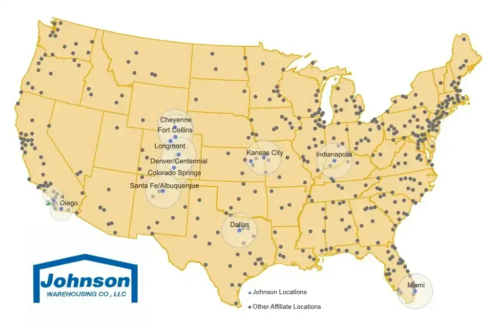
New markets are the clearest case for renting the risk. If you need inventory near Front Range customers, a third-party warehousing node in Denver places pallets near the I-25/I-70 crossing, with no term bet on unproven demand.
2. How fast do you need the doors open?
A lease is the slow road even after signatures. You still have to rack and stack the building, then stand up a WMS and pass inspections.
Finding the building takes time too. National industrial vacancy was 6.9% in Q2 2026, per Cushman & Wakefield, and Kansas City ran tighter at 4.5% that same quarter, per CBRE.
A 3PL with standing warehouse space in Kansas City already has the racks bolted down and a crew on the clock at the crossing of I-35 and I-70. You onboard into an operation that already runs. When freight is sitting in trailers, that is the whole decision.
3. What is the cost of the commitment when volume drops?
Run the down case before the up case. On a pallet rate, a falling count shrinks the invoice on its own. Under a lease, you keep paying for empty square feet, and subleasing is slow and rarely makes you whole.
Empty racks in a building you lease are your problem. Empty positions in a shared building are the operator’s problem. That transfer of risk is most of what the rate buys.
4. Who supplies the labor and the systems?
A lease hands you four walls and dock doors. You supply everything that makes them a warehouse: the WMS, the forklifts, the supervision, and a labor pool you must recruit and retain. A 3PL builds all of that into the rate and spreads it across shippers.
Some 3PL buildings also carry Foreign Trade Zone status. Per the National Association of Foreign Trade Zones, an FTZ allows an importer to defer duties until goods enter US commerce and to file a single customs entry covering seven days of shipments. Getting that status on a building you lease is its own project.
5. What happens at the exit?
Programs end. Contracts get rebid, and customers walk.
In a leased building, exit means a sublease listing or paying out the term. In a shared program, exit means shipping the last pallets and closing the account.
Shippers run seasonal Southwest programs at warehouse capacity in Albuquerque, near the Big I and the I-25/I-40 interchange, then hand the space back when the season closes. A lease cannot do that.
The Shape of Warehousing Costs
The two spends have different shapes, and the shape matters more than the rate.
A lease is a term commitment priced per square foot, and the meter runs full or empty. In Kansas City, average industrial asking rents were $5.43 per square foot in Q2 2026, per CBRE. Racking, labor, insurance, and systems stack on top of base rent.
Shared space is a variable spend. Published 2026 pricing guides set standard dry-rack pallet storage rates at $20 to $30 per pallet per month, with a national average near $23 to $24. On-demand programs run month-to-month and are priced at roughly $25 to $35 per pallet per month, a 15 to 30% premium over annual agreement rates.
Do the comparison honestly. At high, stable volumes, per-pallet pricing can exceed the cost of running your own building, and the lease earns its keep.
What the premium buys is the right to shrink. When shippers benchmark 3PL costs against base rent, they usually leave out the empty months.
When You Should Sign the Lease
Sometimes the lease is right. The framework only works if it says so.
A volume that is proven and stable over a full term favors your own space. If years of history say the count holds, the fixed cost per square foot works for you.
So does a specialized process. Heavy automation, unusual racking profiles, or a flow engineered down to the pick path will not always fit an operator’s building.
Control can close the case on its own. If the program demands your own crew and no other freight under the roof, sign the lease and build it your way.
When Shared Warehousing Wins
Read your answers together. Shared warehousing wins when the sheet looks like this:
• An overflow with an end date
• Doors that must open this quarter
• A down case you cannot absorb
• Labor and systems you would rather rent than build
• An exit that takes an email, not a sublease
If that is your pattern, the lease proposal can wait.
The operator matters as much as the model. Asset-based operators own their buildings and employ their crews, so the capacity promise comes from the people running the doors. Johnson Warehousing runs that model, with its own buildings in Kansas City, Denver, Albuquerque, and other markets.
Do not let a full building rush you into a five-year signature. Put the overflow on a pallet rate and watch demand for a few quarters.
Sign when the volume has earned it. Leases reward certainty. Shared warehousing is how you buy time until you have some.