

Managing the Return Trip
Glance around any airport and it immediately becomes apparent that travel is back in full swing. Chalk it up to pent-up demand but people are either hauling out long-stored luggage or buying new bags and setting off on much delayed journeys. The time was ripe for Samsonite—the world’s best-known and largest travel luggage company—to innovate and enhance their customer experience.
Read More
Satisfying a Craving for Productivity
To boost productivity and streamline operations, Morton Food Service, an independent distributor of food and beverage products based in Windsor, Ontario, began working with VAI, an independent mid-market enterprise resource planning (ERP) software developer.
Read More
Embracing the System
Ramesh Murthy is executive vice president and chief supply chain officer with Bob’s Discount Furniture, a rapidly growing omnichannel furniture retailer, with 164 stores across 24 states.
Read More
Boosting Supply Chain Visibility
Supply chain visibility enables companies to respond quickly to changes in customer demands, optimize production and distribution, deliver a superior customer experience, and gain a competitive edge. Here’s how to achieve it.
Read More
Ecommerce Plug and Play
Allan Marshall figured his days as a CEO were complete. He’d founded several successful logistics firms, including Segmentz, which eventually became XPO Logistics. Satisfied with all he had accomplished, Marshall then spent about 15 years providing seed capital for promising startups.
Read More
Autonomous at Last?
One of the most difficult and expensive areas of the supply chain is last-mile and home delivery. It can also be the most memorable and important aspect of the customer’s buying experience. So, it’s no surprise that last-mile delivery of goods is a key application for driverless technologies.
Read More
Reducing the Impact of Global Events
The global supply chain became even more connected in 2022. The U.S. Commerce Department reported record exports to 73 countries last year, and record imports from 90 nations. But the supply chain remained highly fragile and became a bigger responsibility to manage.
Read More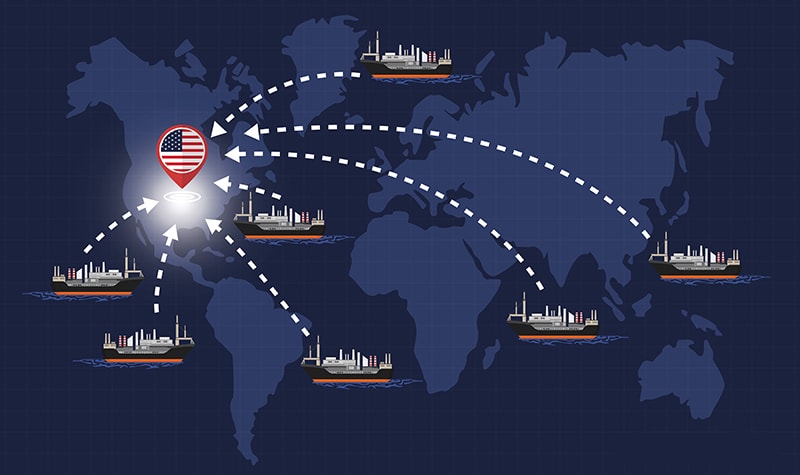
What to Consider Before You Shift
One trend driving the growth in manufacturing jobs has been reshoring–the practice of bringing manufacturing back to the United States. Reshoring activities were estimated to create more than 225,000 jobs in 2022, according to a Reshoring Initiative report.
Read More
Could Ocean Be the Best Solution?
Since COVID, businesses worldwide have had to contend with increased demand, limited storage capacities, and the need for fast, reliable transportation of goods. Many businesses have focused on ocean transport as a potential solution to their shipping issues.
Read More
Strategies to Overcome Cross-Border Obstacles
Brands selling internationally know that their cross-border strategies must accommodate changes in import taxes, localized prices, or governmental sanctions. What many may not initially consider is the complexities of country restrictions, and the possibility that certain products can be deemed a threat and held up in the customs process.
Read More
What You Don’t Know About Your Suppliers Can Hurt You
Most companies run credit checks to make sure their suppliers are stable. But how can executives keep up with the news and other crucial reports to see if those suppliers will keep their commitments?
Read More
The Future of Work is Already Here
Some supply chain employees may feel wary about job security with advancements in automation and technology. The truth is technology isn’t the enemy; it’s a necessity.
Read More
Asset Management is Everyone’s Job
When it comes to keeping the supply chain as efficient as possible, asset management is a vital priority that mustn’t be overlooked. Keeping careful track not only of goods, but of the shipping containers and platforms needed to transport these goods, should be everyone’s responsibility.
Read More
Greening the Last Mile
Last-mile delivery—the end stage of delivery from a pickup point or sortation center to a package’s final destination—is the most expensive aspect of the supply chain, from high fuel costs and address location to labor and first delivery failure. It also has the highest environmental impact of any other part of the supply chain.
Read More
3 Ways Predictive Analytics Improves Fulfillment
Organizations need the technical tools to provide operational insights that lead to smarter decisions about automating inventory management, warehousing, and distribution processes. With improved operational visibility, businesses can strengthen their order fulfillment and supply chain processes while keeping pace with customer expectations.
Read More
Thinking Inside the Box Truck
While most people are at least somewhat familiar with box trucks, these little workhorses don’t get enough credit. Also known as straight trucks or bobtails, they are usually 26 feet long and can carry up to 10,000 pounds of freight. They can also come in small (12 ft.) and medium size (14-18 ft.) configurations.
Read More
Auto Industry Shifts Logistics Strategies
While companies across industries and sizes are making changes to mitigate supply chain risk, the automotive industry seems to be leading the way on some of the top trends.
Read More
Market Swing: Prepare Now or Lose Later
Market indicators are pointing to a stronger second half of the year—in carriers’ favor—signaling to prudent shippers that the time is now to reevaluate both short- and long-term plans.
Read More
Process Manufacturing vs Discrete Manufacturing: Definitions and Differences
Manufacturing is the large-scale process of converting raw materials into finished products, utilizing factors of production, including human labor and machinery. Depending on the product requirements, you can use various manufacturing processes to get the desired output. Discrete manufacturing and process manufacturing are the most common production methods. In this article, we explore the two […]
Read More
Vertical Integration: Definition, Examples, and Advantages
Companies can choose many business strategies to meet their supply chain and logistics needs. Each approach has advantages and disadvantages. The best method depends on a company’s specific needs, goals, and circumstances. Vertically integrated corporations, like those in the booming field of vertical aerospace, are giants with a grip on multiple stages of their production […]
Read More