
How Automation Builds Resilient Supply Chains
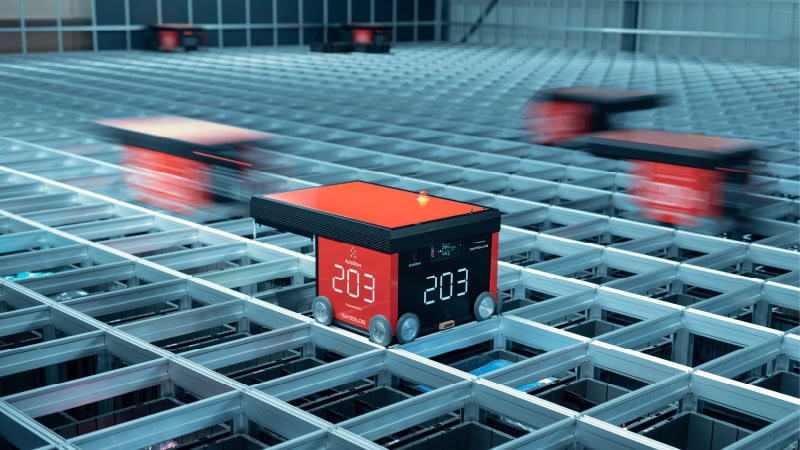
Resilience is the new efficiency. As automation touches every supply chain process—from picking to final delivery—future-proof solutions demand clean data, a holistic vision, and the right software backbone to weather any disruption.
Automation is among the top 10 supply chain trends for 2026, according to the Association for Supply Chain Management. One reason is the ongoing quest for supply chain resilience.
“Automation is no longer just about driving efficiency. It’s about building a more resilient and scalable supply chain,” says Chris Musson, director, solution consulting with Dematic, which provides supply chain automation solutions. Given continued supply chain disruptions, flexible automation solutions that allow operations to adapt as needs change have become critical.
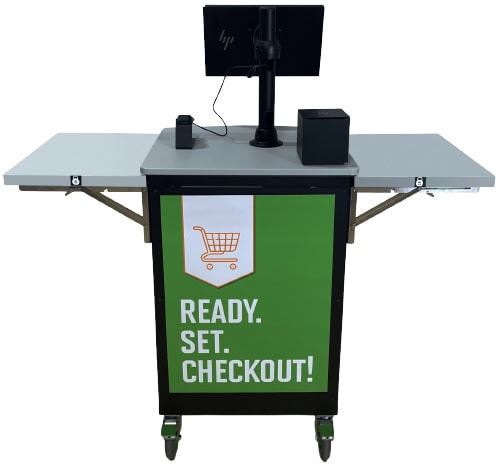
Newcastle mobile work stations enable workers to complete critical tasks directly on the warehouse floor.
Speed is another key driver, says Kevin Ledversis, vice president of sales with Newcastle Systems, which offers mobile workstations. Orders, especially for ecommerce, increasingly need to be turned around quickly—at times, within hours. It’s difficult to meet these deadlines solely with employees, no matter how capable and dedicated.
Labor challenges also are prompting automation initiatives. As consumer demand exploded during the pandemic, many companies found they couldn’t scale or retain the labor they needed, says Keith Moore, chief executive officer with AutoScheduler, which provides a warehouse orchestration platform. So, they turned to automation.
To meet these challenges, supply chain automation is changing shape. To start, it’s moving beyond addressing isolated challenges, Musson says. While many organizations begin automation initiatives by targeting specific pain points, such as throughput constraints, more are considering how solutions can work together to support resilience, flexibility, and efficiency.
The need for flexibility also influences the solutions chosen, says Reuben Scriven, research manager with Interact Analysis. Given unpredictable demand and growth trends, companies are opting for configurable systems that they can adapt, scale, and modify.
As ecommerce has grown, so has the prevalence of smaller handling units, such as “eaches” and cases, creating exponentially more complex logistical operations, Scriven says. Sophisticated hardware and software are needed to manage these processes.
Solutions are “going up in the air, as opposed to just going wide,” or using both vertical and horizontal space within a warehouse, says Steven Simonson, senior managing director with Alpine Supply Chain Solutions. The more efficient use of space is key in smaller facilities, such as micro-fulfillment centers, and in urban locations.
Brownfield implementations, or retrofits of existing facilities, currently are outpacing new, or greenfield initiatives, says Dan Calahan, sales director with Swisslog, a logistics automation firm. As a result, automation solutions often need to work effectively within existing facilities.
Automation solutions will continue to evolve and advance, as both technology and supply chain operations themselves change. Currently, automation impacts numerous processes within supply chain operations.
Putaway and Picking
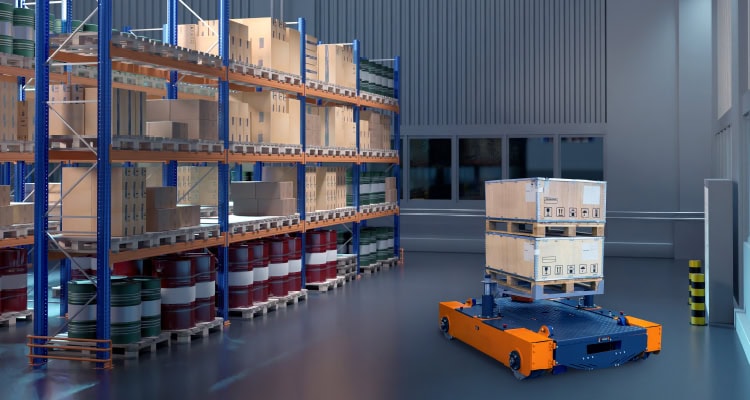
Autonomous mobile robots reduce the time workers spend walking, freeing them to concentrate on specific functions such as picking or putaway.
Solutions such as goods-to-person systems, and autonomous mobile robots (AMRs) or autonomous guided vehicles (AGVs) can bring significant value to putaway and picking processes, says Jeff Peterson, senior director of warehouse with Ryder. Because they slash the time workers spend walking, employees can concentrate on specific functions, such as picking or putting away.
Taking Orders and Rerouting Shipments
Agentic artificial intelligence (AI) refers to systems that are capable of independent decision-making and autonomous behavior. These solutions are well suited to automate both analytical and transactional tasks in logistics, says Sri Sripada, managing director of the supply chain and operations practice with West Monroe.
In an order capture operation, for instance, AI agents can ingest orders from multiple channels, validate the data, check credit and inventory, and create or update orders in operational systems like a WMS, all without manual intervention.
Moreover, even employees who aren’t engineers or computer scientists often are able to use AI, says Daniel Sokolovsky, co-founder and CEO with Warp, which applies AI to transportation. In several years, an employee should be able to say, ‘I want my robot to do this,’ and the AI solution will figure out how it should do that, he adds.
Orchestration Layers
Warehouse orchestration solutions can synthesize data from multiple sources, such as the WMS and inventory management solution, to create optimized plans for a facility.
For instance, if a warehouse manager learns about an unscheduled rush order that’s arriving in 20 minutes, they may drop other work and reprioritize staff to accommodate the order, Moore says.
But how many employees should move? Pulling more workers than necessary might cause service failures, detention charges, or overtime. A single decision can encompass dozens of smaller, interacting decisions, and all need to be considered to effectively run a site, Moore says. An orchestration layer can inform this decision.
Inventory Visibility and Transportation Within a Warehouse

Include the warehouse staff in automation decisions because new technology only works when it genuinely improves employees’ day-to-day efficiency.
Technology promises to play an increasing role in inventory visibility. “We’re seeing big improvements,” Scriven says. For example, autonomous mobile robots can travel through a warehouse and capture image and barcode data on inventory levels, reducing the need for cycle counting.
AMRs and AGVs can handle transportation tasks within warehouses without requiring fixed paths, so they’re often well-suited for operations that need to adapt to changing volumes, layouts, or workflows, Musson says. They also can be deployed incrementally and expanded over time, so companies can scale as their needs evolve.
Packaging
While packaging automation and solutions have always been in demand, their popularity likely will grow as parcel shipping becomes more expensive, and more scrutiny is placed on shipment size, Calahan says.
When choosing a solution, multiple considerations come into play. One is the importance of true, three-dimensional right-sizing. Not all machines right-size in three dimensions, and those that do typically are more expensive and take up more space, so most facilities will have fewer of them. The packing process then needs to be designed to keep the machines fully used at all times.
Another factor is whether you’re able to pick an entire order discretely, or if you need to sort it, Calahan says. With discrete picking, the automated packaging should be designed to feed empty containers directly to the workstation. This changes the facility design.
Digital Twins
Applications for digital twins, or virtual representations of a process or system, are expanding from simulations to guiding decision making, Sripada says.
Previously a digital twin might simulate, say, the impact of labor shortages on a supply chain. When AI is embedded, the digital twin can both simulate different scenarios, and test alternative options, such as rerouting shipments or changing sourcing locations. It also can score the options, based on cost, service, or other criteria, and recommend an optimal course of action.
Automation in Action
Lob.com, a direct mail automation platform for more than 12,000 brands, works with multiple print partners. An AI-powered decision engine dynamically evaluates capacity, cost, location, service level, and other information to determine the best partner for every mail piece, says Brent Hagan, chief supply chain officer. The engine then optimizes routing to balance speed, reliability, and margin.
Machine-learning models continuously learn from the outcomes, such as delivery performance and transit times, to steadily improve the partner selection process, he adds.
This turns “the print network into a self-optimizing system rather than a static routing table,” Hagen says. The company says its supply chain can now power millions of highly personalized mail pieces, at speeds and costs that rival digital channels.
Logistics and Transportation
Outside the warehouse walls, technology is streamlining logistics operations. For example, Circle Logistics uses an automated system to screen potential new carrier partners. The system determines if the carrier meets criteria regarding equipment, insurance, and other qualities that are required to work with Circle, says Derek Holst, senior vice president. An employee generally gets involved once a carrier is qualified.
The company is also testing several AI programs that track packages and manage exceptions. These can elevate exceptions that fall outside the norm, so an employee can intervene, says Gary Horton, vice president of sales and operations.
Reality Check
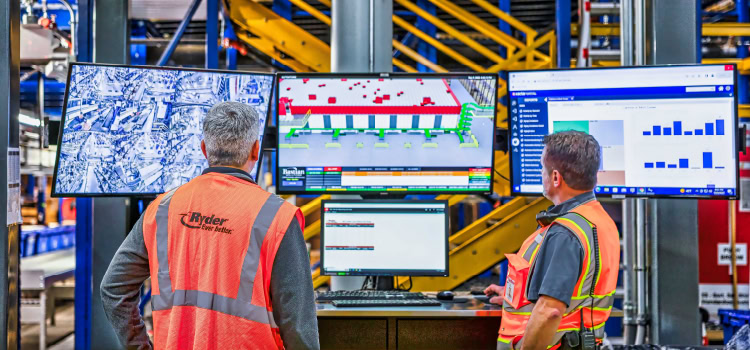
Ryder’s automation distribution center in the St. Louis area is a highly advanced facility featuring 1.3 miles of conveyors, 44 dock doors, and high-tech inventory management systems.
While automation can make numerous supply chain operations more effective, challenges remain. One is the newness of many solutions. Holst estimates that within three to five years, some vendors will have exited the market. “It’s a challenge to make sure you take on the right tech partner,” he adds.
As warehouses introduce automation, many end up with a mix of automated and manual processes. The “seams” between the processes can become challenging, Moore says.
For example, a manufacturing warehouse installed an automated storage and retrieval system (ASRS) for its finished products. However, getting from the production lines to the ASRS required traveling a long hallway. To avoid this, the company turned to AGVs. However, this required a forklift operator to drop pallets at one end, but in an area with limited capacity. The AGVs would then drive the pallets to the induction point.
Because of the limited capacity, however, the workers had to perfectly sync with the speed with which the AGVs were moving to load and unload the ASRS. Ultimately, the forklift operators spent more time waiting for the pallets than they did just driving down the corridor. A warehouse orchestration solution can help with this type of challenge.
Some companies, such as retailers, must manage dramatic business peaks. For these businesses, labor is usually more flexible than automation in both capability and availability, Moore says.
Automation technology has yet to effectively improve every process. For example, solutions to automate unloading operations include depalletizing systems and conveyors. However, items often shift in transit or aren’t in the order expected. “Automation likes things that are very consistent,” Peterson says.
Typically, the more controlled the environment in which an automation solution will operate, the more targeted and cost-effective it can be. So while it may be possible to automate the process for unloading cargo that changes from one truckload to the next, the solution likely would be expensive.
On the flip side, when loading trucks, trailers need to be as full as possible to keep costs in check. If all boxes are the same type and size, machines often can load the trailer and maintain density, Calahan says. When box sizes vary, however, a human’s ability to “jenga” generally results in very dense floor-loaded trucks, he adds.
Even as technology automates more supply chain operations, human interaction remains critical, Holst says. For instance, an employee might talk with a potential carrier that doesn’t quite meet the requirements needed to partner with Circle. The employee can then suggest changes the carrier can make to become qualified. A software solution isn’t going to do that.
“You’re losing a relationship-building aspect,” he adds.
11 Ways to Leverage Automation
The following guidelines can help supply chain organizations gain greater value from their automation solutions.
1. Start with solid software and processes. Installing automation solutions atop outdated software likely will lead to bottlenecks, because the software isn’t able to support the automation.
2. Ensure data quality. Artificial intelligence relies heavily on data and data quality. A lack of clean, unified data makes it difficult for AI to synthesize the information and make recommendations.
3. Map the changes needed. Just because a system is automated doesn’t mean it will produce great efficiencies. The changes need to be mapped, tested, and adjusted as needed.
4. Implement cybersecurity measures. Security risks can increase when using solutions that incorporate AI or automation. Controlling who can access the data and ensuring proper governance, among other steps, can mitigate these risks.
5. Consider support requirements. These are sometimes underestimated, especially with complex systems. For example, if a system that controls several dozen AMRs suddenly crashes, it could shut down an entire location. The maintenance and support program should factor in this risk.
6. Think through how solutions will work together. Automation needs to work seamlessly with existing systems without causing downtime, particularly in brownfield environments. Along with the physical integration, consider how different technologies can be orchestrated to work together. Without coordination between equipment, workflows, and decision-making, automation can create new silos, instead of eliminating them.
7. Consider older technologies. Something as simple as barcoding can add value, especially when deployed within an operation that was using paper-based, manual processes.
8. Ask how to access your data once it’s in the system. This isn’t always easy to determine upfront. For instance, is it necessary to call the vendor and initiate an expensive project? Or, can you get to it through an API or other technology?
9. Weigh the costs and benefits of flexibility. It may cost more to design scalability and flexibility into a solution, but these may be needed to meet business requirements. For instance, if a supply chain works with both cylindrical and square items, a robotic arm that can only pick up one or the other probably will fail to provide the value needed to justify the investment.
10. Recognize no silver bullets exist. Few supply chain processes can be addressed with a single piece of automation. Instead, multiple technologies often need to work together.
11. Get your staff’s opinion. It’s not unusual to find employees ignoring a new technology solution when it fails to truly boost efficiency. According to Derek Holst, senior vice president of Circle Logistics, “You’ll know the technology is right when your staff demands that you keep it.”
Automation’s Other Half: Reskilling the Supply Chain Workforce
Automation is often framed as a replacement for human labor, but the reality is more nuanced: it is a powerful partner. As autonomous mobile robots (AMRs) handle the walking for putaway and picking, and agentic AI systems manage routine transactional tasks, the nature of human work fundamentally changes. The key to building a resilient supply chain isn’t just installing technology; it’s reskilling the people who operate it.
The workforce of tomorrow needs to evolve from manual operators to automation overseers and data analysts. New critical skills include:
Maintenance and robotics management. As sophisticated hardware is deployed, technicians with mechatronics and software knowledge are needed to maintain and troubleshoot complex systems.
Orchestration and data analysis. Warehouse orchestration platforms require skilled managers to interpret synthesized data, make high-stakes decisions, and adjust the optimized plans. Furthermore, the reliance on AI for decision-making underscores the need for staff proficient in ensuring “clean, unified data” for accurate machine learning models.
Exception handling. Automation thrives on consistency. However, items often shift in transit or aren’t in the order expected. Human flexibility—the ability to “jenga” varied-size boxes or address unexpected cargo—becomes invaluable for managing these exceptions, preventing bottlenecks in mixed-process environments.
Relationship building. In roles such as logistics, human interaction remains critical. A software solution won’t “suggest changes the carrier can make to become qualified,” a necessary part of the relationship-building process, says Derek Holst of Circle Logistics.
Ultimately, the goal is to leverage the unique strengths of both. Technology handles the repetitive, data-intensive tasks, freeing employees to concentrate on problem-solving, strategic decisions, and the essential human relationships that hold the supply chain together.
You’ll know the transition is working when, as Holst suggests, “your staff demands that they keep” the new technology because it genuinely boosts their efficiency.