
RFID vs. Barcode: Their Key Differences
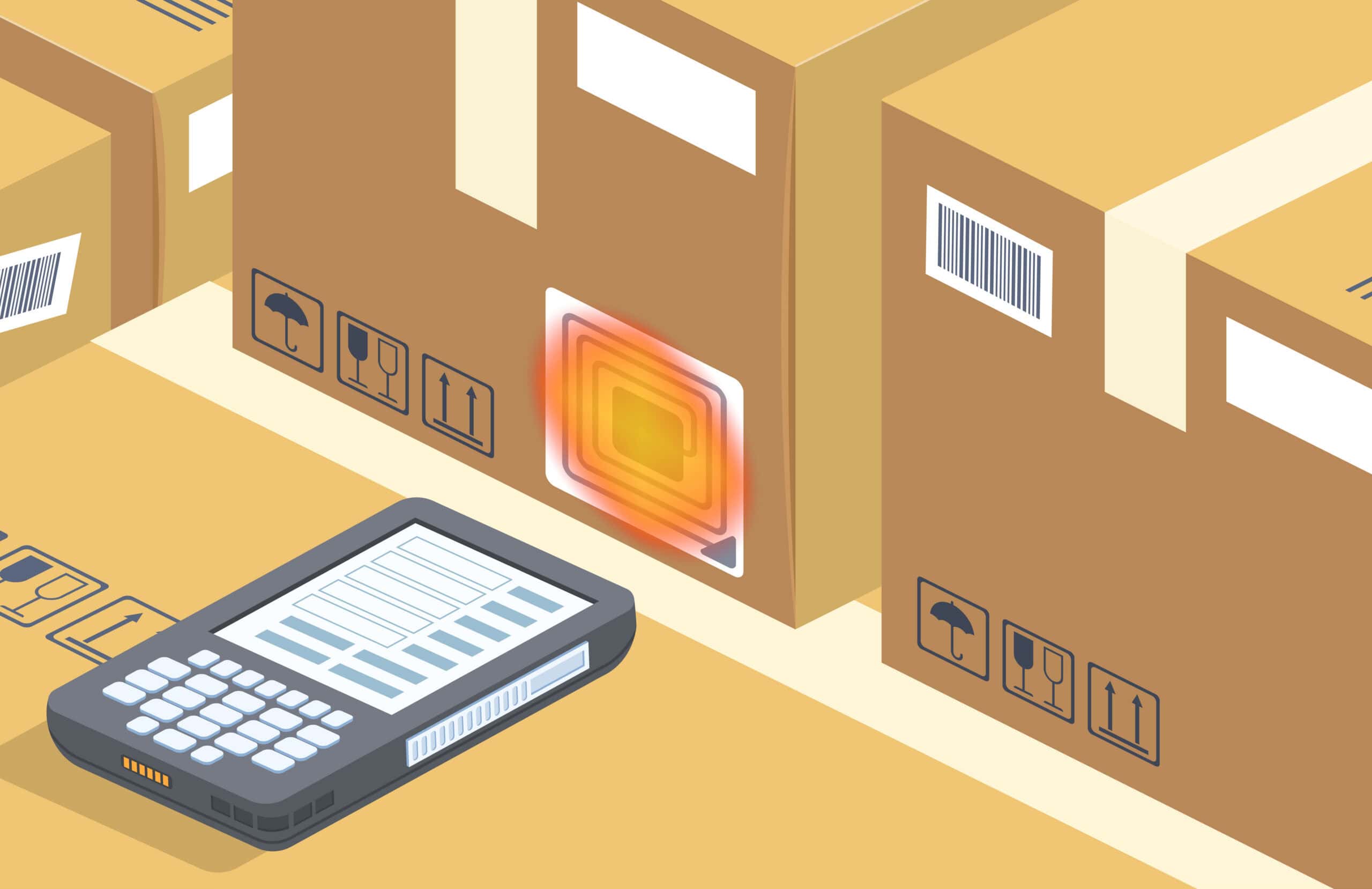
In today’s fast-paced supply chains and data-driven environments, tracking technologies play a critical role in maintaining visibility, accuracy, and efficiency. The debate around RFID vs. Barcode continues to shape how businesses manage inventory, assets, and logistics across industries.
This article explores the differences between RFID and barcode technologies, outlining their strengths, limitations, and real-world applications. The goal is to help businesses determine which solution best aligns with their operational needs, budget, and long-term growth strategy.
What is RFID?
Radio Frequency Identification (RFID) is a wireless technology that uses radio waves to identify and track objects. An RFID system typically consists of three components: a tag (attached to the item), a reader, and a backend system that processes the data. Unlike traditional tracking methods, RFID does not require direct line-of-sight to scan items.
RFID tags store data electronically, which can be read automatically by scanners from a distance. This allows for real-time tracking and bulk scanning of multiple items simultaneously. The technology is widely used in industries where speed, automation, and accuracy are essential.
RFID systems operate using electromagnetic fields to transmit data between tags and readers. These systems can be passive (powered by the reader) or active (powered by an internal battery), each offering different ranges and capabilities. As a result, RFID is commonly deployed in complex environments such as warehouses, manufacturing plants, and large retail operations.
Applications in Business
RFID is used extensively in industries such as retail, healthcare, logistics, and manufacturing. Businesses rely on RFID to track inventory in real time, reduce shrinkage, and automate stock replenishment processes.
In logistics, RFID enhances supply chain visibility by enabling automated tracking of goods as they move through distribution centers. In healthcare, it is used to monitor medical equipment and improve patient safety through accurate identification systems.
Advantages of RFID
RFID offers a technological edge by enabling faster, more efficient data capture without manual intervention. Its ability to process multiple items simultaneously makes it especially valuable in high-volume environments.
- Increased Speed – Scans multiple items at once without line-of-sight.
- Improved Efficiency – Reduces manual labor and human error.
- Enhanced Data Capabilities – Stores more information than traditional barcodes.
- Real-Time Tracking – Provides instant visibility into inventory and assets.
- Automation Integration – Easily integrates with advanced warehouse systems.
These advantages make RFID a powerful tool for businesses seeking to streamline operations, improve accuracy, and gain real-time insights into their supply chain.
Disadvantages of RFID
While RFID delivers strong performance benefits, it also comes with higher costs and operational considerations that may not suit every business.
- High Initial Costs – Requires investment in tags, readers, and infrastructure.
- Ongoing Expenses – Maintenance and system upgrades can add to long-term costs.
- Technical Issues – System complexity may require specialized expertise.
- Interference Issues – Metal and liquids can disrupt signal transmission.
- Operational Impact – Implementation may require process changes and training.
These drawbacks can make RFID less attractive for smaller businesses or those with simpler tracking needs.
What is a Barcode?
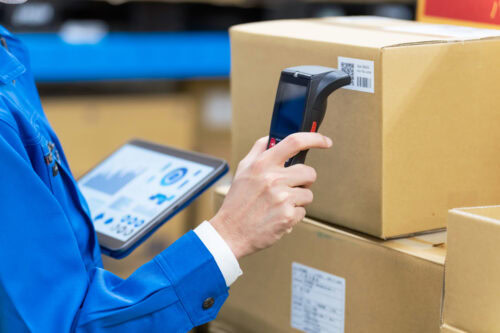
A barcode is a visual representation of data in the form of parallel lines or patterns that can be read by optical scanners. It is one of the most widely used tracking technologies due to its simplicity and affordability.
Barcodes require line-of-sight scanning, meaning each item must be individually scanned. Despite this limitation, they remain highly reliable and easy to implement across a wide range of industries.
There are several types of barcodes, including one-dimensional (1D) codes like UPC and two-dimensional (2D) codes such as QR codes. These variations allow businesses to store different levels of information depending on their needs. Barcodes are commonly used in retail, warehousing, and shipping to streamline operations and improve accuracy.
Applications in Business
Barcodes are foundational to retail operations, enabling quick checkout processes and accurate pricing. They are also widely used in warehousing for inventory tracking and order fulfillment.
In logistics, barcodes facilitate shipment tracking and documentation, ensuring that goods move efficiently through the supply chain. Their simplicity makes them easy to integrate into existing systems with minimal disruption.
Advantages of a Barcode
Barcodes offer a straightforward and cost-effective solution for tracking and identification. Their ease of implementation and widespread compatibility make them accessible to businesses of all sizes.
- Ease of Use – Simple to implement and operate with minimal training.
- Compatibility – Works with most existing systems and software.
- Cost Efficiency – Low-cost labels and scanning equipment.
- Reliability – Proven technology with consistent performance.
- Scalability – Easily expandable as business needs grow.
These benefits make barcodes a compelling choice for businesses seeking an affordable and dependable tracking solution.
Disadvantages of a Barcode
Despite their advantages, barcodes have limitations that can impact performance in more complex or high-volume environments. Their reliance on manual scanning and physical visibility can slow operations.
- Limited Data Storage – Can only store small amounts of information.
- Wear and Tear – Labels can become damaged or unreadable over time.
- Line-of-Sight Requirement – Requires direct visibility for scanning.
- Slower Scanning Process – Items must be scanned individually.
- Human Error Risk – Manual handling increases the chance of mistakes.
These challenges may limit the effectiveness of barcodes in environments that demand speed and automation.

Differences Between RFID and Barcode
Understanding the differences between RFID and barcode technologies is essential for selecting the right solution for your business.
Technical Differences
RFID uses radio waves to transmit data wirelessly, allowing multiple items to be scanned simultaneously without direct line-of-sight. Barcode technology, on the other hand, relies on optical scanning and requires each item to be individually aligned with a scanner.
Additionally, RFID tags can store more data and be updated dynamically, while barcodes are static and limited in their data capacity. RFID systems also support longer read ranges, whereas barcode scanners typically require close proximity.
Practical Implications
These technical differences have a direct impact on daily operations. RFID enables faster inventory counts, reduced labor costs, and improved accuracy, making it ideal for large-scale or automated environments.
Barcodes, however, are better suited for smaller operations or businesses with tighter budgets. Their simplicity and low cost make them a practical choice where high-speed automation is not a priority.
Which Technology is Best For Your Business?
Choosing between RFID and barcode depends on your business size, operational complexity, and budget. Companies with high inventory volumes and a need for real-time tracking may benefit significantly from RFID’s automation and speed.
For example, a large distribution center handling thousands of items daily could use RFID to automate inventory counts and reduce labor costs. Similarly, a healthcare facility might rely on RFID to track critical equipment and ensure patient safety.
On the other hand, a small retail store or startup may find barcodes more practical. The lower upfront costs and ease of implementation make barcodes ideal for businesses with limited resources or simpler workflows.
Ultimately, the decision comes down to balancing cost with functionality. Businesses should evaluate their current processes, growth plans, and technology infrastructure before making a choice.
Conclusion
The RFID vs. Barcode debate highlights two powerful technologies with distinct advantages and limitations. RFID offers speed, automation, and advanced data capabilities, while barcodes provide simplicity, reliability, and cost efficiency.
Selecting the right solution requires a careful assessment of your business needs, operational demands, and budget. By understanding the strengths of each technology, businesses can implement a tracking system that supports efficiency, accuracy, and long-term success.