
Building an Automation-Ready Warehouse Workforce in a Volatile Labor Market
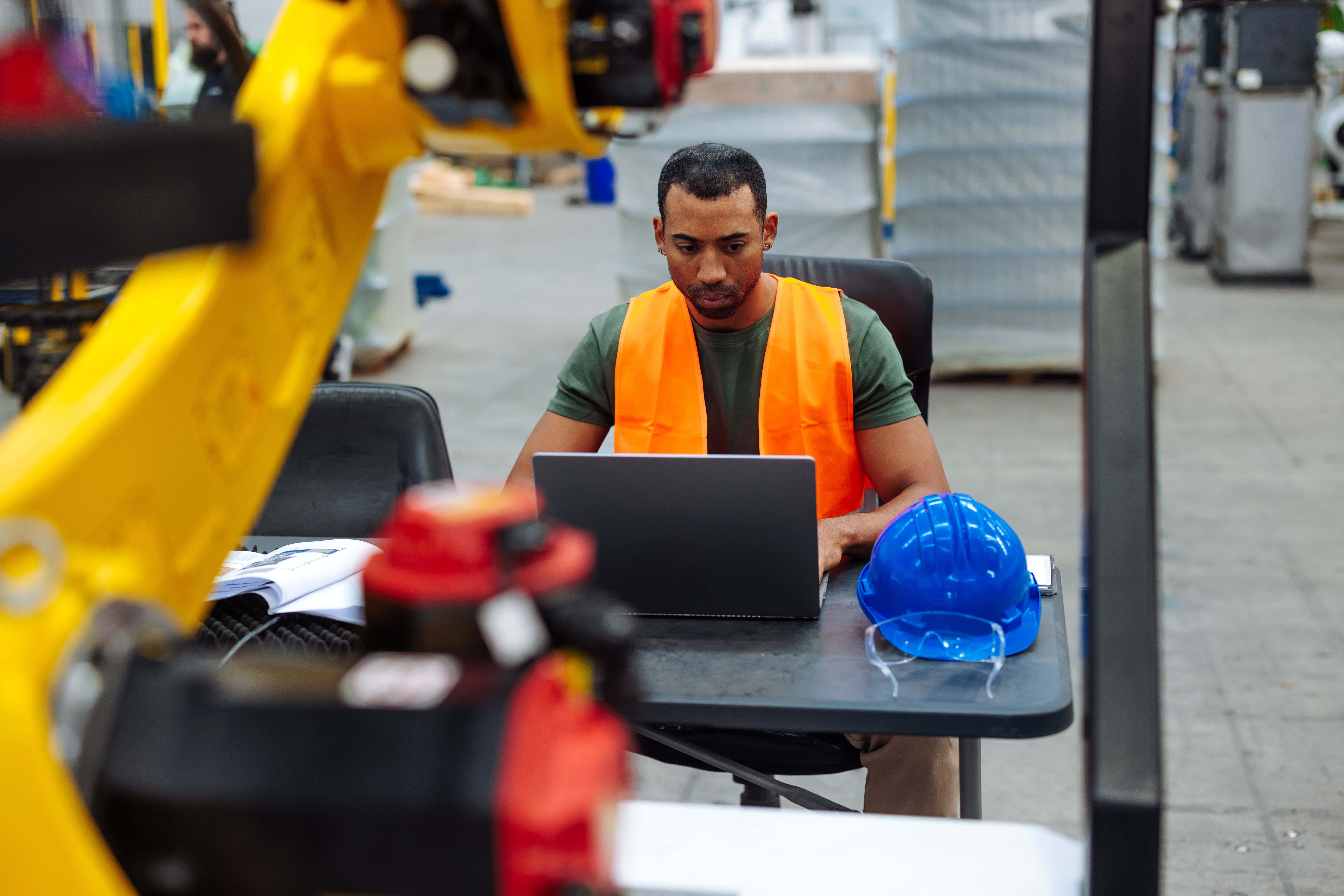
Why workforce readiness—not technology alone—has become the defining factor in warehouse resilience.
Across distribution networks, warehouse automation is no longer a future investment: it is our present reality. Automated storage and retrieval systems, autonomous mobile robots, conveyors, and sortation technology now coexist with traditional labor on the same floor. Yet for many organizations, performance still falls short. The gap is rarely the technology. It is the workforce behind it.
Labor shortages, economic uncertainty, and volatile demand have exposed a hard truth: deploying automation is only half the challenge. Building a workforce capable of supporting it—consistently, safely, and at scale—is where resilience is actually won or lost.
The constraint in most automated warehouses is not the technology.
It is the readiness of the people supporting it.
The Rise of the Automation-Ready Workforce
An automation-ready workforce is not a workforce being replaced by machines. It is one trained to work alongside them: operating, monitoring, troubleshooting, and maintaining increasingly complex systems as those systems evolve.
And the stakes are high; unplanned automation downtime routinely outpaces the labor savings that justified the investment in the first place. A single conveyor failure during peak season, an AS/RS error that goes undiagnosed for hours, or a robot jam that halts outbound flow—each of these costs more than the headcount savings delivered that day. Workforce readiness is, in this context, a direct driver of ROI.
Leading operations are responding by investing in structured upskilling and cross-training programs that build genuine technical fluency. These programs train warehouse employees across multiple system types, from conveyor and sortation environments to robotics and mixed OEM ecosystems. The goal is not to create narrow specialists, but adaptable operators capable of stabilizing performance across shifting conditions.
KEY INSIGHT:
The cost of automation downtime typically exceeds the labor savings that justified the investment. Workforce readiness is in fact an ROI issue.
Resilience in an Unpredictable Labor Environment
The labor market has not stabilized. Tight recruiting conditions, seasonal demand swings, and shifting workforce expectations continue to challenge operations that depend on consistent throughput. Peak seasons and major system launches—already high-pressure events—become especially vulnerable when technical capacity is thin or concentrated in too few people.
Operations building genuine resilience are rethinking not just training, but how labor is structured and deployed. Flexible workforce models—including scalable technical coverage, mobile support capabilities, and access to specialized skills on an as-needed basis—allow facilities to absorb disruption without overextending internal teams.
Some organizations are also taking a more strategic view of how certain execution functions are supported. Selectively outsourcing peak-related labor or specialized maintenance activities through a performance-based 3PL partnership can add capacity and flexibility without replacing internal capabilities. When structured correctly, this approach strengthens the core workforce rather than displacing it—relieving pressure on in-house supervisors and managers so they can focus on higher-value operational responsibilities.
Proactive maintenance discipline is equally critical. Teams trained to recognize early warning signs, conduct preventive work, and optimize system performance play a direct role in extending asset life, reducing unplanned downtime, and protecting throughput over time. Reactive maintenance is not a workforce strategy; it is a performance liability.
Workforce stability and execution stability are the same thing.
One does not exist without the other.
Designing for the Next Phase of Automation
As automation investment continues to grow across warehouse networks, the operations that outperform will not necessarily be the ones with the most advanced technology. Technology is only as strong as the people using it. The operations that win will be those where the automation and workforce are designed to work together: integrated, prepared, and mutually reinforcing.
The design challenge is not purely technical; it is also organizational. How do you build internal capability while maintaining the flexibility to scale? How do you sustain performance through labor volatility without burning out your best people? How do you ensure that the investment in automation actually delivers the throughput, accuracy, and cost outcomes it was built to produce?
The answer requires both internal development and external partnership: a deliberate combination of upskilling and workforce modeling, proactive maintenance discipline, and performance-based execution support where it is needed most.
Organizations that treat workforce readiness as a strategic initiative—not an afterthought to the technology deployment—are the ones positioned to absorb disruption, scale confidently, and sustain performance as conditions evolve.
In an era defined by uncertainty, resilience is not reactive: it is designed in. Starting with the people behind the machines.
About Capstone Logistics
Capstone Logistics is a performance-driven 3PL operating across hundreds of warehouse, distribution, and manufacturing sites nationwide. We help shippers build resilient operations through performance-based execution, workforce development, and automation support programs designed to protect and extend existing technology investments. Learn more at CapstoneLogistics.com.