
What Is a Distribution Center? Definition, Uses, and Benefits
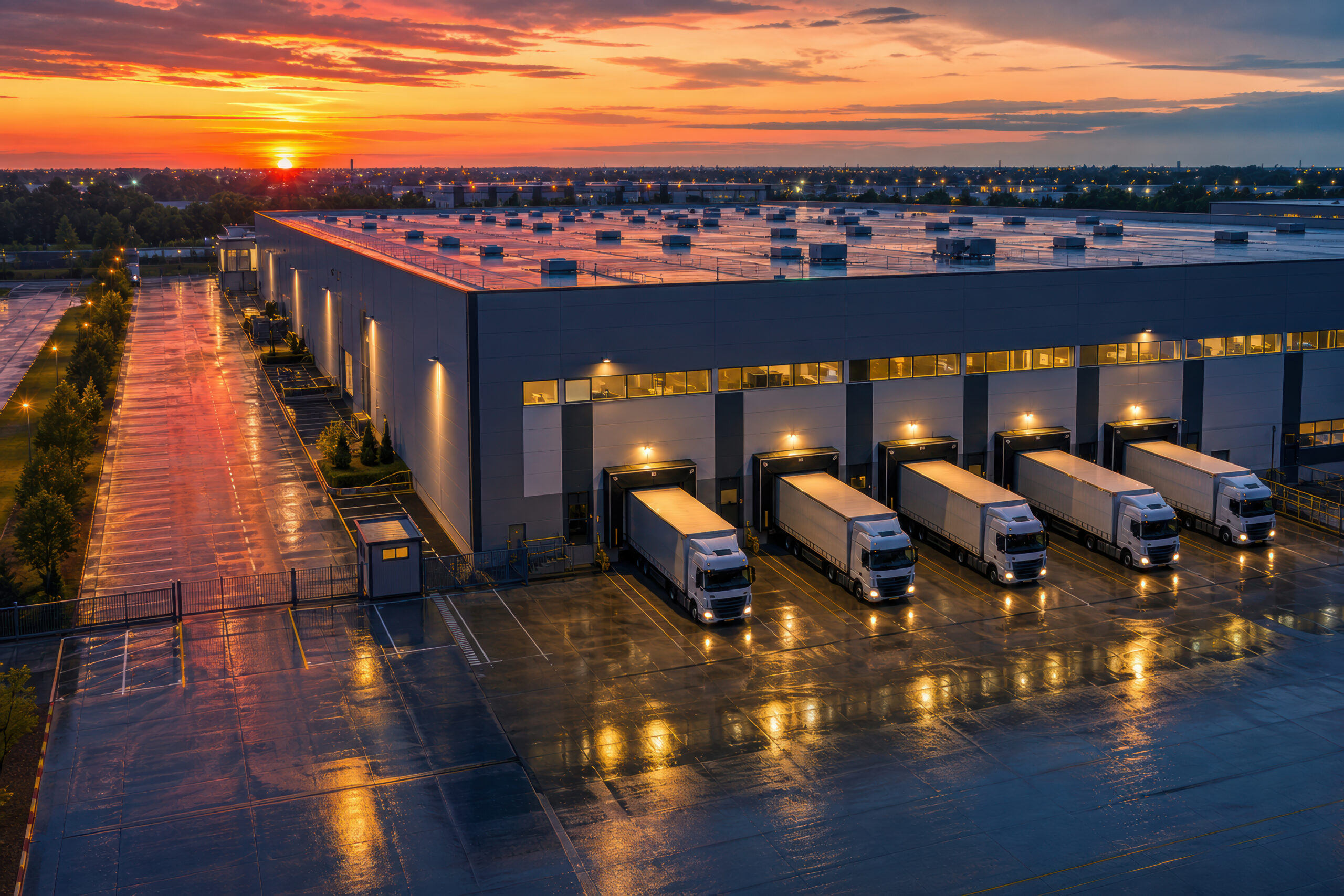
If you’ve engaged in eCommerce, you can attest to how hassle-free it has become to buy products online. The reason behind this efficiency in online shopping is distribution centers. They facilitate easy purchases and more convenient shipping times.
With the rapid surge of eCommerce companies, distribution centers are becoming essential in streamlining the logistics process. It’s especially vital for small and medium retailers seeking to enhance efficiency in the distribution process to match the big brands.
Read on to learn about distribution centers’ relevance in the e-commerce industry.
What Is a Distribution Center?
The distribution center is a feature in the supply chain network where products are held before distribution to resellers or final consumers. You can think of this logistics facility as a specialized, strategically placed warehouse.
Distribution centers play a significant part in the supply chain, facilitating the timely fulfillment of customer orders while keeping the related costs low. They act as intermediaries in supply chains, receiving and storing goods before shipping and distributing them to wholesalers, retailers, consumers, or other distribution centers.
Why Distribution Centers Are Used
The definition of a distribution center offers insight into why companies use these facilities. However, the uses of distribution centers vary depending on the nature and needs of a business.
For starters, businesses use distribution centers to reduce shipping costs. Such facilities provide the nearest distribution hub where companies can ship products from one place to another. This hub especially benefits eCommerce companies as their shipping costs are often higher than their brick-and-mortar counterparts.
Also, businesses use distribution facilities to gain more control over their inventory management systems. As a result, these companies have better inventory planning and ordering, ensuring increased customer satisfaction.
Besides acting as a strategic store for finished goods, a distribution center also handles value-added services. Businesses use the centers to carry out value-added services like picking, packing, and shipping inventory.
How Distribution Centers Work
The workings of a distribution center are divided into three major processes based on its primary functions, as we’ve highlighted below.
Receiving Goods
The first step in the distribution center process is receiving goods for storage. These goods may arrive from the manufacturing facility, wholesalers, or suppliers, and the center receives goods from suppliers for processing before storage or shipment. Most distribution centers use mechanical equipment, including forklifts and motor carts, and mobile technology, such as scanners, to make the goods reception process faster.
A good distribution center receiving process can make inventory management and fulfillment services easier, cost-effective, and more efficient. But establishing an ideal receiving process requires a lot of effort since it comprises numerous crucial steps, including proper documentation, which must be done correctly to prevent later difficulties.
Once the distribution center receives and inspects all the inbound freight, it proceeds to the storage phase. Considering a distribution center’s massive unit loads, this phase features heavy equipment or an automated system to transfer the received goods to the storage system.
Storing Goods
After the inbound freight has been unloaded and inspected, it’s transported from the receiving dock to storage locations that store inventory based on product characteristics. Workers also track inventory levels while goods are in storage. The goods are then stored securely per the facility’s inventory management strategy, often organized by methods such as FIFO or LIFO. The storage period at distribution centers is typically brief, with products out-shipped as soon as possible, whereas warehouses typically focus on long-term storage.
During the storage phase, the warehouse workers keep track of the goods to ensure they remain secure. They also examine temperature-sensitive products, such as foodstuffs. In that sense, both facility types store goods, but a traditional warehouse is built for longer holding periods while distribution centers store goods for shorter periods than warehouses.
Unlike warehouses with storage systems to fit specific company needs, distribution centers require warehouse racking to accommodate their high rotational services. Such systems offer direct and immediate access to unit loads and facilitate FIFO operations, guaranteeing a more efficient workflow.
However, other distribution centers install automated storage and retrieval systems if their operations require maximum optimization.
Fulfillment of Orders
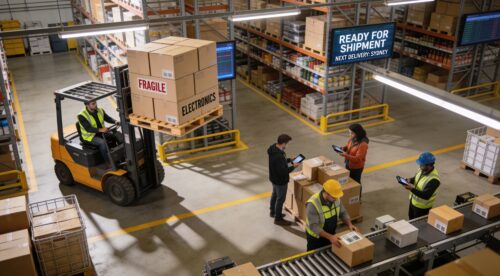
The final phase of the distribution center operations is order fulfillment, which includes picking, packing, and shipping items. This phase starts with order processing, where the order processing management system directs the picking and packing of products for each customer order, streamlining the picking and packing process for shipping. The picking staff or automated robots then pick goods from the distribution center based on the instructions on a packing slip.
Next, the packaging team selects the packing materials to achieve the lowest possible dimensional weight. Because space on delivery trucks is limited, optimizing dimensional weight is critical for expediting delivery while cutting shipping costs.
Finally, the order is sent to the transportation channel as part of the shipping process for delivery to the customer or the next or final destination in the supply chain. Some distribution centers also use cross docking to move inbound goods directly to outbound shipping with minimal storage time. The fulfillment center can sometimes handle returns, enabling the retailer to concentrate on business operations and enhance customer satisfaction.
Types of Storage Used at Distribution Centers
Here are the common types of storage used at distribution centers:
Crates
Crates are boxes that enclose the contents on all six sides, including four side walls, a top, and a floor. This type of storage is typically made of wood, but steel and aluminum crates are also available. The crates offer maximum protection to the load and are customizable to fit the specification of contents.
Crates’ stability and sturdiness make them ideal for stacking in storage. Also, they offer versatility, storing any freight. They protect all sides and are crucial for keeping goods that require optimal security.
Rolls
Rolls are storage structures with cylindrical shapes that store loads with atypical forms. They hold the loads safely, maintaining their shape and quality. The common goods stored in roles include carpets, film, metal wires, and textile fabrics.
Pallets
Pallets are the most common type of storage used at distribution centers. They’re flat transportation structures made of plastic or wood that can withstand up to a ton of heavy loads.
These storage structures can be easily transferred using handling equipment like forklifts or pallet jacks. You can store pallets on the floor and pallets raking or stacking them.
Stackable Containers
Stackable containers, or totes, are pallet-sized storage containers for transporting and storing commodities, typically liquids, and semi-solids. The reusable containers are usually on pallets and can store various items, from pharmaceuticals to grains, powders, sand, and chemicals.
Bulk Boxes
Bulk boxes are pallet-sized boxes used to store large quantities of a commodity. Some of the common products stored in these boxes include granular materials, screws, and bolts, and they may also hold raw items before packaging or redistribution.
The boxes come in different materials, including corrugated cardboard, wood, plastic, steel, and aluminum. Some bulk boxes may have plastic liners to help preserve the contents.
Technology Used at Distribution Centers
Distribution centers rely on technology to streamline their operations, from receiving goods to storing them, preparing them for shipping, and fulfilling customer orders. Here are some automation technologies used in distribution centers:
Automated Guided Vehicles (AGVs)
There’s no better way to spruce up your distribution center storage and retrieval process than to introduce AGVs. These are self-guided vehicles that may include pallet carts and forklifts. AGVs follow digital pathways to transport goods, loading and unloading various types of boxes, including pallets and boxes, and automatic guided vehicles transport inventory without human operators.
You can introduce AGVs to your distribution center without requiring a major layout and systems restructuring. These vehicles come with GPS, allowing the operators to accurately direct them to the load pickup and drop locations.
AGV-equipped distribution centers are more efficient than conventional ones because they semi-automate repetitive tasks and processes. Also, AGVs provide consistent 24/7 and on-demand services as they aren’t entirely operated by humans, enhancing productivity.
The AGV structural integrity is improving with technological advancements, but even older models have proven safer and offer better returns on investment than manual labor.
Automated Picking Tools
Error-prone picking in distribution centers is a thing of the past with the adoption of automated picking tools. Nowadays, distribution centers benefit from near-perfect picking rates by integrating automated picking technology into their warehouse operations. Various tools fall within the automated picking category, including pick-to-light, voice automated, and robotic order picking.
Automated picking tools enhance picking at a distribution center by making it faster, improving labor allocation and retention, and decreasing human error.
Robotics and Automation
When you think about distribution technology, the first thing that comes to mind is automation. With robots becoming relatively affordable, faster, and smarter, they’re set to revolutionize the distribution and warehousing field, alongside tools like a conveyor system that automatically moves products between storage and shipping areas. Any conveyor system suspended from the ceiling also needs adequate structural support.
Because the distribution center is full of repetitive, process-oriented, and error-prone procedures, robotics and automation are critical technologies for streamlining operations. They can handle monotonous duties, resulting in a more consistent, effective, and accurate distribution center operation.
Furthermore, robotics technologies can enhance staff engagement and retention rates by transferring repetitive and tedious duties to robots, making distribution center staff feel more satisfied and efficient while undertaking different operational jobs.
Drones
Drones are flying technological devices that people often regard as either toys or sophisticated weapon delivery vehicles. However, there’s more to drones, especially in the distribution center setting. These devices are used in various applications at the distribution center.
The flying devices can be used for item picking, but they’re primarily handy in the distribution center’s inventory management. Drones can access difficult-to-reach inventory to read barcodes or RFID tags, and their ability to maneuver in small spaces has improved over time.
Warehouse Management Systems
A warehouse management system (WMS) is a comprehensive software solution and one of the core technology solutions for efficiency that consolidates a distribution center’s vital data onto a single platform readily accessible by select members and other players in the supply chain.
The system tracks all the items in the distribution center, including incoming and shipment loads, and helps monitor inventory levels in real time. It enables distribution centers to track the received goods, their storage, and those leaving for order fulfillment. Distribution centers can also design systems that streamline picking and packing operations using the WMS.
The WMS complements the existing autonomous operations in distribution centers to deliver various perks. A WMS’s essential benefits are lightning-fast reporting, real-time analysis, and precise planning capabilities, and it can also support transportation management alongside picking and packing coordination.
Wearable Devices
Wearable technologies are small computing devices that distribution center workers wear or carry to help them send or receive information from anywhere in the facility. This technology helps streamline operations at a distribution center, with tasks like picking, packing, and loading benefitting the most.
Adopting wearable devices in a distribution center improves operational efficiency by eliminating the need to walk to a workstation, saving travel time. Furthermore, the ability to access real-time data irrespective of location helps distribution center personnel to be more flexible and quicker in making informed operations decisions.
Some of the standard wearable devices used at distribution centers include:
- Voice-Controlled Headsets – Used with voice-activated picking operations, headsets can deliver real-time inventory updates.
- Smartwatches – These gadgets, similar to fitness bands, may be used to track and boost staff efficiency.
- Smart Glasses – As a relatively new technology, these gadgets allow operators to access records while working hands-free.
Benefits of Using a Distribution Center
A distribution center offers various benefits to businesses and customers, which explains why most retailers fancy using them. Here are the top benefits of using a distribution center:
Cost-Effective
Distribution centers are specialized facilities that optimize their efficiency, performance, and operations to improve supply chain efficiency, hence having lower maintenance costs.
While transporting goods into a distribution center can be costly in the short term, the long-term benefits surpass this cost. Distribution centers aim at maximizing efficiency with streamlined intake, storage, preparation, and distribution. As a result, these centers reduce wastage on paying for temporary storage, tackling stockouts, and help meet demand as order volume rises instead of losing customers because of delayed or incomplete orders.
Also, businesses will save money in the long run as they won’t have to operate multiple distribution centers. Besides the operation costs, you’ll be able to cut labor costs as managing a single distribution center requires fewer human resources than running several distribution centers and can better support business growth as operations scale.
Options to Ship in Bulk
Distribution centers offer ample storage space, helping mass-production companies and retailers to release surplus inventory. As a result, the distribution center provides businesses with options to ship bulk quantities. These options best-fit retailers and companies that handle large retail and warehouse orders.
Bulk shipping options allow businesses to transfer oversized goods without breaking them into smaller units. These shipping options save companies the associated costs of breaking goods into smaller units, including disassembling, packing, shipping, offloading, and reassembling costs.
Saves Time for Retailers
Distribution centers tend to be set up near major metropolitan areas and major highways to reduce delivery times. Outsourcing fulfillment helps retailers provide speedier delivery by placing inventories closer to buyers through the nearest distribution center, saving them shipping time. Apart from strategic locations, distribution centers also save time by enhancing operational efficiency and making deliveries faster, often through partnerships with carriers or integrated shipping services to speed outbound delivery.
Timely delivery is a huge benefit for retailers. A staggering 67% of consumers in the US expect a two-day or less delivery period for their purchases. So, you need a reliable distribution center with an efficient fulfillment process to handle those high expectations and compete with other retailers.
Finally, retailers have more time to focus on running their businesses by outsourcing order fulfillment to distribution centers. You can utilize the hours spent printing labels and taping packages on your business. It’s crucial for larger retail businesses whose order fulfillment is resource-intensive, which can eat into the time of other operations of your enterprise.
Improves Customer Experience
All the benefits of using a distribution center highlighted above are bound to enhance your business’s overall order process, resulting in on-time delivery for your delivery. Certainly, timely delivery is one of the main reasons individual customers would return to a retailer, and it makes a distribution center more customer centric than a storage-only facility. An improved customer experience leads to increased revenue.
The capacity to manage returns improves a company’s efficiency. With purchase returns becoming increasingly common, proper returns management in the distribution center helps save time as a retailer’s customer base grows, especially those with high online order volume. These centers offer flexible and quick returns processing, leading to increased customer satisfaction.
Disadvantages of Using a Distribution Center
With all the benefits distribution centers offer the supply chain network, they also have a fair share of downsides. Here are the disadvantages of using a distribution center:
Reduced Control
Distribution centers ease the hassle and complexity of order fulfillment for businesses. Once a sale is made, the eCommerce business doesn’t need to worry about shipping the items to the customer. Instead, the order fulfillment process is handled by the distribution center.
Unfortunately, many retailers find it challenging to delegate order fulfillment. The typical tendency of businesses is to micromanage order shipments and deliveries. By delegating these tasks, retailers have reduced control of order fulfillment, limiting the customization and personalization of your deliveries.
You must foster a trustworthy relationship with reliable distribution center operators to mitigate this gap. Therefore, research and choose a dependable distribution center for order fulfillment. Don’t hesitate to request shipment information or other critical metrics, and stay in touch with your provider.
Impacted Revenues
The manufacturer typically sells goods to intermediaries and resellers at a lower price than the maximum retail price. The gap between the maximum retail price and the company’s selling price is the cost of the middleman. The company can operate its distribution networks to minimize intermediary costs.
Also, since distribution centers handle several inbound shipments daily, they charge additive costs. These associated costs can be an issue if you don’t sell items with a short buying cycle. The storage costs at distribution centers can impact your eCommerce business revenues.
Frequently Asked Questions
Let’s look at some frequently asked questions about distribution centers.
What is the difference between a distribution center and a fulfillment center?
A fulfillment center is integral to the company’s supply chain networks, primarily picking, packing, and delivering products directly to the consumer. On the other hand, distribution centers receive bulk goods and ship them in bulk to retailers or the next phase of the supply chain.
Are distribution centers expensive to maintain?
Besides the upfront establishing costs, distribution centers are relatively expensive to maintain. The main associated costs of running a distribution center are handling expenses, with labor chunking the larger expense share. Other significant distribution center costs include storage, operations administration, and general fees.
What kind of job types are typical at a distribution center?
Distribution centers are the storage and delivery hubs for many manufacturers and retailers, featuring an extensive range of jobs, including quality assurance roles. Some of the typical job types available at distribution centers include:
- Managerial roles: distribution center manager, inventory control manager
- Technical roles: forklift operators, machine operators, quality assurance staff who verify products through inspections and testing and may perform spot checks using random samples
- General roles: distribution center pickers, order processors
What’s the difference between a distribution center and a warehouse?
Most people use the terms “warehouse” and “distribution center” interchangeably. While the two facilities share much in common, the key differences between a warehouse or distribution center come down to how each supports supply chain operations. The primary difference between a warehouse and a distribution center is their services. A distribution center handles inventory storage and active order fulfillment to a retail location or customer, while a warehouse functions more as a storage facility, and warehouses usually do not offer shipping services.
Bottom Line
Distribution facilities are critical components of contemporary supply chain management. They are responsible for receiving items from various places and vendors, assorting and storing them properly before delivering them to their final destination, whether retail stores or end customers.
Outsourcing inventory storage, packing, and last-mile delivery to a distribution center can benefit your business. The distribution center will handle everything in your supply chain network. You only need to transport your goods from the manufacturing facility to the distribution center.