
2026 Trucking Perspectives

Inbound Logistics’ annual market report on the trucking sector draws on the insights of both carriers and shippers to sketch an outline of an industry that is more critical than ever.
Summer 2026 news reports pointed to rising freight rates to indicate the end of a four-year freight recession as large numbers of carriers departed the market and cut into capacity. Against that backdrop, the trucking companies that remain are navigating a newly shuffled industry—one that faces fresh opportunities and demands—and continue to encounter some long-familiar challenges.
The Inbound Logistics 2026 Trucking Perspectives report helps to bring clarity to the most important trends and topics that are steering the work of trucking companies and the shippers who rely on them. Every year, we check in with truckers and shippers to see what market conditions look like to them and how they’re redrafting their strategies to adjust.
This year, we see an industry that remains focused on the vital importance of the driver workforce, one that is contending with a government crackdown pulling thousands of drivers off the road and rising costs coming from multiple directions—and one that continues to play a prominent part in a vast spectrum of businesses and organizations throughout the United States and beyond.
Read on for a full view into their current perspective and how it has changed in recent years.
TRUCKERS: As a leading economic indicator, where do you see the economy trending?
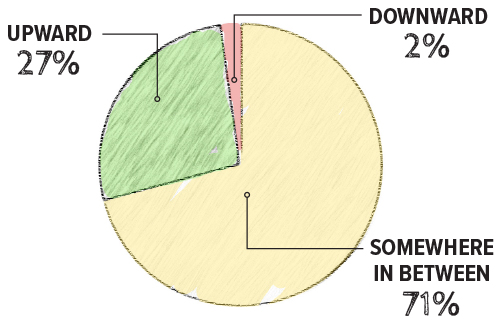 Trucking companies have a unique view of the country’s economic conditions and serve as a leading indicator for where the economy is heading next. Their view on how things are looking for what lies ahead? A vast majority remains cautious with 71% saying they think the economy is trending somewhere in between upward and downward. On the bright side, only 2% of survey participants see a downward-trending economy, while 27% view an economy that is trending upward, up from 22% in 2025.
TRUCKERS: What are your greatest challenges?
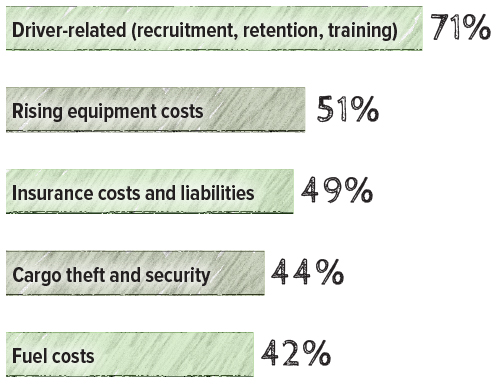 Not surprisingly, this year most companies (71%) pointed to driver-related issues, particularly recruitment, retention, and training, as being among their top challenges, up slightly from 70% in 2025. Rising equipment costs is also top of mind for a majority of truckers with 51% calling it a top challenge. Not far behind was insurance costs and liabilities at 49%.
Along the same theme of cost-related topics, fuel costs (42%) figured into the top five concerns. Notably, price pressure from customers and competitors was cited by 50% in 2025, but dipped below 40% in 2026. Not shown on this chart, it was cited by 38% of respondents and is the sixth most onerous challenge.
SHIPPERS: What are your greatest challenges?
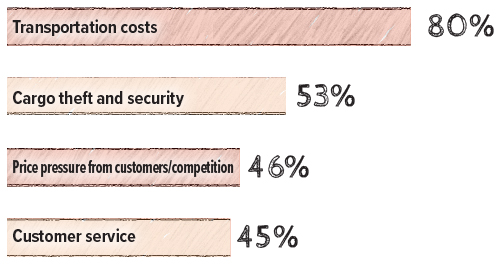 Meanwhile, shippers faced with the same question responded resoundingly, with 80% of survey takers indicating transportation costs as the most-cited concern. Shippers report other areas where the price of doing business has them worried. Price pressure from customers and competitors is among the top worries for 46% of shippers in the survey—the third greatest challenge. Falling outside the top concerns but still onerous, insurance costs and liabilities (not shown) was cited by 37% of respondents.
Cargo theft has rapidly become a prominent issue in the supply chain, with an eye-opening 53% of shippers indicating it was among their greatest challenges, the only other issue to capture more than half of the vote. In a sign of how serious theft has become, just 12% of shippers in 2023 said it was one of their top challenges. Truckers are similarly wary of the issue and its ramifications with 44% of them calling it one of their more pressing problems (see chart above).
TRUCKERS: Do you have a freight brokerage or logistics services division/subsidiary?
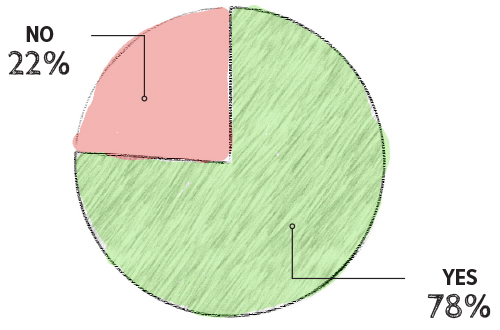 Trucking companies continue to see the value in providing freight brokerage and logistics services with most respondents (78%) saying that they have a freight brokerage or logistics services division/subsidiary.
TRUCKERS: What types of services/solutions do you offer?
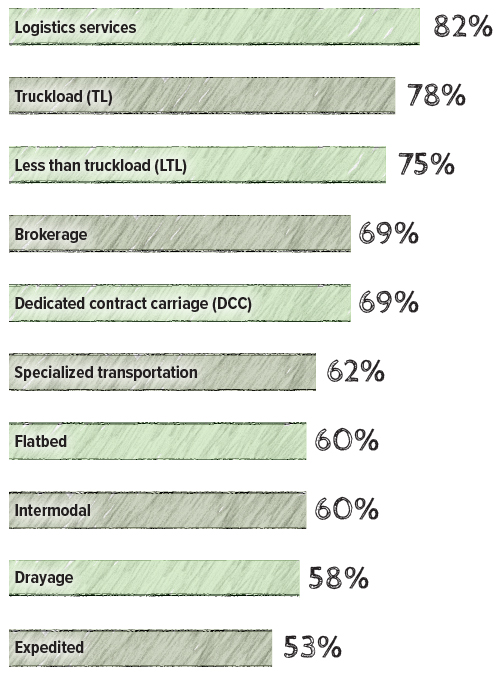 Truckers today have evolved to offer a variety of services and solutions to their clients, helping to strengthen the service that they provide and to diversify their business. Logistics services is the top service or solution that truckers offer at 82%, with truckload and less than truckload not far behind. Brokerage and dedicated contract carriage are also widely available through trucking companies at 69% each. Specialized transportation (62%), flatbed (60%), intermodal (60%), drayage (58%), and expedited (53%) are the other services that more than half of truckers choose to include among their offerings.
Not shown on the chart, services such as final mile, bulk, and cold chain each got around 40% of the vote. Some of the more niche offerings include household goods (36%), white glove (36%), tanker (29%), driver assist (20%), and small package (18%).
TRUCKERS: What industries/commodities do you serve?
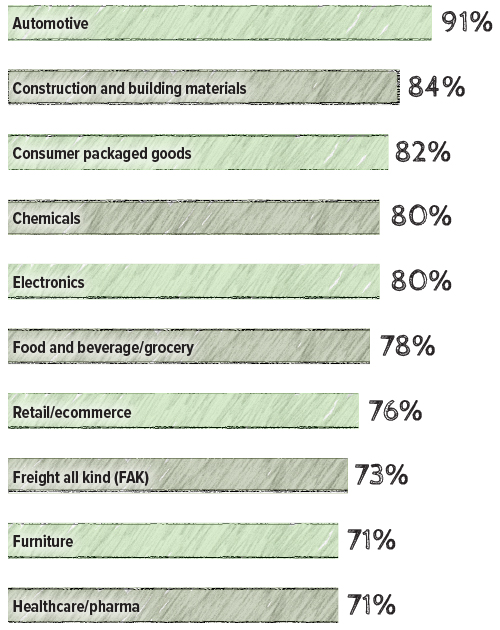 No industry or commodity is more central to the operations of the trucking industry than automotive, which 91% of our trucking respondents serve among their mix of clients—that is a 15-point increase from 2025. Automotive is far from the only field that touches on the operations of the vast majority of trucking companies. Other industry areas that are most integral to putting trucks on the road are construction and building materials (84%), consumer packaged goods (82%), chemicals (80%), and electronics (80%).
In a sign of the wide net cast by trucking companies, most of the industries that we asked truckers about were served by more than half of them. Not charted here, but clearing 50% was agriculture (64%), high value (62%), pharmaceutical (53%), and government (51%). More niche offerings included aerospace (47%), energy, oil and gas (42%), and events (38%).
TRUCKERS: What is your operating area?
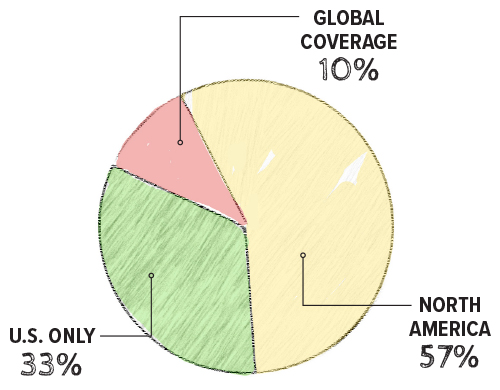 This year’s survey shows a notable shift in the operating area of U.S.-based trucking companies. The major change is that 10% of respondents say that they have global coverage now—a sharp increase from just 2% one year ago. More than half (57%) offer coverage throughout North America as their focus area and 33% stick to the United States only.
TRUCKERS: What certifications do you hold?
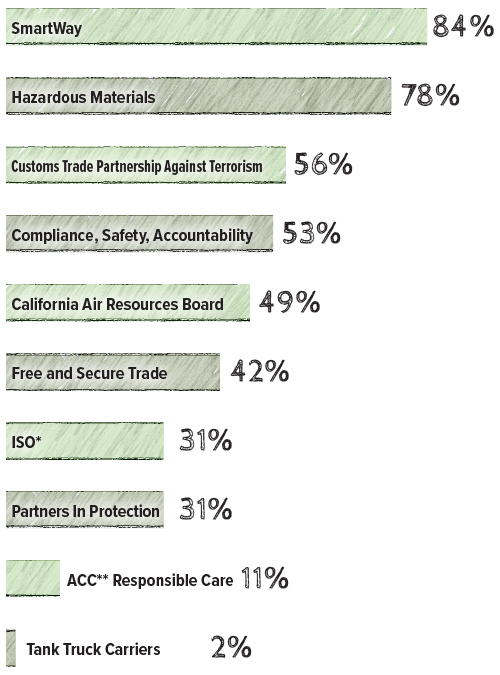 Trucking companies have a range of certifications to consider for their business, and they vary in which ones they gravitate toward. SmartWay, a voluntary designation offered through the U.S. Environmental Protection Agency for improving fuel efficiency and reducing environmental emissions, is the most popular of the certifications at 84%. HazMat remains an important area of emphasis for many truckers, and 78% have HazMat certification.
Other certifications held by more than half of the companies include C-TPAT (Customs Trade Partnership Against Terrorism), a voluntary supply chain security offering managed by U.S. Customers and Border Protection, cited by 56% of truckers, and CSA (Compliance, Safety, Accountability), a Federal Motor Carrier Safety Administration certificate that 53% of respondents hold.
The prominent part that California plays in the industry is reflected in the fact that 49% of truckers say that they hold CARB (California Air Resources Board) certification, which indicates the company’s trucks meet the state’s emissions rules.
* International Organization for Standardization
** American Chemistry Council
SHIPPERS: What are the most important factors to consider when choosing a trucker?
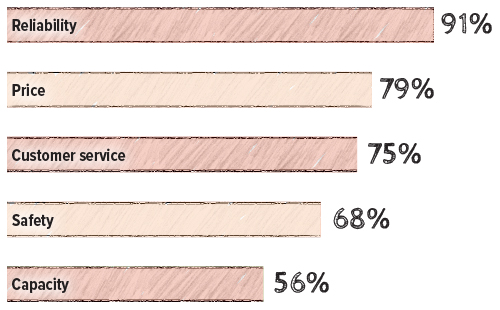 For shippers, choosing a trucking partner is a critical decision that will have profound ramifications on their supply chain. With that in mind, it’s unsurprising that no other factor is more important to them than reliability with a robust 91% of shippers calling it one of the most important considerations when they are making their decision.
Costs, of course, are never far from their minds, though, and 79% of shippers called price one of their top considerations. For many, customer service is integral to a successful partnership, and 75% say that it plays a vital role in sorting through their trucking options.
Despite the far-reaching impact that technology has had on the trucking industry, just 23% of shippers say that it plays an important role for them when they are weighing which trucking partner to choose. Similarly, sustainability didn’t make the chart with a mere 15% of shipper respondents considering it when evaluating trucking companies.
SHIPPERS: Which is more important, your relationship with your carrier or with your broker/intermediary?
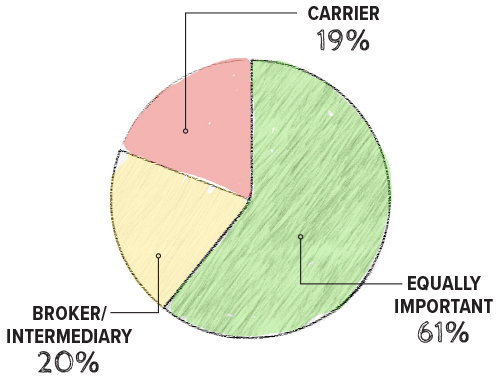 Of course, carriers are not the only ones that shippers rely on as part of managing their trucking needs. Brokers/intermediaries are also crucial for many, and, in fact, 61% of shippers say that their relationships with their carriers and brokers/intermediaries are equally important. Of the remaining shippers, they are almost equally split on which relationship is more important for them—with 20% opting for the broker/intermediary relationship while 19% leaned toward the carrier option.
SHIPPERS: Have you experienced a shortage of truck capacity?
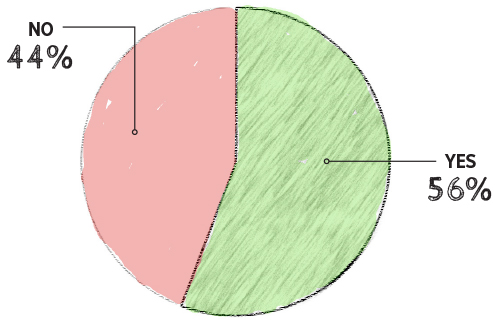 For any shipper, capacity issues can have serious consequences, and 56% say that they have experienced a shortage of truck capacity—that’s up 10 points from 2025.
SHIPPERS: Have you experienced rate hikes apart from fuel surcharges?
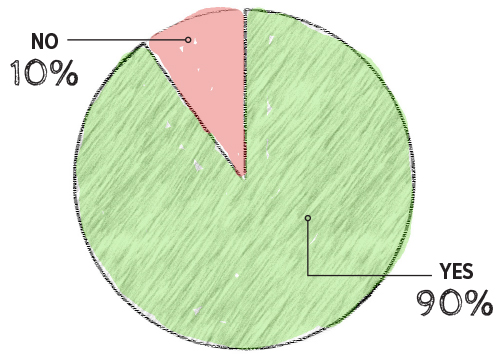 A vast majority of shippers have seen rate hikes (apart from fuel surcharges)—another indication of the growth of costs in the industry. That’s an increase of 6 points from 2025.
TRUCKERS: What legislative or policy measures have the greatest impact on your business?
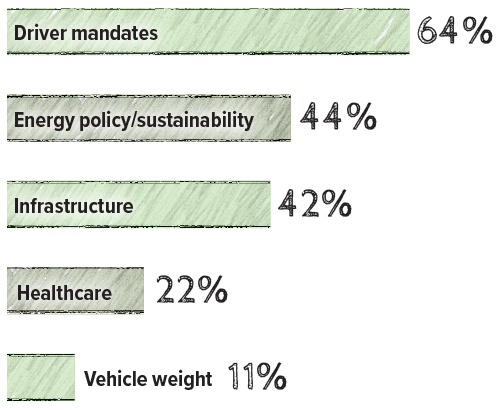 Policy measures can create a range of issues for truckers and lead to unexpected costs and major adjustments in the way that they operate. Driver mandates were cited by 64% (up from 56% in 2025) as one of the legislative or policy measures that have the greatest impact on their business, more evidence that driver issues are in the foreground for trucking companies. Energy policy/sustainability requirements (44%) were also commonly recognized as consequential, and 42% said the same about infrastructure-related measures.