
Charting the Course: How to Navigate Maritime Shipping
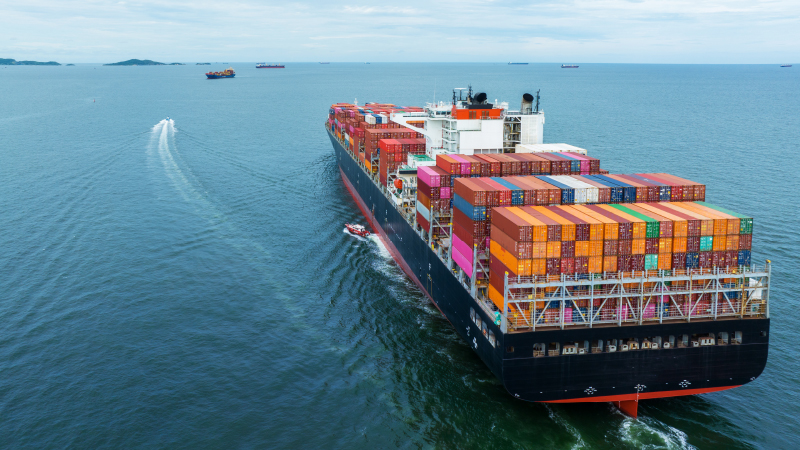
Between shifting trade policies, geopolitical hot spots, port congestion, and rising regulations, ocean shipping is anything but smooth sailing. By leveraging carrier alliances and technology innovations, and implementing smart booking strategies, shippers can stay on course.
Maritime shipping, while never easy, has become even more difficult. “Ocean carriers and shippers are navigating geopolitical disruption, shifting trade policies, port congestion, weather-related impacts, and the need for more predictable service across global trade lanes,” says Claudia Kattan, vice president, logistics, for Central America, Mexico and Panama with Crowley, a maritime, energy, and logistics solutions company.
However, ocean carriers are working in multiple ways to boost their own resilience and reliability, including by forming alliances and investing in digitization. Shippers also can take steps to work more productively with carriers by developing a broad network of partner relationships and extending booking times, among other actions.
Geopolitical Tension Creates Challenges
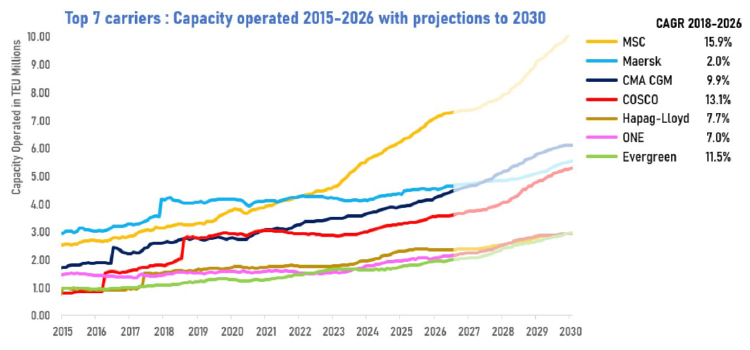
MSC continues to widen its gap at the helm of global container shipping, targeting a projected 10 million TEUs by 2030, while carriers such as CMA CGM and COSCO steadily scale to consolidate their positions among the industry’s elite.
Each year, ships move about 280 million containers across the world’s oceans, transporting roughly 80% of international trade when measured by volume, according to the World Shipping Council.
The most immediate disrupter to these journeys is geopolitical route instability, says Michael Augustin, principal director and ocean freight lead with Accenture. This instability impacts lead times, inventory buffers, supplier allocation, and network design. Both carriers and shippers now plan around the increasingly frequent geopolitical disruptions, rather than wait them out.
In the Red Sea, the Houthis have seized several islands, boosting their ability to control this important shipping route. Transit through the Suez Canal, which connects the Mediterranean and Red Seas, remains about 70% below 2023 levels.
The threat of confrontation in the Strait of Hormuz has prompted a 95% drop in traffic. Many ships now are diverting around the Cape of Good Hope in South Africa.
The Panama Canal has become another pressure point, says Ian Wilson, principal analyst with Everstream Analytics. In late summer 2026, the Panama Canal Authority announced restrictions to the number of vessels that can move through the canal, citing a lack of rainfall and lower watershed inflows, as well as the forecast of a severe El Niño event.
Together, these challenges have depressed global shipping schedule reliability to around 56%, says Melissa Curry, vice president of global at NFI. They also lead to congested ports and localized shortages of specialized equipment, such as refrigerated trailers.
Because of the disruptions, carriers often need to balance excess capacity in some parts of their networks, with strained capacity elsewhere, says Priya Anand, director of global logistics services with Jabil, a provider of engineering, supply chain, and manufacturing solutions. At times, carriers have canceled scheduled voyages, which can artificially boost demand.
Spot rates are also up, often dramatically. The Shanghai-Los Angeles spot rate jumped 185% between September 2025 and September 2026, according to Wayfindr, a logistics provider. Similarly, the spot rate for the Shanghai-New York route was up 161% over the same period, Wayfindr says.
Carrier disruptions are particularly difficult because they rarely affect only the ocean legs of shipper supply chains, says Michael Britton, head of North America market, ocean products, with Maersk.
When vessels are rerouted or schedules change, the effects often ripple through transportation, warehousing, inventory planning, and other operations. For instance, shippers may boost inventory levels to ensure they have enough to cover the extended lead times.
Tariffs Have an Impact
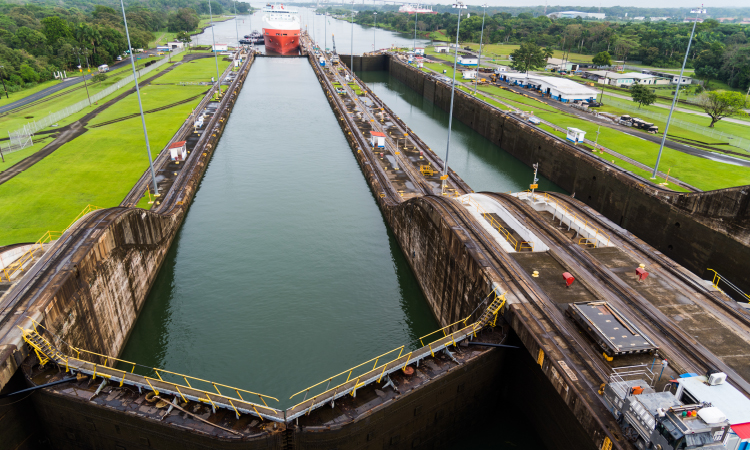
Climate-driven bottlenecks turn key maritime corridors into global geopolitical pressure points. For instance, low rainfall and an impending El Niño forced the Panama Canal Authority to restrict vessel traffic.
At the same time, ongoing shifts in tariff policy make costs and demand patterns hard to predict, Augustin says. Shippers often accelerate purchases ahead of anticipated tariff deadlines, creating artificial spikes in volume that are then followed by aggressive pullbacks. These swings impact carriers’ revenue and complicate their network planning. They also upend shippers’ ability to plan.
As manufacturers have diversified at least some operations from China to other parts of the world, they’ve also generated new logistics requirements around ports, customs capabilities, lead times and other functions.
“Sourcing footprints are changing faster than transportation networks and infrastructure can adapt,” Augustin says. This often sparks capacity mismatches.
Another challenge is the “compounding event phenomenon,” Wilson says. When multiple disruptions hit at about the same time, the impact of each is magnified. For instance, Typhoon Saudel hit areas of China a few weeks after Typhoon Dolphin. Some port operators hadn’t cleared congestion from Dolphin before Saudel hit, making the jobs even more difficult.
Expanding regulations are also driving up shipping costs. For example, beginning in January 2026, the EU Emissions Trading System (EU ETS) required ocean carriers to cover 100% of applicable emissions to, from, and within the EU. This effectively adds $50 to $100 per metric ton to fuel costs on European routes.
FuelEU Maritime further penalizes vessels using conventional fuels. While carriers are investing in LNG, methanol, and ammonia-ready vessels, their investments also drive up costs. “This is a structural freight cost floor that shippers need to budget for, independent of whatever rate volatility the market delivers,” Augustin says.
Best Thing Since Water
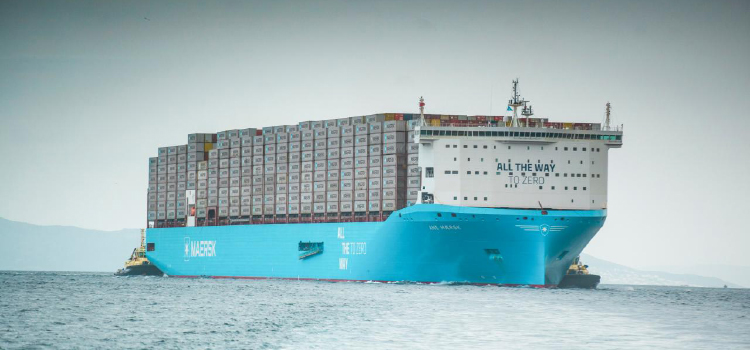
Vessels such as Ane Maersk power the carrier’s role in the operational East-West Network alongside partner Hapag-Lloyd—an alliance designed to boost schedule reliability while accelerating decarbonization across primary global trade lanes.
While the challenges are daunting, carriers are taking multiple steps to address them. A key one is the formation of global alliances between carriers (see box for more information). Through the alliances, the carriers remain competitors but share vessel space.
Maersk has indicated that one such alliance, The East-West Network, is “the best thing to happen to shipping since water.” This network is made possible by Gemini Cooperation, the name given to the collaboration between Maersk and Hapag-Lloyd. Gemini achieved schedule reliability above 90%, according to Hapag-Lloyd.
When individual routes are disrupted, carriers that operate within a coordinated alliance often have more flexibility to redeploy capacity, consolidate sailings, and protect schedule integrity than do carriers operating independently.
The alliances aren’t a panacea. Taking a hub-and-spoke approach, as many alliances do, can boost schedule reliability, but it can mean the cargo will take a more circuitous journey and require transshipping, says Guillaume Bournisien, managing director, freight forwarding, USA and Canada, with GEODIS.
The concentration of carriers can also lead to fewer independent options on major trade lanes, reducing shippers’ leverage in negotiations.
In addition, data standardization between ocean carriers is currently a question mark, Anand says. As a result, data may work differently, even between carriers within the same network. Shippers then need to create models to standardize the data so it is useful in decision-making.
The Digital Container Shipping Association (DCSA) does offer a reference page that shows which carriers have adopted which standards, says Lauren Beagen, chief executive officer and founder of The Maritime Professor.
In addition to forming alliances, some carriers are boosting regional connectivity. Crowley, for instance, recently added a weekly express service connecting Port Houston with markets in Guatemala and Honduras. This will help customers move goods efficiently across the Central America, U.S. and Caribbean trade lanes, with fewer handoffs, plus a broader equipment mix.
Digitization Takes Hold

Hapag-Lloyd is equipping its entire standard container fleet with real-time IoT sensors—giving shippers end-to-end visibility into cargo location, door openings, and environmental conditions across global transit routes.
As the “arteries of logistics” become increasingly fragile, and as more events disrupt planning, shippers need transparency. “Maritime is definitely the next industry that is up for an IT revolution,” says Karsten Schmidt, director of smart containers with Hapag-Lloyd. Information technology can provide this transparency.
Hapag-Lloyd is equipping its fleet of two million dry containers with Internet of Things (IoT) devices that frequently transmit location and condition updates. Shippers can leverage data from the devices, such as a container’s estimated arrival time at a warehouse, to enhance production and labor planning, Schmidt says.
Hapag-Lloyd also is working with ERP providers to ensure that data from the devices can be integrated within their systems.
The devices can be leveraged in other ways, as well. One company that works with raw materials plans to use the devices to reduce financing costs, Schmidt says, noting that a significant challenge in cargo financing is proving the cargo actually exists. An IoT tracker on a container can show this, as well as the cargo’s location. Having this information available may help companies reduce financing costs.
Another application of digitization, electronic bills of lading, could help mitigate cargo theft, as they’re generally less able to be modified than their paper counterparts, Beagen says. Across the industry, the adoption of electronic bills of lading could save $6.5 billion in direct costs, and enable up to $40 billion in global trade, according to a 2022 McKinsey study. However, not all countries currently have legal frameworks that formally acknowledge electronic bills of lading, the International Trade Centre notes.
While ocean carriers remain focused on the sea, many are adding services that can help shippers once their cargo reaches land.
Crowley, for instance, offers inland transportation, warehousing, and logistics services, Kattan says. Shippers can use the ocean service alone or add logistics support as market conditions, cargo requirements, and delivery timelines change.
Multiple carriers have been acquiring freight forwarding, customs brokerage, warehousing, and last-mile capabilities. If something does go wrong, shippers “have one throat to choke,” Augustin says.
On the other hand, the more bundled a relationship, the harder it is to switch out individual services or benchmark them against competitors’ offerings. Also, shippers’ negotiating leverage can erode over time.
Along with the actions that carriers are taking, shippers can do their part to work productively with their ocean transportation partners. A starting point is understanding how spiking fuel costs, additional surcharges, and other market shifts impact their own costs per unit, says Nick Bartlett, co-founder and director with Wayfindr.
Questions to ask include:
- Should I ship?
- Should I wait?
- Should I front load?
- Should I look at alternative fulfillment models?
Too Little, Too Late
Addressing these questions often requires some visibility into the carrier’s network. Without it, shippers often learn about variances, such as carriers canceling scheduled sailings or skipping planned port calls, perhaps to recover their schedules, too late to proactively adjust inventory, transportation, or customer commitments, Bournisien says.
The goal is to evaluate total costs of each carrier. A cheaper booking on a less-reliable carrier can end up costing more if it becomes necessary to add inventory because the schedule can’t be trusted.
“Shift the procurement lenses from price to reliability,” Bournisien says.
Building relationships with multiple ocean carriers and understanding the options they offer also helps when a shipper plans to enter new markets or consider new services. They’re not starting from zero, Beagen says.
Also, the deeper the carrier network that a shipper is using, the wider the benchmark for evaluating spot pricing. And while some shippers assume they lack leverage when negotiating with carriers, “everyone’s got leverage at some point,” Bartlett says, adding that shippers just need to know when to try to use it. For instance, if a vessel is rerouted with no notice, the carrier should face a penalty or other consequence.
Multiple Choice
Along with building a broad carrier network, shippers benefit by developing multiple options for different transportation modes, Anand says. If, for instance, ocean transport won’t move products as quickly as needed, a shipper might replace a segment of the trip with rail.
Given the current environment, Curry recommends shippers extend booking lead times to three to four weeks and build buffers of 10 to 14 days into their cargo-ready dates. And while shippers should maintain baseline cargo contracts for core stability, they’ll want to keep some portion of their volume flexible so they’re positioned to capitalize on potential post-peak rate adjustments and spot market capacity in late 2026.
Because the forces reshaping ocean freight, including geopolitical tension and shifting trade policies, are becoming structural in nature, ocean freight should no longer be managed in isolation. “It has become an integral component of sourcing, inventory and network strategy,” Augustin says.
Carrier-shipper relationships need to evolve into ones that are strategic, data-driven, and built around shared resilience.
Controlling Global Trade Routes
While individual cargo ships dominate the horizon, the real power on the water lies in shared networks. To maximize capacity and keep global trade moving, the world’s top ocean carriers pool their vessels into mega-alliances—or, in one notable case, leverage sheer size to chart a solo course (see sidebar). Here are the major players driving global shipping today.
OCEAN ALLIANCE
Primary Carriers: CMA CGM, COSCO, OOCL, Evergreen
Estimated Share of Global Capacity: Roughly 29%
Description: Massive capacity and broad networks; can run dense east-west networks
GEMINI COOPERATION
Primary Carriers: Maersk, Hapag-Lloyd
Estimated Share of Global Capacity: 21%
Description: Focus is on schedule reliability and operational stability through controlled connections
PREMIER ALLIANCE
Primary Carriers: ONE, HMM, Yang Ming
Estimated Share of Global Capacity: 18%
Description: Competitive on trans-Pacific and intra-Asian routes; network breadth and frequency through pooled capacity
INDEPENDENT
Carrier: MSC
Estimated Share of Global Capacity: 18%
Description: As an independent, can be less complex than an alliance
MSC Goes It Alone
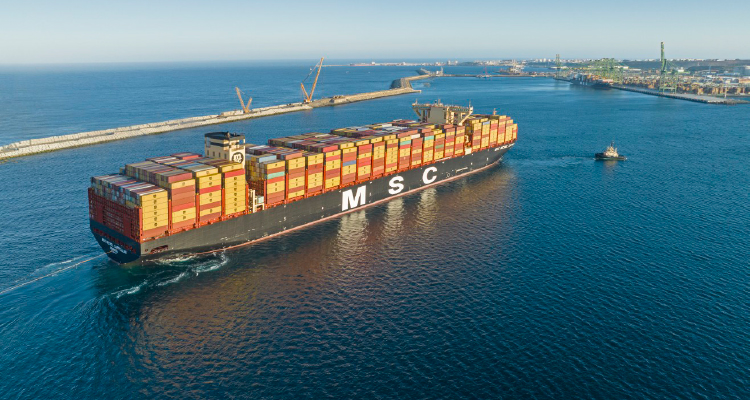
While mega-alliances dominate much of container shipping, Mediterranean Shipping Co. (MSC) has charted a radically different course. Since August 2020, the Swiss carrier has acquired 500 secondhand ships, doubling its fleet capacity from 3.8 million to nearly 7.4 million TEU and capturing more than 21% of global liner capacity.
Combined with an aggressive newbuilding program, this rapid expansion propelled MSC past Maersk to become the world’s largest containerline. Crucially, that sheer fleet size has enabled a feat no major competitor has attempted: operating principal east-west trade lanes independently, without belonging to a global vessel-sharing alliance.
Following the conclusion of its 2M partnership with Maersk, MSC launched a standalone global network, demonstrating that unmatched scale can replace traditional partnership models.