
AI by the Numbers

2 much hype? Here’s how industry leaders quantify the supply chain impact of artificial intelligence.
15%
Share of daily logistics
decisions that will be made
autonomously by 2028,
thanks to AI agents,
according to Gartner research.
PepsiCo Simulates Supply Chain Operations with AI and Digital Twins
 In January 2026, PepsiCo announced a multi-year collaboration with Siemens and NVIDIA to transform plant and supply chain operations through artificial intelligence and digital twin technology. This collaboration marks a first-of-its-kind initiative for a global CPG company applying digital twins to reshape how plant and warehousing facilities are digitally simulated and tested, with early pilots already underway in the United States.
PepsiCo is using AI and new digital approaches to process simulation and facility design to retool and optimize its existing physical footprint. PepsiCo and Siemens are digitally transforming select U.S. manufacturing and warehouse facilities by converting them into high-fidelity 3D digital twins that simulate plant operations and the end-to-end supply chain to establish a performance baseline.
90%
Potential issues in
plant operations identified
Within weeks, the teams reported they optimized and validated new configurations to boost capacity and throughput, giving PepsiCo a unified, real-time view of operations, which can integrate AI-driven capabilities over time.
Leveraging Siemens’ Digital Twin Composer, NVIDIA Omniverse, and computer vision, PepsiCo can now recreate every machine, conveyor, pallet route, and operator path with physics-level accuracy, enabling AI agents to simulate, test, and refine system changes—identifying up to 90% of potential issues before any physical modifications are made.
30-40%
Productivity gains Penske Logistics expects from
its deployment of a new AI platform from Augment.
Penske estimates these gains as the system can
eliminate routine, manual processes and streamline
follow-up workflows with carrier dispatchers.
80% Estimated Stockout Reduction
 By fresh food supply chain tech company Afresh, which uses AI to help grocers simplify operations, cut waste, and serve shoppers better. Its AI engine provides one single source of truth to support smarter decisions across stores. Albertsons Companies, Brookshire Grocery Company, Bashas’, Cub Foods, Smart & Final, and Meijer are among its customers.
Its latest platform expansion Fresh Buying leverages AI to digitize and optimize a challenging job in grocery supply chains: buying perishables for distribution. It helps produce, meat, deli, and bakery buyers manage perishables at scale, letting them react quickly and ensure they ship the freshest products to stores.
Walmart Transforms the Retail Supply Chain With AI and Ambient Internet-of-Things
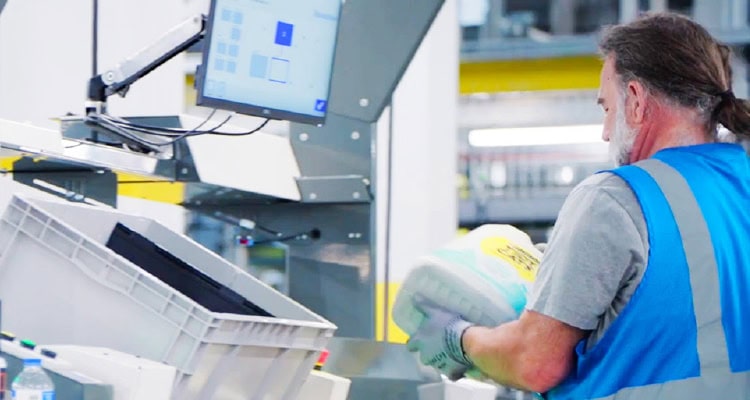
Walmart is combining its AI systems with Wiliot’s ambient IoT technology to enhance supply chain efficiency, inventory accuracy, and cold chain compliance. The retailer is using Wiliot’s IoT Pixels to track its pallets, with a goal of reaching 90 million by the end of 2026. This initiative is one of the largest ambient IoT deployments to date, providing a new source of supply chain data for Walmart’s expanding use of AI.
The collaborative solution is currently deployed across 500 Walmart locations, with plans for national expansion in 2026. The rollout covers 4,600 Walmart Supercenters, Neighborhood Markets, and more than 40 distribution centers, generating high-resolution supply chain data that feeds into Walmart’s AI systems.
AI-Powered Machine Vision Accelerates Supply Chain Quality Checks
By Thomas Edwards, Director of Sales Engineering/Quality and Art Van Der Stuyf, Director of Supply Chain Strategy, iGPS Logistics
In an environment increasingly constrained by tighter margins and higher efficiency demands, AI-powered machine vision can turn your quality assurance program from a potential weak link into one of your most critical strategic strengths. These systems combine high-resolution electronic “eyes” with complex neural networks that excel at identifying patterns and processing immense volumes of data. While they don’t replace all human decision-making, they are incredibly good at spotting tiny yet fundamental issues that could otherwise be overlooked.
Take something as fundamental as the shipping pallet. Not long ago, sorting and inspecting 500 plastic pallets could consume one day. Human inspectors would have to examine pallets for signs of stress as well as contamination.
SORTING/INSPECTING
500
PLASTICS PALLETS/AN HOUR
Today, AI-powered systems equipped with cameras and aided by AI algorithms can scan those same 500 pallets in one hour, spotting dirt and subtle imperfections that human eyes could miss. In some operations, the system doesn’t simply identify an out-of-spec pallet; it also automatically sorts it into a washing machine or a stack that needs repair.
Machine vision is also a core quality assurance asset in other areas of the supply chain. On food and beverage and pharmaceutical manufacturing lines, vision systems verify that labels match products, that cartons are secured, and that tamper-evident safety features are present. And then there are the “eyes in the sky” beyond the assembly and inspection lines. AI-driven vision systems are reshaping distribution centers, monitoring the flow of goods and identifying new ways to lay out racking systems and equipment to optimize space and throughput.
Savvy supply chain leaders view machine vision not as an autopilot, but as a powerful decision-making assistant. This mindset ties into a main directive in supply chain quality assurance: building durable assets instead of chasing short-term savings.
25+ Human Touches Per Load
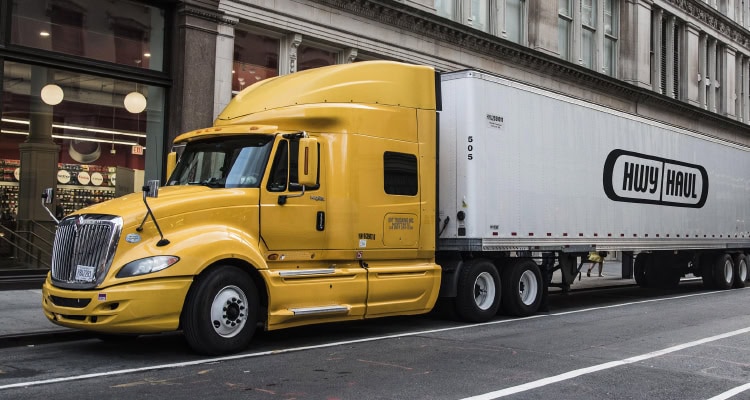
Amount of work expected to be eliminated by Hwy Haul’s agentic AI platform Miles. After deployment inside its own brokerage, Hwy Haul commercially released Miles to shippers, freight brokers, carriers, and TMS providers across North America in January 2026. The standalone, agentic AI platform is designed to make the end-to-end freight value chain fully autonomous. Its command layer supervises specialized AI agents, including quoting, booking, dispatch, load-monitoring, fraud-prevention, and compliance agents.
Fortifying Procurement
By Sabih Rozales, Architect, ORO Labs
Procurement is entering a new operating era. After years of incremental automation, recent results from the first wave of large-scale AI deployments show promise. Teams are seeing faster cycles, fewer errors, and compliance that’s built across everyday workflows.
This acceleration is happening because leaders are moving past experimentation and building governed, workflow-embedded AI that standardizes decisions and removes friction. OpenAI crossed one million business customers in 2025, reflecting this broader shift toward mature, governed adoption instead of small-scale pilots.
In procurement specifically, 59% of organizations plan to innovate through technology. Three recent deployments show how this new operating era is taking shape.
1. Speeding Cycle Times
Cycle time has long constrained procurement capacity. Novartis, a multinational life sciences company managing thousands of purchase requests each month, faced chronic bottlenecks. Reviews took up to five days, required extensive manual oversight, and frequently delayed downstream work.
To address this, Novartis deployed an AI-powered review agent that automatically checks requisitions for accuracy, identifies risk, flags duplicates, and routes requests to the right approvers. Review times dropped from five days to 16 minutes, accuracy improved 325%, and the team now manages 10 times the volume.
16 minutes
Requisition review
times at Novartis,
down from 5 days
2. Uncovering Value
GSK, a global biopharma company, reimagined its procurement model, focusing on speed, efficiency, and compliance. Using a platform branded internally as “GSK I Need to Buy,” the company deployed intelligent AI agents to automate purchasing decisions for 25,000+ users.
When employees upload supplier quotes, an opportunity agent analyzes pricing, vendor history, and market data to identify savings or trigger competitive sourcing events. If a purchase is sole-sourced, a negotiation agent steps in to improve payment terms or lead times. This agent-driven model captures value from below-threshold spend categories that traditional teams lacked the capacity to address. The result: faster cycle times, stronger compliance, and increased savings without adding headcount.
3. Boosting Compliance
Pfizer, a global biopharmaceutical company, faced high manual effort in compliance reviews, supplier onboarding, and payment verification. To streamline operations, Pfizer implemented a governed orchestration layer that automates its 26-point checklist and creates a single “front door” for all procurement intake. The company launched this system in three weeks, increasing oversight while reducing operational drag.
Scoring AI in 2026
10/10
“Artificial intelligence—especially agentic AI and decision intelligence—won’t just be useful in supply chain management; it will be a 10/10 transformational differentiator. Organizations using decision intelligence to automate decisions, predict disruptions, and act in real time are already outpacing peers by 17% in customer satisfaction and 34% in operational efficiency. Falling behind isn’t an option.”
Gonzalo Benedit, Chief Revenue Officer, Aera Technology
8/10
“For the auto transport supply chain. Not for explosive breakthroughs, but for clearing the daily paper cuts that slow carriers and their teams down. Think fewer status checks, less manual data entry, and smoother, automatic updates. The real impact is quiet but meaningful, giving people time back and making auto transport operations faster, easier, and far less chaotic.”
Dave Mendelson, Chief Product Officer, Super Dispatch
5/10
“In routing. AI in logistics routing (scheduling, routing, load planning) will bring incremental gains over existing software. The real breakthroughs will come from robots that can safely handle human-level loading and sorting tasks, and from vehicles using AI to cut collisions by up to 90% through advanced safety and autonomous systems. That is possible over the next few years and scores a 9.”
Dr. Stefan Heck, CEO, Nauto