
Last-Mile Solutions: Delivering the Future
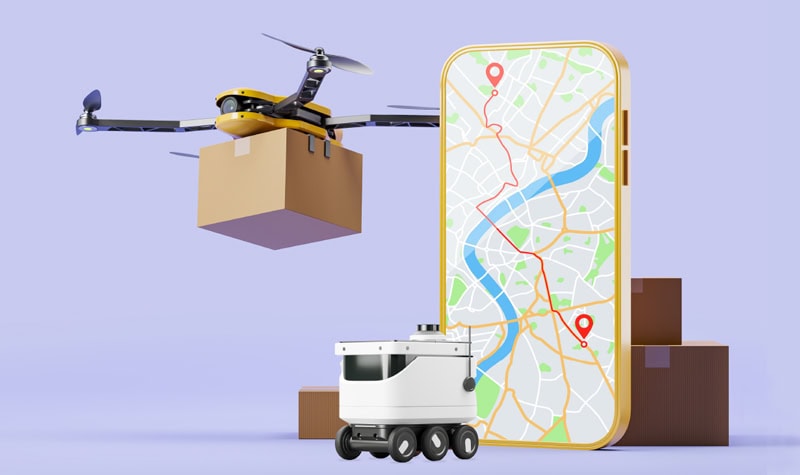
New technologies are transforming last-mile delivery from a cost center into a strategic differentiator. Drones, robots, intelligent routing, and other innovations are reshaping how goods move and how brands win loyalty.
Innovation in the transportation sector often starts with cargo delivery, says Daniel Laury, chief executive and product officer with Udelv, which develops autonomous delivery vehicles. The reason? It’s safer to try something new when moving goods, rather than people.
Effective delivery operations, particularly at the last mile, are increasingly critical. In part, that’s because the last mile can account for more than half of total shipping expense, Statista reports.
A failed delivery can cost retailers around $17, says Gautam Kumar, co-founder and chief operating officer with FarEye, a provider of last-mile delivery technology. “A missed stop is no longer just an inconvenience, but a direct hit to margins,” he says.
Last-mile delivery has also become a core business differentiator. “Companies are no longer just trying to deliver faster; they need to deliver smarter, with less cost, more visibility, and greater operational control,” says Gaurav Bubna, co-founder, Nextbillion.ai, which provides an AI-driven routing and mapping platform.
Innovative solutions, including delivery robots, new ways to power delivery vehicles, more robust routing tools, and drones, can help organizations design delivery operations to meet these goals.
Many new solutions come with challenges. Currently, costs for some of these systems are higher than for traditional delivery solutions. Regulation is still evolving, especially when it comes to autonomous vehicles, whether on land or in the air.
Organizations that can meet these challenges and design effective delivery operations stand to benefit. “Brands that get delivery right with speed, reliability, visibility, and flexibility, can differentiate themselves, win customers, and increase lifetime value,” Kumar says.
Drones
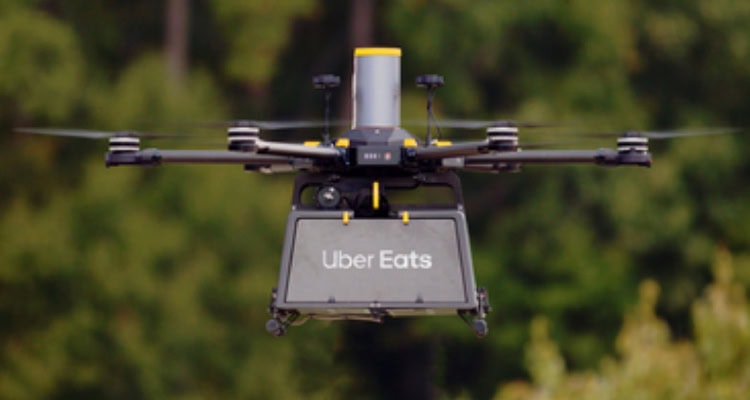
A strategic partnership with Flytrex marks Uber’s first investment in drone delivery and will enable consumers to receive orders in minutes while reducing congestion and emissions.
The average ecommerce package weighs between one and three pounds, Red Stag Fulfillment estimates. That makes them ideal cargo for unmanned aerial vehicles, also referred to as UAVs or drones.
Some big players are getting into this space. In September 2025, Uber Technologies announced it was partnering with Flytrex to begin pilot deliveries for Uber Eats. To date, Flytrex has completed more than 200,000 deliveries across the United States. The combined companies will be able to create an integrated, end-to-end delivery experience, according to the announcement.
Matternet develops commercial drone delivery systems that can carry cargo of up to 4.4 pounds, over distances of up to 12.4 miles. In October 2025, Matternet partnered with Dave’s Hot Chicken to launch drone deliveries in Northridge, a Los Angeles suburb.
“It’s an exciting time,” says Andreas Raptopoulos, founder and chief executive officer. He predicts that the number of drone deliveries per day will jump from several thousand currently to between three and five million by 2030.
To start a drone delivery, a restaurant employee packs the food into a Matternet container and then places it within a space-age-looking landing station, which is typically located behind the restaurant. The drone takes off from there, with a pilot remotely monitoring it. When the drone lands, it releases the package wherever the customer indicated, such as a porch or backyard.
In 2018, Matternet joined the FAA’s Integration Pilot Program, which provided accelerated regulatory clearance for some unmanned aircraft operators. Matternet was approved to fly over people and conducted the first commercial drone delivery in the United States.
In 2022, Matternet was awarded FAA Type Certificate and Production Certificate for unmanned aircraft. Type Certification refers to approval of the aircraft’s design and component parts and shows the aircraft design complies with applicable airworthiness and noise standards.
Recent regulatory action might help accelerate the market for drone deliveries. The FAA is proposing a rule covering Beyond Visual Line of Sight (BVLOS) drone operations, including for package delivery, although an effective date has yet to be announced.
Among other requirements, the operations covered by this proposal would occur at or below 400 feet above ground level, and from pre-designated and access-controlled locations. Operators would need FAA approval for the area where they intend to fly, and would identify the approximate number of daily operations, as well as takeoff, landing and loading areas.
Even as drone technology and legislation move forward, challenges remain. A 2023 McKinsey report found that drone deliveries were more costly than deliveries made by electric vehicles. However, once drone operators can manage about 20 drones simultaneously, a package delivery would cost between about $1.50 to $2, or roughly similar to a van delivering 100 packages per trip, according to the report.
For drone deliveries to truly scale, it will be necessary to consider them “from the perspective of the sovereignty of our airspace,” says Tom Walker, founder and chief executive officer with DroneUp, which develops technology to enable autonomous aviation at scale. Currently, no mechanism verifies the identity of drone operators or ties them to a specific aircraft. “How do we know if it’s a good drone or a bad drone? We don’t,” Walker says. As a result, it’s not feasible to authorize large numbers of drone flights.
In addition, facilities within about three miles of critical infrastructure, such as power plants and hospitals, need to be safeguarded from malicious actors. Together, these cover about three-quarters of the country, he adds.
Walker’s company is developing a system to, among other capabilities, verify a drone’s identity, tie it to a flight plan, and track it in real time. These capabilities will be key to scaling drone deliveries, he says. Walker estimates the legislative foundation and technology infrastructure for scaled deployment will mature within 12 to 18 months. Building compliant commercial fleets that meet rigorous U.S. safety standards will require additional time beyond that.
Delivery Robots
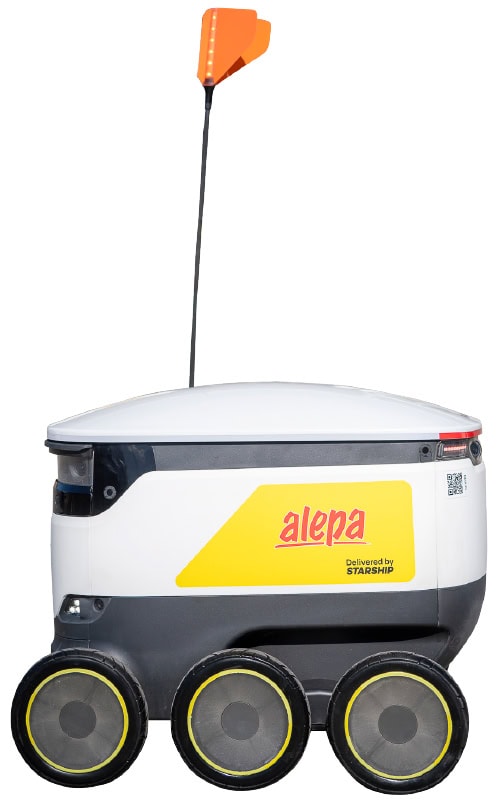
Alepa Starship delivery robots provide autonomous, local grocery delivery in the Helsinki metropolitan area. They use AI and sensors to navigate sidewalks and cross streets.
Innovation is also occurring on the ground. The delivery robots developed by Starship Technologies have made more than 9 million deliveries around the world.
To identify and navigate around obstacles, the robots are equipped with ultrasonic sensors, neural networks, 12 cameras, and other tools. The “bubble of awareness” around them enables them to identify objects, like pedestrians, so they can stop before running into them, says Niclas Schwarz, business development manager.
Getting a fleet of robots up and running generally takes one to two months. Starship works with the organization to map out the routes the robots will travel. Some cities require permits before the robots can travel on sidewalks.
The robots are able to cross streets and can usually travel up to about 4 kilometers, or about 2.4 miles, Schwarz says. They tend to be most cost-efficient at between three and four kilometers.
Starship’s robots are delivering groceries in about six European countries. They can handle about 40 liters of volume, or the rough equivalent of two or three grocery bags of items.
While it’s difficult to pinpoint how much less expensive delivery robots are than couriers, most clients see an expense reduction, Schwarz says. The costs to deploy delivery robots are dropping by 20 to 30% annually, he says.
In the future, delivery robots may link with drones. In late 2024, Serve Robotics, an Uber spinout, announced a partnership with Wing, the drone subsidiary of Alphabet, in which a Serve robot would automatically hand a package to the drone. This capability would be useful for deliveries that extend beyond about 2.5 miles, says Ali Kashani, Serve’s president and CEO. Serve robots are on the ground in multiple U.S. cities and the company was on track to deploy 2,000 robots by the end of 2025.
Route Optimization Software
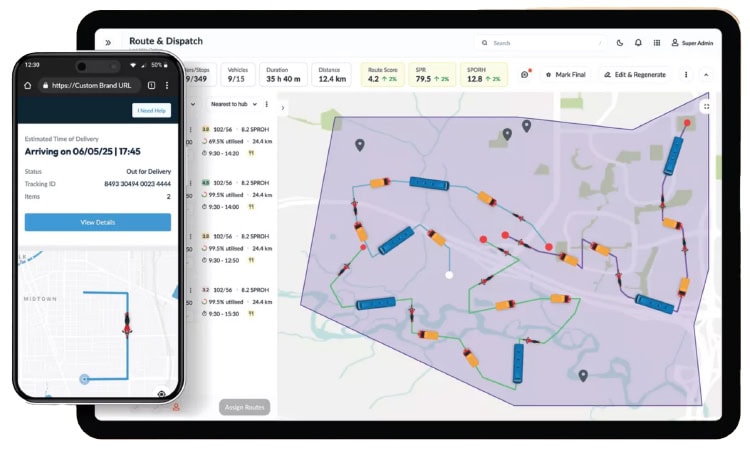
FarEye’s order-to-door platform helps logistics and retail brands simplify last-mile complexity, ensure on-time delivery, and manage shipments with transparency and control.
Along with hardware, the software that powers delivery vehicles is advancing. The platform from NextBillion.ai leverages AI, algorithms, and real-time data, like network demand and delivery policies, to optimize the last-mile delivery process, Bubna says. As real-world conditions change, the system can adjust and re-optimize routes, and can alert the dispatch and operations teams.
Customers using the solution report 20 to 30% drops in delivery costs, as well as fleet utilization improvements of 15 to 18%, Bubna says. They also see significant improvements in the accuracy of estimated arrival times.
FarEye offers an AI-powered last-mile technology platform that integrates with order management, warehouse management, and ERP systems to ingest order and inventory data. It then presents live delivery options at checkout, such as same-day or next-day delivery, based on real-time carrier capacity and business rules.
The routing engine uses optimization heuristics and machine learning to create delivery plans that consider multiple factors, including traffic patterns, driver schedules, and service agreements.
This sort of delivery intelligence has become critical, particularly in the United States, where “delivery ecosystems involve complex product categories, multi-carrier networks, and significant service variability,” Kumar says.
Smart Electric Vehicles
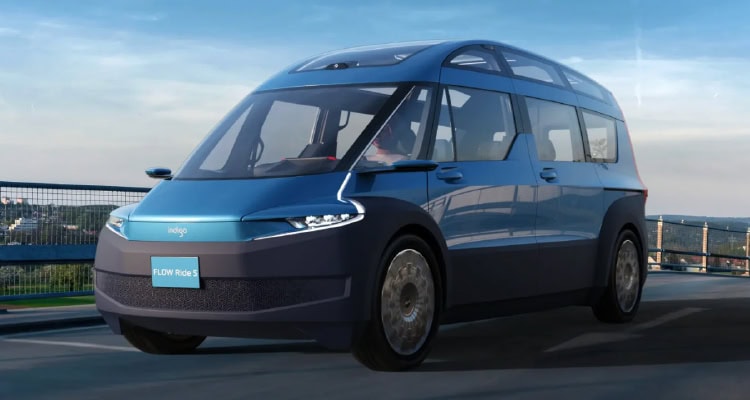
IndiGO Technologies’ EV vehicles are designed to handle high-frequency urban deliveries while maintaining low operational costs.
IndiGO Technologies, which hails from the mobility labs at MIT, is working to improve the technology that powers delivery trucks.
Typical electric delivery trucks require large batteries, which add weight and expense, says Will Graylin, CEO of IndiGo. Moving the motors to the wheels reduces weight and provides about 30% more room for cargo. In addition, the floor can be lowered, making it easier to load or unload packages. In passenger vehicles, it’s easier to navigate in a wheelchair or other mobility device.
The design is like having “a robot in each corner” to make the wheels smart, and able to absorb bumps and keep the vehicle stable, Graylin says. He estimates that IndiGO’s Smart Wheel powered EVs will be available in early 2028.
Autonomous Vehicles
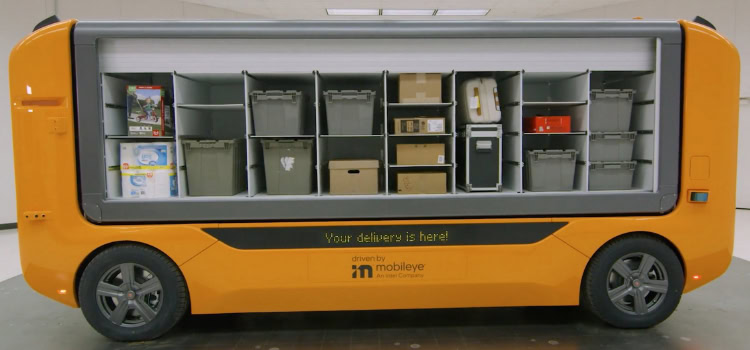
Udelv pioneered autonomous, electric, cab-less delivery vehicles, which feature a unique uPod smart cargo container that allows for up to 80 stops per trip and secures package retrieval via a customer app.
For roughly nine years, Udelv has been designing and refining autonomous electric delivery vehicles for public roads.
“Autonomous driving brings an opportunity to dramatically change the way an automobile or a truck is conceived, because you no longer need a cabin,” Laury says. Instead, the entire interior space can be used for delivery.
At the same time, removing the driver creates other challenges. A key one is the lack of a person to load or unload the cargo. To start to address this, the team at Udelv created an adaptable shelving system that can form spaces of varying sizes to accommodate different products. In addition, its patented curtain system is controlled by software and reveals only the cargo designated for each customer.
The vehicle’s initial use case likely will be in the business-to-business market, where professionals will load and unload. Also, the vehicle typically will be able to traverse an established, repeatable route between, say, a manufacturing plant and distribution center.
By 2035, about 200 billion vehicle miles will be traveled in the autonomous delivery industry annually, Laury predicts.
Smart Parcel Lockers
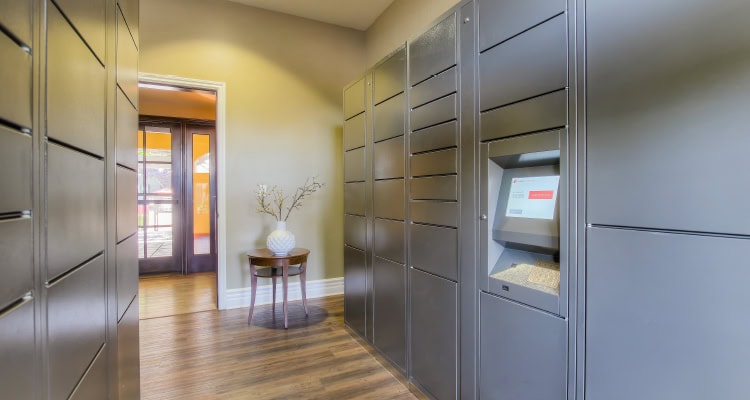
Parcel Pending by Quadient provides smart locker solutions that streamline package delivery, pickup, and returns. Different locker sizes can accommodate different package sizes.
Once packages arrive at their destinations, a secure holding place can reduce theft, streamline pickup and delivery, and reduce the space required to accept deliveries.
Parcel Pending by Quadient provides automated locker solutions used by colleges and universities, as well as retail, commercial, and multi-family buildings. Different locker sizes can accommodate different package sizes.
The system offers several ways for a carrier delivering a package to open and place packages in a locker.
For instance, the driver might enter a code for the property, identify the recipient, and then select the box size. Based on this information, the locker best suited for that package will automatically open, explains Austin Maddox, Quadient’s executive vice president of North America parcel locker solutions.
Once a package has been placed in a locker and the door closes, the recipient is alerted. When they scan in or enter a passcode, the locker containing the package opens.
Today, parcel lockers typically are used for deliveries to the final consumer. Down the road, consumers could use lockers to return purchases. Lockers also could be used as a tool for the middle mile, Maddox says. For example, a truck may deliver cargo from a factory to a locker system, after which the routes are split among several regional or local drivers.
In Europe, public delivery lockers are becoming more common. While not yet popular in the United States, they would offer some benefits. Businesses could pay commercial shipping rates when shipping to a locker, Maddox says. When placed in a store, lockers could drive foot traffic.
More Changes Ahead
Delivery solutions, particularly for the last mile, are rapidly innovating. Because the last mile is the most expensive, operationally complex, and customer-visible part of the supply chain, rising costs and expectations make advanced delivery technologies essential.
“The last mile has become the defining battleground of modern commerce,” Kumar says.