
Carriers Expect Ocean Rates Will Remain Elevated
By Ashley Prince | September 18, 2026
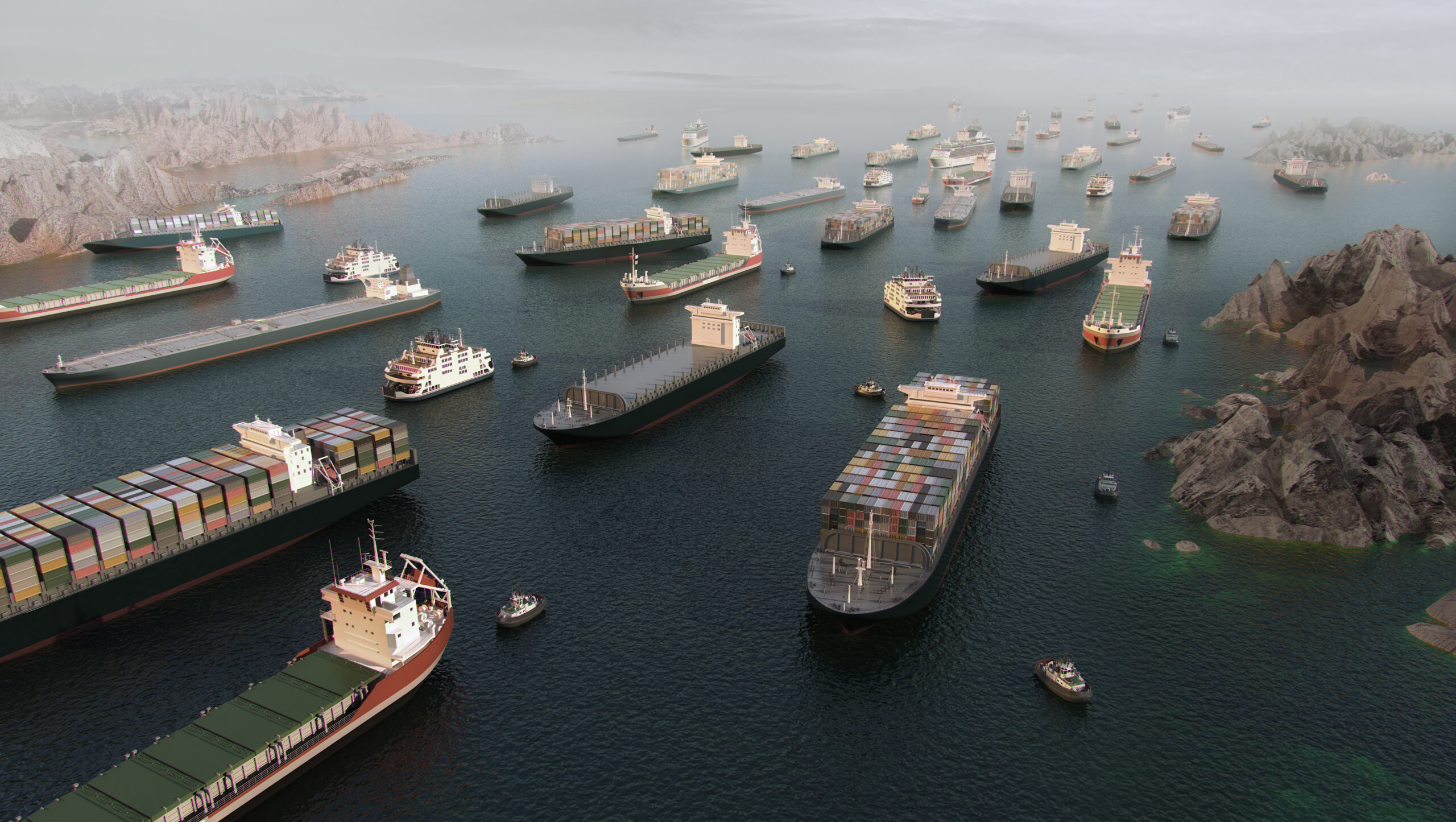
Container lines had little warning before the Strait of Hormuz closed in February. By early March, Alphaliner counted 138 container ships stuck west of the strait. Carriers responded with emergency surcharges up to $3,000 per FEU on cargo routed through the region.
Over six months later, the conflict hasn’t been resolved. According to the International Maritime Organization, 80 ships have been attacked near the strait since the war began, and 20 seafarers have died. Drone strikes knocked out Saudi Arabia’s main Hormuz bypass pipeline on Sept. 10, and Maersk added another Gulf surcharge Sept. 14.
Recently, ocean freight rates have stopped climbing despite ongoing disruption. Carriers are warning, however, that this plateau is not a sign of relief.
Ocean Rates Are Uneven
Drewry’s World Container Index increased 1% to $4,500 per 40-foot container as of Sept. 17. The index was flat for two consecutive weeks before this bump. It is sitting just under the $4,526 late-August peak.
Transpacific rates rose during the same time period. Shanghai-Los Angeles was up 2% to $7,352 per FEU, and Shanghai-New York rose 1% to $9,726.
On the other hand, Asia-Europe rates fell, with Shanghai-Genoa down 3% to $4,216 and Shanghai-Rotterdam down 2% to $3,997.
A relatively flat global average is masking two markets moving in opposite directions.
Maersk CEO Vincent Clerc recently addressed the shift directly at a Copenhagen briefing. He said container pricing has changed permanently since the pandemic and that there is now “a natural floor to the price.” He also said carriers can earn considerably more than the pre-pandemic market allowed.
Maersk is expanding its fleet on that basis, a departure from a decade-long strategy built around insulating the company from rate volatility. Clerc told Bloomberg in August that shippers should expect more disruption going forward.
Lars Jensen, CEO of Vespucci Maritime, has also argued for months that the Cape of Good Hope rerouting created a structural floor under ocean rates.
Carrier financial results support that line of thinking.
Alphaliner’s data shows the leading container lines posted an average operating margin of 11.2% in the second quarter of the year, more than double the first quarter’s 5.2%. No major carrier reported an operating loss. Maersk’s rates rose 22% year-over-year, with an 8.9% margin.
Wan Hai posted a 26% margin, its fifth consecutive quarter at the top of the industry. Wan Hai’s general manager told shareholders in May that he expected rates to remain elevated into October and backed that with a real rate restoration of $100 per 20-foot and $200 per 40-foot container.
Hormuz Traffic Remains Near Standstill
Vessel transits through the Strait of Hormuz have not recovered. Tracking data this week put daily transits between 8 and 14 vessels, depending on the source. Pre-war daily transits ranged from roughly 85 to 140 vessels.
The Sept. 10 drone strikes on Saudi Arabia’s East-West pipeline removed a 7-million-barrel-a-day workaround for the closed strait. Brent crude rose to $110 a barrel, its highest level since May. Saudi Arabia responded by increasing ship-to-ship crude transfers near Oman’s Sohar port, moving oil through the strait itself under U.S. military escort.
U.S. Energy Secretary Chris Wright said 18 million barrels of crude and refined products moved out through Hormuz in a single day this week. He also said Saudi Arabia expects to restore roughly half the pipeline’s capacity within days. Brent has fallen for two consecutive sessions since, to $102-104 a barrel.
Shipper-facing costs continue to accumulate. Maersk’s new $500 Gulf surcharge adds to March’s emergency rates of up to $3,800 per container and a $1,000 Hormuz transit fee introduced in July.
Blank Sailings, Weather Compound Pressure
Blank sailings remain a primary tool for managing capacity. Drewry counted 47 canceled sailings across the major East-West trades over a five-week period in August and September, out of 729 scheduled.
Separate disruptions have added to the strain. Four typhoons struck Chinese ports at Shanghai, Ningbo-Zhoushan, and Yantian, with delays expected to continue into October. China’s Golden Week holiday leaves little time to clear the resulting backlog. Schedule reliability has fallen to 10% on Asia-Europe routes and 23% on Asia-North America routes, according to industry tracking. U.S. diesel prices hit a record $5.967 per gallon, raising the base for domestic fuel surcharges.
One development points toward eventual normalization. Gemini Cooperation is returning four services to the Suez route from the Cape of Good Hope, representing roughly 18% of westbound Asia-Europe capacity. The first sailing is scheduled for Sept. 19. Maersk and Hapag-Lloyd have described the move as conditional on continued Red Sea stability.
Air Cargo Capacity Grew Despite the Conflict
Air carriers serving the Gulf expanded rather than waiting out the disruption. Qatar Airways Cargo added 12% network-wide capacity in May and launched a new weekly freighter route to Helsinki in early September. Unlike ocean carriers, air carriers can route around closed airspace rather than around a fixed chokepoint.
The cost has shown up in fuel prices instead of lost capacity. Jet fuel prices recently rose 6.1% to $181.46 per barrel. That is up roughly 74% year over year, according to IATA’s Jet Fuel Price Monitor. The spread between crude oil and jet fuel prices has widened regardless of which direction crude moves.
Air freight rates have moved less than fuel costs. The Baltic Air Freight Index held roughly flat over the four weeks ending Aug. 31, up 18.1% year over year. TAC Index attributed softer China-Europe rates primarily to new EU customs rules on low-value parcels, which have reduced e-commerce shipping volume from China, rather than to any easing of capacity constraints.
How Shippers Can Respond
- Budget for elevated Transpacific rates through the fourth quarter
- Track the Gemini Cooperation’s Suez return as a leading indicator
- Factor in a growing Gulf surcharge stack when quoting ocean freight through the region
- Watch jet fuel pricing closely for air freight budgeting
- Build slack into Asia-Europe transit planning