
Echo’s $9.8M Logistics Play: Dodging Tariffs, Delivering Savings


Josh Carr is the CEO of Echo, a hydrogen health technology company delivering advanced wellness products globally. Under his leadership, Echo developed a resilient, globally distributed supply chain serving customers in the United States, Europe, and Asia. Learn more at www.echowater.com
When trade tremors hit, hydrogen health tech company Echo didn’t flinch. Faced with looming tariffs and rising risk, the wellness brand moved fast—overhauling its supply chain, shifting manufacturing to the Philippines, and saving nearly $10 million in one year. Here’s a firsthand account of how smart logistics made it possible.
In a global economy defined by volatility, logistics is the frontline of risk. That was the reality Echo Water faced in 2024, as early signs of sweeping tariffs on Chinese imports forced us to confront the vulnerabilities in our supply chain. At the time, our manufacturing footprint was concentrated in China—highly efficient, but deeply exposed to shifting policy winds.
Rather than wait for fallout, we made the call to relocate most of our production to the Philippines. It was a move that required logistical overhaul—new partners, new lanes, new customs frameworks—but the outcome was clear: we preserved operational continuity, prevented cost pass-throughs to our customers, and saved $9.8 million in the first year alone.
This article is a roadmap for logistics professionals facing global disruptions and tasked with making their network more agile and future-proof.
Reading the Trade Signals—and Moving Early
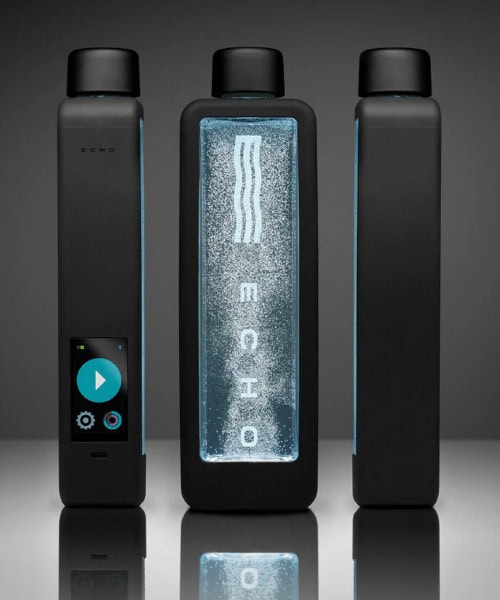 Echo produces hydrogen-infused water products and wellness tools such as the Echo Flask, which require precise materials, regulated shipping conditions, and high consumer trust. For years, we relied on China for its robust manufacturing infrastructure. But in Q2 of 2024, predictive modeling showed an incoming 35–45% cost increase on key SKUs if tariffs materialized.
We didn’t wait for the policy to be enacted. We immediately began scenario planning, identifying alternate production sites and sketching what a re-routed logistics framework could look like.
Why the Philippines Worked
After evaluating Vietnam, Malaysia, and Mexico, we chose the Philippines based on three core logistics criteria:
1. Port access and trade routes. The Philippines offers strong maritime connectivity and favorable duty status with the United States, allowing for smoother transitions through Pacific trade lanes.
2. Customs and regulatory infrastructure. Our logistics partners reported reliable export/import processing times, which would keep Echo’s fulfillment windows intact.
3. Localized production with global reach. The Philippines provided a growing ecosystem of plastics, electronics, and packaging vendors with scalable capacity and multi-modal access.
This move wasn’t plug-and-play. We invested heavily in identifying freight forwarders, auditing packaging tolerances for long-haul ocean shipping, and adapting our just-in-time models to new lead times. But the foundation was solid—and we built fast.
Rebuilding Our Fulfillment Backbone
Switching manufacturers also meant rebuilding the backbone of our entire logistics chain. Here’s how we approached it:
New freight contracts. We negotiated directly with shipping partners to lock in container capacity from key ports in Subic and Manila to West Coast U.S. hubs, stabilizing rates and transit times during an unstable pricing window.
Inventory buffers in strategic warehouses. While our historical model favored lean inventory, we temporarily introduced buffer stock in California and Utah to absorb any timing inconsistencies during the transition.
3PL collaboration. We onboarded a third-party logistics partner in the Philippines to provide local oversight, coordinate outbound freight, and improve real-time visibility into shipments.
Redundant packaging testing. Hydrogen-infused products are sensitive to altitude and heat. We ran packaging integrity tests on every container configuration to prevent loss or quality degradation in transit.
Operational Continuity, Customer Trust, Big Savings
 By early 2025, just as tariffs were fully enacted, we had successfully re-routed more than 70% of our products away from China and through our new Philippine supply chain.
We saved $9.8 million in landed cost avoidance, maintained 96% on-time delivery rate during the transition, and avoided any price increases to customers, protecting brand loyalty. And customer support volume actually dropped by 22%—a sign of smooth, reliable fulfillment.
While many wellness brands faced delays, shortages, or last-minute pivots, Echo delivered. Literally.
Where We Go From Here
We’re now applying the same playbook to other parts of our network. We’re exploring Eastern European manufacturing for EU orders and evaluating additional U.S.-based warehousing for regional fulfillment in 2026.
We’re also doubling down on packaging innovation—moving toward lighter, modular systems that reduce freight weight and improve protection in mixed-modal environments.
Long-term, our goal is not just to react to disruption—but to be unshakable by it.
Final Thought
 Global logistics teams are often asked to do the impossible: deliver faster, cheaper, and more flexibly, no matter what the world throws at them. But the truth is, with the right foresight, partners, and investments, it is possible to adapt without breaking.
For us, the decision to relocate wasn’t easy—but it was essential. It gave us financial resilience, operational clarity, and customer confidence—all built through the lens of logistics.
And in today’s market, that’s not just a competitive edge. It’s survival.
Advice for Logistics Decision-Makers
Relocating production to the Philippines wasn’t about abandoning China—it was about de-risking and building a logistics system capable of weathering policy, pricing, or port pressure.
Here’s what we learned:
Global redundancy is now table stakes. If you rely on one country for manufacturing and one port of entry for distribution, you’re one policy change or weather event away from chaos. Redundancy is no longer waste—it’s protection.
Treat freight as a brand touchpoint. We don’t just ship product—we deliver a wellness experience. That includes unboxing, lead time, and shelf readiness. Your logistics chain is part of your product promise.
Map policy to process. Trade policy changes don’t just affect landed costs—they affect inventory timing, customs behavior, and consumer patience. Model end-to-end impact, not just tariff math.
Visibility beats velocity. During the first month of the switch, we prioritized real-time visibility over speed. It was better to catch and fix issues than to promise fast delivery and miss it. Our WISMO (Where Is My Order) volume dropped by 18% as a result.