
For Shauna Bowen, Curiosity and Accountability are Non-Negotiable

Shauna Bowen embraces three pillars of leadership—servant leadership, transparency, and a growth mindset—to power Radial’s digital transformation and help clients achieve their goals.
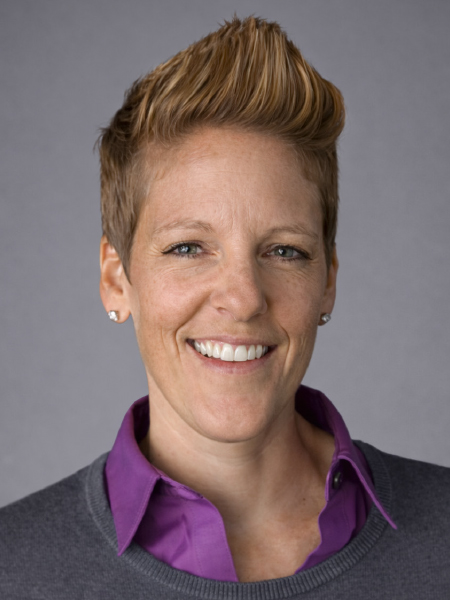
Shauna Bowen, EVP, Chief Digital & Transformation Officer, Radial
Shauna Bowen is helping to lead Radial, a logistics and fulfillment services provider, through a digital and innovation transformation. As executive vice president and chief digital and transformation officer, Bowen helps to set the vision and develop the plans to align Radial’s products and execute against the vision, leveraging technology, digital innovation, and client service.
Radial’s ‘north star’ is helping companies scale as they grow, Bowen says. For instance, Radial can help clients that operate an ecommerce direct-to-consumer business model add a marketplace or start selling over a social media platform. Among other services, Radial will work with the company to drive connectivity through to fulfilment, order management, and other systems. While Radial continues to partner with ecommerce brands, it’s also adding business-to-business clients.
Here, Bowen shares her thoughts on leading an organization through such dramatic changes.
IL: How do you approach your leadership role as you help Radial pursue its goals?
Over the years, I’ve learned you can’t do everything yourself. You need people to help move the ship. It ends up being a force multiplier.
When thinking about how to enable employees, I consider three things. First, I take a position of servant leadership. It’s rare that I ask an employee to do something I haven’t done. I also try to provide clarity and clear obstacles.
Second, people make better decisions the more they know, so I try to create an environment of transparency. As long as information isn’t confidential, I provide as much as possible. Transparency can also help connect the dots, so people understand how we want to change Radial as a company, through this journey of digital innovation and transformation.
The third pillar is having a growth mindset and solving for ‘yes.’ I try to help employees shift their thinking from ‘Here’s why we can’t do it,’ to ‘Here’s how we can do it. I just need these things in place.’ It’s flipping the mindset a little.
IL: Have you applied these concepts to tough situations?
When you try to modernize a technology stack and leverage a workforce that has been around for a while, finding the right balance is critical. You can’t just bring new people in. You need legacy knowledge to ensure you don’t miss something as you bridge the gap. I try to bring our folks along and show them how to think differently and solve for a ‘Yes’ mindset.
Servant leadership comes into play. Instead of simply asking an employee to pull together a recommendation, for example, I’ll organize a two-hour working session. We get out a whiteboard, I roll up my sleeves alongside them, and we talk about what ‘the possible’ could be.
It’s the ‘teaching someone to fish’ scenario. To start, I’m going to fish with you. After that, you’ll be able to fish on your own. Eventually, you’ll find the pond yourself.
This approach can take more time initially. But in the end, the quality is better. The investment upfront ends up being well worth it.
IL: What challenges keep you up at night?
The immediate challenge internal to Radial is bridging the gap between where we are now and where we want to be. We were able to launch an attractive offering that’s nimble, cost effective, flexible, and allows clients to scale. At the same time, we have a book of business that remains on our legacy solutions. Bridging that gap and making sure we remain relevant with all clients is my biggest challenge.
Outside Radial, we have to keep an eye on the competition, and make sure we stay ahead of the game. We need to identify innovation that’s relevant to our clients, ensuring they’re at the center of everything we do.
Looking at the macro level, such as tariffs that could negatively affect our clients, we need to decide how we can help them solve problems they might not have experienced before.
IL: What qualities do you look for when assessing job candidates?
I over-index on soft skills, such as being curious. Curiosity ties to a mindset of growth and improvement. When a candidate asks a ton of questions about the position in an interview, that’s one sign of curiosity.
Also, you can’t be effective without some level of accountability. It’s not just accountability to your box on the organization chart, but to total results, because in most instances, this is a world of collaboration. Whatever your title, you have to take ownership and accountability for total results.
Determining accountability in a job interview is a little trickier. Sometimes you can say, ‘Tell me about a time when you had to influence somebody who wasn’t in your direct reporting line.’ This shows how candidates have impacted behavior outside their own reporting lines.
IL: What sources of inspiration help you stay innovative?
My kids can be a source of inspiration. My oldest is 16, so she grew up with an iPad, and my youngest is 11, so he has always been connected. It’s interesting to see how they look at and interact with the world, what’s cool to them and how they solve problems, whether in schoolwork or sports.
I also have Google alerts set for prompts such as innovation and ecommerce. Different articles pop up that help me remain relevant.
IL: What’s one skill that you’ve found essential in your role?
It’s critical for my success and the success of my team to have a systemic thinking approach and be able to connect the dots across end-to-end processes. Sometimes you might change a process that makes one person’s job harder but makes another job easier.
Without truly understanding the end-to-end system, it’s hard to make the impact you hope to. It’s critical to be able to quickly connect the dots to understand all that’s affected, get everything aligned, and then move fast, versus having to come back and start again multiple times.
IL: Who would you trade places with for a day?
Pep Guardiola is a Spanish soccer player who currently coaches Manchester City. His approach to coaching and managing, and the tactics he brings to the game—along with the way he communicates and motivates his people—is awesome. I’d like to see things through his lens and pick up a few things for my own leadership toolkit.
The Danger of Confusing Effort and Result
“When I approach problems, I try not to confuse effort with results,” says Shauna Bowen. “With Radial’s digital transformation, it’s easy to get caught up in a laundry list of things that everybody wants you to do, until you attach value and outcomes to the tasks.
“It’s easy to say, ‘I can knock out these five things this morning’ and you feel productive, but those five things may not be attached to any outcomes that ultimately turn the needle,” she adds.
“It might make more sense to work on one thing for three days because the better value or outcome will come from that,” Bowen says.