
Pedal to the Metal: General Motors Orders Suppliers to Exit China Supply Chains

As U.S.–China tensions escalate, General Motors is steering its suppliers toward a full exit from China by 2027.
By Felecia Stratton | November 13, 2025
When one of Detroit’s big three automakers tells thousands of its suppliers to get out of China, logistics and supply-chain professionals sit up and take notice. That’s exactly what GM is reportedly doing: setting a hard deadline of 2027 for many of its parts suppliers to eliminate China from their sourcing playbook.
According to multiple reports, GM began nudging suppliers in late 2024 and escalated the directive in 2025 as U.S.–China trade storms intensified amid the Trump Administration’s tariff policies. The move is part of a broader effort by the automaker to bolster resiliency in its supply chain, given the fact that global sourcing ties have grown long, complex, and vulnerable.
As a result, GM suppliers of raw materials and parts—from lighting assemblies to electronics modules and rare-earth components—are being asked to reconfigure long-standing networks and explore non-China sourcing alternatives.
Braking for Impact
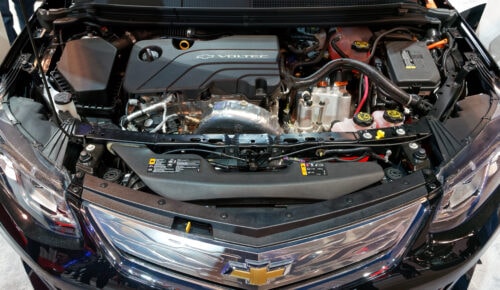
GM’s pivot means lanes, loads, and lead times are all in motion. As suppliers work to shift sourcing from China to regions like Mexico, Vietnam, and India, inbound freight patterns will change, forcing teams to validate new routes, carriers, and customs processes.
Suppliers are also likely to build buffer inventory and dual-source parts to hedge against disruption, which could ripple into higher warehouse demand and increased domestic transport volumes.
Meanwhile, new sourcing regions bring fresh visibility challenges. Ensuring that rerouted shipments still hit just-in-time delivery windows will require tighter coordination across 3PLs, forwarders, and manufacturers.
A Sign of the Times?
GM’s push to decouple from China isn’t an isolated tactic, it may be a bellwether for the wider industry. As auto supply chains rewire, logistics teams at every level—from Tier 1 carriers to material-handlers—should gear up for stratified sourcing destinations, greater regional complexity and tighter synchronization.
4 Takeaways for Logistics and Supply Chain Teams:
- Network redesign ahead. GM’s directive signals major reconsideration of one of the world’s deepest supply-chain wells. China has long supplied everything from custom tool-and-die sets to electronics modules for vehicles built in North America. Suppliers now must rapidly reroute—or rebuild—supply chain links. “In some cases this has been 20 or 30 years in the making, and we’re trying to undo it in a few years,” Vehicle Suppliers Association head Collin Shaw told The Times of India.
- Cost and timing pressures mount. Reshoring or nearshoring parts production isn’t simply plug-and-play. Suppliers face new capital investment, logistics rerouting, and the risk of parts shortages or launch delays during transition. The directive to “deliver alternatives by 2027” means shorter execution timelines than typical multi-year sourcing shifts.
- Regionalization and geo-optimization. GM reportedly prefers sourcing parts from within the same region where vehicles are built, especially for its North American vehicle base. This could mean increased production and logistics activity in North America and allied regions, while sourcing footprints in China shrink.
- Strategic leverage and geopolitical hedging. GM’s move is as much about reducing geopolitical exposure as it is about operations. Steering clear of China content helps shield the automaker from trade volatility, tariffs, rare-earth supply risks, and sudden export restrictions.
Sources: Reuters, CNBC, AutoGuide