
Site Selection Best Practices: Location, Location…Logistics
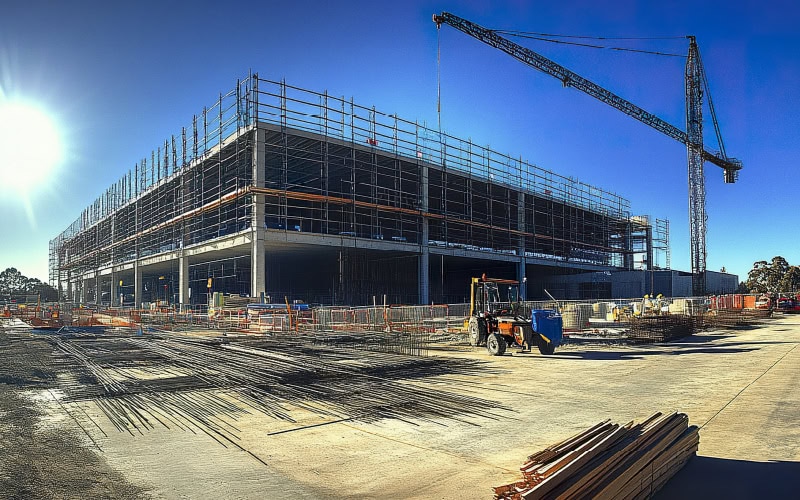
It’s sometimes the overlooked factors–from labor pools to power grids–that define a truly efficient warehouse or distribution center site in today’s demanding supply chain landscape. Following these data-driven strategies will help you separate optimal site selection from costly mistakes.
For some companies, there may be no more important decision to the success of their supply chain than selecting the sites for warehouses and distribution centers. Choosing locations and facilities that can operate at optimal efficiency while fitting adeptly into a shipper’s overall distribution network can have an outsized impact on a company’s bottom line.
However, site selection decisions are rarely easy and require a sophisticated analysis and comparison of possible locations.
Jay Garner, president of Garner Economics, a Georgia-based firm that offers economic development consulting, says when his firm assesses a potential location for a distribution center, it typically examines more than 70 variables with key considerations including transportation access, building or site configuration, operating costs, labor availability and the overall business climate pertaining to the state and specific location.
Site selection means weighing the site itself and its physical capabilities, as well as its geographic context and the communities that are in its orbit. Here are the primary priorities to consider when sorting through new sites for your next warehouse or distribution center.
1. Analyze your transportation infrastructure and distribution network.
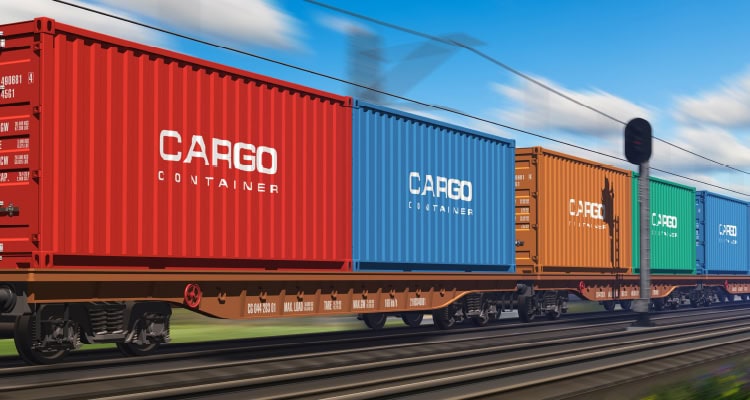
When scouting locations for a new warehouse or distribution center, don’t overlook direct rail access, which can reduce transportation costs and boost efficiency, especially for companies dealing with high-volume, bulk shipments.
Proximity to customers, transportation infrastructure, and distance to suppliers are critical factors for most distribution center projects. Companies with multiple warehouses should evaluate how a new location will fit within the overall distribution network to ensure the most efficient delivery for its products or raw materials.
“Identify how close a site is to key customers and if it can reduce delivery times and costs,” says Nelson Lindsay, a principal with Parker Poe Consulting, a site selection and economic incentives consulting firm. “Is the transportation network in the area adequate for multiple delivery modes including highway, rail, ports and airports?”
How a location’s site fits within the constellation of its supply chain is of the utmost importance, as well as how well it provides access to key transportation options.
“Be specific about how far away you are from the raw product, and how far away the product is coming in from, as well as how far you are from the consumer base, or whoever is purchasing the product,” says Courtney Dunbar, director-site selection and economic development leader for Burns & McDonnell, a construction firm based in Kansas City. “It makes a huge difference.”
For example, an automotive parts distribution center needs to be located at a site that makes it efficient to supply an assembly plant that uses the parts. For that reason, “conducting a transportation study is crucial before initiating the search for the project site,” Garner says.
Intensified customer expectations and demand for rapid delivery has made the site selection process for warehouses and distribution centers more complex and important in recent years.
“You will lose customers if you can’t meet that demand,” says Candy Mitchell, managing director of facility design and automation for PLG Consulting, based in Chicago. “That has to be important when you design your network.
“If your customer requires same-day shipments, it will be critical that you site your distribution center where you can meet that customer demand,” she notes.
The site selection process also includes anticipating how goods or materials will be handled, stored, and moved within the site and ensuring the site will be able to accommodate how goods are moved as efficiently as possible. That means planning for the optimized continuity and flow of products because “time is money, especially in the way that you receive and ship goods,” Dunbar says.
“Suppose the warehouse needs rail access or proximity to barge,” she says. “We’d make sure that there is a smooth flow and an operational capability to have access to those services so there isn’t an issue with how the product is handled in transit to its destination.
“Make sure that spatially you’re in a position where you can handle your products effectively and set them up for transport, or the receipt of goods is set up so there are no issues with the logistics,” Dunbar adds. “The more you understand about product inputs and outputs then the better you will be able to effectively map where you should be and how you should be set up.”
Any kind of inefficiency in a facility’s logistics can be extremely costly, making it crucial to catch these obstacles early in the site selection process.
2. Understand logistics processes and facility capabilities.
When examining a prospective new facility, “it’s not just a box,” Dunbar says.
“Understand the internal function of that distribution facility so you can effectively think about what’s happening inside that will end up adversely or positively impacted by the location where it will operate,” she adds.
“The critical factors are drawn by the facility’s internal process,” Dunbar says. “Understand those critical factors—is the facility a high electric user? Have high-volume employment? Does it handle certain products that may be allowed in one area and not in another?”
The types of products that will be handled in a facility—refrigerated or flammable, for example—should be in the foreground of a site selection choice.
“The type of product being handled can be a major critical factor in choosing a site,” Dunbar says.
Closely study utilities, including electric availability. From a logistics standpoint, the growing use of automation means that some companies do not require the large spaces they used to, and they are better able to use “every inch of a facility,” Mitchell notes.
“Automation does change the power requirements, so make sure that you have enough power for the facility,” Mitchell says. “Sometimes that can be a problem depending on where you’re located.”
In fact, Mitchell has encountered scenarios where the power grid was insufficient to meet the needs of an automated facility, requiring working with the local utility company to increase the grid around the building and to run generators while the work was being done.
If a company is considering existing facilities for a new site—rather than a location where they will build a facility from scratch—then the facility’s composition must match what will be managed inside it. Trying to “make it work” in an ill-suited facility because the location is great will create problems.
“We’ve seen situations where logistics facilities, designed for quick leasing to many clients, have a problem: their roofing materials aren’t adequate for a tenant’s operations,” Mitchell says. “This can make it impossible for that company to get insured, which is a critical issue that needs to be addressed beforehand.”
The role of warehouses and distribution centers is too important to overlook inefficiencies when selecting a site in hopes of “figuring out how to make it work,” Dunbar says.
“Don’t just make general assumptions,” she advises. “Today, we have the science and technology to achieve precise accuracy when determining things like conveyor length, equipment sizing, or racking dimensions. A thorough understanding of the process will help you make the best decisions.”
3. Evaluate the regional workforce and consider incentives.

When choosing a new site, carefully evaluating the local workforce—their skills, availability, and cost—is crucial. A strong talent pool ensures smooth operations and long-term success for any business.
Companies that have never conducted a site search for a distribution center often make the mistake of focusing solely on the site’s proximity to markets and transportation network.
“While these are certainly critical to distribution centers and warehouses, the availability of suitable labor at reasonable wage rates can be equally important,” Lindsay says. “For those centers still requiring a significant headcount, the cost to find and keep workers can be a large portion of the operating expenses.”
Evaluating the regional workforce starts with understanding the specific needs of the facility—the number of workers, the necessary skill levels—and then analyzing the availability of labor in the area that meets those needs.
“The process defines the labor,” Dunbar says. “The process defines the demands of the site.”
Understanding the skill set that you will need and the resources in a region to help train workers can be challenging for some facilities. The presence of colleges and technical schools is helpful, and local economic development organizations can be great collaborators to identify and develop workers who match a company’s needs.
“It’s important to understand the labor dynamics,” Dunbar says. “If it’s not a highly automated facility and you need a lot of employees, do you have the ability to effectively staff it? Some markets have exceedingly low unemployment rates, and they struggle for years to get the appropriate number of workers.”
Among the ways that regions try to lure companies to sites in their areas is with an array of incentives. Garner says his firm’s clients generally consider incentives “a nicety rather than a necessity.”
“While incentives do not improve the quality of a subpar site, they can be crucial during the final evaluation and scoring of potential sites,” Garner says. “Initially, we score the sites without incentives, followed by scoring them with incentives to provide a comprehensive comparison.”
Lindsay agrees that incentives should be reserved for the end of the site selection process, when decision-makers are weighing a group of finalist locations.
“For instance, communities with higher tax rates become more competitive by offering performance-based property tax abatements,” Lindsay says. “Likewise, a community can provide infrastructure to a site that may have access challenges which, in turn, makes the site more attractive to the company.
“In short, incentives can play an important role in the selection process but only after the company has determined the new location will work from a business and cost standpoint,” he adds. “At that point, incentives are icing on the cake. As the old saying goes, incentives cannot make a bad site good, but it can make a good site better.”
4. Keep an eye on the future.
Planning for the future is a complex but necessary component of selecting a site—understanding not just what the operation will be on day one but years down the road, too. That includes examining how well a site would be able to accommodate increased volume and perhaps future facility expansions or upgrades, as well as how it will fit into the overall distribution network as it evolves.
On the flip side, some companies will negotiate for a shorter lease when they don’t feel as though they have a strong grasp on their future needs and how well a site may be able to meet those needs.
It’s important to involve a cross-functional team in the site selection and design process to help understand what the needs for the facility will be both from the outset and in the years ahead—and also to plan for ramping up the usage of the facility for an efficient launch.
“You don’t want to be out of space the minute you open the doors,” Mitchell notes.
“A linkage to the commercial team is critical because they know the growth plan, and they know what services or products they’re going to focus on,” Mitchell adds. “Planning and inventory management has to be a part of the process from the beginning. Sometimes they are pulled in at the very end, and they don’t realize the value that they bring.
“You don’t want to have a warehouse sitting empty when you’re paying for it,” she says.
12 Site Selection Mistakes to Avoid
1. Unprepared site selection team. An effective team requires core competencies in human resources, cost accounting, logistics, taxes, engineering, construction, and environmental issues. Neglecting to assemble the right mix of stakeholders and experts early increases the risks of project delays and poor location selection.
2. Lack of executive consensus. Sharing only final analysis results can lead to challenges. Include corporate leadership throughout to promote buy-in and understanding of the analytical process.
3. Incorrect search area. Problems arise if the initial general region isn’t validated with the facility’s operating objectives.
4. Narrowing the search area too rapidly. Quickly eliminating large geographic chunks can omit favorable alternatives. Prioritize critical location factors to avoid this.
5. Failure to consider all issues. Each location search has unique factors. A common error is considering only easily quantified aspects such as labor costs, real estate, or taxes.
6. Incomplete labor market analysis. Unemployment and hourly earnings are general indicators. Quantify the dozens of other factors affecting employee markets.
7. Failure to consider community trends. Towns, counties, states, and regions are dynamic. Labor and real estate markets, utilities, political factors, and demographics change. Datasets don’t capture this context.
8. Poor or absent technical site review. You can avoid unforeseen circumstances such as adverse geotechnical conditions, floodplains, and permitting hurdles. Understand environmental risk, timing, development obstacles, and construction costs.
9. Breach of confidentiality. Project confidentiality protects owners. The site selection team must take precautions to not reveal corporate identity or business nature to third parties.
10. Failure to capture negotiable incentives. State and local economic development communities attract jobs and investment. Don’t overlook or underachieve discretionary incentives.
11. Acceptance of overvalued incentives. The negotiation strategy must account for the operation and corporation’s needs. Don’t accept tax credits that won’t apply.
12. Poor implementation of incentives. Once the deal is signed, continued effort is needed. The implementation team must ensure they capture all benefits.