
Matching Demand to Supply: The Stakes are Higher Than Ever

Rising capital costs and soaring customer expectations mean inventory mismatches—from excess stock to empty shelves—are a direct threat to profit and reputation. Here’s how leading brands address the challenge.
Successful companies have long worked to accurately match supply and demand, knowing that mismatches can lead to either excess stock or lost sales, both of which cut into profit. Now, however, matching supply and demand as closely as possible has become even more critical.
A major driver is the rising cost of capital, says Matt Wilson, a principal in the supply chain and industrials practice of SSA & Co., a global management consulting firm.
Higher capital costs push many customers to more tightly manage cash, so they’re less willing to commit to large, forward-looking orders or hold excess inventory, Wilson says. Instead, they purchase closer to the time they need the products and often in smaller quantities, while also adjusting orders as demand changes.
This means that demand signals arrive later and are more apt to change. Yet many suppliers have less ability to absorb variability. With inventory, capacity, and labor buffers more expensive, suppliers are running their networks with a tight rein. The result? Supply chains have less tolerance for error, Wilson says.
Suppliers also need to contend with increasing buyer expectations, says Michael Zimmerman, partner in the strategic operations practice of Kearney, a global consulting firm. With the proliferation of influencers, poor performers are punished with hits to their reputation.
To address these challenges, companies increasingly seek advanced analytics and AI solutions that can dynamically model demand and supply in near real time and drive rapid decision-making, says Marc Palazzolo, a principal in Kearney’s strategic operations practice. They use AI for demand sensing, as well as to model the corresponding supply scenarios so they can quickly project inventory levels and the implications for working capital.
Generative AI solutions can pull together supply and demand data from in-house and external sources and make recommendations that planners can consider, use, and refine, Zimmerman says.
When part of a larger, multi-step process, generative AI can take on multiple functions, such as acquiring and reconciling data from various sources, suggesting which forecasting method to use and testing its performance, and running scenarios, among other capabilities.
Some companies also are “re-globalizing” their supply chains and locating closer to end customers, says Brian Deming, industrials senior analyst with RSM US. Along with shortening fulfillment time, this helps companies pick up changes in consumer sentiment occurring on the ground.
The companies highlighted here are adeptly deploying tools and adjusting operations to more accurately forecast supply and demand. Their initiatives are reducing costs and inventory levels, while boosting customer satisfaction and sales.
CDW: Managing Inventory, Working Capital, and Obsolescence
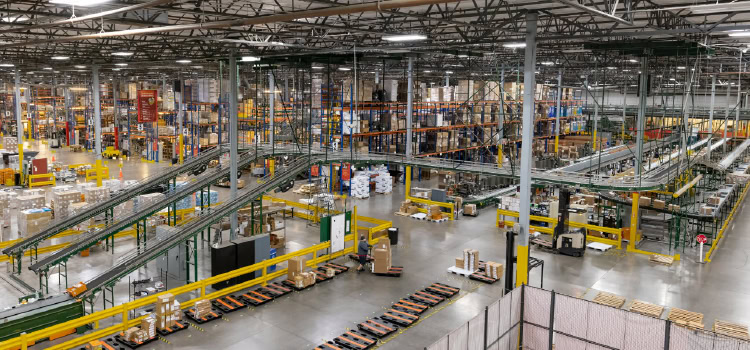
More accurate forecasts help CDW meet customer demand while protecting cash flow and minimizing excess or aged stock. The company brings inventory into its distribution centers as needed. It then configures products and applies value-added services, such as kitting or asset-tagging.
“Our supply chain’s job is simple: we deliver on our promises to customers,” says Ray Nair, senior vice president, supply chain operations with CDW, a provider of IT solutions and services.
“We don’t manufacture, we orchestrate. And orchestration demands as much precision, expertise, and commitment as any production operation,” he adds.
While matching supply and demand has always been critical, CDW recently placed greater emphasis on the financial implications of managing inventory levels, working capital, and obsolescence. Because the company holds less inventory, accurately understanding what customers will need and when they’ll need it becomes more important. More accurate forecasts help CDW meet customer demand while protecting cash flow and minimizing excess or aged stock.
Several years ago, CDW shifted from a spreadsheet-based planning process to Blue Yonder, whose AI-driven demand and supply planning platform powers CDW’s demand forecasting and inventory optimization processes. The shift to a dedicated team and platform provides a holistic view that factors in events such as large customer purchases, new product introduction cycles, and seasonality.
While data from before the shift to Blue Yonder isn’t comparable, trendlines show continual improvement in forecast accuracy, Nair says.
CDW’s team of demand and statistical planners uses Blue Yonder to analyze historical sales patterns and isolate anomalies, such as unexpectedly large orders that would skew traditional forecasts. The team leverages the system to generate customer demand plans, and supply planners then execute strategic buys against these plans, adjusting order sizes based on real-time upstream signals.
“This ensures we stock only what our customers will actually need, when they’ll need it,” Nair says. Cash flow is protected and excess inventory minimized.
To maintain real-time connectivity with its network of 1,000-plus supply partners, CDW uses EDI, APIs, and B2B feeds. The connections provide line-of-sight visibility into supplier levels and help CDW track availability, estimated times of arrival, and lifecycle changes, Nair says.
CDW brings inventory into the company’s distribution centers as needed. Products are configured and any value-added services, such as kitting or asset-tagging, are applied.
Moving from spreadsheets to Blue Yonder required an investment of time and energy. To help employees master the software, CDW partnered with consultants for several years as it built its internal capabilities. The company achieved full self-sufficiency in 2025, Nair says.
Suppliers’ use of different planning systems and data standards can complicate integrations. CDW addresses this by using APIs and EDI, maintaining strong data hygiene efforts, and collaborating regularly with OEMs and distributors.
One-off events, such as pandemic spikes, can distort models. Close governance and connectivity to upstream partners help CDW interpret these events consistently and tune forecasts quickly.
“We’ve steadily improved forecast accuracy, which reduces excessive ordering, stockouts, and obsolescence, while improving working capital efficiency and metrics,” Nair adds.
GE Appliances: Zero Distance and a Digital Thread

GE Appliances uses agentic AI to analyze patterns and better predict what and when customers will order in the future, adapting its operations accordingly.
One key to GE Appliance’s business strategy is “zero distance,” says David Head, executive director of planning and fulfillment. That is, manufacturing takes place close to customers. For the U.S. market, GE makes most products domestically at one of nine manufacturing plants or two micro-factories, which are used for smaller batch production.
As GE Appliances continues to expand its manufacturing footprint, it’s also growing its domestic supply chain, which currently includes about 6,500 U.S.-based vendors, making it stronger and more resilient, Head says. Working with suppliers that are close to GE’s facilities allows for nimbleness when demand fluctuates or external events affect the global supply chain.
The company’s “digital thread strategy” connects its supply chain partners and systems within a seamless, closed-loop system that allows for coordination and real-time sharing of data. Each day, Head and his team check that all members of the network are connected and have updated information regarding demand planning, forecasting, and production metrics.
By deploying AI, GE Appliances can correct issues in real time and even prevent some from occurring.
For example, GE’s enterprise resource planning system is integrated with AI-integrated tools from Oracle, Salesforce, and Prophecy, the company’s internal system, providing visibility into day-to-day operations. Among other benefits, this helps optimize productivity by determining exactly what needs to be produced and where it should be distributed. The system also ensures that updates flow to the appropriate stakeholders and that the production schedule is adjusted as needed.
Artificial intelligence has also helped boost the accuracy of forecasts, particularly in the single-family market, where ordering patterns fluctuate more.
“With agentic AI, we can analyze patterns to better predict what and when our customers will order in the future and adapt our operations accordingly,” Head says.
Previously, operations were less integrated, making it difficult to pinpoint exactly where the company needed to strengthen its supply chain. By the time management gained visibility into the cause of an operational issue, it often was too late to react effectively to prevent disruptions.
“The digital thread and AI-driven visibility have transformed supply chain operations from reactive to proactive,” Head says. The integrated system and improved planning processes have led to multiple benefits, such as reducing inventory levels by between 20% and 25%, even as revenue has increased.
Customer satisfaction, particularly in the multifamily segment, has noticeably increased due to better project management, execution, and product availability, Head says.
Grainger: Agility is Key
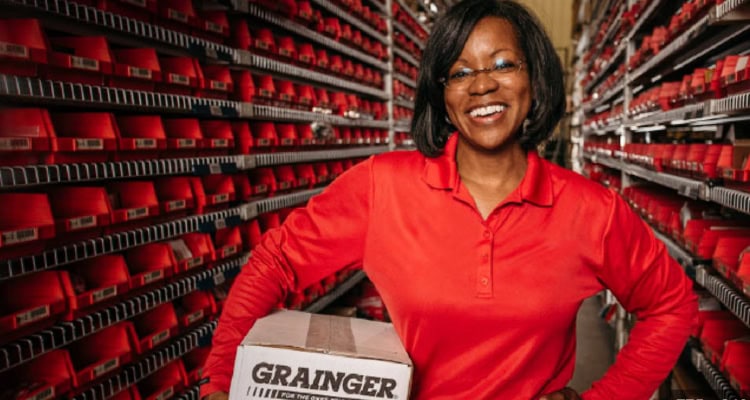
Grainger upskills its team members so they’re fluent in the latest analytical techniques.
Customers rely on Grainger, a leading broadline distributor, for stellar service and access to a broad portfolio of products, regardless of supply or economic conditions, says Anand Lal, group vice president, supply chain.
“Understanding demand patterns and optimizing inventory across our distribution network are evergreen objectives, but even more important now,” he adds.
Agility is critical, as ongoing fluctuations in the macro environment mean that Grainger must sense demand changes and adjust inventory positions quickly and seamlessly, while ensuring its network remains resilient to any global supply shocks.
It’s also important that Grainger efficiently utilize its assets as it grows its product assortment, distribution center network, and business. For instance, Grainger is constantly trying to minimize unproductive inventory, Lal says.
To reach these goals, Grainger has made significant investments in AI. It’s applying advanced analytics to assist strategic design decisions as it evolves its distribution network.
Grainger is also increasingly utilizing optimization tools to make smart, automated decisions across key supply chain processes, including demand forecasting and inventory planning. Team members are being “upskilled,” Lal says, so they’re fluent in the latest analytical techniques, while also understanding the business and functional context in which the company operates.
When implementing these solutions, the starting point is robust, quality data that can feed Grainger’s models. “We have built data on product information, customer demand, and supply chain parameters for years,” Lal says.
Grainger’s inventory optimization models have boosted customer service levels by multiple percentage points, while increased inventory efficiency is extending the life of existing distribution centers.
“We significantly improved end-to-end decision-making with the optimization models deployed throughout the supply chain,” Lal says.
Ice Mobility: Helping Clients Maintain Profitability
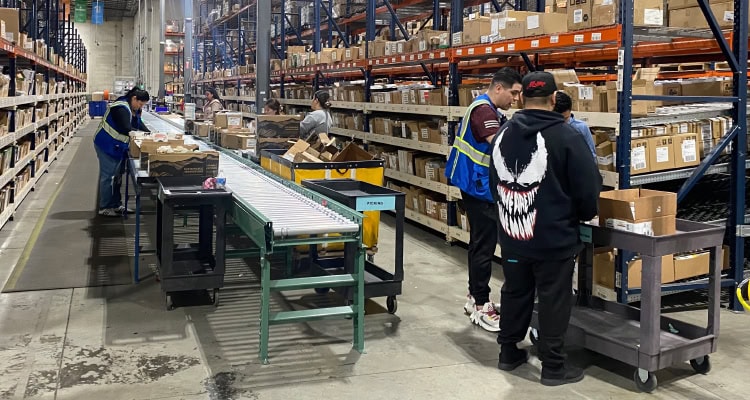
Predictive demand planning has led to fewer stockouts and returns at Ice Mobility. Order accuracy is consistently higher than 99.8%.
At Ice Mobility, precision in supply and demand planning is no longer optional. “Matching supply and demand at a SKU (stock-keeping unit) and channel level is how our clients maintain profitability and protect brand equity,” says CEO Michael Magner.
The company’s ClearIce platform applies AI-driven supply chain planning and real-time visibility to its partners. It analyzes demand signals, inventory positions, and historical performance to recommend optimal stock levels and fulfillment routes, down to the individual retail door or ecommerce channel.
For example, if the platform detects a surge in sales for a specific SKU in one region while inventory sits idle in another, it will flag the imbalance and recommend rebalancing. ClearIce also incorporates historical and seasonal trends to anticipate demand shifts ahead of peak periods, so the company can make inventory and replenishment decisions proactively.
To allow for seamless data exchange and channel alignment, ClearIce is integrated with major marketplaces and ERP platforms.
To tackle the challenge of data fragmentation, Ice Mobility early on invested heavily in middleware and API integrations that enable its systems to talk to partners’ systems in real time. “That has paid off in faster decision-making and better inventory accuracy,” Magner says.
The company also strives to balance flexibility with standardization. While every partner has unique packaging, routing, and/or compliance requirements, Ice Mobility’s operations still need to scale. “By using ClearIce’s modular workflows, customization doesn’t slow throughput,” Magner says.
Predictive demand planning has also led to fewer stockouts and returns. With the help of ClearIce, the company’s order accuracy is consistently higher than 99.8%.
Clients now view logistics not as a cost center but as a growth engine. “The integration of AI and real-time planning has helped brands launch faster, retailers sell through cleaner, and carriers maintain stronger shelf discipline during high-volume seasons,” Magner says.
Ice Mobility doesn’t just deliver. “We make distribution a competitive advantage,” Magner adds.
Sophistication Matters Less than Practicality
How tools for supply and demand planning are used matter more than how sophisticated they are, says Matt Wilson, a principal in the supply chain and industrials practice of SSA & Co. The goal is to leverage the insight generated to inform and even redesign planning processes, such as production schedules, replenishment quantities, and inventory deployment.
To that end, the analytics solution should answer practical questions about what to build and buy, and where action is needed. “A model that lives in a dashboard gets discussed,” he says. “A model that feeds production, replenishment, or deployment decisions gets used.”