
Cross-Border Logistics Solutions: Keeping Freight in Motion
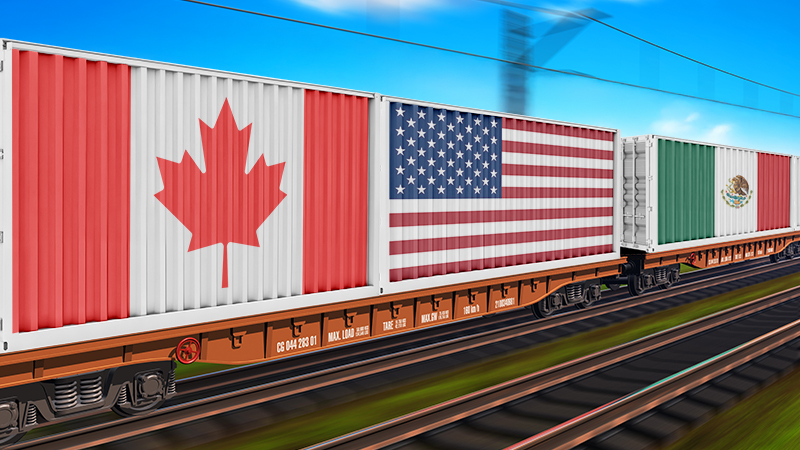
As nearshoring trends and tariff regulations reshape North American freight flows, shippers turn to experienced logistics partners to manage complexity, ensure continuity, and keep goods flowing smoothly across borders.
The implementation of the United States-Mexico-Canada Agreement (USMCA) in 2020 kick-started the nearshoring trend, driving a rise in cross-border traffic across all three nations. As the agreement comes up for review in July 2026, cross-border activity remains strong across multiple industry sectors.
Under the USMCA, Mexico has become the United States’ largest trading partner—in 2025, U.S. goods traded with Mexico totaled roughly $878 billion, surpassing both China and Canada. Mexico has become a favored destination for companies seeking diversified, resilient supply chains, offering competitive advantages such as low labor costs and short transportation lead times within North America.
THE NUANCES OF NEARSHORING
Nearshoring has emerged as a popular strategic move in recent years, allowing companies to establish manufacturing ecosystems closer to the U.S. to reduce exposure to geopolitical disruptions. More recently, in response to tariffs, companies scrambled to shift manufacturing and supply chains from Asia to new sources. As a result, both shippers and logistics providers have had to adjust their operations to the evolving environment.
“It was long overdue for companies to rethink their supply chains, and now I think we’re more resilient and efficient in how we move cargo,” says Dave Cox, CEO of Polaris Transportation Group, a cross-border LTL carrier.
While the tariff landscape remains uncertain, nearshoring appears to be a lasting trend. Companies relocating production from the Asia-Pacific region to adjacent nations can shorten lead times and lower transportation costs. With inventory closer to distribution centers and customers, shippers gain greater production flexibility and can reduce carrying costs by turning inventory faster.
Eliminating thousands of ocean or air miles also lowers the risk of port delays, container congestion, and lost cargo due to geopolitical disruptions.
“Importers have seen a lot of disruption in their supply chains because of tariff impacts, and we had to adapt as customers diversified their import strategies,” says Megan Skas, executive vice president of account management for Hub Group, a North American 3PL. “Often that meant moving away from China, but every retailer seems to have a different approach.”
Even as companies move production to North America to avoid tariffs on Chinese goods, many still need to source raw materials from China, where tariffs and transportation costs can offset some nearshoring benefits.
Shippers, then, are seeking providers capable of managing shipments on both sides of the border to reduce the costs and risks of transloading.
“Use logistics partners that can coordinate the entire journey of your shipment—from origin pickup and ocean freight to customs clearance, drayage, and delivery,” advises Chris Skraba, head of business development, West Region, for Lineage, a global cold storage logistics provider.
To maximize the benefits of cross-border operations, shippers must navigate complex customs regulations along with cultural, operational, and regulatory differences. Experienced cross-border logistics providers are invaluable in these areas, offering processes that streamline documentation and customs clearance.
TAMING CUSTOMS COMPLEXITIES
Providers with strong connections to customs agencies in each country can shorten border wait times and efficiently handle documentation for hundreds of products. For example, Hub Group connects with customs brokers on the other side of the border to automatically share shipment information, including the Complemento Carta Porte document required for moving goods within Mexico.
“We deploy it automatically, and everything happens much faster with our process in place,” says Diego Anchustegui, chief commercial director for EASO, a Hub Group company.
When tariffs were imposed on Canadian imports in early 2025, many shippers were surprised to learn their products were subject to additional fees, while other goods qualified for free-trade certification under USMCA, allowing U.S. importers to avoid duties and taxes. The confusion was tough on shippers.
“There were a lot of Canadian shippers whose goods qualified for free trade under USMCA rules but were never certified,” Cox says.
Securing goods as they cross the border is another challenge for shippers embracing nearshoring, as cargo theft in Mexico has surged in recent years. Trucks remain prime targets, though railcars and warehouses are also at risk. Technology, law enforcement collaboration, and strict security protocols can significantly reduce losses from organized gangs and opportunistic criminals.
“You have to partner with experts who know how to keep freight safe and lower the risks of accidents or theft,” Anchustegui says.
MANAGING SECURITY RISKS
Tracking technology helps lower risk by monitoring vehicles in real time and sending alerts if a truck makes an unauthorized stop or its doors are opened. Mode choice can also improve security. Intermodal containers are targeted far less frequently than trucks, making rail potentially a safer option for high-value shipments.
Carriers with a stable driver and employee base offer additional protection.
“Asset-based carriers like TNi operate their own trucks, drivers, and equipment, allowing for better oversight, consistent service, and faster problem solving when it matters most,” says Brad Colvin, director of corporate business development and logistics at Tri-National, Inc, a cross-border shipping company.
Seamless cross-border trade requires partners who can manage every step of the process—helping companies navigate customs, security, and transportation to keep goods moving efficiently between nations.
Here are a few firms helping shippers to do just that.
HUB GROUP: CROSS-BORDER EXPERTISE
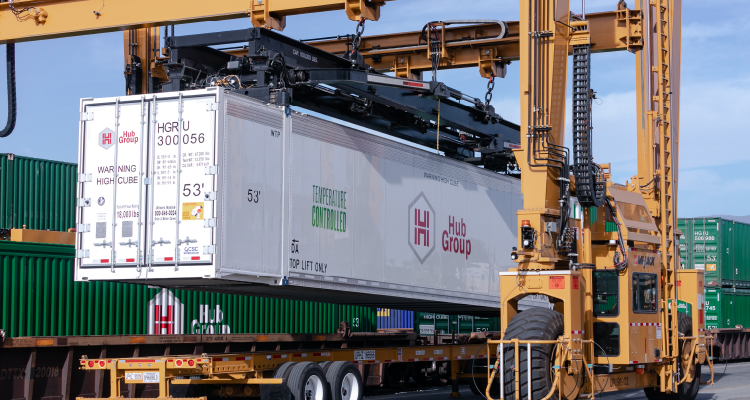
Hub Group offers cross-border shippers a single, integrated provider for North American freight flows through its joint venture with EASO, Mexico’s largest intermodal carrier.
As a strategic effort to enable a more seamless supply chain solution across North America, Hub Group has formed a joint venture with EASO, the largest intermodal carrier in Mexico, to extend its cross-border and intra-Mexico capabilities. The partnership leverages Hub’s and EASO’s established asset base to support shippers as they reassess their import strategies and diversify sourcing away from China, often with unique network requirements.
The joint venture between Hub Group and EASO is the largest cross-border and intra-Mexico intermodal company in North America. Together, the companies offer intermodal and over-the-road cross-border transportation, domestic lanes within Mexico and the U.S., dedicated trucking, brokerage across the USMCA region, and logistics services, including managed transportation, consolidation and fulfillment, and final-mile solutions. The combined service portfolio is designed to give shippers a single, integrated provider for North American freight flows.
“Being able to offer a full range of services has been critical as we adapt to customers diversifying their import strategy,” says Megan Skas, executive vice president of account management for Hub Group. “As customers pause imports or pull orders forward, we can receive that freight, transload it into our 53-foot intermodal containers, and then move it intermodally across the U.S., Canada, and Mexico.”
The joint venture combines assets and networks to provide a true boots-on-the-ground presence in both the U.S. and Mexico, including terminals, maintenance shops, drivers, and company-owned trucks at strategic locations. This infrastructure supports custom solutions that fall outside traditional transportation lanes; for example, Hub can connect Cancun and Merida to the U.S. East Coast, a lane combination not commonly available.
“We cover virtually every transportation need between Mexico, the U.S., and Canada,” says Diego Anchustegui, chief commercial director for EASO, a Hub Group company. “With our expertise, we provide a seamless, efficient, and cost-saving cross-border experience for our customers.”
As more Hub Group customers embrace nearshoring, the company is extending select U.S.-based offerings into EASO, a Hub Group company service area, including last-mile delivery and managed transportation services. Nearshoring is particularly active in CPG, automotive, home appliances, and electronics, as shippers invest in new manufacturing capacity in Mexico. The asset base model allows Hub equipment to support short-term fluctuations as importers react to tariff deadlines with extra capacity to absorb volume fluctuations.
Nearshoring not only avoids tariff implications but also reduces transport distances, cutting inventory lead times and carrying costs.
“With consistency in how goods are moving through North America, you can cut down significantly on lead time, and so you don’t have to over inflate your inventory levels. In this economic climate, most companies don’t want to be burdened with that excess inventory,” Skas says.
Hub and the EASO joint venture also support growing agricultural and cold-chain volumes by using company-owned, temperature-controlled intermodal assets as the traffic mix shifts from over-the-road to intermodal services, with telematics-enabled chain-of-custody capabilities. With the recent acquisition of Marten Transport Intermodal, Hub Group more than doubled its temperature-controlled intermodal container fleet to better support its customers’ growing needs across North America.
“A lot of our customers are looking to us to provide temperature-controlled intermodal services between Mexico, the U.S., and Canada, and we expect that market to grow in the next few months,” Anchustegui says.
FOCUS ON SECURITY
With more than 55 years of operating experience in Mexico, EASO and Hub Group have a time-tested, comprehensive cargo-security program that combines advanced technology with deep relationships with law enforcement and rail carriers. Sensors on intermodal containers send alerts if doors are opened unexpectedly, while GPS devices monitor truck driver behavior such as unscheduled stops or out-of-route movements. Data from these systems feeds into a security scoring model that helps predict load risk and pinpoint criminal activity hotspots, enabling targeted collaboration with authorities.
“It’s not only about technology; it’s about understanding the security landscape in Mexico and the protocols required to keep freight safe,” Anchustegui says.
LINEAGE: CONTINUITY ON BOTH SIDES OF THE BORDER
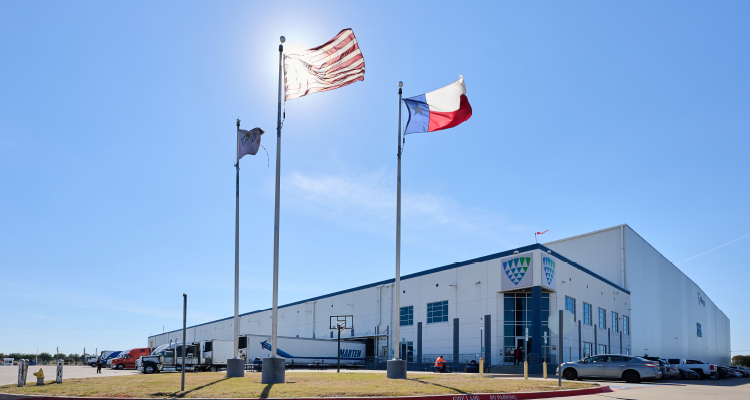
Operating more than 300 temperature-controlled warehouses in the United States and Canada, Lineage offers extensive cross-border reach.
As a freight forwarder and NVOCC, Lineage Inc.’s North American footprint provides customers with continuity on both sides of the U.S.-Canada border, allowing them to facilitate international moves with a single warehouse and transportation provider. Lineage operates the largest temperature-controlled warehouse network (300+ warehouses in both the U.S. and Canada) and has established multi-vendor consolidation, LTL, and truckload services with national reach on both sides of the border.
“Lineage provides seamless and cost-effective end-to-end product movement,” says Chris Skraba, head of business development, West Region, for Lineage.
Lineage’s dedicated import and export excellence team can help customers navigate shifting trade policies with expertise in compliance and services such as NVOCC, freight forwarding, bonded warehousing and transportation, and customs brokerage.
In addition to moving cargo, Lineage provides data-driven insights to help determine optimal inventory positioning. Using data such as historical shipments, supplier and retailer locations, transportation rates, manufacturing and warehouse locations, the Lineage team can uncover opportunities to optimize supply chains and, in some cases, reduce costs.
“Lineage’s data science capabilities and network modeling services allow us to provide customers with a network optimization visual analysis—think of it as a detailed map that shows product flows through their supply chain,” Skraba says.
For one U.S.-based importer and exporter, a Lineage analysis uncovered $2 million in annual savings. The customer wanted to address capacity issues and supply chain bottlenecks, so they turned to Lineage for a supply chain network designed to build in new efficiencies. The team discovered that expanding into four distribution centers and new markets, with additional capacity, would reduce the customer’s annual transportation costs. Additionally, Lineage recommended new ports of discharge with new distribution center locations. The proposed solution moved the customer’s inventory closer to its final destination.
LOGISTICS RESILIENCE IN ACTION
Across its network, Lineage prioritizes site resilience in facility acquisitions, conducting thorough due diligence to assess geographic risk factors, including flood-zone vulnerability and water-resource availability. For greenfield developments, resilience is integrated from initial design through construction, supporting long-term operational continuity. Many new sites are designed to meet leading energy-efficiency standards and incorporate climate-adaptive features, such as robust roofing systems engineered to withstand extreme weather events, including hail and high winds.
“This proactive approach helps to mitigate certain environmental risks and supports the resiliency of our infrastructure,” Skraba says. “Our goal is to maintain our operations so we can keep our customers’ supply chains moving.”
To manage disruptions, Lineage leverages its extensive network and integrated transportation solutions to keep customers’ supply chains moving. For example, when a specialty grocer opening its first U.S. retail location was caught in a widespread power outage caused by extreme weather, Lineage teams mobilized to move more than 10 truckloads of inventory into one of its owned facilities, preventing a $350,000 product loss due to spoilage.
In another event, Lineage helped a seafood importer whose supply chain was disrupted by port strikes. The teams worked closely with the customer’s carrier and activated a network-wide response, keeping 72 containers with $10 million in frozen product safe and moving.
International logistics will always bring complexity, and having the right partner can help shippers react dynamically to changing market conditions.
“Lineage’s experts collaborate with our customers and across service lines to deliver a streamlined experience for customers so they can make quick decisions, experience fewer delays, and have confidence their products are handled correctly from start to finish,” Skraba says.
POLARIS TRANSPORTATION GROUP: CROSS-BORDER CONSISTENCY

Polaris Transportation Group offers industry-leading transit times for daily LTL cross-border freight moving between Canada and the United States.
Founded in 1994 as a family-run company, Polaris Transportation Group has grown into one of Canada’s largest privately held cross-border less-than-truckload (LTL) carriers, operating primarily in Ontario, Quebec, Eastern Canada, as well as the U.S. From the outset, the Cox family focused on providing consistently fast cross-border transit, challenging the standard two- to three-day service for a 500-mile move. Polaris initially established overnight service between Toronto and Chicago and between Toronto and New York for a wide range of freight, including apparel, industrial and household goods, and automotive components.
Since 1994, Polaris has handled more than 5 million cross-border shipments through its network of terminals located within 500 miles of Toronto on both sides of the U.S./Canada border, offering industry-leading transit times through a strategic partner network.
“We became very intentional about our daily LTL cross-border service, and we wanted to offer our clients an option to get their goods to market quicker and faster than what traditional transportation had provided up until that time,” says Polaris CEO Dave Cox, the second generation of leadership.
In its early years, Polaris prioritized schedule integrity, even when trucks were not running at full capacity.
“We knew that if we were going to provide a service, the trucks would run on schedule, regardless of whether we were a quarter full or 100-percent full,” Cox says. “We didn’t always make money, but we sold reliability in the marketplace.” This is how Polaris raised the bar in LTL cross-border service.
During the COVID-19 capacity crunch, Cox recognized that the company was not adequately balancing capacity with demand. Polaris responded by adopting an airline-style booking model that offers shippers an alternative departure time when their preferred schedule is fully booked.
“When an order is tendered and their time is not available, we send an automatic alert offering space on the next truck,” Cox says. “Customers have come to value the transparency and integrity of knowing the schedule for their loads and having the option to choose another carrier.”
Polaris’ Priority Plus next-day service by noon provides an elevated level of care for time-sensitive freight, ensuring that pickups are completed on schedule and customs documentation is in order before the shipment reaches the border.
MASTERING CUSTOMS COMPLEXITY
Reliable, consistent service helps shippers stay on schedule and manage inventories while navigating a volatile tariff environment. Some are evolving from a just-in-time strategy to a just-in-case approach, building buffer stock to mitigate potential disruptions.
“We have long-time American partners moving goods to our warehouse facilities in Toronto just in case of tariff disruptions again,” Cox says. “Our service consistency really appeals to our clientele.”
Over time, Polaris has cultivated strong working relationships with the Canada Border Services Agency (CBSA) and U.S. Customs and Border Protection (CBP) to keep freight flowing smoothly across the border. Each load is verified to ensure accurate, complete documentation that crosses the border without delay.
New automation capabilities allow many shipments to be cleared well before pickup and several days before they reach the border.
“When clients send us a commercial invoice, we start pre-clearing the cargo immediately. Our average time is under 60 minutes for the CBSA and CBP freight-release processes,” Cox says.
TRI-NATIONAL INC: STREAMLINING NEARSHORING
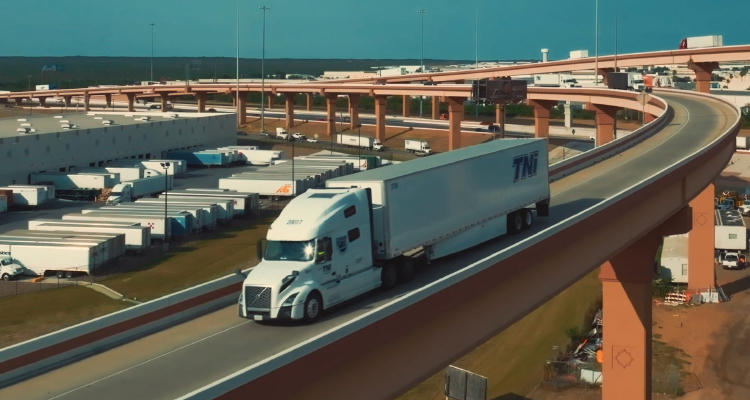
Tri-National (TNi) has more than 30 years of experience in cross-border shipping to Mexico.
Tri-National Inc. (TNi) has more than 30 years of experience as a cross-border shipping company with a primary focus on seamless cross-border transportation via service points in Mexico, through the Texas border, and across the U.S. Southeast and Midwest.
TNi has supported the growth of nearshoring, positioning manufacturing and agricultural producers close to North American consumption centers. The company has invested in meeting the growing demand for transportation and warehouse facilities along the U.S.-Mexico border.
“One of the consequences of this shift is the need for more capacity for regional lane support,” says Brad Colvin, director of corporate business development and logistics at Tri-National, Inc.
Cross-border shippers are changing inventory philosophies to counteract the threat of sudden tariff shifts and reduce lead times, inventory carrying costs, and the risk of disruption.
“This is another area where regional networks are impactful, as they help cut down on overstocking and shorten lead times,” Colvin says.
As an asset-based carrier with a base of owned trucks, facilities, and warehousing, Tri-National’s speed, efficiency, and flexibility support shippers’ nearshoring strategies. Shippers rely on TNi for regional and over-the-road services as well as daily Texas “milk runs” along 400 miles of the southern border.
In addition, shippers can take advantage of convenient and flexible warehousing services, including northbound/southbound consolidation and crossdocking from TNi’s large, multi-bay facility in Laredo. The Laredo terminal boasts 100,000 square feet of storage and 20 trailer bays, as well as access to the World Trade International Bridge and the Laredo-Colombia Solidarity International Bridge. Two additional Texas terminals are conveniently located along the border at Del Rio and Pharr. These terminals support cross-dock operations, nearshoring strategies, and load consolidation services. The new terminal in San Antonio, expected to open next year, has been expanded to 15,000 square feet.
TNi’s warehouse operations support import and export shipments, with capabilities for transloading and continuous cross-docking. TNi’s customer service team provides bilingual support to address any issues.
SECURITY OVERSIGHT
In Mexico, security concerns continue to be an issue for carriers transporting goods from the border to destinations and back. TNi’s customers can access satellite tracking on all shipments 24/7. Tracking, coupled with door-to-door crossing options, ensures that TNi shipments can reach their destination without transloading, reducing the risk of cargo loss.
To address security concerns, shippers are seeking improved processes and technology upgrades to reduce the risk of cargo loss.
“We see customers requesting stronger asset-based carrier vetting with multiple tracking capabilities,” Colvin says.
As cross-border traffic volumes continue to grow, barriers to efficiency show up under stress. While there are technological solutions, removing friction from processes could significantly improve cross-border efficiency.
“From our perspective, the biggest gap today is sharing data between customs officials,” Colvin says.
One current hurdle is the requirement for additional, immediate invoices for cargo destined for entry into Mexico, Colvin notes.
“It has added complexity to the invoicing process and requires additional work to be in compliance,” he says.