
TMS Solutions: New Capabilities, Rich Possibilities

Shippers operating without a transportation management system are leaving real money on the table. Today’s integrated TMS solutions are the map and the key, opening a treasure chest of financial governance, real-time visibility, and the intelligence needed to run smart.
As the supply chain field has evolved and grown increasingly complex, transportation management systems (TMS) have evolved too, adding powerful new capabilities to ensure that users are equipped to meet today’s sophisticated challenges.
TMS amounts to “foundational infrastructure” today—not just for transportation execution but for financial control, says Stewart Dunsmore, senior vice president of supply chain services, nVision Global. “Shippers are operating in a world defined by compressed lead times, global sourcing complexity, rising freight costs, and relentless pressure to improve visibility at every node in the chain,” he adds.
For shippers, the difference between operating without an effective TMS and using one in the current climate is the difference “between running blind and running smart,” says Mark Hill, CEO of PCS Software.
“Shippers don’t have much margin for error in today’s supply chain with tight capacity, rate volatility, and customer expectations that don’t bend,” he says.
“Shippers who still manage transportation using spreadsheets or patchwork systems are leaving real money on the table, and many of them don’t fully realize how much,” Hill says. “A modern TMS provides visibility, control, and the data to make faster, better decisions. Without it, you’re reacting. With it, you’re planning. That shift changes how a private fleet runs.”
Shippers without an effective TMS lack real-time insight into where their freight is, what it costs them, and whether their transportation providers and suppliers are performing to expectation.
“An effective TMS is no longer optional for most shippers,” says Ron Dodig, SVP, sales and logistics for CT Logistics. “It’s core to running a competitive supply chain.”
A TMS is necessary to manage the growing complexity of carriers, modes, and customer expectations. “Without it, companies rely on manual processes that limit scalability, increase costs, and impact service levels,” Dodig says. “In today’s environment, a TMS isn’t just a tool; it’s a key driver of efficiency, control, and customer satisfaction.”
When they lack a robust TMS, organizations often react to costs after the fact, relying on invoices to understand what happened. A modern TMS shifts that paradigm. It enables shippers to plan, execute, and validate transportation decisions in real time, before they incur costs.
“In that sense, a TMS is no longer just an operational tool, it is a financial governance platform that brings structure, predictability, and accountability to freight spend,” Dunsmore says.
Connected Trucking
The modern TMS serves as the central nervous system of connected trucking, says Hill, adding that he means that “literally.”
“The connected truck generates enormous amounts of data such as location, capacity, hours of service, fuel, and load status,” he says. “Without a TMS that can process and act on that data intelligently, the value of all those sensors and systems is mostly lost.”
There has been a marked shift in the TMS landscape around integration.
“The best TMS platforms today don’t just manage loads; they connect dispatch, accounting, safety, driver management, and back-office workflows in a single system,” Hill says. “That’s where the compounding value comes from.”
TMS solutions have shifted from being on-premise to more SaaS-based and API-driven.
“Old TMS systems provided limited visibility, and now true end-to-end visibility is expected,” says Brian Scott, EVP of sales for CTSI-Global.
There has been a notable change on the carrier side, too.
“We hear this directly from customers right now: Shippers are starting to ask their carriers to demonstrate their technology,” Hill says. “Not as a nice-to-have conversation, but as part of evaluating whether they want to work with them at all.
“One of our carrier customers had a shipper ask, ‘Show me what you’re running, how you will communicate with me, how I’ll have visibility into my loads,’” he adds. “They wanted proof they were working with a modern carrier, not just a capable one. That’s a shift worth paying attention to.”
Here is how providers of some of the top TMS solutions on the market help their shipper clients excel when managing today’s complex supply chains.
CDM Web Freight: Managing Shipments From ‘Anywhere’
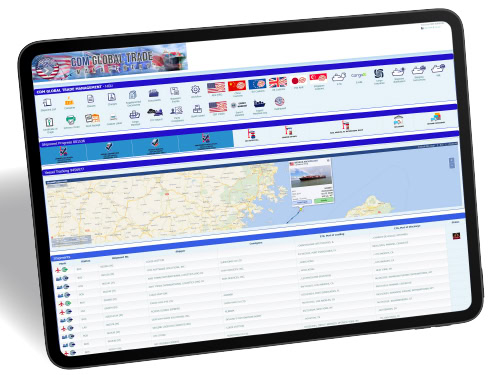
CDM Web Freight’s TMS solution provides shippers and logistics providers real-time visibility, automated freight management, carrier connectivity, and streamlined dispatch operations through a cloud-based platform.
Darrell Ortiz, founder and CEO of CDM Software Solutions, a Texas-based provider of software solutions for logistics, supply chain, global trade compliance, oil and gas asset tracking and asset utilization, has seen a notable evolution in how transportation management systems support shippers over the years. His company has been at the forefront of that evolution.
“Initially, the TMS was used to simply manage documents; it then evolved into a customer service mechanism and then to global customs compliance,” Ortiz says. “Today the TMS must be able to access data from various sources multiple times throughout the shipment cycle through automation. It then must validate the quality of data by utilizing multiple sources, and cleanse the data so that operations and customers are able to easily view key milestones in a single dashboard from first mile to in-transit to last mile.”
CDM’s TMS offering, CDM Web Freight, is distinctive because it is flexible and can be configured out of the box to meet the operational, compliance, customer service (including shipment tracking), and accounting requirements for freight forwarders, ocean carriers, and large retailers with in-house logistics departments.
The solution encompasses air freight and ocean freight, and warehouse receipts integrate into air and ocean shipments. In addition, customers are able to log in to CDM Web Freight and view current inventory.
“Our TMS is easy to use and intuitive,” Ortiz says. “Most customers can be up and running within three to five days. Because CDM Web Freight is web-based, users can utilize mobile devices such as an iPad or Galaxy to manage their shipments from anywhere without the requirement of having to connect to a server via remote access software.”
That’s all backed by the expertise and experience of the CDM Software Solutions team. The company was founded more than 38 years ago and serves customers that range from a one-man shop to Fortune 500 companies with hundreds of users. CDM Web Freight has proven to be a reliable TMS solution no matter the size and scope of the work.
CT Logistics: TMS Built for Speed and Financial Control

The platform’s strengths include deep carrier connectivity, flexible
API-driven integrations,
AI-powered tools and agents, and the ability to optimize freight movement.”
Ron Dodig
SVP, Sales & Solutions
CT Logistics
By receiving an electronic bill of lading (BOL), CT Logistics can match shipments against invoices in real time and generate highly accurate accruals, reducing discrepancies and manual intervention, explains Ron Dodig, SVP, Sales & Solutions.
In addition, if a CT Logistics client is leveraging the company’s LTL pooled rates, the TMS allows them to shop those rates alongside their own to ensure that they are selecting the most cost-effective option per lane. “This combination of integration, visibility, and rate optimization is what makes the solution especially effective,” Dodig says.
The CT Logistics TMS is primarily used by mid-market-sized shippers who often are still managing transportation through manual processes such as spreadsheets, emails, and phone calls. Their most common challenges include lack of visibility, time-consuming shipment execution, limited cost control, and frequent billing discrepancies.
“They’re typically trying to streamline operations, improve accuracy, gain better insight into their freight spend, and create a more scalable process as their business grows,” Dodig says.
CT Logistics worked with one mid-sized shipper that had been relying on manual processes and consequently struggled with limited visibility, inefficiencies, and billing discrepancies. When they implemented the CT TMS, they streamlined their operations through integration with freight audit and payment, enabling electronic BOL matching and more accurate accruals.
“The ability to shop both their own rates alongside CT’s LTL pooled rates helped optimize costs by lane, while improved visibility into shipment data supported better decision-making,” Dodig says. “Backed by an experienced team, the client gained a more efficient, scalable operation with stronger cost control and service performance.”
The CT Logistics TMS also proved vital for a leading North American manufacturer that was struggling with a fragmented transportation process across regions, multiple carriers and modes. This led to limited visibility, inconsistent carrier selection, manual processes, and challenges with auditing and reconciling freight invoices, all contributing to higher operational costs and reduced control over transportation spend.
Seamless Integration
CT Logistics implemented its enterprise TMS, seamlessly integrating with the client’s ERP and logistics partners. The solution centralized multi-mode transportation management, automated carrier selection and shipment execution, and provided real-time visibility across regions. It also consolidated freight audit and payment processes and enabled integration with business intelligence tools, giving the client improved control, consistency, and actionable insight into transportation spend.
For those clients and others, the CT Logistics TMS stands out for its ability to unify rating, execution, visibility, and decision-making across over-the-road freight in one connected platform, Dodig says. Because it is created to support complex shipping environments, the TMS helps shippers, 3PLs, and supply chain partners manage truckload, LTL, final mile, and parcel through a single solution designed for speed, consistency, and control.
“The platform’s most distinctive strengths include deep carrier connectivity, flexible API-driven integrations, AI-powered tools and agents, real-time rating and tracking, and the ability to identify more efficient opportunities to combine and optimize freight movement,” Dodig says.
“Together, these capabilities help reduce manual work, improve responsiveness, increase visibility, and support more intelligent, cost-effective transportation execution across the shipment lifecycle.”
CTSI-GLOBAL: Turning Logistics Data into Financial Certainty

CTSI-Global’s Honeybee TMS streamlines transportation management with end-to-end visibility, intelligent load optimization, automated carrier selection, shipment execution, and real-time tracking capabilities that help shippers reduce costs and improve efficiency.
With freight costs representing one of the largest expenses for companies today, an effective TMS has never been more critical. After all, a TMS can ensure that companies “do not leak money,” according to Brian Scott, executive vice president, global sales, for CTSI-Global, a Memphis-based firm that provides freight-invoice processing and supply chain management technology and consulting services, including the Honeybee TMS.
“Cost control and visibility are a must-have and a strong TMS accomplishes these needs,” Scott says.
With that in mind, CTSI-Global’s history helps give its TMS a distinctive edge, Scott says. “We have the best and fastest rate engine in the industry because we have been an auditing company for over 60 years,” he says.
CTSI-Global includes control tower services as part of its TMS offering. Dedicated teams at customer facilities oversee customer shipping volumes, work directly with carriers, track shipments using Honeybee TMS in real time, and make decisions to reroute shipments based on analytics.
For instance, CTSI-Global worked with a Fortune 100 global manufacturer that was executing a multi-year expansion of advanced production facilities. The initiative required precise coordination of high-value capital equipment, facilities infrastructure, and inter-site movements across North America, EMEA, and APAC.
The company partnered with CTSI-Global to deploy a fully integrated Control Tower, Routing Center, and Freight Audit & Payment solution that had CTSI-Global operating as an extension of the company’s supply chain organization.
CTSI-Global provided 24/7 Control Tower oversight for all capital equipment and facilities shipments through the partnership. That included end-to-end shipment orchestration; real-time tracking; daily shipment check calls and proactive issue resolution; coordination with onsite docks, warehouses, and crating and rigging partners; formal escalation within 12 hours for any shipment at risk; and business continuity planning to mitigate weather, labor, or transit disruptions.
Upstream Execution
To ensure disciplined execution upstream, the CTSI-Global Routing Center managed all inbound and inter-site shipments. That service included supplier and internal shipment entry via the web-based Honeybee TMS portal. The result was consistent routing decisions, faster response times, and cost-controlled execution.
As part of Freight Audit and Payment integration, financial governance was embedded directly into operations and not just handled downstream. This created one source of truth connecting physical shipments to financial exposure.
The project encompassed considerable scale and complexity, including more than 117 freight and parcel carriers and more than 150,000 annual shipments routed and tracked. Global origins encompassed North America, Europe, and Asia, and the project required continuous coordination across transportation, facilities, finance, and operations.
The business impact was sizable. Highlights included:
- Zero late deliveries against committed installation milestones.
- Reduced premium freight through disciplined routing and early issue detection.
- 99% shipment visibility across execution, financial, and performance dimensions.
- Improved invoice accuracy and reduced financial leakage.
- Elimination of manual reconciliation between logistics and finance teams.
- Enabled scalable ramp execution without adding internal headcount.
The project yielded $5.2 million in annual audit savings.
Ultimately, Honeybee TMS serves as a fitting complement to CTSI-Global’s freight bill audit and payment process. That has notable benefits for shippers.
“Using the same company for TMS that you use for the audit limits your integrations,” Scott says. “We capture the needed shipment data up front to use as a match to the carrier invoice when it comes in. It makes the data so much more meaningful and powerful.”
Fortigo: Flexible, Scalable, and Customer-Oriented

Upon customer funding, Fortigo can pay carriers in any geography and with any currency. This allows you to deploy a closed-loop logistics solution on a global scale, maximizing the savings potential while also improving transportation efficiency and visibility.
George Kontoravdis
Founder and President
Fortigo
Fortigo’s commitment to continuous customer-oriented improvement and innovation for its TMS solution means that the company routinely incorporates new enhancements to expand the solution’s capabilities. Those enhancements help the Fortigo TMS emphasize efficiency and agility while serving to simplify the supply chain for the shippers who use it.
Flexibility is at the core of the Fortigo TMS offering.
“Our TMS is built on a scalable architecture, allowing it to grow and adapt to the changing needs of the customer,” says George Kontoravdis, founder and president of Fortigo, an Austin, Texas-based TMS provider. “Whether managing a small volume of shipments or a large, complex transportation network, our TMS can accommodate any level of demand and scale accordingly.”
The Fortigo TMS drives down operating costs, improves access to logistics information, enforces business strategy, and reduces freight costs. In addition, it shortens the accounts receivable cycle, increases collaboration with suppliers and vendors, and improves the customer experience. The Fortigo TMS offers robust support for multimodal transportation, adding to its flexibility.
The Fortigo TMS, which is web-based, offers shippers with one system of record for logistics across multiple sites. The solution is carrier neutral and interfaces with ERP and SCM systems. It can be deployed in just weeks and allows for enterprise scalability. Ultimately, shippers using the Fortigo TMS can automate, optimize, and audit their logistics processes across the supply chain so that the right product arrives at the right place at the right time, incurring the lowest possible cost.
Fortigo’s TMS leverages advanced optimization algorithms to maximize efficiency and cost savings. It considers factors such as routing, mode selection, carrier rates, and service levels to identify the most cost-effective transportation options while following all enterprise business rules.
Fortigo uses AI-driven spend dashboards to maximize visibility and empower shippers’ supply chain data, tracking carrier performance and spend trends. End-to-end visibility into transportation activities gives users the power of proactive decision-making and exception management.
Fortigo customers include large, multinational companies with complex constraints and global shipping across all geographies while using multiple modes of transportation.
Closed-Loop Solution
Many shippers pair Fortigo’s TMS with its Freight Audit solution to enjoy the benefits of a closed-loop supply chain solution that optimizes efficiency and enhances cost control throughout the transportation lifecycle. Kontoravdis says the Fortigo closed-loop ecosystem ensures maximum visibility, and pairing Fortigo’s Freight Audit service with its TMS can compound customer savings. A closed-loop approach helps shippers access additional carriers, enforce business rules throughout the shipment process, identify incorrect charge codes, and recoup savings.
“Upon customer funding, Fortigo can pay carriers in any geography and with any currency,” Kontoravdis says. “This allows you to deploy a closed-loop logistics solution on a global scale, maximizing the savings potential while also improving transportation efficiency and visibility.”
Loadsmart: A New Era of Decision Intelligence
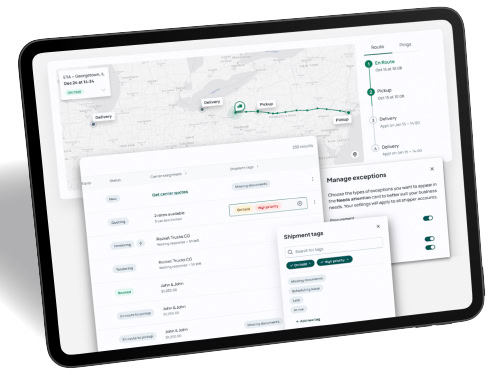
Loadsmart’s ShipperGuide, an AI-native transportation management system, streamlines freight procurement, planning, execution, visibility, and analytics with intelligent automation, real-time insights, and AI-powered workflows to help shippers move freight faster.
A TMS today should not just clean up operations, it should protect the transportation budget, says Giovanni Battistella, vice president of ShipperGuide, an AI Native TMS for procurement, planning, execution, visibility, and analytics.
“That’s where ShipperGuide is genuinely distinctive,” Battistella says. “ShipperGuide Instant Rates collapses the multi-portal, multi-email quoting cycle into a single screen—shippers add their own providers, get live multimodal pricing back in seconds, and book without leaving the TMS.”
Meanwhile, FreightIntel AI runs against a shipper’s live network and tells them where rates are drifting, where lanes are softening, and where they should renegotiate. “That’s the number that lands with a CFO,” Battistella says. “You don’t justify a TMS on operational efficiency alone. You justify it on the freight spend you stopped leaking.”
Every week, Jill Prangnell, senior product manager for ShipperGuide TMS, hears the same complaint from shippers: Their team spends most of the day on work that shouldn’t require a human at all—updating load statuses, chasing carrier confirmations, re-entering data out of email threads.
A good TMS not only digitizes that work; it erases it. ShipperGuide accomplishes that through its Copilot Tasks, Automation and ShipperGuide AI Agents.
“They handle the routine end-to-end, escalate only the real exceptions, and learn each user’s playbook over time,” Prangnell says. “The shift we see in customer accounts is dramatic—teams that used to spend most of their day pushing tasks forward now spend most of it on the strategic decisions that meaningfully move the business forward. That’s the standard we hold the product to: If a task can be done without a human in the loop, it should be.”
A crucial element of the ShipperGuide TMS is that AI is not bolted on the side of it, as you find with conventional TMS systems, according to Paul Rehmet, head of product for Loadsmart, a transportation services and software solutions provider based in Chicago.
“ShipperGuide was built the other way around,” Rehmet says. “AI and automation is in our DNA, not a feature. That’s why a shipper can talk to ShipperGuide using natural language, and ShipperGuide understands what you need and executes that action on your behalf.”
It’s also why ShipperGuide’s FreightIntel AI analytics engine runs continuously on the customer’s live data and surfaces optimization opportunities the user wouldn’t have known to look for. And it’s why the system gets smarter with every load, every tender, every invoice it sees.
“This is what AI-native means in practice, and it’s what shippers get from ShipperGuide TMS but will not get from other platforms,” Rehmet says.
Copilot Plan
ShipperGuide recently launched Copilot Plan, which automatically explains every optimization run: which constraints shaped the plan, why certain loads didn’t consolidate, what levers you can pull for a better outcome.
“The next era of TMS isn’t about more powerful AI—it’s about AI a logistics team understands and can actually act on,” Prangnell says. “Copilot Plan is the first piece of evidence we’re already across that line.”
In the next step in the evolution of transportation management systems, Battistella says the TMS won’t just record what happened or follow rules. Instead, it will reason about your data using agentic AI. The result is a shift from a system of record to a system of decision intelligence.
“We’re already shipping it inside ShipperGuide AI Native TMS today, and we think the TMS that defines the next decade is the one your team trusts to make decisions on its own,” Battistella says.
nVISION GLOBAL: Providing Auditable Cost Certainty

The clients that benefit most from IMPACT TMS are those looking to move beyond transactional transportation management and toward a model of proactive financial governance, where cost is understood, controlled, and aligned before it ever becomes an invoice.
Stewart Dunsmore
Senior Vice President of Supply Chain Services
nVision Global
“What makes IMPACT TMS so effective is its ability to bring together technology, global scale, and configurability to deliver not just visibility but also control,” says Stewart Dunsmore, senior vice president of supply chain services for nVision Global. “It shifts transportation management from a reactive process to a proactive financial discipline, where costs are understood, validated, and aligned before they ever impact the business.”
IMPACT TMS delivers value by addressing one of the most persistent gaps in transportation management: the disconnect between planning and financial validation. A key inherent advantage that IMPACT TMS offers stems from its foundation in freight audit and payment.
“It is built on the same rating logic used to validate and audit invoices, which means the cost intelligence is not theoretical,” Dunsmore says. “It is grounded in real, auditable outcomes. Most TMS platforms help you plan and move freight. IMPACT TMS ensures you understand and validate the true cost inclusive of accessorials of that freight before it moves.”
At the center of this is nVision Global’s proprietary rating engine. Unlike standard rating tools that rely on static tables or estimates, IMPACT TMS applies actual transportation provider contracts, fuel indices, global currencies, and accessorial rules in real time.
Another key differentiator is the platform’s closed-loop integration across the freight lifecycle. This means the same data used to plan and execute shipments is continuously validated, audited, and analyzed.
Equally important is the global infrastructure behind the technology. nVision Global operates with corporate-owned offices and teams around the world, enabling true 24/7 follow-the-sun support and oversight.
In addition, IMPACT TMS leverages advanced AI to process and normalize transportation data from a wide range of sources, but it is reinforced by dedicated data integrity teams who ensure long-term accuracy and consistency.
IMPACT TMS is used by a broad range of shippers, from mid-market organizations scaling their logistics operations to large, global enterprises managing complex, multimodal transportation networks.
“The clients that benefit most from IMPACT TMS are looking to move beyond transactional transportation management and toward a model of proactive financial governance, where cost is understood, controlled, and aligned before it ever becomes an invoice,” Dunsmore says.
One such client was a European retail seafood company that operates a complex, global supply chain supporting inter-European and international freight flows across multiple business units. Years of rapid growth and multiple acquisitions created a highly fragmented logistics and data environment, limiting their ability to manage freight operations holistically. nVision Global partnered with this European retail seafood company to design and deploy a comprehensive, globally aligned transportation and visibility strategy powered by the IMPACT TMS.
The result was that this seafood company transformed an acquisition-driven logistics environment into a connected, data-driven, and scalable global supply chain. The solution not only delivered immediate operational and financial benefits but also positioned them with a robust foundation to support continued growth, compliance, and customer satisfaction in an increasingly complex global market—an experience emblematic of working with nVision Global.
“Ultimately, what sets IMPACT TMS apart is its ability to deliver upfront cost certainty, continuous validation, and global operational support, all within a single ecosystem,” Dunsmore says. “It’s not just about moving freight more efficiently; it’s about managing transportation as a controlled, predictable, and financially aligned process.”
PCS SOFTWARE: Delivering Total Operational Visibility
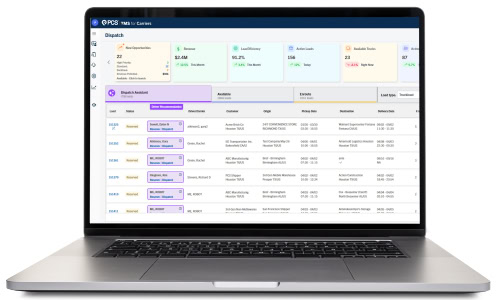
Dispatch Metrics, part of PCS Software’s TMS for carriers, delivers AI-powered dispatch management with real-time visibility, driver and load matching, and performance analytics that help fleets streamline operations, reduce empty miles, and improve profitability.
PCS Software, a Houston-based company, provides an all-in-one TMS that is built for its customers’ entire operation, not just one piece of it. That means dispatch, accounting, safety, and fleet management are all native to the PCS platform, as is the Cortex AI tool.
“No integrations to babysit, no data falling through the cracks between disconnected systems,” says Mark Hill, CEO of PCS. “When everything lives in one place, decisions happen faster and nothing slips.”
PCS’s core market comprises carriers running 25 to 500-plus trucks, asset-based brokers, and shippers operating private fleets in the 100 to 1,000 truck range. Over 1,000 transportation companies run on PCS today.
“What they have in common is that they’re running lean,” Hill says. “They don’t have sprawling IT departments or army-sized back-office teams. They need software that works without a lot of hand-holding—and they need it to actually move the needle on profitability, not just digitize paperwork.”
PCS built Cortex AI natively into its TMS platform because “when AI is an add-on, it’s also an afterthought,” Hill says. While bolt-on AI means that operators have to leave their workflow to consult it—meaning they rarely bother—when Cortex surfaces a dispatch recommendation or flags a backhaul opportunity, it does it inside the screen the dispatcher is already using.
“The AI shows up where the decision happens, not somewhere adjacent to it,” Hill says.
A third-party AI layer also works with a filtered, delayed, and incomplete version of data, but Cortex AI has direct, real-time access to everything from dispatch history to customer requirements.
“It sees the whole operation, not a slice of it,” Hill says. “That’s what makes the recommendations actually trustworthy.”
In addition, third-party AI integrations mean more points of failure that end up as support tickets, something Cortex AI users don’t have to worry about.
“For our customers, the difference is simple: Cortex doesn’t ask them to change how they work,” Hill says. “It makes the work they’re already doing smarter. That’s a fundamentally different value proposition than ‘here’s another tool to check.’”
While mid-size carriers and brokers historically have been priced out of sophisticated AI tools, PCS is closing the gap with Cortex.
“PCS is giving us enterprise-level tech that used to only be for the giants,” says Tim Reilly, vice president of Voyager Express, a Detroit-based trucking and logistics company.
Invaluable Efficiencies
Royal Logistics, a Fargo-based trucking and brokerage company, runs 100 trucks with a small operations team. Before adopting Cortex, dispatch was their biggest bottleneck—lots of manual cross-referencing, lots of time burned before a truck ever moved. After teaming with PCS, they found invaluable efficiencies.
“One-click assignments and automated driver recommendations have cut hours of manual work out of our week,” says Kaleb Groce, director of operations for Royal.
On the financial side, Hill says, customers running PCS’s integrated accounting module, which is GAAP-compliant and built into the TMS, have seen meaningful improvements in cash flow.
No matter their needs, customers benefit from PCS’s background in the field, as the company was purpose-built for transportation in 1996.
“We know this industry,” Hill says. “We didn’t start as a generic logistics platform and retool for freight. We understand the workflows, the pressures and what actually matters at 5 a.m. when a dispatcher is trying to cover a load. That depth of domain knowledge is baked into how the product works.”
TRINITY LOGISTICS: Customizing TMS for Each Client

At Trinity, our technology offerings are customizable down to the user level. This enables us to create tailored solutions that are specific to each person, while staying aligned with enterprise-level goals. That gives everyone the ability to leverage the true value that a Trinity solution can offer, whether that be in technology, capacity, or both.
Jason Will
Senior Sales Executive
Trinity Logistics
Some of the more complex organizations may be looking for extremely robust solutions, maximized automation, and full-scale integration, he explains, while other shippers are earlier in their TMS journey and are looking to digitize their supply chain and get away from managing day-to-day tasks via spreadsheets.
“That is what makes Trinity Logistics offerings so unique,” Will says. “We help our customers define what an ‘effective’ TMS means for them, and from there we work together on tailoring a solution specifically for their supply chain needs and goals.”
Trinity is a freight-solutions organization that provides TMS technology made by and for logistics professionals. The company has a wide range of clients that partner with its technology offerings, including large industry-leading organizations and fast-growing enterprises looking to penetrate growing markets.
Will says not every customer has the same goals, but similarities among Trinity’s clients tend to align across two main initiatives: streamlining and/or automating operational tasks, and leveraging data to gain an informational advantage.
“Whether we are working with a small to medium-sized shipper or a global enterprise, these are the two main challenges our TMS directly addresses by offering impactful and measurable solutions,” Will says.
Supply chains are becoming more complex every day, even for growing small to mid-sized shippers. Will says some shippers often assume their logistics operations are effective simply because shipments move and customers are served, but if an organization is truly looking to improve, then an effective TMS solution like the one Trinity offers is a key pillar to sustainable and long-term growth.
“At Trinity we have a saying, ‘If we’re doing good, we want to do great. And if we’re doing great, we want to do better,’” Will says. “Shippers should have this same mindset when looking at their supply chain.”
Customization is at the heart of Trinity’s TMS solution. Every supply chain is unique, and even within the same organization every department, team, and employee has their own tasks and goals.
“At Trinity, our technology offerings are customizable down to the user level,” Will says. “This enables us to create tailored solutions that are specific to each person, while staying aligned with enterprise-level goals. This gives everyone the ability to leverage the true value that a Trinity solution can offer, whether that be in technology, capacity, or both.”
Will says customizable technology is great but it will never maximize its potential without the right expertise.
“Trinity’s technology is truly amazing, and it can do so many great things, which is why our people are the differentiators,” Will says.
Trinity customizes its solutions to drive value where it is needed for each customer. As Will emphasizes, “it’s not a one-size-fits-all offering.” Getting that level of customization right requires stellar customer relationships and team members who can bring critical insights to the partnership.
“It’s our people who work with our customers to create a tailored program and then continue to partner with them in perpetuity,” Will says. “At Trinity we are not just a TMS provider, we are a capacity and logistics partner for our clients, helping them to achieve their supply chain goals now and every day moving forward.”
TMS Evolves: Modern Capabilities vs. Legacy Systems
TMS capabilities expand each year, providing new benefits for shippers. Looking back a decade, for instance, conversations around supply chain technology focused on faster API connections and integrations with ERP and accounting systems, with the goal of streamlining information. That type of connectivity is now standard for most current platforms.
“Today, AI dominates the conversation, but the core purpose of TMS evolution remains the same,” says Jason Will, senior sales executive for Trinity Logistics. “A TMS offers shippers the ability to work faster and smarter by leveraging data to gain an informational advantage. The tools to attain this goal are always evolving with advancements in technology, but that fundamental principle remains constant.”
Modern TMS solutions deliver far greater visibility across the supply chain, giving shippers real-time insight into shipment status, costs, and exceptions. They also capture and leverage detailed historical shipment data, allowing companies to identify trends, improve forecasting, and make more informed decisions going forward.
“The integration of AI-driven capabilities has taken this a step further, enabling predictive analytics, smarter routing, automated decision-making, and continuous optimization,” says Ron Dodig, SVP, sales and logistics for CT Logistics. “As a result, a modern TMS is no longer just about managing freight; it’s about driving intelligence and performance across the entire transportation network.”
Ten years ago, a TMS was primarily a rate-shopping and load-tendering tool used to select a transportation provider and generate a bill of lading. Although that functionality is still important, it is only a fraction of what modern platforms should deliver.
“Today’s TMS must operate across the full transportation lifecycle, from inbound supplier management and purchase order visibility through outbound fulfillment, customer delivery, and post-shipment analytics,” says Stewart Dunsmore, senior vice president of supply chain services, nVision Global.
Tellingly, the industry has seen a shift in who owns the TMS conversation, too, Dunsmore says. While it used to be primarily a logistics IT decision, today CFOs and supply chain executives are driving the conversation.
The reason? They recognize that transportation intelligence directly impacts working capital, customer satisfaction, and EBITDA.
“The evolution is clear: from execution-centric systems to integrated platforms that connect planning, execution, audit, and analytics,” Dunsmore says. “The TMS is no longer just moving freight; it is managing the financial signals behind every shipment.”
TMS Suppliers Guide
In the market for a transportation management system?
Start your search with these leading providers.
CDM Software Solutions
cdmsoft.com
CDM Web Freight is a flexible, web-based TMS designed for freight forwarders, ocean carriers, and large retailers, offering configuration for operational, compliance, customer service, and accounting needs. Because the system is web-based, users can manage shipments and view current inventory from anywhere using mobile devices.
CT Logistics
ctlogistics.com
The CT Logistics TMS is built to seamlessly integrate with the company’s freight audit and payment services to create a more accurate and efficient end-to-end process.
This solution unifies rating, execution, visibility, and decision-making for multi-mode over-the-road freight (truckload, LTL, final mile, and parcel) on one connected platform.
CTSI-Global
ctsi-global.com
Honeybee TMS is integrated with CTSI-Global’s freight audit and pay service, which leverages historical data to drive its rate engines and predictive analytics. The system streamlines transportation execution from order to payment, consolidating orders, rate shopping, and tracking shipments, and is complemented by dedicated control tower services.
Fortigo
fortigo.com
The Fortigo TMS is a web-based solution built on a scalable architecture, offering one system of record for logistics across multiple sites and supporting multimodal transportation. It uses advanced optimization algorithms to maximize efficiency and cost savings by considering routing, mode selection, and carrier rates.
Loadsmart
loadsmart.com
Loadsmart’s ShipperGuide TMS targets mid-market shippers and supports multimodal operations including truckload, LTL, intermodal, and drayage. The platform offers end-to-end visibility for procurement, planning, execution, and analysis, with AI tools such as FreightIntel AI providing real-time guidance.
nVision Global
nvisionglobal.com
The IMPACT TMS is a global freight management solution built on the same rating logic as freight audit and payment, ensuring costs are validated before the freight moves. It allows global clients to manage regional shipments using local currencies while viewing all supply chain data centrally in their native currency.
PCS Software
pcssoftware.com
PCS Software provides an all-in-one TMS that integrates dispatch, accounting, safety, and fleet management natively, eliminating the need to manage integrations between separate systems. The platform features the Cortex AI tool, which is embedded to surface real-time dispatch recommendations and other insights within the user’s existing workflow.
Tai Software
tai-software.com
Tai Software’s TMS solution is a cloud-based, all-in-one domestic freight management system designed specifically for freight brokers. It focuses on full-scale automation for both full truckload and less-than-truckload shipments, using an open ecosystem to integrate directly with more than 500 carriers, load boards, and capacity tools.
Trinity Logistics
trinitylogistics.com
Trinity Logistics offers customizable TMS technology that can be tailored to align with each client’s specific supply chain needs and goals. The solutions are designed to streamline and automate operational tasks while leveraging data to provide customers with an informational advantage.