
Logistics In Hawaii: Sustaining Supply Chains
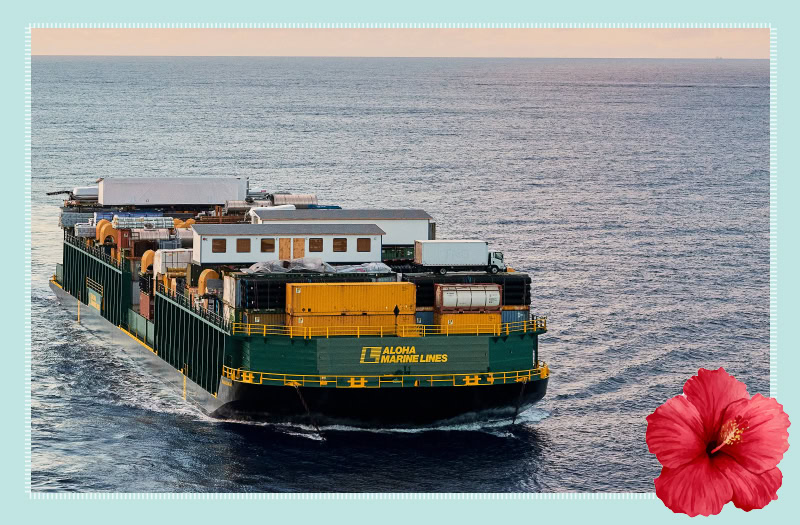
Logistics companies serving the Hawaiian Islands cultivate resilience while navigating unique challenges, including unpredictable weather events.
Hawaii is often regarded as a poetic sanctuary where dramatic peaks meet the magnificent Pacific Ocean. Yet the state also has a more sobering distinction: It is especially vulnerable to “black swan” events—unpredictable phenomena with severe and widespread consequences that can reverberate across the economy. In March 2026, flooding storms, including back-to-back Kona low systems affecting Oahu and Maui, once again underscored the impact on island logistics networks.
For the companies responsible for maintaining cargo flows to the state’s residents and businesses, resilience is not optional; it is essential.
In addition to economic initiatives involving tax cuts, housing development, and healthcare expansion, Hawaii Gov. Josh Green highlighted Maui recovery efforts in his 2026 State of the State address in January. Those efforts primarily refer to the ongoing recovery from the devastating Aug. 8, 2023 Maui wildfires, particularly the destruction of Lahaina. For logistics professionals, the fires created extraordinary challenges, disrupting supply chain operations across the Hawaiian Islands.
The fires were exacerbated by extreme winds associated with Hurricane Dora, which passed south of Hawaii. In the face of drought conditions, the hurricane-driven winds allowed the fires to spread rapidly.
Because the state relies heavily on imported goods delivered by sea and air, logistics is a critical economic lifeline. It is no surprise, then, that both state and federal governments are focused on strengthening the islands’ logistics infrastructure.
In his January address, Green cited the securing of $2 billion in federal disaster funding tied to the Maui wildfires, along with continued investments in wildfire mitigation, infrastructure upgrades, and community rebuilding efforts.
Keeping pace with Hawaii’s evolving shipping infrastructure—on land, in the air, and at sea—are logistics providers that specialize in navigating the state’s unique operational environment. Hawaii’s geographic isolation requires providers to coordinate ocean freight, consolidation services, trucking, and final-mile delivery within a highly integrated supply chain model.
Multiple Locations Amplify Challenges
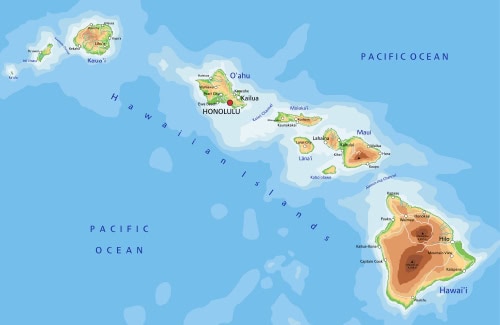
Although mainland residents tend to think of Hawaii as a single destination, the state comprises multiple islands, each with distinct logistical demands. The Hawaiian archipelago includes eight main islands: Niihau, Kauai, Oahu, Molokai, Lanai, Maui, Hawaii (the Big Island), and Kahoolawe. Each island presents unique geographic and infrastructure considerations, with the Big Island serving as both the largest island and the southeasternmost point in the chain.
Oahu is by far the most populous island, home to well over half of Hawaii’s residents, as well as the state capital, Honolulu. The next most populous islands are the Big Island, Maui, and Kauai.
Hawaii’s remote Pacific location and multi-island geography create a logistics landscape that demands specialized expertise. While geographic isolation has driven innovation in supply chain management, the state’s dispersed island network also amplifies distribution challenges.
The roughly 2,400-mile distance from the U.S. mainland increases shipping costs, extends lead times, and heightens vulnerability to weather disruptions and natural disasters. Hawaii’s heavy dependence on imports makes reliable, just-in-time delivery especially important given its limited storage capacity. Any disruption can quickly affect the availability of food, medicine, fuel, and other essential supplies. Port congestion at key hubs, such as Honolulu Harbor, can further strain operations.
As a result, logistics providers serving Hawaii must be proficient across multiple transportation modes while adapting to the unique operational realities of inter-island commerce.
Honing Multimodal Capabilities
 “If something needs to be delivered quickly, we can transport it via air or ship.
If it’s less urgent, we can save the customer money by using our barge service. We call this service Dynamic Routing.”
Bret Harper
Vice President of Sales
Aloha Marine Lines
Lynden
“You pay for the speed you need,” says Bret Harper, vice president of sales for Aloha Marine Lines, part of the Lynden family of companies. “Our combined capabilities allow customers to have their freight picked up from suppliers on the mainland and shipped to Hawaii all by the same company, simplifying the entire process. If something needs to be delivered quickly, we can transport it via air or ship. If it’s less urgent, we can save the customer money by using our barge service. We call this service Dynamic Routing.”
The Aloha Marine Lines barge service features bi-weekly voyages between Seattle and Hawaii. “We use our Makani Class barges for our Hawaii service,” says Harper. “They are built to hold up to the rigors of transiting the open ocean and the rough weather that can occur on that journey.”
The Makani Class barges are 438 feet long and 105 feet wide, with a deadweight capacity of 16,900 tons. They are fitted with high binwalls, which help to keep freight secure while minimizing the amount of lashing needed for each voyage. The newest Makani Class barge, the Makani Loa, was built and added to the fleet in 2024.
Finding innovative ways to service customers efficiently and effectively is a core focus of Lynden. “The binwalls on the Makani Class barges are a good example,” says Harper. “With the walled barges, fewer preparations are required to protect cargo from the ocean elements, so most cargo can be handled the same as it is on the mainland.”
Preparing for All Contingencies
Lynden’s innovative equipment also includes a fleet of 102-inch-wide equipment that start at 20 feet long and go as long as 53 feet. “Lynden’s wide variety of unique equipment ensures that we can utilize the best solution for the customer’s freight,” says Harper. Regardless of any special requirements, Harper adds, Lynden freight specialists work with customers “every step of the way” to ensure that all contingencies are handled. “We work through the booking process to make sure all requirements are being met from the start.”
Lynden has systems in place to prepare for the unexpected, unpredictable events that so often befall Hawaii, Harper says. “Transportation flexibility is key for logistics managers responding to supply chain challenges during unexpected events,” he says. “Lynden focuses on multimodal solutions precisely for that reason, utilizing combinations of air, land, and sea options to best balance time and cost.
“We work with our customers to build logistics plans for their shipments, starting from the source or manufacturer all the way to the final delivery,” he adds. “As situations change, we can adjust the modes being utilized to ensure shipments get to their destination exactly when they are needed.”
Forward Thinking Built In
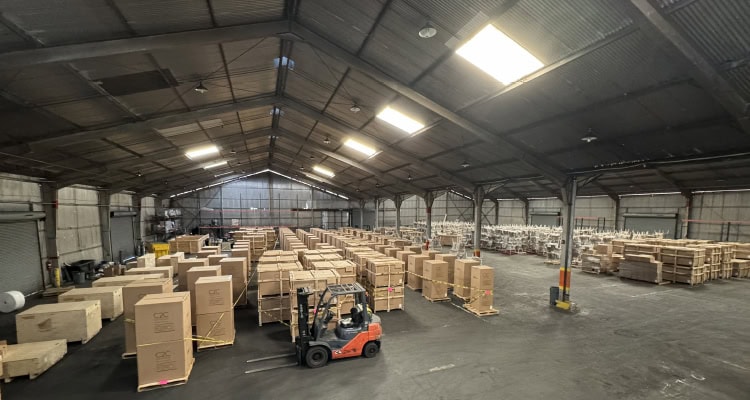
Logistics Plus maintains warehouses and offices in strategic locations across the United States, including Honolulu.
You might say that global supply chain solutions company Logistics Plus, Inc. was built to meet the kinds of challenges that Hawaii presents. After all, the company boasts that it was built for “what’s next.”
Founded in 1996 in Erie, Pennsylvania, Logistics Plus now maintains offices and warehouses in strategic locations across the United States, including Honolulu.
The company also maintains a broad trans-Pacific and global footprint stretching from Canada to Vietnam and beyond.
“Logistics Plus opened its Honolulu office in late 2022, and the market response has been strong,” says Cara Fradelos, sales manager for Logistics Plus Hawaii. “Troy Pagaduan, our director of operations, along with Frank Knafelz, our senior vice president, has built a capable local team that combines island expertise with the resources of a global organization.”
In March 2025, the company opened a 75,000-square-foot warehouse just five minutes from Honolulu Harbor and Daniel K. Inouye International Airport. “That proximity to port and air infrastructure is essential when serving island-based clients,” Fradelos says.
Pagaduan believes that the characteristics of logistics in Hawaii require a global perspective to navigate effectively. “Being in the middle of the Pacific Ocean, we are very vulnerable to weather and other delays,” he explains. “Staying in touch with our clients, setting shipping expectations, and helping forecast their needs really help to mitigate disruptions to service.”
Because global supply chain disruptions hit Hawaii particularly hard, the company’s “what’s next” approach to logistics frequently comes into play. “Most of our product has to come via shipping, so planning ahead and forecasting the future is always best practice,” Pagaduan says.
“Hawaii has always benefited from a strong geographic position, but global attention on the Pacific has expanded considerably,” Fradelos adds. “As U.S. trade policy shifts to diversify away from single-source dependencies, Hawaii’s role as a strategic waypoint continues to grow, both for goods bound for the islands and for cargo moving on to Guam, Australia, and other Pacific destinations.”
Anticipating the Future
Economics also underscores the need for forward thinking. “Most economic changes affect Hawaii in more ways than one,” Pagaduan says. “For example, increases in fuel prices affect pricing for just about everything from shipping and deliveries. Helping to understand your needs, but also being aware of what is going on globally, will help prepare for what’s coming.”
Pagaduan sees shifts ahead for Hawaii’s supply chains. “Tourism and trade play a big part of the global trade pattern,” he says. “I could see a change of more exports out of Hawaii along with an increase of imported goods.” He believes more international imports will be needed to support the state.
Hawaii’s steady growth will impact freight demand and infrastructure, he adds. “It will be interesting to see what type of changes are in store for Hawaii,” he says. “Hawaii is a growing state, and freight demand will always be a big priority.”
Logistics Plus will be ready to respond. “LP started out small, trying to carve a niche in the islands, and we have been consistent with growth in the past couple of years,” he says. “Our FF&E (Furniture, Fixtures, and Equipment) department started doing projects on the island the past couple of years as well.”
Leveraging a Historical Perspective
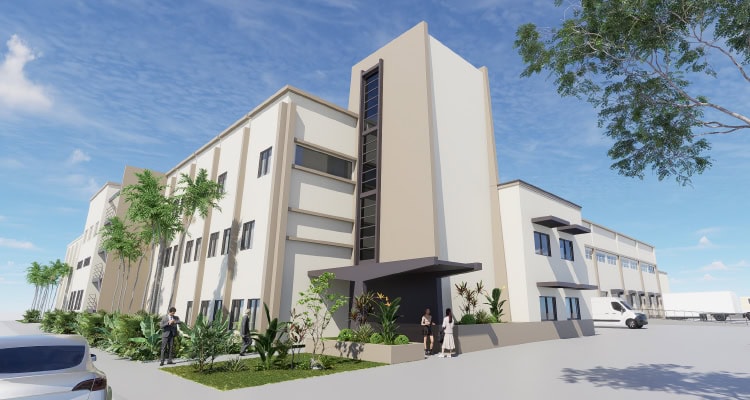
Honolulu Freight Service (HFS) purchased the former Love’s Bakery location on Middle Street in Honolulu. The site will serve as the company’s headquarters and 92,400-square-foot Honolulu operations center (rendering above).
Having a long history gives logistics companies a major advantage in navigating Hawaii’s unique challenges. Case in point: Honolulu Freight Service (HFS).
Founded 90 years ago, HFS provides multimodal freight transportation services connecting Hawaii and Guam to the continental United States. The company’s roots date to 1936, when Paul Beidleman delivered freight from Yuma, Arizona, to Los Angeles, California, under a company called Yuma Merchants Express. The freight included cargo bound for Honolulu.
When some truckers were unwilling to deliver cargo headed for Hawaii to the docks in southern California, Paul Beidleman launched another company, United Drayage, to handle the work. Notably, this occurred more than 20 years before Hawaii became a state.
“We’ve built decades of trust and enjoy many long relationships,” says James Beidleman, the founder’s grandson and today’s president and CEO.
The company’s Hawaii footprint is substantial. HFS owns and operates one of the largest Oahu trucking operations and a diverse warehousing service, ensuring optimum intra- and inter-island service.
HFS provides partial and full container load services and offers short-term warehousing. In addition, the company provides refrigerated pickup and delivery from three U.S. West Coast port areas to Hawaii.
Honolulu Freight Service Honolulu, the company’s terminal, is located less than two miles from major steamship lines and carriers. The 60,000-square-foot facility features 14 dock-high doors, ramp access, and quick access to the freeway. The operations department runs 24/7, and customer service is located on-site.
Providing a Comprehensive Network
With an emphasis on serving Hawaii with state-of-the-art technology and infrastructure, HFS offers a comprehensive network of all-points less-than-truckload (LTL), truckload (TL), and inter-/multimodal services (steamship, barge, rail, and air) throughout all 50 U.S. states, as well as specialized services, warehousing, and equipment. HFS is the largest less-than-container (LCL) freight forwarder in Hawaii, with the volume to efficiently direct load shipments to and from all islands.
Three years ago, the company purchased the former Love’s Bakery location on Middle Street in Honolulu, which will serve as the company’s headquarters and 92,400-square-foot Honolulu operations center.
The company’s success has been achieved by building a tradition of superior service and cost-effective solutions for every customer. Through its growing network of asset-based trucking companies, state-of-the-art terminals, warehouses, logistics technologies, and detailed tracking information, HFS can provide visibility and shipment information over land, air, and sea.
Complementing the HFS inter-island cold chain container movements are daily inter-island airfreight movements. This service is a function of the company’s Oahu-based trucking division (XPress Trucking). Inter-island airfreight moves through TSA-approved facilities, providing same-day transportation of products between each of the Hawaiian Islands.
In addition to Honolulu, HFS terminal locations include Tacoma, Washington; Los Angeles and Oakland, California; Portland, Oregon; and Guam.
A spirit of innovation continues to drive the company. From the earliest days of using bright stickers to quickly identify packaged goods as they came off the ship, followed by plywood containers to minimize damage, to today’s state-of-the-art terminal and warehousing operations throughout the U.S. West Coast, Hawaii, and Guam, Honolulu Freight Service works closely with each customer to identify the best shipping solution for their cargo, budget, and timeline.
Offering Predictability and Control
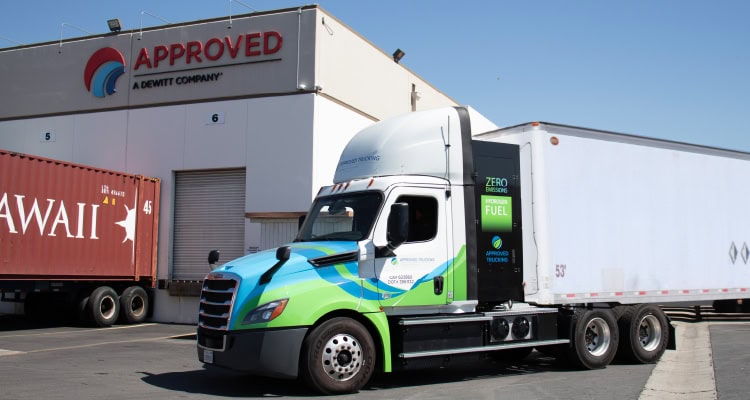
Approved Freight Forwarders serves Hawaii, Guam, Puerto Rico, and Alaska, combining regional expertise with international freight forwarding services.
Local, up-to-the-minute knowledge is, of course, vital to meeting the changing logistics needs of Hawaii, where weather events and other conditions are constantly in flux. Approved Freight Forwarders, a freight specialist serving Hawaii, Guam, Puerto Rico, and Alaska, combines regional expertise with comprehensive international freight forwarding services, positioning itself to be prepared for the unpredictable.
With owned trucks, warehousing, and experienced teams operating throughout the Hawaiian Islands, the company brings greater control and predictability to Hawaii freight shipping. By managing the Hawaii freight process in-house, Approved Freight Forwarders helps customers avoid unnecessary handoffs, reduce risk, and keep costs in check.
Shippers working with Approved Freight Forwarders benefit from having a single partner for ocean, air, trucking, warehousing, and consolidation. This coordinated approach allows for proactive communication from quote to final delivery while helping to streamline operations and improve efficiency.
Part of the DeWitt family of companies, which was founded in 1927, Approved Freight Forwarders got its start three decades ago serving the Guam market and has since expanded to Hawaii and California, serving as a key link to the Pacific and destinations around the world.
Now deeply rooted in Hawaii, one of the company’s key strengths is its ability to solve customers’ unique challenges through local expertise and its close relationship with sister company Royal Hawaiian Movers, the largest mover in Hawaii.
Royal Hawaiian Movers has been serving Hawaii for more than 40 years and is the only moving company in Hawaii to have locations and crews on Oahu, Maui, Kauai, and the Big Island. The company helps customers with any move that involves Hawaii, whether it is moving to Hawaii, moving to the mainland, or moving locally.
Likewise, with terminals on Oahu, Maui, the Big Island, and Kauai, Approved Freight Forwarders offers end-to-end freight and logistics solutions for shippers who require reliability, visibility, and expertise.
Making Tech Advances
Over the years, the company has made substantial investments in technology, including near real-time shipment tracking and digitized documentation processes that simplify the freight experience for customers.
Moreover, Approved Freight Forwarders has optimized its inland-to-Hawaii consolidation services and invested in scalable infrastructure, including state-of-the-art warehouses in Honolulu and Los Angeles, to support faster throughput and more efficient inventory management.
The company recognizes that Hawaii’s logistics environment is not simply an extension of West Coast shipping. The reality is that Hawaii requires a specialized, localized approach, making a blend of international and local transportation, distinct regulatory considerations, and port-specific requirements essential to effective freight operations. With that in mind, Approved Freight Forwarders develops customized logistics solutions designed to address these unique challenges.
About 85% of the products consumed in Hawaii are imported from distant locations. This heavy reliance on imported goods underscores the importance of efficient logistics in maintaining a steady supply of essential products, such as food, medicine, and other commodities.
As Hawaii’s economy continues to evolve and supply chains become increasingly complex, businesses depend on freight partners that understand the unique dynamics of island transportation. By combining local knowledge, operational control, and a broad network of logistics capabilities, Approved Freight Forwarders helps customers navigate challenges while maintaining the consistent flow of goods that Hawaii’s communities and businesses rely on every day.
Ensuring Seamless Experiences
So many poetic phrases describe Hawaii: tropical paradise, lush landscapes, vibrant rainbows. While appreciating the breathtaking beauty of the islands, however, logistics professionals see the scattered archipelago as something of a puzzle laid out on a table that may be overturned at any moment.
They pick up the pieces with uncommon efficiency and speed, trained to be resilient in the face of challenges. Change is a constant in the logistics industry, especially in Hawaii, but the most successful logistics providers ensure their clients experience seamless delivery, even as conditions evolve.
Meeting Cargo Needs
The state’s transportation infrastructure meets cargo demands, as well as facilitates passenger travel. The State of Hawaii Department of Transportation (HDOT) Airports Division directly manages a statewide system of 15 public airports:
- Daniel K. Inouye International (HNL)
- Kahului (OGG)
- Hilo International (ITO)
- Kona International (KOA)
- Līhuʻe (LIH)
- Molokaʻi (MKK)
- Lānaʻi (LNY)
- Hana (HNM)
- Kapalua (JHM)
- Kalaupapa (LUP)
- Waimea-Kohala (MUE)
- Kalaeloa (JRF)
- Dillingham Airfield (HDH)
- Port Allen (PAK)
- Upolu (UPP)
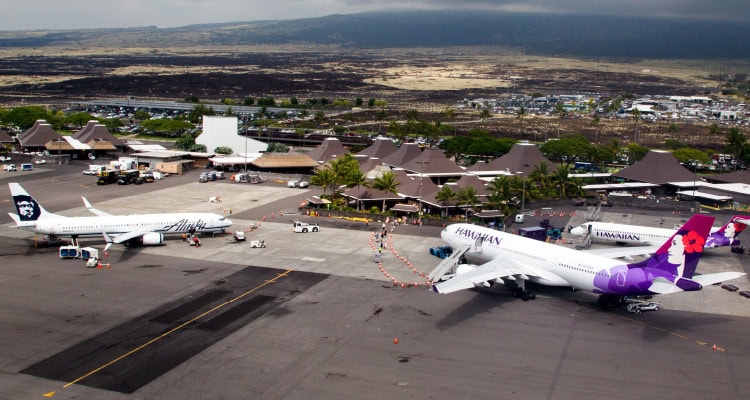
Kona International
Meanwhile, the HDOT’s harbors division maintains 10 state-commercial harbors:
- Honolulu Harbor (Oahu)
- Kalaeloa Barbers Point Harbor (Oahu)
- Hilo Harbor (Hawaii Island)
- Kawaihae Harbor (Hawaii Island)
- Kahului Harbor (Maui)
- Kaunakakai Harbor (Molokai)
- Kaumalapau Harbor (Lana)
- Nāwiliwili Harbor (Kauai)
- Port Allen Harbor (Kauai)
- Hana Harbor (Maui)
According to the U.S. Bureau of Transportation Statistics, Hawaii has about 4,281 miles of public roads, including state, county, and other public roadways.
Official HDOT information and federal summaries indicate that Hawaii’s Department of Transportation is responsible for about 2,450 lane-miles of state highways and related facilities.
The highway system is unusually complex due to Hawaii’s island geography and the presence of federally funded interstate highways that exist entirely within the island of Oahu, where Hawaii’s interstate highways H-1, H-2, and H-3 are all located.
Flying High: Airports of the Future
Major improvements are in the works for Hawaii’s airports, which bring millions of visitors to the Hawaiian Islands each year and allow Hawaii to serve as a major hub that links the U.S. mainland with Asia and destinations beyond.
The Hawaii Airports Modernization Program seeks to: create airports that are modern in their response to the demands and rigors of air travel; are Hawaiian in their response to the unique cultural and natural environment; are facilities of which both residents and visitors alike are proud; are places that embody the Aloha spirit and create a gateway to Hawaii. The program was developed in close cooperation with the airlines and other airport and visitor industry partners.
The program is part of Governor Josh Green’s continuing work on airport improvements throughout the state and includes these goals:
- Expand capacity at Hawaii’s airports; improve efficiency and safety
- Create jobs and stimulate the state’s economy
- Integrate principles of sustainability into design features
- Embrace Hawaiian cultural elements
SOURCE: Hawaii Department of Transportation (HDOT): Airports Modernization Program