
Uniting the Public and Private Sectors to Achieve High-Stakes Goals
With a lifelong immersion in politics and business, Eugene Laney, president and CEO of the AAEI, values the art of listening, the power of public-private partnerships, and adaptability as the ultimate trade secret.
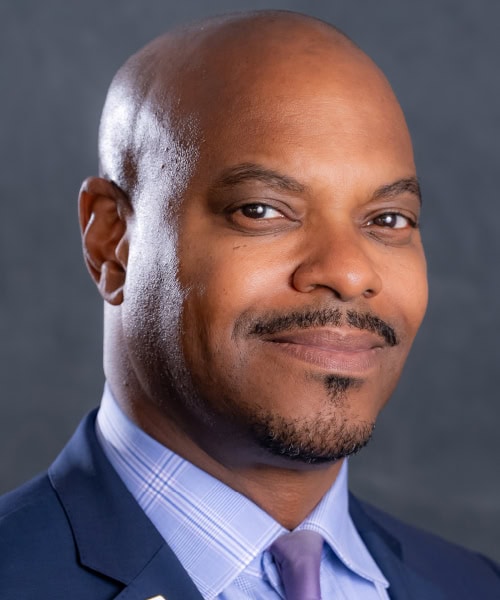
Eugene Laney, President and CEO, American Association of Exporters and Importers
Eugene Laney is president and CEO of the American Association of Exporters and Importers (AAEI), a trade organization representing U.S. companies engaged in global trade. He brings more than 30 years of experience in public and governmental affairs to his role.
Laney has been learning about the ways business, politics, and government intersect since childhood. “When I was a toddler, my mom took me to see President Nixon as he waved farewell,” he says. “I didn’t understand why I was there, but politics has always been a big part of my life.”
When President Harding founded the AAEI in 1921, it was made up of small- and mid-sized exporters that had gathered to figure out ways to grow their business. Today, the organization has the same mission it had back then: finding ways to help U.S. companies grow globally and navigate the challenges that come with growth.
The AAEI’s traditional constituency includes customs brokers and trade compliance professionals who get into the nitty gritty work of classifications, HTS codes, and regulations. Today, because all areas of most companies are engaged in trade, AAEI’s constituency also includes supply chain managers or CFOs who oversee the distribution of refunds or deal with tariffs. It includes government affairs experts who lobby on Capitol Hill about trade issues and pricing departments who work with tariffs.
Here, Laney talks about his approach to bringing together individuals from different organizations in the public and private sectors to reach common, but often difficult, goals.
IL: AAEI has members from different companies and industries, some are competitors. How do you manage the varying goals?
One of the biggest challenges is finding consistency among competitors. It helps to focus on the basic idea of facilitating trade. Once everyone can agree that we all want an efficient, effective, safe, and secure trade facilitation network, it becomes easier to identify how to reach that goal while avoiding some of the competitive issues.
IL: What challenges keep you up at night?
The cost of compliance is a big challenge. We’ve seen a movement away from finding a balance between trade facilitation and enforcement to greater emphasis on enforcement. Most companies try to be good actors, but enforcement boosts the cost of compliance. For instance, not only do companies assume the cost of tariffs, but they also take on the work of understanding the regulations to ensure they implement the tariffs correctly.
One example: In 2025, the administration expanded and increased existing steel and aluminum tariffs. This impacted even dental floss companies because each container has a tiny strip of steel to cut the floss. Because of those little pieces of steel, these companies had to figure out whether and how to comply with the rules. There’s a cost associated with that.
AAEI let the administration know its members needed proper guidance, as well as a way to not overly impact small businesses. The administration then made some revisions based on that feedback.
Unfortunately, the changes typically happen on the back end. One of the biggest challenges is trying to create more public-private partnerships in policy formulation so we don’t have to do revisions or deal with unintended consequences.
IL: What public-private partnerships have you been involved with?
After the terrorist attacks of Sept. 11, 2001, I managed a cross-functional team and led the advocacy efforts of the National Business Travel Association on Capitol Hill. I also met with multiple federal agencies, serving as liaison to the Federal Aviation Administration, Transportation Security Administration (TSA) and other organizations. We helped shape post-9/11 travel policies and supported the creation of TSA’s Registered Traveler Program, among other accomplishments.
I was also involved with the Air Cargo Advance Screening (ACAS) program implemented in 2018. Terrorists had been putting explosives in cargo, then sending the shipments across the globe and to the United States. We worked with the TSA and Customs to identify ways to get information on shipments prior to their arrival in the United States.
ACAS requires advanced air cargo information on shipments arriving in the United States from foreign locations, replacing the previous voluntary process. It has become best practice for customs authorities across the globe. So that public-private partnership led to good policy.
IL: What attributes are critical for effective leaders?
You have to have vision—an idea of where you’re trying to take the organization. Then you have to get alignment from everyone who follows you.
A big part of this is listening. My staff meetings are more of a listening session to understand the challenges and opportunities so we can move forward. It’s the same at our AAEI trade focus committee meetings. I listen to our importers, exporters, and trade service providers talk about the issues. Then, I take a step back and work with the staff to address the concerns they raised.
Another part of leadership is “cultivating the good.” Once you identify where a company or individual wants to go, you cultivate what they’re good at and press forward versus trying to be everything for everyone.
AAEI has many technical experts on trade, which is different from other industry or trade associations. We can leverage their expertise when we try to advance policy or provide recommendations.
IL: How do you keep AAEI innovative?
I know my staff gets tired of it, but I press them to continue their education around artificial intelligence (AI). So much is changing, and we have to consistently and carefully educate ourselves outside of, as well as within, our industry.
We also have to think about the next crisis. Sometimes we get so caught up in day-to-day operations that we forget two years from now we may have a new administration, a new trade policy, and be three years into new AI technology.
So much is going to change. We have to start thinking about that now.
Guess Who’s Coming to Dinner?
If Eugene Laney could host a dinner party with several leaders, Henry Kissinger would top his invitation list.
One of Laney’s greatest professional moments was the day he spent with Kissinger before a conference where he was speaking. Laney normally picks up conference speakers and takes them to the conference, where they speak and leave. Instead, he spent the day with Kissinger and his bodyguard.
They talked about politics briefly, but then they talked about dating, marriage, and their favorite football teams. Laney learned that someone can be a huge figure and still be an everyday person.
Laney would also love to sit down with Muhammad Ali. A more contemporary person on his list would be Jamie Dimon, CEO of JP Morgan Chase, because he would love to learn about the challenges of running the largest bank in the world.