
Port Update: Shoring Up Supply Chains
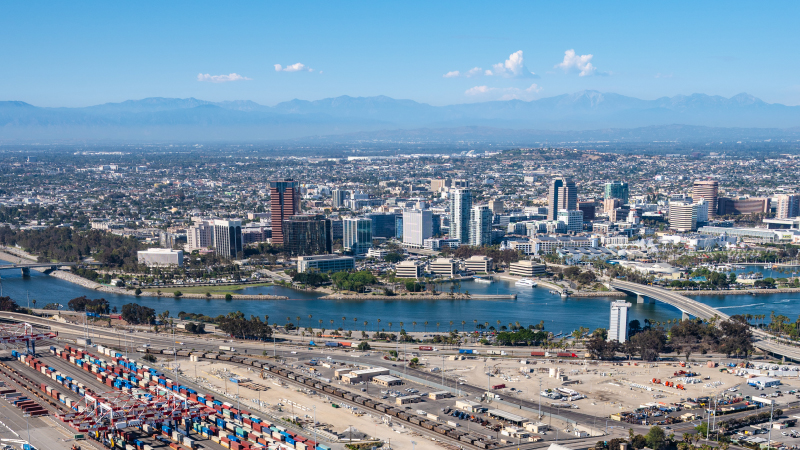
Far more than cargo docks, ports and port-supporting organizations lift their communities and spur economic development.
In today’s increasingly complex geopolitical environment and amid competing domestic priorities, defining the scope and scale of the work that ports and supporting organizations do is anything but simple.
From their 17th-century origins as colonial outposts, U.S. ports have evolved into much more than gateways for trade. Today, they function as economic engines helping to drive regional development, increasing the competitiveness and the assets of their communities.
Consequently, today’s port leaders must be experts not only in maritime operations, supply chain activities, and logistics, but also in economic development, public finance, and strategic planning.
One compelling example is the Port of Cleveland (formally known as the Cleveland-Cuyahoga County Port Authority), a key Great Lakes hub and the only full-service container port on Lake Erie.
According to its 2025 Impact Report, released in summer 2026, the agency financed projects with nearly $339.3 million in bond funding, supporting projects with a combined value of $781.7 million. Records also show the port authority approved bond financing for several additional regional projects, including a mixed-use campus adjacent to the Cleveland Browns’ practice facility in suburban Berea, about a dozen miles from downtown Cleveland.
Issuing bonds is an important community development financing tool for ports; state law grants them that authority. But a port’s direct economic impact on its community still primarily stems from the infrastructure the port develops and maintains, along with the employment and logistics activity generated by port operations and the supply chains they support. Development finance complements these core functions by facilitating investments that fuel broader regional economic growth.
Despite the outsized economic influence of ports nationwide—achieved through both the financing tools they deploy and their own operations—the communities they serve may often overlook their contributions. According to port expert Jean-Paul Rodrigue, Ph.D., this oversight occurs in part because the fundamental nature of port-related economic activity has changed over time.
“If you looked at ports a century ago, they generated a great deal of direct economic impact,” says Rodrigue, professor, Department of Maritime Business Administration, Texas A&M University-Galveston. “Everything was centered around the ports, and most of the communities were very well aware [of their impact]. They saw it.”
Broadening Their Impact and Serving Multiple Functions
Today, globalization has extended supply chains far beyond the waterfront. “We have record traffic figures, but ports have more and more of a difficult time linking their activity with their local communities,” Rodrigue says.
Containers arriving at a port are often transferred almost immediately to destinations hundreds or even thousands of miles away, he points out, making a port’s local economic contribution less apparent.
“Port directors work in a complex and constantly changing environment,” writes Geraldine Knatz, Ph.D., in a chapter of Rodrigue’s ports textbook, Port Economics, Management and Policy.
“The chief executive of a port, whether the position is called executive director or CEO, sometimes both, must juggle competing demands from customers, board members, stakeholders, staff, and, in some cases, one or more overseeing governmental authorities,” writes Knatz, professor of the Practice of Policy and Engineering, a joint appointment between the University of Southern California’s Price School of Public Policy and the Viterbi School of Engineering.
Knatz writes from experience: She served as the executive director of the Port of Los Angeles from 2006 to 2014. She also was the managing director of the Port of Long Beach.
Among the diverse qualifications required of port directors, Knatz recognizes the need for political savvy: “While a port executive might share some common characteristics with a private-sector CEO position, such as prestige and salary, the growing public awareness and participation in port activities, coupled with greater diversity among port board membership, has resulted in increased politicization of the port director’s position,” she writes.
For manufacturers and their logistics providers—who are important forces in regional economies themselves—an understanding of the multiple functions of ports is essential as they navigate the political processes that help determine how ports can best meet their needs.
As shippers work to come to terms with that equation, they partner with port directors, political officials, commercial real estate developers, and other business leaders in joint efforts to ensure the strength of ports in job creation, supply chain efficiencies, and community growth is not only safeguarded but enhanced.
CenterPoint: Building Strategies and relationships
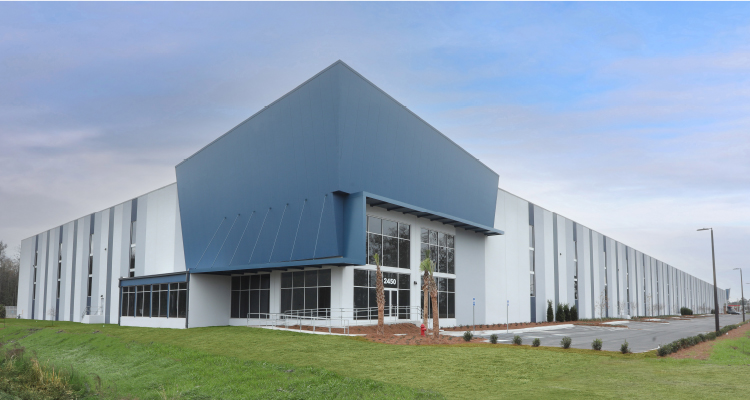
CenterPoint acquires, develops, and manages state-of-the-art industrial facilities near ports, major transportation nodes, and population centers in top markets. One example is this Garden City, Georgia, facility serving the Savannah market.
“A key challenge facing U.S. ports today is navigating evolving government regulations and tariffs, and assessing how those policies will influence both cargo throughput and the overall composition of goods moving through major ports,” says Ronel Borner, senior vice president, East Region, CenterPoint Properties. CenterPoint acquires, develops, and manages state-of-the-art industrial facilities near major transportation nodes, ports, and population centers in America’s top industrial markets.
“There is also real uncertainty around how shipping lines will respond—not only by shifting cargo from different origins, but by determining the most efficient way to move goods through U.S. ports and into U.S. distribution channels,” Borner adds.
As a driving force in economic development in key locations across the country, CenterPoint must have strong relationships with the ports in the communities it serves.
“Our role as a real estate owner, investor, and developer is to stay close to our customers, listen to what they need, and make sure we are building, operating, and owning the facilities that customers and logistics companies want to have near the ports,” Borner says.
Fostering strong relationships with ports positions the company to help its customers execute the strategies they need to respond to government policies and regulations that shape the community. Historically, the firm has focused a significant portion of its investment dollars on port-centric assets, recognizing the nexus between port activity and the demand for logistics real estate.
At the same time, CenterPoint’s platform has evolved to include major population and distribution hubs, expanding to major population centers that also drive the need for logistics real estate in cities like Atlanta and Chicago.
In the Chicago metropolitan community, for example, CenterPoint built a master-planned intermodal freight terminal, the 6,400-acre CenterPoint Intermodal Center in Joliet and Elwood, Illinois, constituting the largest inland port in North America.
Supporting Economic Development
The combination of port proximity, inland infrastructure, and access to major consumption centers enables CenterPoint to support both port-driven supply chains and broader regional development. “One of the clearest trends we’re seeing in port-related logistics is a much greater focus on efficiency within existing footprints,” Borner says. “Our customers are spending a lot of time looking at the space they already have and asking how they can make it work harder for them.”

A key challenge facing U.S. ports today is navigating evolving government regulations and tariffs.
Ronel Borner
Senior Vice President, East Region,
CenterPoint Properties
CenterPoint partners closely with customers as they work through operational optimization. “With more than 60 million square feet nationally, we’re focused on offering logistics companies a portfolio of distribution and warehouse assets in the country’s most competitive infill industrial submarkets, near dense population centers and key local and regional transportation hubs,” Borner says.
He cites Savannah as a good example of how CenterPoint has been able to invest around key port infrastructure. Over the past several years, CenterPoint has executed a multi-building park strategy less than three miles from the Port of Savannah, giving customers direct access to one of the country’s most important logistics gateways.
The park started with the construction of a build-to-suit facility for Maersk, then a facility for Port City Logistics, and most recently a long-term build-to-suit lease with Gulfstream Aerospace for a new 400,000-square-foot facility.
Georgia Ports Authority: Driving Infrastructure Investments
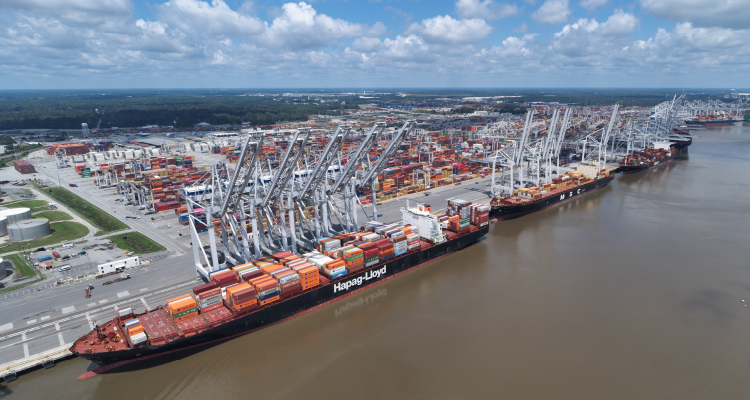
Georgia Ports Authority invested $4.13 billion in terminal infrastructure over the past decade. Looking ahead to the next decade, GPA plans to invest $5 billion, growing annual capacity to 12 million TEUs.
Moving forward, an issue for all ports will be developing capacity to keep pace with demand while also contributing to state and regional economies. To address this challenge, over the next 10 years the Georgia Ports Authority (GPA) plans to build five big-ship container berths in Savannah and one berth for Roll-on/Roll-off (RoRo) cargo at the Port of Brunswick.
The scale of Savannah’s 1,500-acre Garden City Terminal has allowed GPA to grow capacity through infrastructure and efficiency improvements. Over the past decade, Georgia Ports has contributed to the community by investing $4.13 billion in terminal infrastructure, and over the next decade GPA plans to invest $5 billion, growing annual capacity to 12 million twenty-foot equivalent container units.
Savannah is one of the best-connected ports in the nation, offering 40 weekly container ship services to global destinations. To streamline off-terminal cargo flow, the Georgia Department of Transportation (GDOT) has invested nearly $600 million in Savannah’s cargo beltway. Conscious of community needs, these investments ensure direct access to Interstates 95 and 16, keeping trucks off neighborhood streets.
Expanding Capacity
GPA is focused on expanding capacity and making it easier to do business at the port. A spokesperson cited these cases in point:
Ocean Terminal. The $1.6-billion renovation of Ocean Terminal in Savannah is more than halfway complete. Improving the 200-acre terminal will increase its annual container capacity from 200,000 to 1.75 million TEUs. Other improvements include expanded truck gates and a $29-million overpass funded by GPA to carry exiting trucks directly onto the I-16 corridor.
Savannah Container Terminal. To ensure ample future capacity, GPA plans a 3.5 million-TEU container terminal just across the Savannah River from Ocean Terminal. GPA anticipates receiving federal approval to begin construction this year.
Brunswick Rail. Phase 2 of the Colonels Island Southside Rail project will come online in 2029. The $54-million project will increase the Port of Brunswick’s annual rail capacity for automobiles to 590,000 units.
Meanwhile, GPA’s Gainesville Inland Port opened in May 2026, extending the Port of Savannah’s reach into Northeast Georgia with daily rail service operated in partnership with Norfolk Southern. GPA expects the inland port to shift 26,000 containers from road to rail during its first year, easing highway congestion and lowering emissions.
At full build-out, Gainesville Inland Port will be able to handle up to 200,000 containers annually.
GPA also has begun a study on further deepening and widening the Savannah Harbor. The study will consider adding passing lanes for two-way ship traffic. An example of the power of state and federal partnerships, the U.S. Army Corps of Engineers will provide technical assistance and will retain final review and approval authority.
Additionally, construction on a fourth berth for RoRo ships at the Port of Brunswick is underway. The $100-million berth will open to vessels in December 2027, accommodating ships up to 975 feet long. Over the past two years, GPA has completed $284 million in self-financed improvements in Brunswick.
Port of Long Beach: Showing Persistent Strength
While shifting tariff policies, rising fuel prices, and geopolitical uncertainty continue to challenge U.S. ports, the volume at many ports is encouraging. The Port of Long Beach, for example, recorded its busiest year ever in 2025, moving 9.9 million container units. At the midpoint of 2026, the port has moved 4.8 million TEUs, up 1.7% compared to the first half of 2025.
This sustained activity reflects both resilient consumer demand and the continued importance of West Coast gateways in global supply chains.
The port’s performance underscores persistent strength in trans-Pacific trade flows, notes CEO Noel Hacegaba. Volume consistency also signals ongoing reliance on Southern California logistics infrastructure.
The Port of Long Beach spans 11.9 square miles, serves 266 vessel operators, and connects to more than 400 global seaports. Its geographic position provides one of the most efficient maritime corridors between East Asia and the United States. The port’s efficiency translates directly into regional economic value, as faster transit times reduce inventory costs and improve supply chain reliability for U.S. importers and exporters.
A major driver of regional economic impact is infrastructure capacity. With leading big-ship capability in North America, including terminals that can accommodate vessels up to 24,000 TEUs, the port supports dense, high-frequency cargo flows.
These volumes sustain a wide ecosystem of regional industries—particularly trucking fleets, rail operators, warehouse developers, freight forwarders, and distribution centers concentrated throughout the Los Angeles Basin and Inland Empire.
The port’s economic influence extends well beyond its terminals. Integrated infrastructure—including interstate highways, national rail links, access to six major airports, and more than 2.1 billion square feet of logistics and warehouse space—creates a highly efficient multimodal freight network.
This system enables rapid “ship-to-shelf” movement across the United States, resulting in a significant employment multiplier effect across transportation, construction, warehousing, and supply chain management sectors.
Navigating Current Conditions and Looking Ahead
Tariff uncertainty continues to complicate operational planning, as it influences inventory timing, sourcing strategies, and shipping routes. Those factors ripple through regional labor markets, affecting warehouse staffing levels, drayage trucking demand, and port-adjacent service industries.
Meanwhile, Hacegaba points out, geopolitical pressures and fuel price volatility are accelerating the transition toward cleaner fuels and more efficient shipping technologies. He says the port is responding through long-term sustainability initiatives, including Green Shipping Corridor partnerships with the Port of Los Angeles as well as Shanghai and Singapore, aimed at decarbonizing trans-Pacific shipping routes.
In May 2026, the port introduced a $1-million award to the first shipping company to successfully perform a commercial-scale methanol bunkering fuel at the Port of Long Beach.
Looking ahead, the Port of Long Beach is targeting 20 million TEUs of annual capacity by 2050, supported by a $3.3-billion capital-improvement program. These investments are designed to improve terminal efficiency, expand throughput capacity, and ensure long-term competitiveness in global trade.
Collectively, these infrastructure upgrades, trade flows, and sustainability efforts reinforce not only the port’s global role but also its central importance to regional economic development, job creation, and long-term resilience across the Long Beach and Southern California economy.
Port Tampa Bay: Gateways for Growth
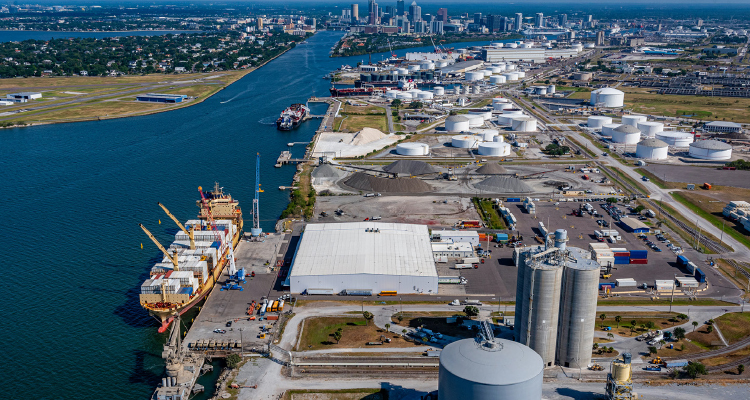
Port Tampa Bay continues to strengthen its position as Florida’s largest and most diversified seaport through sustained cargo growth, targeted infrastructure investment, and a focus on supply chain performance.
At Port Tampa Bay, the focus is very much on growth. President and CEO Paul Anderson cites a series of major infrastructure investments designed to strengthen supply chain efficiency, improve vessel access, and support long-term economic growth amid global volatility.
“Together, these investments reinforce Port Tampa Bay’s role as a high-performance gateway and a primary economic driver for West Central Florida, generating a $34.6-billion annual economic impact,” Anderson says. “This growth is supported by Florida’s population of more than 23 million residents and approximately 143 million annual visitors, both of which continue to drive sustained demand for freight movement, energy products, and consumer goods across the state and region.”
The most generationally significant project is the Tampa Harbor Navigation Improvement Project, which will deepen the federal shipping channel from 43 to 47 feet, says Anderson. This federally authorized investment will enable safer and more efficient access for larger vessels, improving navigation reliability and enhancing long-term cargo capacity for decades to come.
Complementing this effort is ongoing container terminal expansion, including a 100-acre yard development in partnership with Ports America. The project supports the port’s ability to scale toward 1 million TEUs annually while improving overall terminal efficiency and cargo movement.
Recent equipment upgrades, including two new Post-Panamax ship-to-shore cranes, further enhance berth productivity and allow the port to service multiple large vessels simultaneously. These improvements will support increased container throughput once the new cranes enter service later in 2026, further underscoring Port Tampa Bay’s growing role in global trade.
Meanwhile, Anderson reports, Port Tampa Bay is also expanding its RoRo business through targeted investments and infrastructure enhancements, strengthening its role as a key automotive gateway for Florida and the Southeast.
The remarkable growth at Port Tampa Bay comes amid major challenges in the maritime/logistics industry. “The greatest challenge facing U.S. ports in the coming years is ensuring the maritime industry has the workforce and infrastructure needed to sustain growth,” Anderson says. “As experienced mariners, skilled tradespeople, and logistics professionals retire, ports nationwide face a widening talent gap. At the same time, increased emphasis on domestic manufacturing and shipbuilding is driving demand for skilled labor. Meeting that demand will require greater investment in technical education, apprenticeships, and career awareness to build the next generation of maritime workers.”
Taking a Proactive Approach
Port Tampa Bay is taking on these challenges with a proactive approach that strengthens the future of the community. “At Port Tampa Bay, workforce development is a strategic priority,” Anderson says. “Through initiatives such as the Maritime Education Expo, the port is connecting students and young professionals with career opportunities across the maritime industry, including skilled trades, engineering, logistics, and business. These efforts strengthen the regional talent pipeline that supports both port operations and Florida’s broader maritime economy.”
Over the next three to five years, U.S. ports will continue evolving as global trade patterns shift and demand for efficiency, resilience, and sustainability increases, Anderson notes. “While workforce development and infrastructure capacity remain foundational priorities,” he says, “the focus will be on scaling innovation and aligning investment with long-term growth.”
Port Everglades: Optimizing Assets
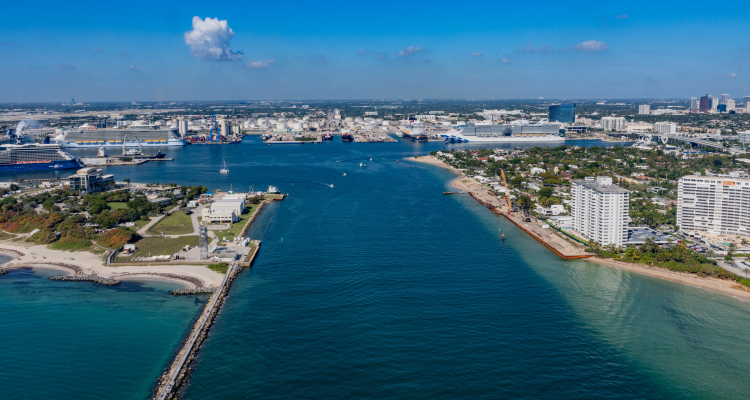
Port Everglades generates approximately $48.3 billion in economic activity and supports nearly 300,000 jobs throughout Florida, according to maritime industry analyst Martin Associates.
In South Florida, Port Everglades embodies the real estate/logistics maxim, “location, location, location.”
Joseph Morris, the port’s CEO and port director, explains: “The port is located directly adjacent to the interstate and highways, is two miles from an international airport, and has a near-dock railway managed by Florida East Coast Railway. This allows trade to move from ship to store efficiently. Export cargo, for example, can move quickly from truck or rail to vessel and reach markets in the Caribbean, Central America, and South America in a few days. Our proximity is also good for time-sensitive cargo such as perishables, for which Port Everglades is No. 1 in the State of Florida.”
Port Everglades works to optimize its geographic assets for the benefit of both customers and the community through partnerships, grants, and contract work, thereby demonstrating the port’s commitment to innovating through change, says Morris.
Among the challenges he sees for U.S. ports over the next several years will be the need to quickly modernize and manage densification to keep up with market demand.
“Key will be equipment electrification,” Morris says, adding that the port launched a real-time video program to help truck drivers better manage their arrivals and departures.
“This was augmented by investments by two of our marine terminal operators who incorporated a truck appointment system to streamline container pick-ups and drop-offs,” he explains. “The port also partnered with a marine terminal operator on a $53.3-million grant through the U.S. Department of Transportation’s Port Infrastructure Development program.”
He says the grant will support a Port and Maritime Electrification Plan, electrical system upgrades, and associated civil works required for the charging stations, the purchase of various types of hybrid and electric equipment, and a workforce development program.
Mapping Out the Future
Port Everglades’ 20-year Master/Vision Plan Update identifies more than $3.8 billion in capital investments to improve productivity for cargo, cruise, and energy businesses.
Among the proposals expected to be accomplished over the next five years that will directly enhance services for cargo customers are container terminal redevelopments, replacing aging bulkheads, and widening Slip 1 for petroleum vessels.
“We have ongoing infrastructure investments in capacity and efficiency, including the recently completed Southport Turning Notch Extension that added five new berths and six new Super Post-Panamax container gantry cranes,” Morris says. “These projects are designed to help our terminal operators handle larger vessels, improve cargo velocity, and support future growth.”
Port Everglades’ growth is also driven by private-sector investment from its marine terminal partners. “Investments in equipment, technology, gate systems, and safety tools help improve cargo velocity and strengthen the overall competitiveness of the port,” he says.
It’s all part of the organization’s commitment to function not only as a highly efficient port for customers but also to be a high-functioning and supportive member of the South Florida business community, Morris says.
“We have the good challenge of balancing diverse business lines of cruise, cargo, and energy with land scarcity,” he says. “We are committed to finding ways as a landlord port to help our customers grow within a highly constrained, urban footprint, while also improving service.”
Sustaining Long-Term Success
“When ports work well, you don’t notice them,” says Jean-Paul Rodrigue, the port scholar and author based at Texas A&M. “You don’t pay attention to them too much.”
That is, until they help big projects happen that change the face of the communities in which we live and work.
The caveat is this: If you are not paying attention at all, you may not be aware of the role that port leaders—in tandem with the community’s media, government, financial, and commercial real estate leaders—play in bringing such major projects about.

When ports work well, you don’t notice them. You don’t pay attention to them too much.
Jean-Paul Rodrigue
Port Scholar and Professor
Texas A&M University-Galveston
Similarly, consumers and community residents may not fully appreciate the role that ports play in the everyday conveniences of their daily lives.
“It’s a paradox,” Rodrigue says. “You are a victim of your own success. Because the supply chain is so efficient, especially with ecommerce, people do not associate full store shelves and deliveries done within 24 to 48 hours with the efficiency of the supply chain and the efficiency of the ports supporting it.”
While communities enjoy the enormous financial benefits that ports and port authorities provide—visible in everything from buildings and parks to community services, yet often unrecognized because of the multifaceted nature of port operations—a limited understanding of ports’ impact on their communities remains a global reality. “In Europe it’s the same story,” Rodrigue says. “It’s similar all over the world. Ports are complex beasts.”