
Articles
Transportation


Chemical Logistics: Keep it Moving, Keep it Safe
As U.S. chemical production grows, chemical shippers and their partners refine their strategies to ensure trouble-free transportation, secure sufficient capacity, and navigate the regulatory landscape.
Read More
Ocean Spray: Tastes Good, Good for You and the Environment
When companies get serious about cutting costs by reducing their carbon footprint, they call in the Climate Corps.
Read MoreCutting Costs While Delighting Customers
North American companies increasingly are seeking data-driven supply chain strategies to lower costs while improving customer satisfaction. Robust technologies and advanced analytics drive the business insight needed to streamline processes and reduce costs from raw materials to end delivery. Sophie Dabbs, vice president of client solutions for third-party logistics provider Transportation Insight, discusses the art […]
Read More
Trends—June 2015
Highway Trust Funding: Déjà vu All Over Again? News that U.S. Congress and President Obama are about to finalize a two-month extension to the lame duck Highway Trust Fund has elicited mixed reaction from industry. Some are optimistic because legislators were able to push through a bill without undue delay, especially as summer construction work […]
Read More
How to Cut Seven Non-Traditional Wastes
In my first column for Inbound Logistics in 2012, I covered the seven traditional wastes identified in Lean thinking: Transportation, inventory, motion, waiting, overproduction, over-processing, and defects, more commonly known by the acronym TIM WOOD. But there are other wastes to consider in your supply chain and logistics functions. Let’s examine the following seven non-traditional […]
Read More
Connected Vehicles & Smart Infrastructure
While the future of transportation may not include the flying cars from "The Jetsons" or "Back to the Future," it is still light-years beyond our current travel methods. We are all familiar with the litany of concerns regarding our land-based transportation system, including inadequate infrastructure, traffic congestion, energy usage, pollution, and safety. On a recent […]
Read More
Benefits of Partial Truckload Shipping
Q: What is partial truckload? A: You hear a lot about less-than-truckload (LTL) and full truckload, but an often overlooked mode is partial truckload, or volume LTL. This mode has benefits shippers should consider when looking for faster transit times, less handling, and a more cost-effective solution. Logistics professionals begin to look at partial truckload […]
Read More
Dealing With Demurrage, the Dreaded D-Word
Every industry endures a topic no one wants to discuss. It’s usually too painful or tedious to confront, although it probably will never vanish. For shippers and receivers who transport by rail, that topic is the dreaded demurrage. Demurrage is the fee charged for the extended use of a railroad-owned or privately held railcar. When […]
Read MoreImproving Shipper/Carrier Relationships
From shippers, receivers, and purchasing agents to carriers and third-party logistics companies, everyone has an opinion on how to reduce trucking costs. But they all agree that to help save money, shippers should build strong relationships with their less-than-truckload (LTL) carriers. Mark Hamblin, vice president of sales, west, for LTL carrier Saia, offers some advice […]
Read More
Trends—May 2015
U.S. Ports Critical to Sustained Economic Growth Transportation budgeting at the state and federal levels has become a contentious battleground as politicians and private sector lobbyists search for new funding mechanisms to execute much-needed infrastructure upgrades. One point of consensus is that U.S. ports are key to sustained economic growth—and therefore should be a priority […]
Read More
Global Logistics—May 2015
China Picks Pakistan for Trade Corridor China’s "global diplomacy" holds few bounds. From Central and South America to Africa, the country has been aggressively asserting its influence and injecting capital into new infrastructure developments that also pave the way for further commodity sourcing. But China’s impact in Asia is far greater, especially as it relates […]
Read More
The Driver Shortage—Not Just a Carrier Issue
Q: The transportation industry’s nationwide driver shortage is getting worse. What is the cause? A: Tougher regulations, a lack of interest by younger workers, and the graying of today’s drivers are contributing to the driver shortage. The problem will continue to grow over the next several years—especially as freight volumes increase. Despite the fact that […]
Read More
How Amtrak’s Supreme Court Case Affects Freight Shippers
Track-sharing among railroads has long been a complicated issue. The U.S. Supreme Court recently reviewed a case determining whether Amtrak has the authority to regulate privately owned freight railroads with which it shares rail. The Rail Passenger Service Act of 1970 was supposed to reinvigorate a national passenger rail system. The legislation created Amtrak to […]
Read More
Five Ways to Mitigate a Truckload Capacity Crunch
Many factors have led to increased costs for truckload services, and created challenges to the freight pricing status quo for shippers. In the wake of the disruptions caused by the current capacity crunch, many are asking: "Am I overpaying? And if I am, what can I do about it?" To avoid paying too much for […]
Read More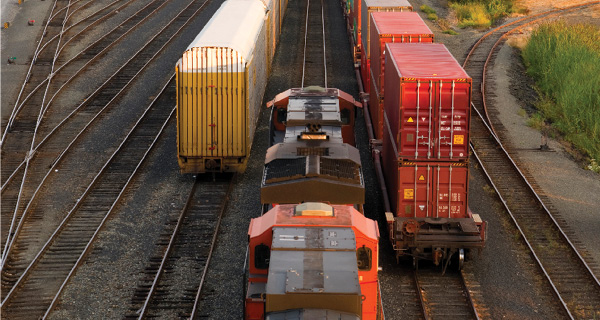
Riding the Rails
America’s great rail intermodal sites serve as vital hubs in the logistics landscape.
Read More
Strategic Shipping Solutions
Q: How is predictive modeling reshaping logistics? A: Predictive modeling is changing the dynamic that exists between the carrier and the shipper. It’s creating more of a collaborative environment, where the carrier and shipper can now talk openly about their goals with the transparency required to create and maintain a great relationship. The shipper now […]
Read More
Offshore vs. Outsource for Transportation & Logistics
Many transportation and logistics professionals hear outsourcing and think offshoring, but there is a big difference.
Read More
Collaborative Distribution: Taking Off the Training Wheels
To break the cycle of needless, duplicative logistics costs, many competitors are choosing to work in tandem.
Read More
Freight Transport in Alaska: The Haul of the Wild
Because of Alaska’s remote location and precarious weather, transport providers carrying freight on land, sea, and air have developed special expertise to buck the challenges.
Read More