
Practical Automation: How Distribution Centers Build Efficiency
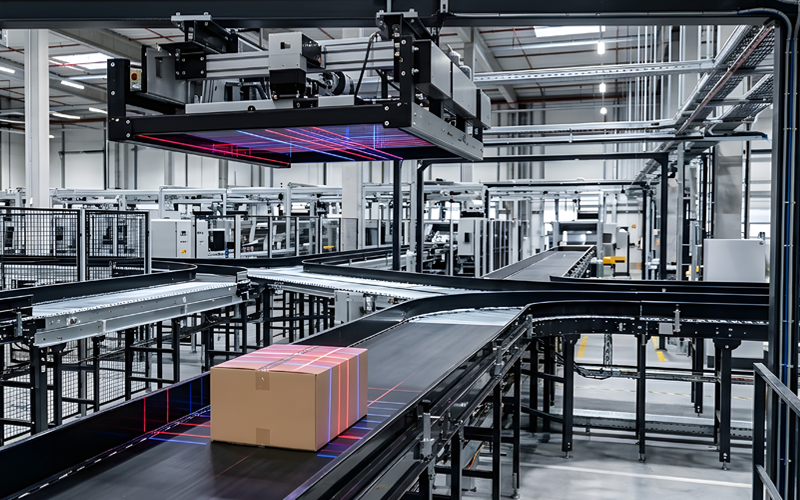
While highly automated distribution centers (DCs) from companies like Amazon grab headlines, many facilities still rely on a mix of manual systems, automation, and emerging artificial intelligence.
Keeping pace with ecommerce demands while improving operational efficiency and meeting customer demands for on-time deliveries and real-time data, amid a tightening labor market, leads DC operators to seek technology solutions for their most pressing issues.
Staffing remains a challenge in a tight labor market, as competitive wages rise even in traditionally low-paying sectors like fast food. Warehouse work can be tedious and demanding. Turnover in a DC can exceed 100%, forcing a facility to replace its entire workforce in one year. Automation and other technologies can make warehouse work more attractive, improving productivity and employee safety.
Making Workers More Effective
For many companies, the goal is not to replace employees, but to make them more effective. With labor shortages, distribution centers may be significantly understaffed.
“It’s interesting because a DC doesn’t necessarily want to replace labor; they can’t find the labor,” says Don Caddy, CEO of Engineering Innovation, an automation company based in Lafayette, Indiana.
Automation can help fill the gap and increase retention and employee safety, even as the labor resources needed to operate a warehouse continue to fall.
Caddy has seen the staffing problem play out on the floor. At one operation, only half the line ran at the start of a shift because only half the crew had arrived. Product piled up beside idle equipment until more workers trickled in that evening, and managers could not let anyone go because replacements were scarce. Automated lines that run at full capacity can help justify automation investments.
Right-Sizing Automation Investment
Full-scale automation buildouts remain out of reach for most operators. The cost of automating a medium-sized retail DC is $50 million to $150 million, according to University of Wisconsin-Madison researchers.
Many companies also hesitate to sign multiyear projects when technology changes quickly and prefer immediate gains. Caddy says his company’s typical entry point runs $50,000 to $200,000 and targets one bottleneck in the operation.
Modular design makes a phased approach practical. One customer began with a line that reads a barcode, weighs and dimensions each parcel, and prints the label. Next year the company plans to add pockets to sort by carrier as its carrier base grows. Another bought scan-and-sort machines, then wanted to add weight and dimensioning capabilities. Engineering Innovation Inc. (EII) technicians added the new modules before the shift started, and production never stopped.
Automation also returns investment by building data infrastructure within the DC. Collecting more data is a major benefit of automated systems. Warehouses integrate software and infrastructure to manage internal decision-making, while also giving 3PLs the ability to provide similar information to customers.
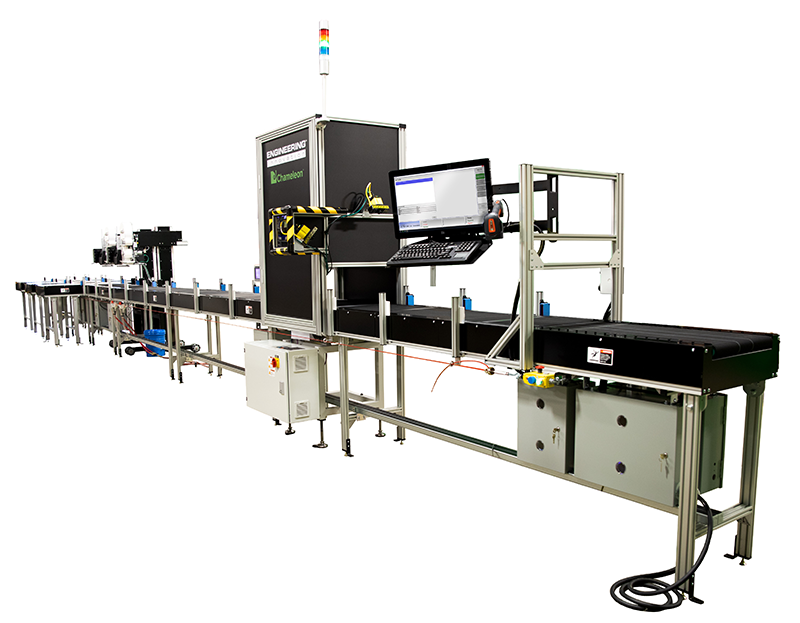
Engineering Innovation’s Chameleon® Parcel Sorting System features a modular design.
Accuracy Pays
DC automation can help reduce expenses from mislabeled packages. The U.S. Postal Service charges a $3 penalty on certain packages with incorrect dimensions, even when the error overstates size, and large retailers enforce strict dimension, weight, and labeling rules.
Shippers that don’t meet those requirements could face fines or chargebacks, sometimes up to 60 days or more after shipment. Smaller shippers with less sophisticated supply chain management may struggle to meet the requirements and incur significant fines.
The average chargeback for falling short of the standards is 1%-5% of the cost of goods. For high-volume shippers, penalties could run into millions of dollars each year. Automation can solve those problems before they drain revenue.
Check-weighing systems also feed accuracy back to customers, and the worst offenders improve once they realize someone is holding them accountable. The same data supports negotiations with carriers on actual weights and volumes.
Inbound receiving can follow the same path: Confirm the shipment arrived, add a check weigher, then run boxes past cameras to read labels and track inventory counts. Inaccurate and delayed data are significant barriers to an orchestrated flow in the warehouse.
Buyers looking at automation investments tend to fall into two camps: first-timers wary of a large check, and veterans disappointed by an earlier project. Caddy’s advice to both is to prove one piece first, such as a reader at the front end, until success rates climb, then add sorting.
He also recommends watching a live shift. The realities of everyday workflows often differ from the plan, and a dock supervisor once told him more than the executives who designed the project. Phased projects also suit stressed IT departments that don’t have the resources for a lengthy implementation program.
While lights-out, AI-driven warehouses aren’t the right solution for many DC operators, identifying automation steps can help DCs deliver efficiency gains while dealing with the labor situation.
Engineering Innovation Builds for the Future
 Engineering Innovation Inc. celebrated its 20th anniversary in 2026. Founder and CEO Don Caddy has based the company’s growth on one motto: The only thing consistent about the logistics market is that it’s not consistent.
“I’m the old guy in the company, but I’m willing to try new tricks,” Caddy says. “I’m always trying to convince people here that just because we did it that way last year or 10 years ago, doesn’t mean we can continue to do it that way.”
The company started in the mailing industry with letters and flat mail, then expanded into parcel handling. That led to the warehouse and distribution center market, where they developed modular equipment that can expand as a DC’s needs grow.
The Modular Approach Fits Budgets
The modular approach is especially attractive for small- to medium-sized DC operators who may feel automation is out of reach. EII recommends an incremental approach, starting with a thorough on-site assessment to identify chokepoints to offer budget-friendly options that can scale along with demand.
“We can knock off a few rough edges and take some of the bottleneck out of the process, and then grow as the customer grows,” Caddy says.
Growing with the Customer
One customer wanted to start with a Chameleon SLAM (Scan, Label, Apply, Manifest) line to read barcodes on the item, weigh and dimension it, look up the data and print a shipping label. In next year’s budget, the customer plans to add the capability to sort by carrier.
“Once they get used to the system, we can add pockets to it so they can sort to the various carriers,” Caddy says. “That’s just one example of how you might grow a system.”
Recently, the EII team upgraded a SLAM line with a dimensioning module with zero downtime for the distribution center.
An incremental approach helps a company manage capital outlays and the impact of installation on operational uptime. It also gives companies confidence without committing to a lengthy implementation timeline.
“Because a lot of these companies know things change so fast, they’re not comfortable with saying we’re going to spend $3 million on a two-year project, because in two years their business will be different,” Caddy says. “We try to come up with modular approaches that are scalable, so that people don’t have to throw away what they have already done to grow.”
Prioritizing Scalability
When a DC operator considers investing in automation, it’s critical to ask about scalability over the next several years so they can add capabilities as the business grows.
“I would lay out a scenario, whether it’s reality or not, for your vendor and ask, if I buy this solution this year and I want to add this on next year and add this feature on the year after, how would that work for you? And see what the answer is,” Caddy says.
Warehouse automation isn’t just for the billion-dollar companies. Solutions can fit any budget and operating environment. “At whatever size you are, you have to look at the opportunities to automate because of the lack of people, and to stay competitive,” he says.
Rethinking Warehouse Operations: The Technologies Transforming 3PLs
Today’s distribution centers face a growing set of demands. Shippers are expected to move products faster while maintaining accurate inventory, managing labor costs, and adapting to changing customer expectations. Meeting those demands requires more than additional warehouse space. It calls for smarter operations, strategic infrastructure, and technology that can keep up.
For third-party logistics (3PL) providers, warehouse automation has become an increasingly important part of that equation. By combining established technologies with newer innovations, 3PLs can help customers improve efficiency, increase visibility, and build greater resilience into their distribution operations.
Automation That Works Smarter
While artificial intelligence and robotics often dominate conversations about the future of logistics, many impactful warehouse technologies are refinements of systems that have been established for decades.
Automated storage and retrieval systems (AS/RS), for example, have evolved considerably. By incorporating vertical racking, automated loaders, and robotic shuttles, these solutions help maximize available space while reducing the time employees spend locating and retrieving inventory.
Goods-to-person systems bring inventory directly to warehouse associates, while collaborative robots work alongside employees to streamline picking and packing. Inventory drones can scan barcodes and RFID tags to improve inventory visibility, while automated sorting and palletizing systems help move products through fulfillment operations more efficiently.
By reducing repetitive tasks, these technologies can help employees focus on higher-value responsibilities while improving productivity and supporting customer service.
The Digital Backbone of Modern Fulfillment
Modern, cloud-based warehouse management systems (WMS) can provide real-time or near-real-time inventory tracking, support faster order processing, and improve communication between logistics providers and their customers.
Through API integrations, WMS platforms can also share valuable operational data, giving businesses better insight into inventory levels, fulfillment activity, and supply chain performance. This creates a stronger foundation for data-driven decision-making and the continued adoption of advanced technologies, including AI.
No single technology is the right fit for every operation. The most effective automation strategy depends on a facility’s physical capabilities, the products it handles, and the specific needs of the customers it serves.
Pairing Strategic Real Estate with Logistics Expertise
Phoenix Logistics approaches third-party logistics through a combination of strategic real estate, applied technology, tailored service, creativity, and flexibility. As an affiliate of Phoenix Investors, a national commercial real estate firm specializing in industrial properties, Phoenix Logistics can draw on an extensive property portfolio and its affiliate’s financial and market resources to source or acquire facilities that align with individual client requirements.

Phoenix Logistics sources or acquires facilities that align with client requirements.
“Technology works best when it fits a customer’s business,” says Robert L. Kriewaldt, chief operating officer of Phoenix Investors, who also leads Phoenix Logistics. “Our goal is to bring the right facility, systems, and people together to help customers operate efficiently and adapt as their needs change.”
As distribution demands continue to evolve, businesses need logistics partners capable of looking beyond today’s challenges. By bringing together the right infrastructure, technology, and operational expertise, Phoenix Logistics helps customers build distribution strategies designed to support long-term success.