
The Ultimate Guide to Pallet Grades: Understanding the Differences Between A, B, and C-Grade Pallets
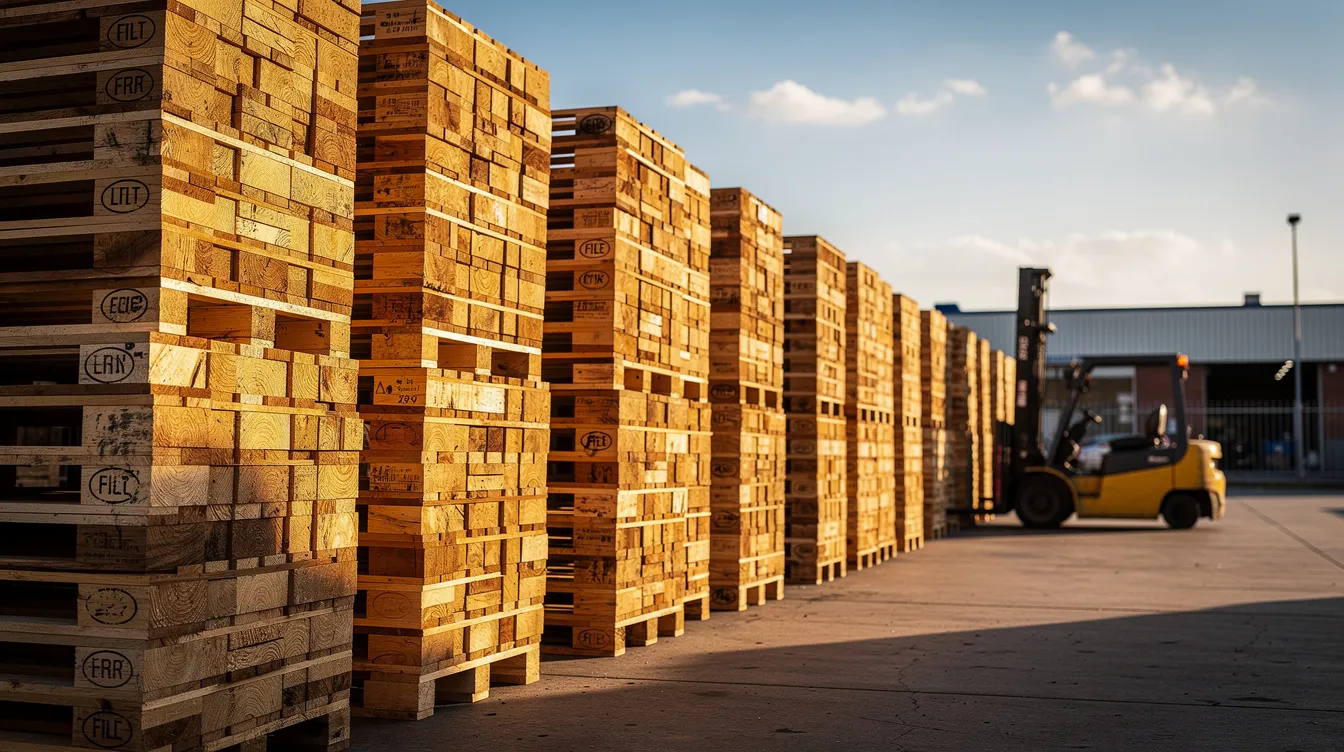
Pallet grades classify pallets based on condition and repair history, and choosing the right grade directly affects your shipping costs, product safety, and warehouse efficiency. This guide breaks down what separates Grade A, Grade B, and Grade C pallets so you can match pallet quality to your operational requirements without overspending.
Key Takeaways
- Grade A pallets are nearly new with minimal wear and original, unrepaired stringers. They are ideal for customer-facing applications, food and beverage distribution, and automated systems that demand dimensional consistency.
- Grade B pallets are structurally sound but show visible wear and moderate repairs such as companion board repairs, replaced boards, or reinforced stringers. They are a cost-effective choice for internal warehousing and general shipping.
- Grade C pallets are heavily worn with multiple repairs and best suited for low-demand applications like static storage or one-time shipping-never for dynamic loads or automated systems.
- GMA pallets (the 48×40 standard developed by the Grocery Manufacturers Association) are the most commonly graded pallets in North America, sorted into Grade A, Grade B, and Grade C tiers.
- Export shipments require ISPM-15 heat treatment and marking regardless of grade, but most shippers prefer Grade A to reduce rejection risk.
What Are Pallet Grades?
Used and recycled wooden pallets are classified into different tiers based on condition and structural integrity. Pallet grades depend on structural integrity, repair history, and overall condition-not just appearance. The industry relies on a standard tiered grading system, but pallet grading is not standardized globally and varies by supplier. There is no single federal or global standard that defines what grade A, grade B, or grade C means; definitions come from industry practice, organizations like the National Wooden Pallet and Container Association, and individual recyclers.
In North America, grading is most commonly applied to the 48×40 GMA pallets used across grocery, consumer goods, and general warehousing. Pallet grades are often classified as new, recycled, or remanufactured, with recycled grades further broken into A, B, and C. Inspectors evaluate stringers, deck boards, fasteners like nails and metal plates, moisture levels, and overall safety. Understanding pallet grades gives purchasing teams a practical tool to match different grades to specific applications-retail distribution versus internal transport versus utility scrap.
How Pallets Are Evaluated and Graded
Determining whether a pallet earns a Grade A, Grade B, or Grade C label comes down to four inspection areas:
- Stringers/runners: Grade A pallets must have original, unrepaired stringers. Grade B pallet grades allow companion or plugged stringers. Grade C pallets may have multiple block repairs, broken stringers, or repaired stringers cobbled together from mixed components.
- Deck boards (top and bottom): Inspectors check board count, spacing, thickness, and the presence of replaced boards or damaged components.
- Fasteners: Nails should be flush in Grade A. Grade B and C may show visible plugs, staples, or protruding nails.
- Dimensional stability: Warp, twist, moisture damage, and contamination are evaluated. A pallet’s condition must remain safe for handling.
Large recyclers use standardized checklists-some, like Millwood’s verified grading system, add measurable criteria like squareness tolerance and wood brightness-to ensure a truckload of grade B pallets looks consistent enough for repeat buyers.
Specifications of the Different Pallet Grades
With pallet grades explained through inspection criteria above, here are the defining traits, typical uses, and cost profiles for each tier. These definitions are oriented around common 48×40 GMA pallets but apply conceptually to other sizes. Pricing normally steps down: new pallets cost the most, followed by Grade A, Grade B, and Grade C.
Grade A Pallets (Premium / Near-New)
Grade A pallets are the highest quality recycled pallets available. They are nearly new with minimal wear and fewer repairs-original stringers with no block or companion repairs, uniform boards, and nails flush with the surface. Some Grade A pallets have undergone extensive repairs to restore them to near-new condition, but the result is a clean, polished appearance with good dimensional consistency.
Grade A pallets are ideal for customer-facing applications and suitable for hygiene-sensitive industries like food and beverage and pharmaceuticals. They are also ideal for shipping delicate items and retail products into grocery stores, club stores, and e-commerce fulfillment centers. Their structural quality makes them compatible with automated systems, conveyor lines, and AS/RS installations that need predictable board spacing.
Grade A carries a higher price-typically $6–$14 per unit for used softwood 48×40 GMA pallets-because of tighter criteria and lower availability in the recycled stream.
Grade B Pallets (Functional / Mid-Level)
Grade B pallets are structurally sound but show visible wear and moderate repairs. They may include repairs like replaced boards or reinforced stringers, visible plugs, companion board repairs, or additional metal plates. The appearance is darker or mixed in lumber color with significant wear, but no missing critical structural elements.
Grade B pallets are ideal for applications where appearance is less critical. They are often used for internal warehousing operations, warehouse transfers, manufacturing plants, closed-loop supply chains, and one-way shipments where pallets are not customer facing. They remain structurally sound for normal dynamic loads when repairs are correctly executed, and many vendors require them to handle at least 2,500 lbs.
Grade B pallets are a cost-effective choice for general shipping, usually running $3–$8 per unit-roughly 30–50% less than Grade A. This makes them the value workhorse of distribution centers and internal transport fleets.
Grade C Pallets (Utility / Low-Quality)
Grade C pallets are heavily worn with multiple repairs-cracked or mismatched deck boards, repaired stringers from mixed sources, and uneven appearance with visible repairs throughout. They may not meet structural standards for many uses and are not suitable for dynamic loads or repeated handling.
Grade C pallets are best for non-critical applications or one-time shipping: static floor storage, temporary in-plant staging, or situations where pallets will be discarded afterward. They are often repurposed for crafting or recycling into mulch, biomass fuel, or repair lumber stock. Some recyclers do not formally sell grade C pallets at all, diverting them straight to dismantling.
Quality varies widely at this tier. Visually inspect any Grade C loads carefully and keep them away from retail environments, racking, or any safety-critical role.
GMA Pallets and Grade Labels
The Grocery Manufacturers Association (now the Consumer Brands Association) standardized the 48×40 pallet that dominates North American logistics. Wooden pallets are primarily built to this standard 48×40 GMA size, with nominal 5/8- to 11/16-inch deck boards, three stringers, and load capacities around 2,500–4,600 pounds depending on species and condition.
GMA pallets are commonly sorted into Premium (sometimes called “Super A” or “A+”), Grade A, and Grade B. A premium grade pallet has near-new appearance with minimal wear-wide lead boards, bright wood, and tight squareness. Grade A GMA pallets allow only minor stringer fixes, while Grade B allows fully repaired stringers and more extensive board replacement. These consistent grade pallets keep supply chains running smoothly for grocery stores, beverage distributors, and big-box retail.
How to Choose Between Grade A, Grade B, and Grade C Pallets
Pallet selection affects product safety, shipping costs, and warehouse efficiency. Choosing the wrong pallet grade can compromise product safety, while overspending on the right pallets wastes budget. The appropriate pallet grade depends on where and how each pallet fits in your operation. Pallet grades help match quality to operational requirements, and choosing the right pallet grade balances cost and operational needs.
Start by categorizing your uses into tiers of demand.
High-Demand Uses: Export Shipments and Automated Systems
For international shipping, pallets must comply with ISPM-15 standards. ISPM 15 requires wooden pallets to be heat-treated to eliminate pests-specifically, the core must reach 56°C for 30 continuous minutes. Export shipments must carry the proper IPPC stamp regardless of grade.
Many exporters prefer new pallets or top-tier Grade A GMA pallet units because they offer predictable dimensions and lower risk of customs rejection or load failure. Modern automated systems-AS/RS, robotic depalletizers, conveyorized sortation-require flat, straight pallets with consistent board spacing and no protruding hardware. Grade A pallets are usually the minimum acceptable grade for such systems, and some facilities specify Premium A only. Operational efficiency in these environments depends entirely on dimensional consistency.
Medium-Demand Uses: Internal Transport and Closed-Loop Flows
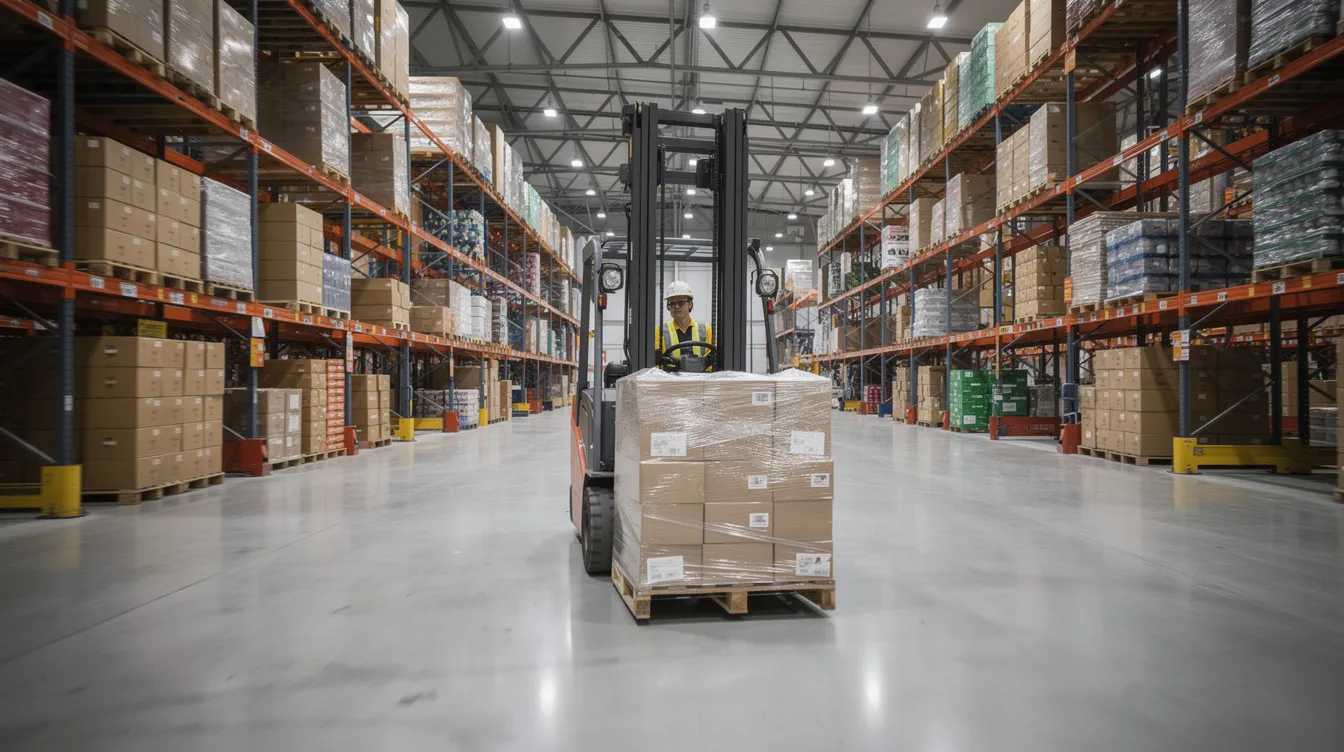
Both Grade A and Grade B pallets work well for internal warehouse transfers, manufacturing lines, and closed-loop circuits. Grade B pallets work especially well in environments with forklifts and pallet jacks but limited automation, where moderate repairs and mixed appearance do not impact operations.
Mixing Grade A and Grade B in the same internal pool can be cost effective-use Grade A where customers see the pallet and Grade B where only internal staff handle it. Track damage rates and handling cycles to determine whether upgrading from lower grades might reduce total cost of ownership over a full year. Also document any retailer requirements that might prohibit grade B pallets on certain inbound lanes.
Lower-Demand Uses: Grade C and Utility Applications
Grade C pallets fit scenarios like back-room storage, off-season inventory, project-based material handling, or short one-way transfers. Even at this tier, avoid pallets with missing stringers, fractured lead boards, or exposed nails that could puncture product. Pallet durability is influenced by the material used, such as wood or plastic, so even utility-grade wood pallets should be structurally functional for their intended task.
Many companies segregate grade C pallets physically in the yard, labeling them for non-critical use only. Severely degraded units can be dismantled for repair lumber or chipped for mulch as part of a circular economy approach. Never send grade C pallets into automated systems or export shipments.
Pallet Grades and Sustainability
Higher-grade recycled pallets extend service life while reducing demand for new lumber and landfill waste. Using Grade A and Grade B refurbished pallets in place of new pallets can cut the embodied carbon of pallet programs in high-volume operations. Grade C pallets often represent the final usable stage before wood is recovered as repair stock or converted into mulch, bedding, or biomass fuel.
Life-cycle assessments of wood pallets consistently show advantages over one-way alternatives when repair and recycling are maximized. Plastic pallets are moisture-resistant and hygienic, making them suited for food industries, but wood pallet reuse programs typically deliver lower per-trip emissions. Set internal policies that prioritize repair, grading, and reuse, and work with recyclers who track recovery rates across all recycled grades.
Frequently Asked Questions About Pallet Grades
Is there a universal standard that defines Grade A, Grade B, and Grade C pallets?
No. There is no single federal or global law defining these grades. They are commercial classifications shaped by organizations like the National Wooden Pallet and Container Association and major recyclers. While dimensions for GMA pallets are standardized, exact grading rules-how many repairs qualify as a Grade B defect, for example-can vary by supplier’s grade definitions and region. Always request written grading specifications and sample photos from your supplier so you know exactly what their grade B pallets or grade C pallets look like before ordering.
Can Grade B pallets safely carry the same loads as Grade A pallets?
In many cases, a properly repaired Grade B pallet has similar load capacity to a Grade A pallet of the same design, because repairs are intended to restore strength. However, excessive or poor-quality repairs can reduce capacity, so visual inspection and consistent repair standards are critical. For high-risk or high-value loads-tall stacks, heavy unit loads, fragile goods-use Grade A or better. Routine internal freight and food processors moving product between facilities are often well served by solid Grade B pallets that remain structurally sound.
Are Grade C pallets ever acceptable for racking or high stacking?
Grade C pallets are generally not recommended for selective or drive-in racking, or for tall stacks, because of variability in deck board and stringer integrity. Limit Grade C use to ground storage, low stack heights, or one-way moves where consequences of pallet failure are relatively low. When in doubt, upgrade to Grade B pallets for any racked or mechanically handled loads, and follow your site-specific safety guidelines. Keeping pallets safe in racking is non-negotiable.
Can I mix different pallet grades in an automated warehouse?
Most automated systems perform best when supplied with a single, consistent pallet grade-usually new or Grade A. Mixing Grade A and Grade B, or especially Grade C, can increase jams, sensor misreads, and emergency stops in conveyors and AS/RS equipment. If mixing cannot be avoided, test and qualify specific grades beforehand and clearly segregate which grades are allowed into each automated zone. The right grade for automation is almost always the one with the tightest dimensional consistency.
How do pallet grades affect export shipments beyond heat treatment?
Export regulations focus on treatment and marking, not on whether pallets are Grade A, Grade B, or Grade C. However, many shippers choose new or Grade A pallets for export shipments to reduce risk of breakage, claims, or rejections at overseas receiving docks. Before selecting pallet grades for ocean freight, verify both the load requirements of your cargo and any receiver preferences in the destination country-an acceptable grade at origin may not satisfy your buyer abroad.