
3PLs Slam Volatility

For today’s shippers, survival in a volatile market requires more than just a reliable delivery partner. As supply chains face evolving regulations and unpredictable consumer behavior, third-party logistics providers take on an expanded role. Here’s how they help shippers achieve supply chain stability.
Supply chain volatility no longer consists just of occasional disruptions. Instead, chaos has become a “permanent operating condition,” write Vinayak Hegde, product marketing specialist and Mandy Chung, senior manager, business intelligence and analytics with project44, a supply chain solutions provider.
Hegde and Chung analyzed multiple events over the past few years that had disrupted many supply chains, including the Panama Canal drought, the collapse of the Baltimore bridge, and the imposition of multiple tariffs. Disruptive events no longer arrive sequentially, they found. Rather, a new disruption often occurs before supply chains have stabilized from the previous ones. Given the volatile environment, any time a shipment is in motion, it’s potentially at risk, says Eric Fullerton, vice president of data insights with project44.
Not surprisingly, many organizations are placing a greater emphasis on supply chain resilience and flexibility. They’re reassessing inventory strategies, options for supplier diversification, and transportation networks, says Catherine Chien, chair of Dimerco Express Group, a logistics provider. Their goal is to reduce dependence on any single market, route, or source of supply.
As a result, the role of logistics providers is also evolving. They’re expanding their focus from transportation execution toward broader supply chain management and risk mitigation. “Customers increasingly expect logistics partners to provide market intelligence, alternative routing options, risk assessments, and operational contingency plans, rather than simply moving freight from point A to point B,” Chien says.
Here are 9 ways 3PLs are tackling volatility for their shipper customers.
1. Plan for Viral Moments
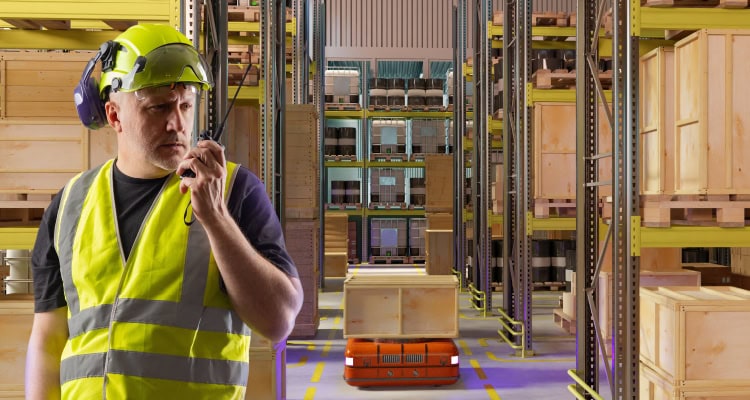
Automated warehouses help manage volatility by aligning technology with a shipper’s specific supply chain needs. This targeted approach ensures that automation remains practical and scalable and directly supports daily operations.
Logistics providers help shippers plan for and navigate demand spikes that can hit when a product gains exposure because a social media post goes “viral” and captures widespread attention. “Then it’s just go, go, go in that moment because you want to capitalize on this event,” says Andreas Podwojewski, managing director in North America and Brazil with Arvato, a supply chain solutions provider.
When an Arvato client ran TikTok campaigns for the first time, demand jumped 1,000% over forecast. Arvato worked with the company to develop an “ad hoc mini-peak plan,” he says.
Arvato serves this client from its Louisville, Kentucky facility, which is highly automated and encompasses seven buildings spread over more than four million square feet. Arvato’s unified SAP environment and “standardized execution playbook,” were also key to its ability to serve this client.
The playbook offers a defined, repeatable way of running and scaling operations, Podwojewski says. It covers standard process designs for inbound, pick-and-pack, and returns; a defined system architecture and configurations; workforce models and training concepts; and defined responses for peaks and promotional spikes.
By leveraging its automation, unified information environment, and standardized processes, Arvato could quickly train its teams and redeploy staff to meet the increased demand while maintaining service levels, Podwojewski says.
2. Implement Automation to Meet Shippers’ Needs
An optimal automation solution is the one that best addresses a shipper’s supply chain needs, not necessarily the largest or most technically sophisticated one, Podwojewski says.
For example, an ecommerce shipper might experience very high peaks during promotional periods, but a relatively moderate baseline demand. In that case, a capital-intensive goods-to-person system that’s built to handle the peaks would be underutilized for a large part of the year.
A smarter approach could be to build a promotional fast-pick area using manual picking and scale it when needed, while sizing a relatively less expensive goods-to-person system to meet the baseline demand. “The real value comes from fit-for-purpose automation, not from maximizing the level of automation itself,” Podwojewski says.
3. Aggregate Data for End-to-End Visibility
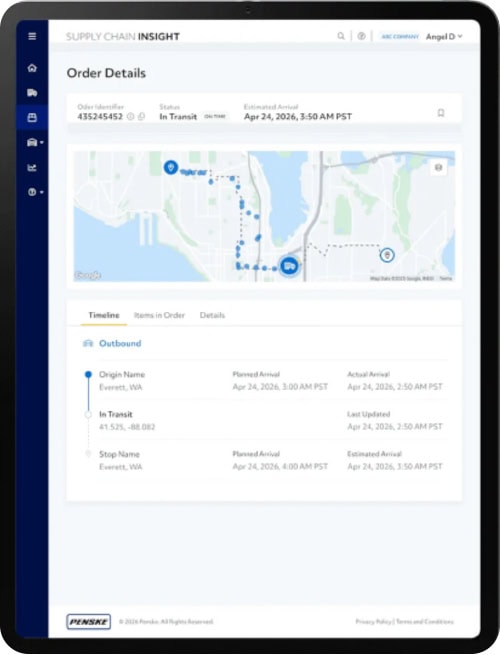
Penske’s Supply Chain Insight platform mitigates volatility by integrating fragmented warehouse and transportation data into a single, real-time visibility portal.
By providing shippers visibility to their logistics and supply chain operations, logistics providers can help them react quickly, or even proactively, to disruptions.
For instance, Penske Logistics can leverage Supply Chain Insight, a platform and app that offers shippers real-time visibility and a unified view of their supply chains, including aggregated data from multiple logistics providers, says Mike Medeiros, executive vice president. It also can optimize routing across complex networks. Shippers can make decisions based on updated, comprehensive views of their inventory and operations, then quickly identify where to focus attention.
4. Provide Flexibility
To some extent, logistics providers themselves are a solution to volatility, says John A. Evans, president and chief executive officer with Evans Distribution Systems. For instance, a shipper might sign a lease with Evans for 100,000 square feet that includes an option to cut back or increase its space by 25% at the end of the year, so it can respond to any changes in its business.
To ensure it can provide this flexibility, Evans maintains strong relationships with landlords and real estate professionals in Detroit, which is near its headquarters in Melvindale, Michigan. The level of trust his team has established with its business partners often allows it to move quickly, Evans says.
5. Deploy Foreign Trade Zones
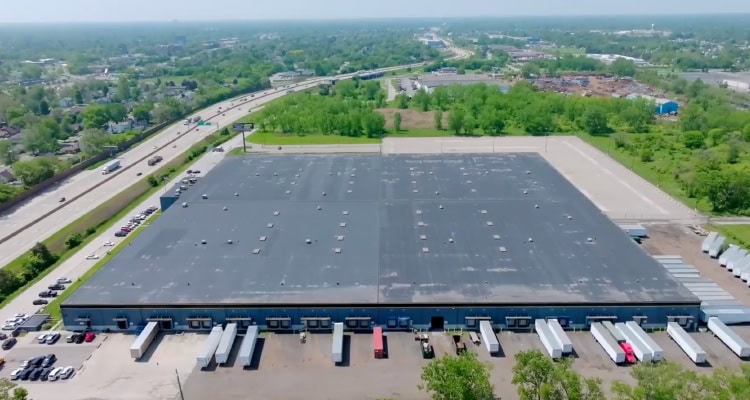
As the tariff environment has intensified, the number of shippers interested in learning about foreign trade zones (FTZs) has jumped. (FTZs are specially designated sites near U.S. ports of entry that allow corporations to move goods in and out of the country while paying reduced or even no customs, duties, taxes, or fees.)
In April 2025, in response to the new tariffs, Evans Distribution activated 378,000 square feet of warehouse space as a General Purpose Foreign Trade Zone. In total, Evans’ FTZ square footage totals about 2.3 million square feet, Evans says.
Note that the government created a loophole that diminished the primary benefit of an FTZ, so shippers now pay the tariff rate that’s assessed at entry, rather than the rate at release, which could be lower (see sidebar). However, some shippers still use the FTZ to defer tariff payments, Evans says.
6. Leverage Purchasing Insight
Over the past few months, Infinity Loop, a negotiation intelligence platform, has seen a seven-fold increase in purchasing contract renegotiations. “The assumptions that went into contracts that were negotiated six to 12 months ago are thrown completely out the window,” says Nithin Mummaneni, the company’s CEO. He attributes that to ongoing supply chain volatility.
By leveraging information contained within their contracts, shippers can identify the ones that could most benefit from adjusting. Say a manufacturer that buys corrugated packaging across several regions signed a contract one year ago. Infinity Loop continuously analyzes commodity indices, freight costs, and other market signals, then compares them to the contract. If it finds a buyer is paying well above current market rates, the solution can identify the contracts most likely to support a successful renegotiation.
“Most companies have thousands of contracts, and no one can hold every pricing provision, review clause, and trigger event in their head,” Mummaneni says.
Another change is the growing number of renegotiation clauses in new contracts. A provision might stipulate, for instance, that if a relevant price index moves more than 15% over a specified period, either party can reopen pricing. In general, both sides benefit from this flexibility. If the price of a key raw material jumps significantly and the contract offers no mechanism to adjust the pricing, the vendor might struggle to fulfill the contract while maintaining profitability or even viability.
That’s a risk for the vendor and its customer. “Both benefit from a predictable way to handle volatility,” Mummaneni says.
7. Be Transparent
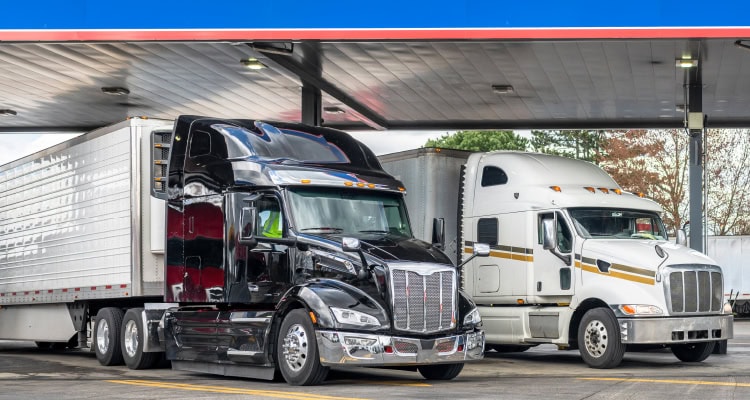
As rising fuel prices pressure supply chains, Buske Logistics mitigates the impact by separating fuel charges on invoices and indexing them to neutral market benchmarks. This collaborative approach allows both Buske and its customers to navigate volatile fuel markets together.
The rise in fuel prices is impacting almost every organization. In its invoices, Buske Logistics identifies fuel separately, says Steve Schlecht, director of strategic initiatives.
Buske also bases its fuel charges on a neutral, relevant index and incorporates guardrails that identify when pricing can be adjusted. With this approach, shippers and Buske can ride the fuel markets together, and both parties can limit their exposure.
8. Use AI to Boost Transportation Efficiency and Effectiveness
Artificial intelligence has started to change the logistics marketplace, says John Conrad, chief revenue officer with Evans Transportation, based in Delafield, Wisconsin.
Logistics providers can use agentic models to take over some tasks that humans typically handled, such as conducting initial screens of carriers and processing documents. This helps logistics providers more efficiently and quickly serve shippers, so they can adapt or take proactive steps to adjust to market fluctuations.
In addition, some logistics providers and carrier organizations use AI and other solutions to determine the location of their vehicles, Conrad says. Then, they can quickly identify where capacity is located and adjust as needed to meet fluctuating demand or other changes.
RyderShare is a real-time collaborative visibility tool that can be accessed by key stakeholders in a supply chain. If a cargo truck encounters a weather or road issue that could cause delays, Ryder can proactively work with shippers and carriers to assess the situation, says Steve Sensing, president of Supply Chain Solutions and Dedicated Transportation Solutions at Ryder System, Inc. They can decide, for instance, whether to divert the truck so it meets its original delivery time.
9. Facilitate Changing Distribution Networks
The tariffs imposed over the past few years have prompted some shippers to relocate their manufacturing operations. While China remains a massive exporter to the United States, Canada, Mexico, Taiwan, and Vietnam have currently jumped ahead of it, according to April 2026 Census numbers.
Even domestically, companies are adjusting their distribution networks to best meet demand. For example, changing consumer demand and shopping habits means an ever-changing landscape for big food companies. Many are acquiring new companies while divesting some of their existing brands, which requires changing their manufacturing strategy and optimizing their infrastructure and supply chains, Sensing says.
Ryder worked with one food products company to consolidate two distribution centers in the Southeast into one, and another two in the Midwest into one. Ryder also launched a large-scale automation project to optimize labor.
“With a constantly changing landscape, we’re always looking for ways to drive waste out of the supply chain,” Sensing says. “Our customers count on us to be more than just a 3PL; they want a true partner that can help them execute their business strategy.”
Because many companies manage a broader range of suppliers across multiple locations, they need technology that allows them to access information about their shipments fast and efficiently, Fullerton says. For instance, rapid access to inventory levels can help shippers determine if they need to expedite a shipment to meet a jump in demand or if they have enough stock on hand to accommodate the increase.
A technology solution can help logistics providers and shippers determine how to direct goods that arrived at a port where cargo is at a standstill by estimating the impact on cost and service levels of remaining at the port versus shifting to over-the-road transportation.
Along with technology, human expertise is critical when launching operations in new locations, especially in new countries. Logistics providers can help shippers get any new networks off to a strong start. When starting out in a region, selecting the right partners, such as drayage companies and truckload carriers, is essential to successful operations.
“There is a lot of complexity that needs to be managed,” Fullerton says. Strong logistics providers, especially those that have local expertise and established operations on the ground, can help shippers make intelligent choices.
The supply chains of high-tech and semiconductor companies that move products between Asia and North America are among those that have experienced significantly changing trade policies, capacity constraints, and shifting market conditions over the past year, Chien says. To help its shippers navigate this changing environment, Dimerco leverages its Asia-Pacific operating network, local market expertise, and transportation management capabilities so it can provide alternative routing options and market intelligence. Customers can make more informed decisions when capacity conditions, costs, or transit times change.
“The goal is not simply to move freight, but to help customers maintain supply chain flexibility and resilience as market conditions evolve,” Chien says.
Strong Partner Benefits
Organizations increasingly need logistics partners that can provide visibility, flexibility, and strategic guidance across their broader supply chains as geopolitical uncertainty, demand shifts, and regulatory complexity continue to evolve and global supply chains become more complex.
Leading logistics providers help shippers diversify transportation options, improve visibility, and develop contingency plans, such as leveraging regional gateway strategies, to provide multiple options when market conditions change.
Navigating Volatility with FTZs

As the tariff environment intensifies, shippers increasingly turn to Foreign Trade Zones (FTZs) to manage costs. These specially designated sites, typically located near U.S. ports of entry, operate as secure areas—technically outside U.S. customs territory—allowing corporations to store and handle goods while deferring or potentially reducing customs, duties, and taxes.
The strategic utility of FTZs has shifted, however. A recent regulatory change has diminished their primary cost-savings benefit: Shippers now typically pay the tariff rate assessed at the time of entry, rather than the potentially lower rate at the time of release.
Despite this, FTZs remain a vital tool for tariff deferral. By delaying payment, shippers can preserve essential cash flow during periods of volatile supply chain costs. The data reflects this ongoing interest; logistics providers are aggressively expanding their FTZ footprints to meet demand.
For instance, Evans Distribution Systems activated an additional 378,000 square feet of warehouse space as a General Purpose Foreign Trade Zone in April 2025, bringing its total capacity to roughly 2.3 million square feet. For shippers navigating unpredictable trade policies, the FTZ remains a cornerstone to help mitigate tariff exposure and maintain operational flexibility.