
Stand-Out Sites: Build for Speed
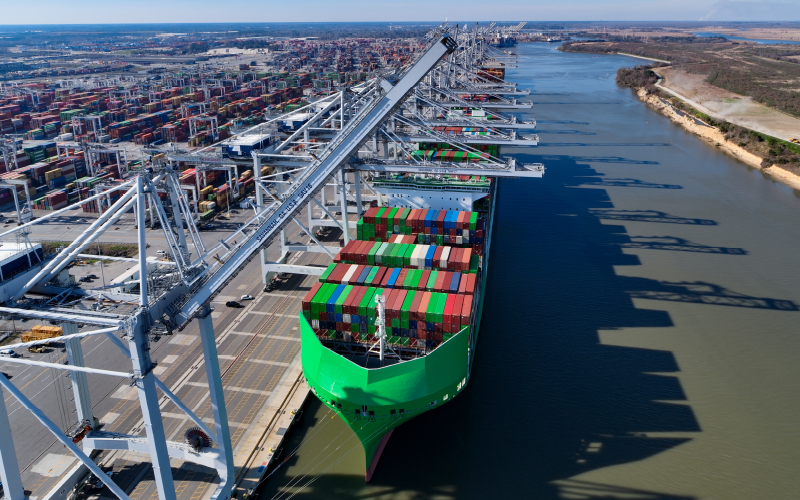
The most logistics-friendly locations build it—the physical infrastructure to handle complex cargo projects and a favorable economic environment for business—so supply chain speed can come.
Business leaders from high tech to manufacturing express variations on the same theme: Success requires moving quickly while building on a solid foundation. The maxim applies to the cities and regions that compete for leadership in logistics.
“The number one thing is transportation infrastructure,” says David J. Closs, Ph.D., chair emeritus of business administration and former chairperson of the Department of Supply Chain Management at Michigan State University.
It’s a paradox: In logistics, speed and reliability depend on things that are fixed in place—ports, airports, highways, and railroads that provide the means for transporting goods. Successful logistics regions capitalize on the advantages of their geography and transportation infrastructure, continually investing in and enhancing those assets.
Solid Foundations, Speedy Supply Chains
Along with providing the transportation infrastructure, the strongest logistics locations also create a favorable business climate for the companies that transport and manage goods.
“Not far behind transportation is the tax infrastructure,” Closs says. Favorable taxes and a qualified labor force help logistics providers operate economically and efficiently.
Bringing these elements together requires cooperation among community leaders, government officials, and operators of the region’s critical logistics assets.
The ability of all these entities to work together can help turn a collection of advantages into a stand-out site.
Maintaining a competitive position requires constant vigilance. “First, you must understand what your distinct advantage is,” Closs says. “That’s not always obvious. What is your current competitive advantage?”
Strong regional entities like the Georgia Ports Authority (GPA), with its gateway ports in Savannah and Brunswick; Port Tampa Bay, with its ideal blend of logistics strengths; and WSI, a 3PL with rail-served warehouses and national reach, can make all the difference.
Building a Talent Pipeline
A qualified labor and talent pool is essential for communities to achieve logistics leadership. Both operational workers and executive/management personnel “have to be much more knowledgeable in terms of dealing with tools and technology than they did in the past,” says Closs.
Satisfying that necessity requires robust partnerships with the region’s academic community. Colleges and universities are expanding and improving supply chain education, but Closs believes they need to accelerate their offerings even more.
Community leaders must keep a close eye on industry trends reported by the Bureau of Labor Statistics (BLS) and make sure the region’s level of logistics training aligns with the growth and projections reflected in BLS data (see sidebar below), Closs notes.
Transporting Cars: RoRo or ContainersProviding Capacity and Connectivity
Thanks in no small measure to their ports, two communities ranking high on the list of logistics-friendly locations are Savannah and Brunswick, Georgia.
From the perspective of the Georgia Ports Authority, capacity and connectivity are major factors in the formula for the communities’ success. The gateway ports of Savannah and Brunswick form the two pillars of GPA’s dual port strategy, with Savannah specializing in containers and Brunswick specializing in roll-on/roll-off (RoRo) cargo.
Edward Fulford, the GPA’s manager of media relations, points out that truck turn times at the Port of Savannah average 43 minutes for dual, export-import transactions. Nearly 80% of Savannah’s container trade moves by truck. “GPA’s terminal efficiency means truckers can complete six to eight turns per day and still be home for dinner,” Fulford says.
At Brunswick, Colonels Island Terminal is the nation’s leading hub for autos and heavy machinery. The port is served by every major RoRo ocean carrier calling the East Coast. The port has two on-terminal railyards, extending GPA’s reach to inland dealerships and manufacturing locations.
Supporting Robust Growth
Savannah and Brunswick’s growth sets the pace for automotive logistics centers of excellence. Hyundai’s Metaplant has announced plans to increase annual production capacity at its Georgia plant from 500,000 units to 700,000-800,000 units by 2028.
GPA anticipates container volumes to increase by 55% over the next 10 years and will invest $5 billion in infrastructure, adding five container berths (the most of any U.S. port) and a fourth RoRo berth.
“The Port of Savannah provides customers more flexible supply chain options and greater resiliency through its 40 weekly vessel calls, 42 double-stack trains each week, and 15,000 truck transactions daily,” Fulford says. “Savannah delivers the industry’s best speed to rail, averaging just 20 hours between a container being discharged from a ship and departure by rail. Savannah’s fast truck turn times also translate into higher velocity supply chains, enabling customers to restock inventory faster and reduce inventory carrying costs.”
Expanded highways to and from the port ensure cargo reaches inland destinations without delay. The Georgia Department of Transportation (GDOT) has opened the $126-million Brampton Road Connector, a new four-lane highway linking Garden City Terminal’s Gate 3 directly to the interstate system, removing at-grade rail crossings and truck traffic from local neighborhoods. The project gives truck drivers faster access to the Port of Savannah and a more streamlined route to inland markets.
Clearly, community investment is a priority. Over the past 12 years, GDOT has invested nearly $600 million in roadway projects that also include:
Reconstructing the I-16/I-95 interchange and widening I-16, a $295-million project improving the safety and flow of commuters and cargo moving on and off each interstate.
Jimmy Deloach Parkway, a $129-million, limited-access truck route linking Garden City Terminal with Interstates 16 and 95.
“Georgia Ports has maintained steady investment in capacity-building infrastructure to promote efficient cargo handling,” Fulford says. “Over the past decade, GPA has invested and completed $4.13 billion in infrastructure projects.”
Future investment promises to keep that community-building record on track.
Capitalizing on Assets
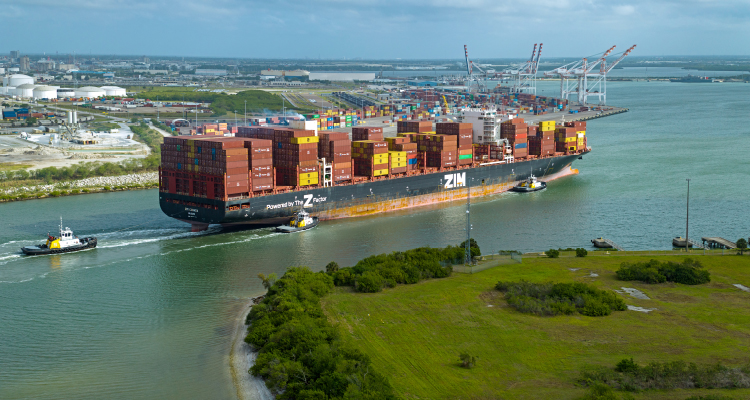
A critical gateway for domestic and international trade, Port Tampa Bay is one of the state’s largest economic drivers, generating an estimated $34.6 billion in annual economic impact.
“A logistics-friendly location starts with flexibility, connectivity, and reliable execution,” says Port Tampa Bay President and CEO Paul Anderson.
Port Tampa Bay’s strength lies in intentional diversification. The port handles a broad mix of cargo, including containerized freight, breakbulk and project cargo, bulk commodities, RoRo cargo, and energy products.
“That diversity gives customers flexibility as markets and supply chains evolve, allowing the port to adapt to changing customer needs and shifting trade patterns,” Anderson says.
Infrastructure investment is equally important. “Port Tampa Bay has approximately $100 million in ongoing infrastructure projects designed to strengthen capacity, efficiency, and long-term resilience,” Anderson notes. “Those investments include continued improvements to terminals and cargo-handling capabilities, helping ensure the port can support growth while responding to changing market demands.”
Location and connectivity are also key. Situated on Florida’s Gulf Coast with convenient access to Interstate 4, Port Tampa Bay connects efficiently to one of the country’s fastest-growing distribution regions.
The I-4 corridor encompasses more than 550 million square feet of distribution and logistics space, helping support faster cargo movement, lower drayage costs, and efficient last-mile delivery throughout Florida and the broader Southeast.
Ultimately, a logistics-friendly location needs the right combination of infrastructure, flexibility, connectivity, and geographic advantage, Anderson says. “Port Tampa Bay brings those assets together to provide customers with efficient, reliable access to their markets while remaining adaptable in an evolving global marketplace.”
The port and the region it serves are complementary forces. “Port Tampa Bay provides the infrastructure, connectivity, and cargo capabilities that help keep Florida’s economy moving,” he says, “while the region provides a growing market that coxntinues to create demand for those assets.”
Serving as a Critical Gateway
As the state’s largest port by tonnage and acreage, Port Tampa Bay serves as a critical gateway for domestic and international trade. It is one of the state’s largest economic drivers, generating an estimated $34.6 billion in annual economic impact.
The port spans approximately 5,000 acres of industrially zoned land with deepwater access, supporting a broad range of maritime, logistics, and industrial operations.
The region complements those assets with a large and growing consumer base. Florida is home to more than 23 million residents and welcomes more than 143 million visitors annually.
Continued population growth, tourism, and economic development are driving demand for housing, roads, commercial development, and infrastructure—all of which require the movement of raw materials.
Meeting Growing Demand
Port Tampa Bay plays a critical role in meeting that demand. The port is a major factor in the movement of dry bulk commodities such as cement, gypsum, granite, limestone, phosphate, sulfur, grain, salt, fly ash, and aggregates. These materials support construction, infrastructure, agriculture, manufacturing, and other industries throughout the state.
The result is a strong alignment between the port and the region: Port Tampa Bay provides deepwater infrastructure and logistics capabilities, while the scale and continued growth of Florida’s economy create the demand that keeps those assets in use.
For other communities and regions aspiring to attain a similar status, Anderson says the most important lesson is to stay flexible. “Markets will fluctuate, supply chains will change, and customer needs will evolve,” he says. “Ports and the regions they serve must be flexible enough to adapt to those peaks and valleys while continuing to invest in the infrastructure and services that keep them competitive.”
Leveraging Sturdy Infrastructure
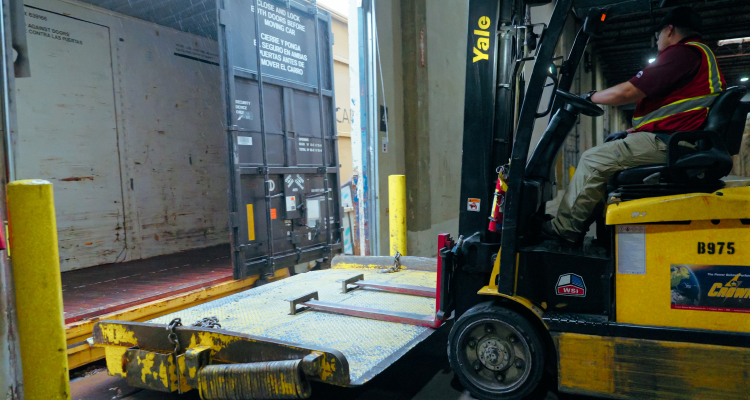
WSI provides rail transloading, warehousing and distribution, transportation management, chemical and hazardous-material logistics, fulfillment, and specialized handling.
Regions that excel in logistics are built on the strength of their overall infrastructure and how well all the components of the supply chain work together. That’s where logistics providers like WSI (Warehouse Specialists, LLC) come in.
One of the largest privately held third-party logistics companies in the United States, WSI operates a nationwide distribution network with global logistics reach. Its warehousing, fulfillment, transportation, and specialized logistics services support customers at virtually every point in the supply chain. WSI provides rail transloading, warehousing and distribution, transportation management, chemical and hazardous-material logistics, fulfillment, and specialized handling.
Headquartered in Appleton, Wisconsin, WSI has dozens of facilities in nine states: Wisconsin, Illinois, Pennsylvania, Iowa, Texas, California, Arizona, Ohio, and Oregon.
In addition to its 3PL warehouses and fulfillment centers, WSI provides transloading through an extensive private network of rail-served warehouses across the United States.
Helping Customers Navigate Complexity
Specialized expertise across its service verticals gives WSI a broad range of capabilities. Through organic growth and strategic acquisitions, WSI’s family of companies has built a portfolio of services designed to meet customers’ individual needs.
Together with Kase, its technology-focused ecommerce and omnichannel fulfillment arm, WSI helps customers navigate increasingly complex supply chains across its network.
“Rail can be a tremendous advantage for shippers moving high-volume products,” says Billy Vance, WSI’s director of rail relations. “But you need usable infrastructure, warehouse capacity, trucking capacity, and an operating environment that allows the different modes to work together efficiently.”
The labor market and overall business environment are also important factors in regional logistics performance. “Ultimately, a logistics-friendly community needs the infrastructure, people, and relationships that allow companies to move freight reliably,” Vance says.
How does WSI contribute to the equation at its multiple locations?
“One thing I think sometimes gets overlooked is that good freight infrastructure only creates an opportunity,” Vance says. “You still need good execution, and rail is a great example. The value isn’t just having a siding at the building. You have to keep railcars moving, have the labor and equipment available to unload them efficiently, and maintain visibility into shipments.”
Experience Adds Value
WSI works directly with railroads, trainmasters, and regional superintendents to resolve problems quickly when something doesn’t go according to plan.
“That’s where an experienced logistics operator adds value,” Vance says. “We connect the infrastructure to the customer’s actual supply chain.”
Again, the key word: Connectivity. “A logistics-friendly location starts with connectivity,” Vance says. “You want access to the major transportation routes, ports, rail yards, and highways, and to be positioned where you can efficiently reach customers.”
But connectivity extends beyond physical infrastructure. It also includes relationships within the community and within the company.
“The relationships are what make the infrastructure work,” Vance says. “Our people know the trainmasters, the crews, and the customers at their sites. When something doesn’t go according to plan, they already know who to call and how to get freight moving again.”
Enabling Constant Improvement
You might say Facebook’s former motto, “Move fast with stable infrastructure,” characterizes logistics success stories and underpins stand-out sites.
Continual improvement in supply chain assets is vital to growth in the logistics field, says Dr. David Closs, who has worked with many Fortune 500 corporations focused on logistics strategy. His work has involved developing and applying computer models and information systems for logistics operations and planning, including location analysis, inventory management, forecasting, and routing.
Being strategically situated near major markets and freight flows gives communities an obvious logistics strength.
But location is not enough. They must shorten the distance—and therefore the time and cost—between suppliers, distribution centers, and customers.
Regions with the right combination of infrastructure, workforce, taxes, and other assets understand that equation. They invest in systems that make distance less of a barrier and goods easier to move efficiently from one point to another.
That ability to overcome the challenges and complexities of distance is, ultimately, a region’s most important competitive advantage.
Developing a Competitive Workforce
Communities must ensure their local workforce keeps pace with the ever-increasing needs of the logistics field. Educational institutions and technical training programs must prepare people for the jobs the industry will need.
Workforce planners can use Bureau of Labor Statistics (BLS) projections to track employment trends in transportation and logistics to help inform decisions about workforce training. Here are some key numbers at a glance:
1.6 million: Average annual openings projected for transportation and material-moving occupations, 2025–35.
198,800: Jobs projected to be added in the transportation and warehousing sector, 2024–34.
10%: Projected 2024–34 growth in freight transportation arrangement, the fastest-growing industry within transportation and warehousing.
18%: Projected 2025–35 growth in employment of logisticians, compared with 3% for all occupations.
94.5%: Share of transportation and material-moving workers whose jobs required on-the-job training in 2025.
These statistics underscore the need to prepare workers for a changing industry. The BLS says increasing use of warehouse management systems, automated guided vehicles, robots, and artificial intelligence is expected to boost productivity while limiting employment growth in some occupations. At the same time, demand is growing for workers who can manage increasingly complex supply chains.
Source: U.S. Bureau of Labor Statistics