
14 Supply Chain Moves to Help Retailers Survive and Thrive

Winning brick-and-mortar and ecommerce retail today demands a smarter supply chain, including dynamic stores, flexible distribution, total inventory control, and a rock-solid returns strategy.
The current retail environment is tough. More than 4,100 stores closed or were set to close in 2025, Business Insider reports. Major retailers announcing closures include Joann Fabrics, Party City, Starbucks, Big Lots, and Walgreens.
Several trends mean that supply chains and operations increasingly contribute to retailers’ success, or lack thereof.
One trend is the blurring between physical stores and digital tools such as online marketplaces and social media platforms, or what some call “phygital.” More than 70% of shopping journeys begin online, even if the final purchases occur in physical stores, says Eva Ponce, Ph.D., director of the MIT Omnichannel Supply Chain Lab. Retailers no longer manage separate physical and online channels; instead they operate complex, integrated omnichannel networks.
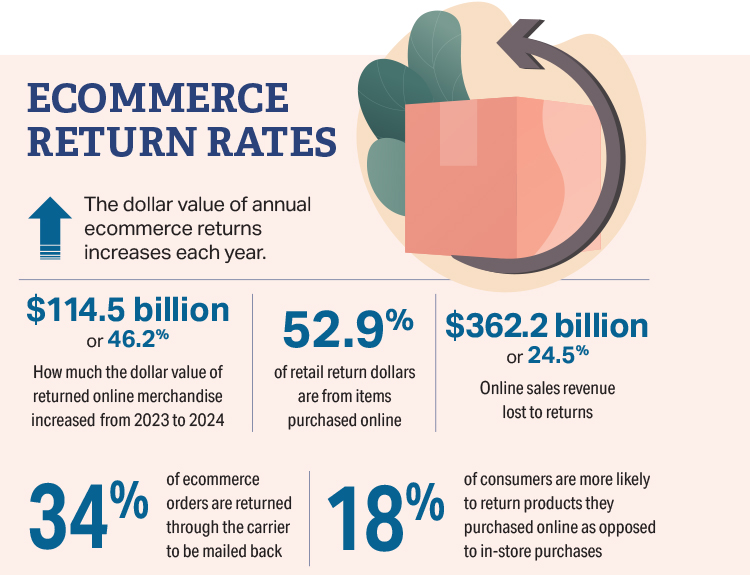
As ecommerce sales continue to grow, and given the high rate of returns of goods purchased online, an effective approach to returns is becoming even more important, says Disney Petit, founder and CEO of LiquiDonate, which provides a sustainable solution for returns and excess inventory. Retailers need to establish processes that are both operationally efficient and easy for consumers.
The rise of social media channels means there’s really “no direct path to purchase,” says Mark Mathews, chief economist and executive director of research with the National Retail Federation.
The inspiration for a purchase can come from social media posts, blogs, videos, or by scanning QR codes, among other prompts. Retailers need to find consumers, wherever they might be, and turn inspiration into a transaction that they can fulfill quickly and intelligently.
On a positive note, technology, and particularly artificial intelligence (AI), can help the retail sector. For instance, AI and data analytics can help retailers better understand customer buying patterns, forecast demand, optimize inventory, and make smarter purchasing decisions, says Elie Y. Katz, president and CEO of National Retail Solutions, which provides point-of-sale services.
Given the impact of these trends, retailers’ supply chains can become competitive differentiators. Taking the following 14 actions can help.
1. Rethink Physical Stores
As retailers assess their customers’ omnichannel shopping habits, as well as their own labor and occupancy costs, they’re redesigning stores to better match their markets, says Lee Holman, lead retail analyst with IHL Group. Among other changes, some are moving to smaller stores, adding fulfillment functions, and/or making stores more experiential.
Some retailers use stores to forward deploy inventory. This can cut the time required to move products to customers, says Tim Schleeter, managing director, consumer retail practice and business transformation with FTI Consulting.
2. Use Stores to Leverage the Brand Experience
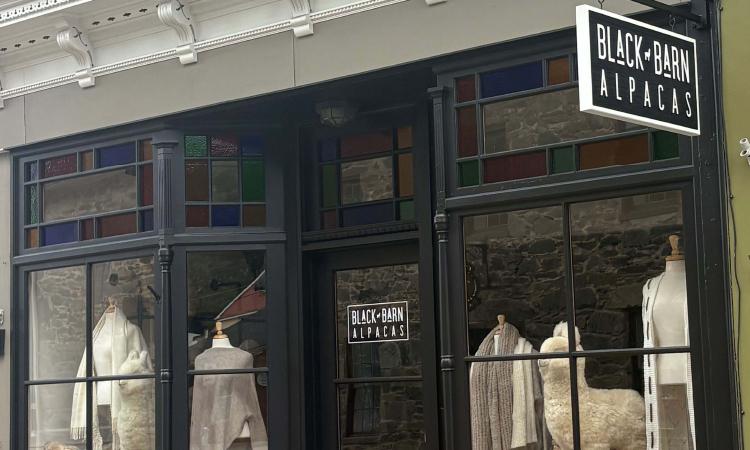
Black Barn Alpacas offers a tactile sensory experience that connects shoppers directly to the animals and sustainable farming practices behind their fiber, creating a hands-on environment that gives consumers a reason to visit physical stores that technology cannot replicate.
“Right now, technology cannot replicate the tactile and olfactory sensory engagement” that consumers can find in physical stores, says Lauren Beitelspacher, marketing professor and associate dean, Babson College. Retailers need to make the in-store experience worth the trip.
Black Barn Alpacas, for example, is creating a retail experience that connects customers directly to the product source—alpacas. The Shoppe by Black Barn Alpacas in Sykesville, Maryland, is part boutique, part storytelling space, and part extension of the company’s agritourism experience. “Our goal is to bring the farm experience into a Main Street retail setting,” says Yussy McManus, the company’s co-owner.
Customers can engage with the story behind the fiber, including the animals themselves and the sustainable farming practices that make alpaca fiber such a special material.
3. Develop a Robust, Flexible Distribution Network
As more consumers shop multiple channels, flexible distribution networks become even more critical. For example, the ability to ship products from stores, as well as from distribution centers, offers “a relief valve,” says Shauna Bowen, chief digital and transformation officer with Radial, a logistics and fulfillment provider. Retailers can pull inventory from whichever node is more effective.
Scenario modeling can help retailers strategically place distribution nodes and build this type of network, Bowen says. Scenario modeling (see sidebar below) examines a range of potential futures and explores the differences between them.
4. Take a Network-Wide Approach to Inventory
Providing a seamless experience regardless of the channel(s) a consumer uses requires accurate, real-time inventory visibility across all channels. Inventory should be “network-wide” rather than channel-owned, says Sundip Naik, Americas leader for logistics and fulfillment with EY.
Accomplishing this involves building real-time visibility across channels and leveraging Available-to-Promise (ATP) logic for true, real-time order orchestration and allocation. ATP refers to the quantity of a product a business can allocate to new orders without breaching existing commitments. It generally considers on-hand inventory and confirmed sales orders, among other factors.
5. Build a Flexible Technology Stack
A flexible technology stack allows retailers to adjust their business without rebuilding their technology every time their needs change, Bowen says.
Say a retailer is expanding into new channels or introducing new fulfillment options. Modular, flexible technology enables those changes to happen faster, with less disruption and at a lower cost than typically would be the case with rigid, monolithic systems. AI accelerates this by making it easier to connect data, automate workflows, and introduce new capabilities without extensive custom development.
6. Figure Out Where Consumers Are Going And Get There First
This step sounds daunting, if not impossible. Yet it’s also critical. “More than ever before, a good retailer needs to understand the consumer,” Mathews says. This understanding needs to cross platforms, regions, and demographics.
AI can help, as it can synthesize massive volumes of historical, contextual, and near real-time data, and then generate predictions and recommendations faster than traditional analytical methods, Ponce says.
For example, AI can continuously analyze consumers’ browsing behavior, purchase history, and search queries, as well as social media trends, among data. By identifying patterns across these various sources, AI can better anticipate customer preferences.
As Black Barn Alpacas is both a farm and a retail business, its supply chain is more personal and transparent than a traditional retail model. At the same time, customers expect convenience, availability, easy discovery, and a seamless experience.
“Technology and data can help us better understand demand patterns, seasonal buying behavior, event-driven traffic, and which products resonate most with customers,” McManus says. Tools such as digital inventory tracking, ecommerce data, customer insights, and eventually more advanced demand planning can help small retailers make smarter decisions.
7. Ensure Data is Clean
Clean data, such as standardized stockkeeping units and inventory signals, is critical before implementing technology, and especially AI. “If the underlying data and systems are weak, the best you’ll get is poor decisions made quicker,” Holman says.
Retailers that have diligently cleaned their data to prepare for AI show significant strides in multiple areas, including product discovery, demand forecasting, inventory visibility, and labor productivity, Holman says.
8. Leverage AI in Demand Planning
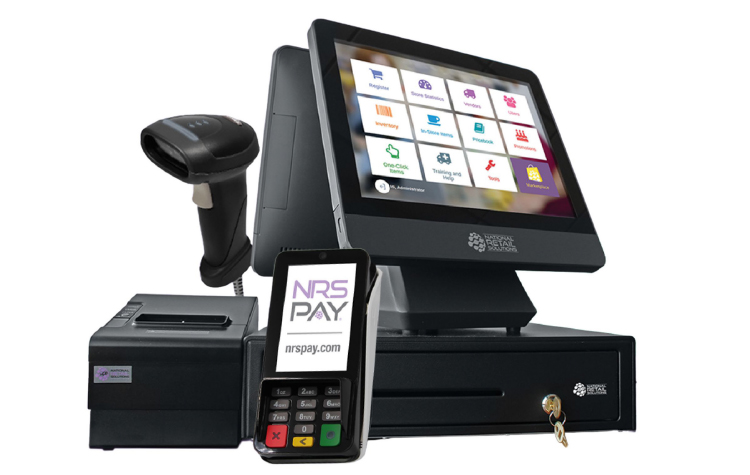
AI and data analytics are transforming point-of-sale systems such as NRS Pay, helping retailers forecast demand, streamline inventory, and make data-driven purchasing decisions.
AI allows retailers to shift from reactive demand planning and inventory models that were built on historical data to predictive systems that can sense and respond to demand signals in near real time, Beitelspacher says.
FTI is testing an AI solution to better determine how to manage replenishment cycles, says Rick Jordon, senior managing director with the company. Artificial intelligence can cut through the volumes of data to assess, for instance, when to let a truck go and when to hold it back to more completely fill it. It also can estimate how changing the truck’s schedule likely will impact the time to fill orders.
9. Keep Other Technologies In the Mix
While AI captures lots of attention, other technology solutions still hold value. For instance, RFID can speed inventory counts by reducing the time associates spend searching for merchandise, manually receiving inventory, and auditing stock, Naik says. Just as important, inventory accuracy often jumps from roughly 85 to 90% in a non-RFID environment to 98 to 99% with RFID, which reduces stockouts and errors, and improves omnichannel fulfillment.
10. Position Inventory dynamically
Rather than rely on fixed inventory allocation rules or historical sales patterns to position inventory, retailers today need to continuously adjust inventory locations based on changing demand, Ponce says.
By combining real-time inventory visibility with AI-enabled demand forecasting and advanced analytics that considers historical sales along with real-time signals—such as customer searches and promotions—retailers can better anticipate where demand is likely to increase. They can then position inventory closer to customers even before orders are placed.
11. Leverage Source-to-Store data collection
Source-to-store data collection systems enable retailers to make faster, smarter decisions, says Tony D’Onofrio, president of Sensormatic Solutions, a provider of retail technology. These systems collect item-level visibility data throughout a product’s journey, from manufacturing and distribution to the store floor and point-of-sale system. Retailers can better understand where merchandise is and how it moves through the supply chain.
The data itself can be relatively simple, such as, “this item was detected at this location at this time,” D’Onofrio says. But when the information is connected across the supply chain, it helps retailers improve inventory accuracy, reduce shrink, and ensure products are available when and where shoppers expect them, among other benefits.
Because the data creates a continuous view of merchandise movement, it also helps retailers optimize labor and make more informed replenishment decisions.
12. Invest in Talent
Technology is only as good as the people who understand how to deploy it, Beitelspacher says. As technology becomes more sophisticated and strategically important, organizations need employees who are adaptable and critical thinkers to be effective stewards of this technology.
13. Develop a Reverse Logistics Strategy

LiquiDonate helps retailers reroute unsellable and excess returns directly to local non-profits, which cuts reverse logistics costs while keeping functional goods out of landfills.
The return rate for online purchases is nearly three times that for purchases completed at brick-and-mortar stores, at 24.5% versus 8.72%, according to Capital One Shopping.
Given these return rates, along with tight margins and the expense and reputational costs of moving returned goods to landfills—where about 80% of returns end up, Petit estimates—or liquidating unsellable goods for pennies on the dollar, retailers need to prioritize reverse logistics as a real strategy, not a clean-up function, she says.
Once again, AI-powered tools can help. On the front end, solutions such as virtual try-on technologies can enable more informed purchasing decisions, Ponce says. That can reduce returns from the start.
AI can also facilitate smarter and faster decisions about handling returns, Petit says. For example, it makes no sense to ship a returned product to a warehouse across the country if it’s not going to be put back into stock.
One option, LiquiDonate, can identify nonprofits that can use the product and are within about 30 miles of customers’ homes, Petit says. To consumers, the process is no different from any other returns.
14. Create Connected Experiences
Over the next few years, successful retailers will integrate across all channels, so the consumer experience doesn’t feel disconnected, McManus says. Customers may discover a product on Instagram, ask about it at an event, buy it in-store, or reorder it online.
“The supply chain has to support that full journey,” she adds.
Social Commerce: Connections and Challenges
American shoppers will spend $104.6 billion on products from social media platforms in 2026, rising to $160 billion by 2030, Capital One Shopping estimates.
Social commerce is particularly important for businesses like Black Barn Alpacas, where the story behind the product matters as much as the product itself. Social media allows shoppers to see the alpacas on the farm, learn about fiber, watch seasonal events, and discover new products. “That kind of connection can turn a retail transaction into a relationship,” says Yussy McManus, co-owner.
At the same time, social commerce platforms bring challenges. To start, retailers typically don’t own the social media channels. This can blur their visibility to the customer and transaction.
Social commerce compresses the distance between product discovery and purchase to nearly zero, placing pressure on fulfillment speed and flexibility. Retailers need to plan for demand that is even less predictable and driven by viral moments, rather than by season.
Impulse buys prompted by influencer posts may produce higher return rates than purchases that are more considered. These also may be for lower-value items where the cost of processing the returns exceeds their value. Retailers need to develop a returns approach that accounts for these shifts.
When purchasing is essentially instantaneous, customers often expect delivery to be equally fast. Inventory needs to be close to customers, whether through local or micro fulfillment centers, or stores that also are fulfillment hubs. This increases complexity and last-mile delivery costs.
Social commerce also boosts demand for real-time visibility, faster replenishment, and more responsive logistics networks. Retailers who can quickly identify trends and react accordingly will enjoy a competitive advantage.
Scenario Modeling in Retail Supply Chains
Scenario modeling is the practice of creating digital “what-if” simulations to stress-test how a supply chain responds to potential disruptions or market shifts before they actually happen.
In retail—where demand spikes, port congestion, supplier failures, and sudden freight inflation are constant risks—relying solely on static forecasts leaves businesses vulnerable. Scenario modeling allows supply chain teams to build dynamic digital twins of their network to simulate unpredictable variables:
- Supplier crises. What if a primary overseas manufacturer shuts down for three weeks?
- Demand volatility. What if a viral social media trend increases product demand by 50% overnight?
- Logistics bottlenecks. What if shipping costs double or key transit corridors stall?
By running these simulations, retailers evaluate trade-offs between speed, cost, and service levels. Rather than reacting blindly when a crisis hits, leaders can pre-script operational playbooks, such as automatically rerouting inventory, activating regional backup suppliers, or adjusting safety stock thresholds.
Ultimately, scenario modeling shifts retail supply chains from reactive fire-fighting to proactive resilience, protecting both profit margins and customer trust in an unpredictable market.