
It’s a Logistics Match! How Locations Can Stand Out

While offering geographical advantages and proximity to major markets is a solid starting point, locations draw site-selection decision makers by investing in and enhancing their logistics profiles.
The competition among regions to attract site-selection decision makers is heating up as supply chains grow ever more vital and complex. Communities are becoming increasingly sophisticated in their efforts to incorporate and develop the characteristics that will place them among the select group of logistics hot spots. Some of those characteristics are dictated by pure geography, but some can be developed.
“For a region to be considered ideal for logistics, certain physical and locational assets give it a built-in advantage,” says Nada Sanders, professor of supply chain management at Northeastern University, Boston. “The ideal geography for a logistics-friendly region combines strategic location (close to demand and trade flows) with physical suitability (flat, hazard-resistant land and room to grow), and natural multimodal access (ports, air, rail, and highway).” These assets provide logistics operators with both cost efficiency and long-term resilience.
Proximity to target markets is advantageous. This includes being located close to dense population centers or manufacturing clusters to reduce last-mile and replenishment costs.
Another big draw is being located along international trade corridors or at the crossroads of continental freight flows. Providing logistics operators with multimodal transportation nodes—e.g., coastal sites, international airports, access to rail networks or interstate highways—is another green flag.
Smart communities build from there.
“Geography provides a structural foundation—the closer you are to key markets and trade corridors, the lower the natural logistics friction,” Sanders says.
The most logistics-friendly regions combine both favorable geography and world-class transport infrastructure. “Where geography is suboptimal, sustained investment and advanced logistics capabilities can still create competitive supply chain nodes, but usually at higher ongoing cost,” Sanders notes.
Community Partnership and Commitment
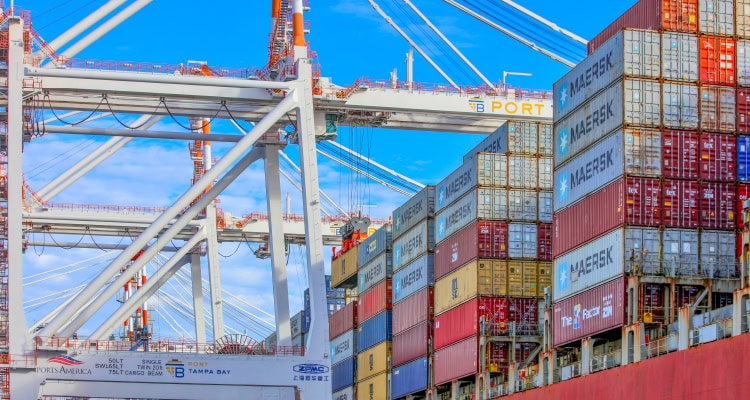
As Florida’s largest and most cargo-diverse port, Port Tampa Bay checks all the boxes. It offers multimodal access, industrial infrastructure, labor availability, technology and efficiency, and a favorable regulatory environment.
How important are community, regional, and state resources to the equation?
“Geography and transport networks provide the foundation, but community, regional, and state resources supply the soft infrastructure—policy, talent, innovation, and resilience—that turns a mere transit point into a durable, world-class logistics hub,” Sanders says.
Community, regional, and state resources, both public-sector and academic, play a strategic, enabling role in a region’s logistics competitiveness. While they can’t replace core geography or hard infrastructure, they strongly influence how well those physical assets are leveraged and how resilient the logistics ecosystem becomes.
State and local transportation agencies shape the quality and capacity of highways, rail spurs, port improvements, and airport expansions, Sanders says, citing as an example the creation of state or regional foreign-trade zones, bonded warehouse programs, and streamlined customs procedures to reduce friction for international shipments.
“Then there is the relationship with community colleges and universities with supply chain or logistics curricula that can feed a steady supply of skilled labor—from forklift operators to data scientists,” Sanders says. “Another example is state emergency management and regional planning bodies that coordinate contingency plans for natural disasters, strikes, or cyberattacks that could disrupt freight flows.”
Forward-thinking leaders of regional assets can contribute mightily to enhancing the region’s place in the logistics hierarchy.
A case in point is Port Tampa Bay, which provides leadership that does not stop at the dock.
“Success in logistics isn’t just about geography,” says Raul Alfonso, executive vice president and chief commercial officer for Port Tampa Bay, Florida’s largest and most cargo-diverse port.
“It’s about vision, adaptability, and alignment with industry demand,” Alfonso maintains, adding that the primary assets needed to qualify a location as “logistics-friendly” include not only strategic geography, but also multimodal access, industrial infrastructure, labor availability, technology and efficiency, and a favorable regulatory environment.
Tampa Bay boasts all of these attributes and more, including proximity to the I-4 and I-75 corridors between Tampa and Orlando, and network connectivity between ocean, road, and rail networks. “In addition,” Alfonso says, “Florida prides itself on business-friendly policies and customs efficiency, which help streamline supply chains.”
But no matter what assets a location currently enjoys, Alfonso says, continuing investment is key to maintaining a premier position in the logistics marketplace.
Continuing Investment
Port Tampa Bay endeavors to do just that with proactive terminal expansion and infrastructure modernization.
Recent expansion of Port Tampa Bay’s container yard to 100 acres, a new gate, three more post-Panamax cranes, the recent purchase of two additional cranes, and the expansion of container berths from 3,200 to 4,500 linear feet combine to position Port Tampa Bay to stay ahead of the continued growth and supply chain demands of Florida.
“Port Tampa Bay is uniquely positioned to deliver a Florida-first, customer-focused supply chain solution,” Alfonso says. “The port’s proximity to Florida’s concentration of distribution centers allows for excellent truck capacity to reach other out-of-state markets, at costs that are 50% lower than southbound rates. The port also offers competitive northbound backhaul trucking rates that further extend our value proposition to cargo owners serving the Southeast and beyond.”
Sparking Growth
Asked for the best advice he’d give to other regions aspiring to Tampa Bay’s stature in the logistics field, Alfonso cites five essential strategies:
Invest ahead of the curve. Port Tampa Bay’s proactive terminal expansion and infrastructure modernization ensured capacity kept pace with population and cargo growth.
Leverage regional synergies. The port’s partnerships with importers, exporters, and economic development corporations along the I-4 and I-75 corridors create a successful environment for smart development and optimized supply chains.
Focus on customer efficiency. Cost-effective drayage, backhaul savings, and quick turnarounds are top priorities for shippers. Eliminate congestion and minimize transit friction to win loyalty.
Diversify trade lanes and cargoes. Tampa’s growth was accelerated by expanding routes to Latin America and Asia and serving a variety of cargo, from containerized goods to steel, cement, and renewable energy materials. Port Tampa Bay’s diversity is its strength in changing market conditions.
Be data-informed and future-facing. Anticipate shifts in consumption, industrial trends, and global trade dynamics and build capacity, talent, and policy support accordingly.
Following its own lead, Alfonso says, Port Tampa Bay is preparing for future growth with a deepening project (to 47 feet) and a rail-served transload warehouse.
Emphasizing Assets
Regional leaders must know what their region has and what it needs before they can build on their region’s assets.
“The first step is to develop a fact-based, shared understanding of the region’s current logistics ecosystem and its gaps before spending on projects or incentives,” notes Sanders. Commissioning a comprehensive logistics audit to evaluate physical assets, freight flows, business climate, and labor resources is key to gaining this understanding.
This baseline knowledge provides a common language for public officials, carriers, shippers, and educators.
“A transparent logistics baseline and a collaborative freight strategy are the foundation on which all later investments—ports, rail upgrades, workforce programs—can be justified and prioritized,” notes Sanders.
To stay at the top of the logistics hierarchy, a community or region must treat logistics as a continuously evolving industry, not a one-time investment. “Even locations with ideal geography and strong infrastructure can be overtaken if they fail to adapt,” she says.
Meeting Evolving Needs
Regions must continuously prioritize interconnected imperatives—the first of which is infrastructure. Maintaining highways, bridges, ports, airports, and rail connections ahead of demand, and investing in port expansions and high-capacity intermodal yards are crucial to-do’s, notes Sanders.
Also key for long-term success is workforce retention and upskilling. Sanders recommends partnering with universities, community colleges, and technical schools to create programs in supply chain analytics, transportation engineering, robotics, and artificial intelligence. Companies should offer reskilling opportunities to help workers adapt to automation and new digital tools.
Premier logistics regions treat logistics as a “living ecosystem,” she says. “Geography provides the starting advantage, but sustained leadership depends on continuous reinvestment in infrastructure, talent, policy, innovation, and resilience. Regions that institutionalize this cycle remain competitive even as technology, trade patterns, and customer expectations evolve.”
Logistics Profile Must-Have’s

Nada Sanders, Northeastern University
While the “location, location, location” trifecta is well known, three additional elements can enhance logistics attractiveness, says Nada Sanders, professor of supply chain management:
ACCESS. This includes a multimodal access environment, such as high-capacity roadways, rail links, deep-water ports, and air cargo hubs that provide reliable intermodal options. “Having physical transportation access is key,” she says. Also essential is proximity to markets. This means access to major population centers or manufacturing clusters to shorten lead times and reduce last-mile costs. This also includes access to routes and carriers to mitigate disruptions from weather, congestion, or geopolitical shocks.
COST. “There are many aspects to this,” says Sanders. “One is a favorable regulatory and business environment. For example, this may be efficient border procedures, modern customs technology, adherence to international standards, favorable tax structure, and stable regulations and transparent governance to reduce compliance risk.” Cost also involves access to a skilled logistics workforce. This involves availability of experienced warehouse staff, drivers, freight forwarders, and supply chain professionals. Yet another factor is real estate and facility availability which impacts costs.
RISK. “This means an environment that is low risk of natural hazards, such as floods, hurricanes, earthquakes, or political instability,” Sanders says. Risks are also reduced from community support, such as local partnerships and public acceptance of freight activity.
“A truly logistics-friendly region is one where these elements reinforce one another,” Sanders says, “where physical assets, regulatory conditions, talent, and technology converge to minimize total landed cost while maximizing speed, reliability, and adaptability for global supply chains.”
Major Freight Connections
Logistics-friendly locations bank on the power of their road network. Here are six major U.S. freight routes with their most common cargo, according to Truck Drivers U.S.A., a job-matching site and online community focused on commercial drivers (CDL holders) in the United States:
Interstate 95: The East Coast Consumer Goods Highway
- Runs about 1,900 miles from Miami, Florida, to Houlton, Maine.
- Transports consumer goods such as electronics, pharmaceuticals, apparel, and packaged retail products.
- Connects to major ports like Newark, Norfolk, and Baltimore, supporting containerized freight.
Interstate 80: The Transcontinental Bulk Freight Corridor
- Stretches nearly 2,900 miles from San Francisco, California, to Teaneck, New Jersey.
- Carries bulk commodities including grains, construction materials, and heavy equipment.
Interstate 90: The Northern Cross-Country Freight Route
- The longest interstate, at about 3,020 miles, connecting Seattle, Washington, to Boston, Massachusetts.
- Transports heavy machinery, agricultural goods, and containerized freight.
- Daily truck traffic ranges from 7,000 to 14,000 vehicles along various segments.
Interstate 10: The Southern Fuel and Produce Corridor
- Extends roughly 2,460 miles from Santa Monica, California, to Jacksonville, Florida.
- Critical for transporting energy products such as gasoline and chemicals, along with agricultural produce.
- Recognized as a primary freight corridor linking refineries and ports to inland markets.
Interstate 75: Automotive and Agricultural Freight
- Runs from the Canadian border in Michigan to Miami, Florida.
- Supports automotive manufacturing shipments and fresh produce transport.
- Notably congested near Chattanooga’s I-24/I-75 interchange, impacting freight efficiency.
Interstate 40: Intermodal and Consumer Goods Freight
- Covers about 2,500 miles from Barstow, California, to Wilmington, North Carolina.
- Connects urban centers and intermodal freight terminals.
- Frequently carries containerized freight and consumer goods.