
Not Having Parcel Functionality in Your TMS Is a Blind Spot

EVP of Commercial Operations, FreightWise
Some shippers treat parcel shipping like a utility bill. A bill paid weekly that is occasionally higher than usual, but you aren’t totally sure why. For businesses where parcel shipments are not the primary way products reach end-users, parcel expenses get lumped in with other internal shipping expenses. The result is a blind spot on overall spend, and lack of clarity if your parcel shipping is optimized.
The U.S. parcel market is projected to reach $30 billion with a 5% CAGR between 2025 and 2029 according to Parcel & Post Technology. With changes happening almost weekly with parcel rates, it is hard to keep up with modifications to rate tables and surcharges. Most companies, even heavy industrial or machinery type companies, have some level of parcel shipping for repair parts, etc. Ignoring and siloing parcel shipping costs and processes is a costly mistake.
Common challenges we see at FreightWise relative to parcel rating, parcel execution, and overall visibility for parcel.
- Limited or no multi-modal TMS rating: Many Transportation Management Systems do not integrate parcel rating and execution. Many enterprise TMS systems were built to support highly complex multi-stop truckload scenarios,but due to how they were built they overlooked the evolution of parcel shipping, especially for high-velocity parcel shippers. Without comparing the rates across modes, you simply don’t know if you are shipping the most optimal method each time.
- Incomplete parcel rating: Accessorial charges now on average make up 40% of the cost of a parcel shipment. Many shippers rely on basic ratings from Warehouse Management Systems (WMS) or quoting engines that do not factor in these fees, transit times, or other surcharges. This means there are oftentimes components that are overlooked when giving an estimated shipping cost to a customer, or not having a complete view.
- Inadequate parcel invoice auditing: Back to the utility bill analogy, many companies fail to match rated amounts to billed invoices, a process sometimes called “match pay.” One of the biggest gaps FreightWise sees when engaging with a new business is the lack of rigorous rate verification against actual invoices. In working with thousands of shippers, more often than not, the invoices are being audited, but not against the actual rating engine.
“One of the most common challenges when not being able to compare the rated amount for a parcel shipment with the invoiced amount comes up in address correction fees. The average address correction fee is around $25 per package. That surcharge won’t show up in the rating engine, but can show in the invoice. Without a proper parcel audit, this could be something repeated over and over because the rated amount and invoiced amount aren’t being matched for reconciliation purposes.”
—Jennifer Domonkos, EVP of Commercial Operations, FreightWise
There are several steps you can take to avoid flying blind with parcel shipping.
- Use a rating engine that can compare across modes. Specifically for less-than-truckload and parcel, having a way to compare those rates especially if you have a number of “in betweener” shipments. This will make sure you are always shipping the most cost effective method.
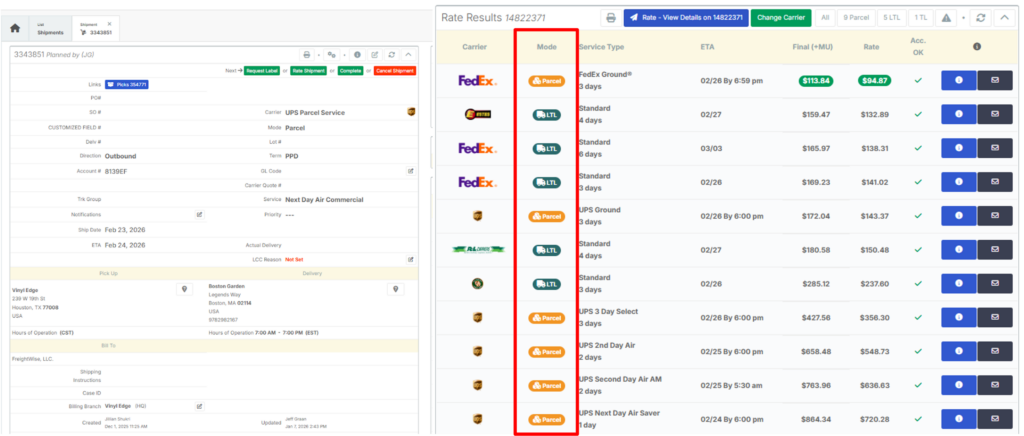
- Quote parcel rates comprehensively. Have the ability to accurately quote your parcel shipping. Not just weight and zone, but take into account all the accessorials tied to the shipment. This will make sure you are picking the right mode, but also eliminate surprises. This can also allow you to determine if there is a better service level for your package to arrive sooner at a nominal fee for a better customer experience.
- Match the rated parcel shipping amount with the invoiced amount. Gone are the days of auditing a parcel invoice and getting Guaranteed Service Refunds, but audit parcel shipments is still very important. You can notate any discrepancies between the rated amount and invoiced amount. This could be a box size getting charged dimensional weight, an incorrect address in your system, or other common accessorial charges.
- Leverage reporting across modes. Most Transportation Management Systems provide some level of embedded reporting and dashboards, which allows you to look at the cost across all modes or break it out. This unified visibility also enables cross-modal comparisons that reveal inefficiencies or hidden costs that might otherwise be missed when parcel and freight data are siloed.
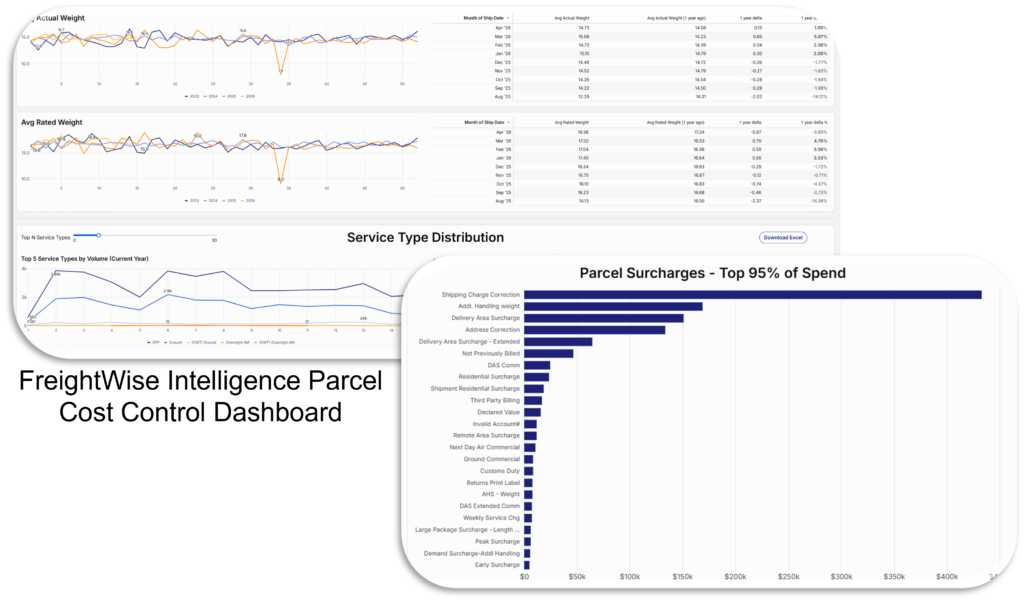
“FreightWise Intelligence gives you visibility across all modes with embedded dashboards directly in the TMS. This allows you to segment by location, mode, cost per mile, along with trending year-over-year and month-over-month comparisons.”
—Jennifer Domonkos, EVP of Commercial Operations, FreightWise
Conclusion: Holistic TMS Solutions and Visibility
Transportation management systems (like FreightWise and Kuebix TMS) understand the importance of consolidating parcel, LTL, and TL management under one roof. Their systems offer robust rating engines, detailed invoice auditing tools, and comprehensive reporting capabilities that enable shippers to manage and optimize transportation costs more effectively.
By integrating parcel capability into your TMS, you eliminate the blind spot of parcel spend and gain complete control over your entire transportation network. This crucial step helps you build an optimized supply chain, while reducing shipping costs.