
WHAT’S THE WORD: The Language of Logistics

From refreshers to recently coined terms and emerging concepts (should we be concerned about shadow AI?), here are some quick definitions to add to your logistics dictionary.

The upstream supply chain can be thought of as “supply” while the downstream supply chain is the “demand.”
Upstream Operations
The upstream supply chain refers to all activities that happen before manufacturing—primarily the flow of materials into the company—including:
- Supplier management, relationships, and selection
- Sourcing and procurement
- Inbound logistics
- Inventory of raw materials
Upstream supply chain management focuses on building strong supplier partnerships, ensuring materials meet quality standards, and reducing lead times and costs.
Downstream Operations
The downstream supply chain starts once the product is manufactured. It covers everything involved in getting the product to the end customer:
- Warehousing and order fulfillment
- Distribution and logistics
- Last-mile delivery
- Customer service and returns
Downstream operations focus on customer satisfaction, shortening delivery times, and reducing return rates.
Dive deeper here:

Supply Chain Disruption:

Recognizing there are two distinct faces of disruption—chronic and catastrophic—must be part of any attempt to strengthen resilience, according to DP World’s global report.
 “If this difference is ignored, the risk is that firms over-insure against rare shocks and underinvest in the operational discipline that keeps shelves stocked and factories running the rest of the time. High-volume sectors such as perishables and retail need tighter day-to-day coordination and flexibility to smooth these bumps, while automotive customers need very low tolerance of failure at key nodes.”
–Beat Simon, Global Chief Commercial Officer
and Chief Operating Officer-Logistics, DP World
2026 TERM TO WATCH: Data Fabric
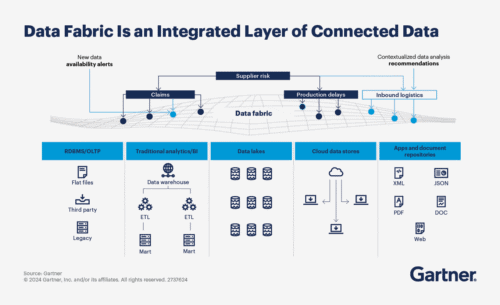
A data fabric architecture is a modern approach to data architecture that enables organizations to manage and utilize data across diverse systems, locations, and partners. Rather than centralizing data into a single platform, data fabrics establish a unified data layer that connects information wherever it resides—cloud or on-premise supply chain applications.
Source: GARTNER

CSR stands for Corporate Social Responsibility. CSR is a management concept and business approach that helps companies integrate social, environmental, and economic concerns into their values, corporate culture, and decision-making processes.
ESG stands for Environmental, Social, and Governance. This set of criteria is measurable and used by investors to evaluate potential profitable and ethical business investments.
What’s the Difference?
Although CSR and ESG share objectives, the two are not interchangeable. The biggest difference resides in how corporate accountability is tracked and measured.
In terms of CSR, companies voluntarily self-assess how successful they are at integrating social and ecological accountability programs into their operations. In contrast, ESG focuses on how these efforts can be gauged and quantified.
By using metrics to rank and evaluate a business’s performance, companies can tangibly express to customers, investors, and stakeholders how they manage their supply chain, human rights record, carbon imprint, corporate governance, and more.
Source: ThomasNet

AI Paradox
Inside supply chain organizations, AI is already automating sourcing, supplier risk, and forecasting at enterprise scale, but adoption is lagging because roles, incentives, and decision authority haven’t been redesigned to work with the technology.
This is called the AI paradox: different readiness levels contradicting/counteracting each other.
In short, the technology is enterprise-ready, but supply chain organizations are not. Companies can follow the example of leading organizations and:
- Redesign procurement and supply chain roles to be AI-first, not AI-assisted
- Automate tactical work while rebuilding trust in AI-driven decisions
- Use AI agents to absorb labor pressure without burning out teams
- Close the skills and confidence gap before it becomes operational risk

“Shadow AI—when individuals use commonly available tools like ChatGPT, Grok, or Perplexity without oversight at work—potentially raises serious data privacy and compliance concerns. The corporate benefits of GenAI’s potential is unlocked when leaders drive secure, strategic adoption with risk management as a priority.”
—Ulf Persson, CEO, ABBYY
More than one-third (36%) of transport and logistics leaders admit that a driving factor for introducing GenAI was that employees were already using it on a Bring-Your-Own-Software basis for personal productivity, which impacts security concerns over shadow AI, found an ABBYY survey conducted by Opinium.
Retail Reality: Phygital
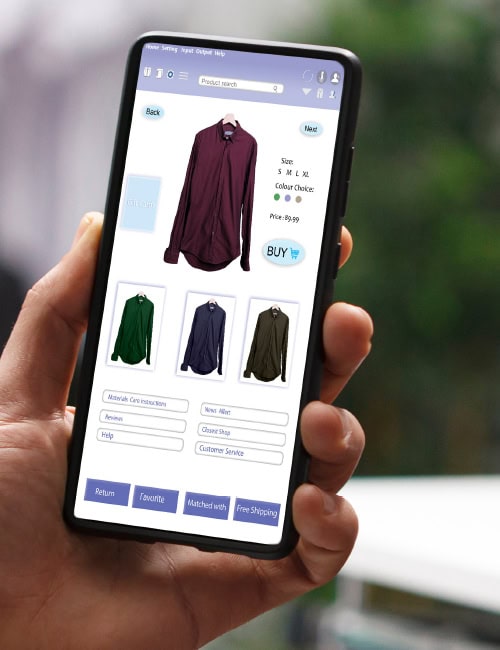 Definition: The blending of physical and digital shopping experiences.
Almost half of U.S. shoppers (45%) use phones to look up product information while in-store, finds a recent Vestcom study. And these digital behaviors are only expected to deepen.
Brands can capitalize on phygital opportunities by enhancing the in-store experience with digital messaging, such as QR codes on signs and packaging.
“The physical store is where 85% of consumer purchases are made, yet digital channels dominate the focus of most brands’ media spend. Quite simply, an in-store shopper can react in real time to a brand message with far less friction, which increases the potential for conversion, and that should be the ultimate objective for any media campaign. The brands that recognize this fundamental truth and invest accordingly will capture the impulse economy, while their competitors chase less effective impressions.”
–Shock Torem, SVP, Vestcom Media Solutions

Pay Attention To:
Bonded Warehouses
“Bonded warehouses aren’t new, but their relevance surged in 2025. By storing goods in a customs-controlled environment, companies could defer duties until the moment products were released into U.S. commerce. That delay created two major advantages: improved cash flow and the possibility of paying less if tariff rates dropped before release.
With last year defined by rapid policy shifts, that flexibility matters. But bonded programs only work when compliance is airtight. Customs requires precision—item-level tracking, clear audit trails, and strict control over when and how goods move. Warehouse management systems (WMS) allow operations to maintain real-time visibility, enforce workflow controls, and prevent premature release of goods.
This strategy allows importers to hold inventory strategically, time duty exposure, and stay compliant even as enforcement tightens.”
—Amy Dean, VP of Operations, SC Codeworks