
17 High-Impact Moves for a Sustainable Supply Chain
Sustainability initiatives can improve a company’s supply chain performance, as well as its environmental footprint. These strategies can help you go green.
Supply chain sustainability is no longer solely an environmental issue. “It is an operations and resilience priority,” says David Linich, sustainability partner with PwC. The steps that reduce emissions and resource use, such as redesigning products to require fewer inputs and optimizing logistics, can also help stabilize costs, reduce the impact of disruptions, and improve service.
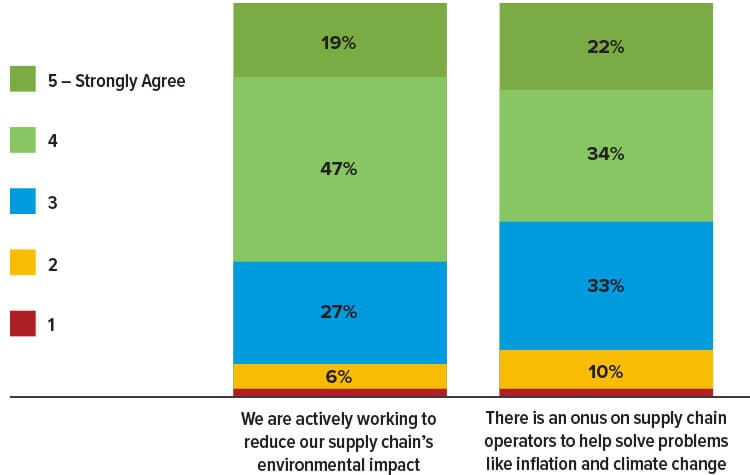
Two-thirds of supply chain leaders responding to a recent Blue Yonder survey indicate they’re actively working to reduce their supply chain’s environmental impact. Operational efficiency, productivity, and faster decision-making are top priorities, and they all enable more sustainable operations, the survey notes.
The following operational changes can help organizations build more sustainable and resilient supply chains.
1. Take A Holistic Approach

Denim manufacturer Soorty’s Organic Cotton Initiative supplies farmers with quality, non-GMO seed that was once scarce and costly.
“Sustainability can’t be solved in isolation,” says Liz Minne, head of global sustainability with Interface, a flooring and sustainability company. Progress depends on collaboration across suppliers, customers, and partners to more quickly develop and adopt lower-carbon materials and circular solutions.
Interface has invested in supplier engagement and accountability and collaborates with partners to identify and scale lower-carbon solutions. Among other steps, it has conducted carbon maturity assessments with the suppliers representing the majority of Interface’s Scope 3 emissions.
Similarly, Interface helps educate customers about carbon (see below for more on carbon). This often leads to an “aha” moment, which Interface hopes will prompt them to consider the impact of carbon across their own purchasing decisions, Minne says.
Interface has seen enthusiasm from existing and prospective customers for lower carbon products, as well as for carbon-storing material innovation, she adds.
Since 2019, Interface’s baseline year, the company has driven meaningful carbon reductions across its product categories, including carpet tile, luxury vinyl tile, and nora rubber, Minne says. This is due in large part to material and supply chain changes.
Soorty, one of Pakistan’s largest denim manufacturers and exporters, is both global and vertically integrated, says Eda Dikmen, group general manager, marketing communications and branding with Soorty Enterprises. The Soorty Organic Cotton Initiative (SOCI) provides farmers reliable access to quality, non-GMO seed, which has been both scarce and expensive in this region.
Water use by farmers in the program has fallen by between 18-28%, while profit margins have increased by one-third to one-half in verified cases. Vertical integration enables Soorty to control the seed, soil practice, and increasingly, the traceability of the cotton.
2. Embed Sustainability in the Culture and Core Processes
Culture is probably the most underestimated challenge to a durable sustainability focus, says Jeff Krajacic, managing director in the industrials practice of SSA & Co., a global management consultancy.
If sustainability has never been a priority, making it one requires people to change behavior and sustain it under pressure. Some will question whether the commitment is genuine or a fad that will be dropped during the first tough quarter.
Cold chain solutions provider Americold’s sustainability performance is supported by the Americold Operating System (AOS), an enterprise-wide framework designed to drive disciplined, data-driven operational excellence. While the AOS extends beyond sustainability, it standardizes how Americold manages energy intensity, refrigeration performance, maintenance optimization, waste minimization, and safety.
The AOS both drives sustainability efforts and gets employees involved. “You have to have everybody along for the ride,” says Brian Dunn, senior vice president, facilities and engineering, and head of sustainability. Employee-led sustainability councils—one each in the United States, Europe, and APAC—discuss and evaluate emerging trends and regulations that could materially impact operations and sustainability goals. The councils also share energy and sustainability best practices.
3. Assemble Accurate Data and Measure
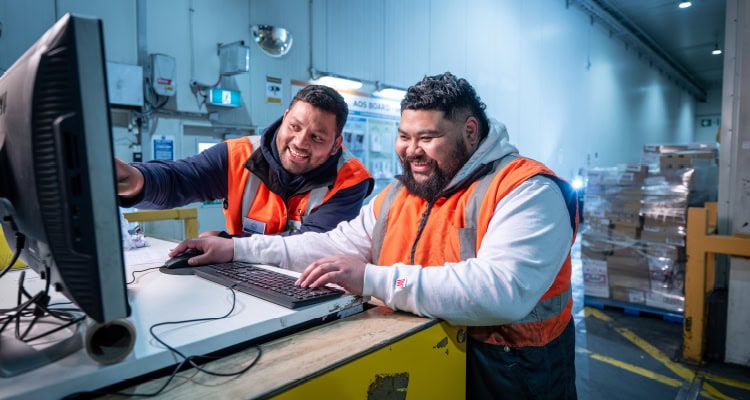
Americold employees worldwide are actively involved in standardizing and scaling the company’s sustainability performance. Through regional, employee-led sustainability councils across the United States, Europe, and APAC, team members collaborate to share best practices and navigate emerging environmental trends.
Measuring environmental impact is harder than it sounds, given inconsistent supplier data, fragmented internal systems, and methodologies that don’t align, Krajacic says. These make it difficult to build the credible baseline measurements needed to determine whether operations are improving.
Accurate data is also critical to making informed trade-offs. “Rarely are we solving for just one piece at a time within supply chains,” says Jason Li, partner with McKinsey. Instead, supply chains typically have to consider cost and service, as well as sustainability.
At times, meeting a deadline might require expediting, which drives up costs and emissions. Accurate, complete data helps ensure that the trade-offs are presented in context, so the company can identify the best options.
Technology can help in capturing data. Americold leverages real-time metering at all its sites, Dunn says. Site managers can see, in real time, whether they’re using more energy than they previously were, given current conditions.
Americold’s intelligent automated refrigeration platforms embed AI, enabling cost- saving strategies that optimize refrigeration performance and reduce inefficiencies, Dunn says. The systems pull in data, including weather, energy grid capacity, and forecasted utility rates, to help the sites avoid peak demand costs. The system automatically shifts loads and/or shuts down specific equipment to cut energy use, while ensuring operations aren’t disrupted and that Americold remains compliant with all contracts.
These actions help ensure that neither Americold, nor its customers, see large spikes in energy costs. The byproduct of equipment that operates efficiently is lower kilowatt usage, which directly lowers greenhouse gas (GHG) emissions.
4. Invest in Planning
Poor planning can drive up resource use. If demand forecasting and sales and operations planning processes are ineffective, companies often overproduce and carry excess inventory. They also often rely on energy-intensive expedited shipments to cover any gaps.
“A lot of carbon gets burned fixing problems that better planning would have prevented,” Krajacic says.
5. Make Buildings More Efficient
Sustainability efforts should extend to the facilities where supply chains operate.
Soorty’s facilities, for instance, incorporate 11.7 megawatts of solar installations, which remove more than 7,200 tons of GHG annually, while a Soorty-owned wind farm has cumulatively avoided approximately one million tons of carbon dioxide emissions, Dikmen says. Biomass integration, or the incorporation of organic resources, such as wood or agricultural residue, into energy systems, reduces GHG by another 44,600 tons per year.
Of Americold’s 240 warehouses, 200 have converted to LED lighting, with the company committed to converting all its sites by 2030, Dunn says. LED products can generate light up to 90% more efficiently than incandescent light bulbs, reports Energy Star.
As of December 2025, Americold has 34 facilities with solar installations and 46 facilities that are sourcing 100% renewable or low carbon energy. The 30,882 megawatt hours of annual renewable energy created from the solar installations equates to a reduction of roughly 20,798 tons of carbon dioxide equivalent (tCO2e). (In accordance with Solar Renewable Energy Certificates accounting protocols, Americold claims a 12,711 tCO2e reduction.) Americold has five more solar projects currently under construction, with six more expected to break ground in 2026.
6. Map the Supply Chain
Approximately 25% of companies in PwC’s State of Decarbonization Report report no visibility beyond their Tier 1 suppliers. This makes it difficult to develop a clear understanding of where emissions, waste, and risk are concentrated across materials, production, and logistics, Linich says.
By mapping the sub-tiers of their supply chains, organizations can identify where carbon and waste leaks occur and use this information to prioritize interventions.
7. Work Across Silos
Many organizations operate in silos, yet sustainability cuts across multiple departments, including procurement, operations, product development, logistics, and finance, says Bryan Gross, supply chain operations partner with PwC U.S. Without shared KPIs, such as cost and emissions per unit, teams tend to optimize locally rather than across the system. A lack of aligned incentives and cross-functional coordination can hinder progress.
8. Source Locally, When Possible
One challenge to operating sustainably is “distance decay,” says Kevin Lyons, PhD, professor of professional practice and director, Center for Local Supply Chain Resiliency with Rutgers Business School. When supply chains are optimized for short-term cost, they prioritize global sourcing that relies on carbon-intensive long-haul logistics.
Local sourcing strategies can reduce costs, as well as carbon impacts, because shipments move shorter distances. This also allows for packaging reductions, which can further reduce shipping weight and fuel consumption.
Interface has emphasized regional supply chains and manufacturing locations close to its customers, Minne says. By building supply networks around its manufacturing hubs, Interface reduces transportation emissions, improves agility, and strengthens collaboration with local suppliers. This improves resilience and responsiveness to local market needs.
9. Develop “New Collar” Workers
A workforce that understands both digital inventory optimization and manual shop-floor reality can foster the adoption of advanced sustainability protocols. Lyons refers to these workers as “new collar” employees.
10. Recognize the Timing of Costs and Benefits May Not Align
When implementing sustainability initiatives, some early wins are possible. One example? Improved planning that cuts the need for expediting, saving money and emissions.
Many changes, such as developing a measurement infrastructure, require an upfront investment that likely won’t pay off right away, Krajacic says. In fact, emissions numbers may initially look worse, as accurate data replaces estimates. Measurable emissions reductions typically follow process changes by 12 to 24 months.
Longer term, the savings gained by shifting transportation modes and reducing inventory carrying costs can compound over time. Structural changes, such as network redesign, can also produce more durable results. “The cost and sustainability curves don’t always move together at first, but they tend to converge,” Krajacic adds.
11. Integrate AI, Data, and Workflows
Connecting AI, data, and workflows across an enterprise provides visibility into emissions and operational hotspots, while creating a road map for productive changes, Gross says. He worked with a global trade hub that implemented a digital platform to connect stakeholders—including shipping providers, transport operators, and financial institutions—across its previously fragmented logistics ecosystem.
Because the new platform improved end-to-end visibility of goods moving through the hub, participants could better coordinate operations, reduce delays, and minimize errors that had resulted from inconsistent or outdated information. While not explicitly designed as a sustainability initiative, the improvements support sustainability and resilience by reducing inefficiencies, enabling better tracking, and creating the transparency needed to more effectively manage environmental impacts.
12. Innovate With Materials
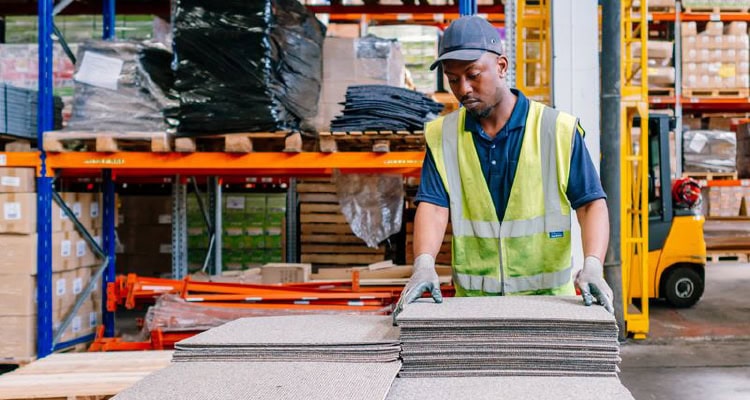
Commercial flooring company Interface uses bio-based and captured carbon materials to cut emissions across its global supply chain.
Interface has reduced its carbon footprint in part by prioritizing low-carbon and raw material innovation, increasing its use of recycled, bio-based, and captured-carbon materials across manufacturing processes, Minne says. This reduces the embodied carbon of its products while creating demand for more sustainable inputs across its supplier network.
13. Consider End-of-Life
In 2024, Second Life, Soorty’s traceable denim-to-denim recycling operation, diverted 6.3 million kilograms of post-consumer waste from landfills. The initiative processes up to 54 million garments per year and makes the recycled feedstock available for Soorty’s own production, as well as for other mills and spinners. “The impact extends beyond our own supply chain,” Dikmen says.
Second Life demonstrates that post-consumer textile waste can be recovered, processed, and spun into high-quality denim fiber at scale.
14. Design Sustainability into Products
Product design influences materials, durability, packaging, manufacturing intensity, transport needs, and end-of-life outcomes, Linich says. Design decisions, from material selection to product functionality, can determine up to 80% of a product’s life cycle environmental impact, finds the PwC decarbonation report.
A recent survey by NYU Stern finds that consumer packaged goods products marketed as sustainable enjoy a five-year compound annual growth rate of 10.9%, compared to 2.2% for conventionally marketed products.
15. Shift Modes
Moving freight from air to ocean, or truck to rail, on qualifying lanes can meaningfully cut transportation emissions and often reduces costs. Shippers should also factor in emissions performance when selecting carriers.
16. Integrate Vertically
Vertical integration is a strategic advantage and makes systemic change operationally possible. “Second Life works at scale because we own the recycling, the spinning, and the weaving, and because we have decades of experience in what good quality yarn required for durable denim means,” Dikmen says.
17. Embed Sustainability into Operations and Partnerships
Attitudes Toward Sustainability
Sustainability remains an evolving priority for supply chain leaders in 2026, according to Blue Yonder’s latest Supply Chain Compass research.
Source: Blue Yonder
Integrating sustainability initiatives into core operations is critical. At Interface, steps such as working collaboratively with suppliers to accelerate innovation are embedded into product design, sourcing decisions, and manufacturing strategy. They’re not side initiatives, Minne says.
In its annual report, Interface says its sustainability goals are “a brand-enhancing, competitive strength.” Over the past three years, sales have increased by about 10%, and over the past five years, Interface stock has risen more than the NASDAQ Composite, as well as more than many of its industry peers.
Achieving a sustainable supply chain is a resilience and operations priority. Implementing these high-impact moves enhances resilience, reduces emissions, and drives long-term financial benefits.
Why Carbon Reduction?
Historically, the earth’s natural systems balanced the amount of carbon in the atmosphere on their own. But industrialization threw that off, putting too much carbon in the atmosphere and driving climate change.
All living things store carbon. But when they die, the carbon they store is released. When companies like Interface use bio-based products, the carbon in those materials doesn’t re-enter the atmosphere.
When a product stores more carbon than its creation emits, the product is carbon negative. Interface, for instance, stores carbon in its products by replacing higher footprint raw materials with low-carbon and carbon-storing alternatives.
Source: Interface