
A Shipper’s Guide to Science-based Securement at High Altitudes
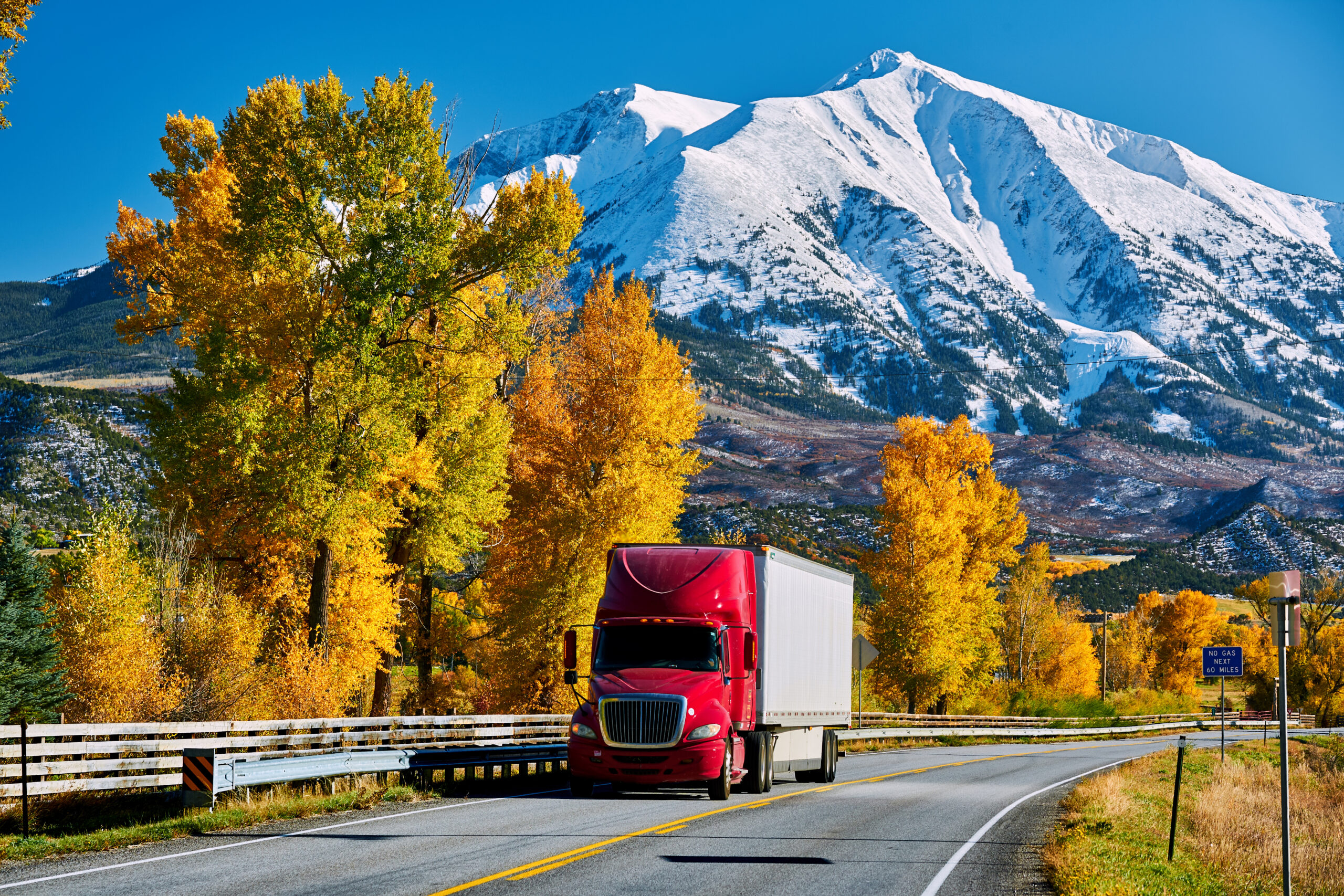

Which mile is more important in the shipping journey–the last mile or the highest mile?
Last-mile discussions often rise to the boardroom given its impact on customer perception and satisfaction, but the highest mile remains somewhat uncharted territory. High-altitude mileage poses often unforeseen freight safety issues that determine whether the cargo arrives fully intact.
While cargo securement, like blocking and bracing, is seen as a routine process for carriers, cargo damage continues to be a perpetual challenge impacting shippers’ bottom lines. This is especially detrimental to freight on trucks with transportation routes that can reach up to 11,000 feet above sea level, as the atmospheric pressure and temperature fluctuations at these heights can quickly create a damage claim.
To help shippers move beyond guesswork, RXO recently commissioned research with Clemson University’s Packaging Science program to investigate the over-the-mountain challenge. The findings provide a roadmap and actionable tips for shippers to evolve from reactive claims management to proactive, science-based cargo protection.
The atmospheric audit
Before selecting securement materials, shippers must identify which routes are subject to major changes in altitude. Our study confirmed that altitude changes cause greater pressure swings than temperature changes. This is important because pressure directly correlates to increased horizontal force.
When freight moves from a manufacturing facility or warehouse at sea level to or through a high-elevation hub like Denver, the atmospheric pressure drop may cause dunnage airbags to expand. How should shippers account for this? By assigning elevation categories to each shipping lane. A flat Midwestern route requires different securement than a route through the Appalachians or Rockies.
Securement matchmaking: Finding your crush profile
Our study highlighted the importance of knowing a load’s “crush profile,” or how much compression, weight, or impact the load can withstand in shipment. We tested three common dunnage bag materials that help cushion freight: 4-Ply Kraft paper, woven polypropylene (WPP) and polyvinyl chloride (PVC). The results unveiled critical trade-offs between stiffness and ductility. Kraft paper and WPP convert altitude-induced pressure increases almost entirely into restraining force, which is great for holding heavy loads, but they carry a crush risk for consumer goods. On the other hand, PVC airbags stretch at altitude, relieving pressure, and losing restraining force when returning closer to sea level. So, it’s up to you to determine the crush profile of the load and work backwards from there to ensure you’re using the most suitable securement materials.
One size does not fit all
What should you take away from our research? One size does not fit all shipments. One of our goals of this research was to gain a better understanding of science to help minimize damage claims and securement mishaps. Managers can take these insights into their day-to-day operations by accounting for lane topography to calculate the burst and crush risks associated with each dunnage bag material.
If your shipment using Kraft or WPP bags will summit mountains, then reduce inflation at sea-level securement to account for the inevitable expansion and avoid crushing product. If your shipment using PVC follows the same route, then plan ahead for the deflation and resecurement that will need to take place on the other side of the mountains. This seemingly small detail can make a huge impact on operations and customer satisfaction.
Science-based shipping
Loss mitigation is a major issue in the freight industry today and must be approached at both the macro and micro levels. At the macro level, much attention is being paid to help thwart cargo theft. At the micro level, shippers should pay attention to physics-based altitude securement. We wanted to understand the science behind this issue because we know the little details are where excellence and trust are found.
I’ll leave you with a few key takeaways to ensure cargo arrives intact regardless of the elevation change:
- Categorize your shipping lanes by elevation gain and loss to identify high-risk routes.
- Carefully choose your dunnage materials by finding your preferred balance of load weight and cargo fragility.
- Standardize route-specific PSI levels to account for atmospheric expansion or deflation.
- Audit arrival conditions to close the loop between securement theory and real-world outcomes.
By understanding the physics behind securement practices, shippers can reduce the number of variables that go into a shipment making it to the final destination in the same state as when it started its journey.