
Florida: A Growing Gateway for Logistics & Trade
Long a hub for global trade, Florida continues to expand its role in logistics, thanks in no small measure to organizations that prize innovation and continuous improvement.
From moving cargo to transmitting the digital information that connects businesses and economies around the world, Florida has the infrastructure and expertise to remain a global economic powerhouse.
The evidence is compelling. SelectFlorida, the state’s official international commerce organization, highlights the many forces propelling Florida’s economy. Among them, the state’s formidable capacity to move cargo efficiently throughout Florida, across the country, and to international markets stands out.
Florida is a key player on the global logistics stage, says Shahram Taj, Ph.D., professor of business analytics at Florida Polytechnic University in Lakeland. Drawing on a career spanning supply chain consulting and research across the Midwest and Southern United States, as well as Europe and Asia, Taj brings an international perspective to the state’s growing logistics prominence. Lakeland itself is a Central Florida logistics hub and part of one of the nation’s fastest-growing metropolitan areas.
A significant advantage, Taj says, is Florida’s continually evolving transportation infrastructure, including an expanding highway network, robust rail connections, deepwater seaports capable of accommodating post-Panamax vessels, and an air cargo system handling millions of tons of freight annually.
Florida’s reach extends beyond physical freight, too. Its data infrastructure connects the United States with Europe, Latin America, and Africa, reinforcing the state’s position as a global gateway for commerce.
Statistics underscore the scale of the state’s logistics strengths. SelectFlorida, which works in direct support of the Florida Department of Commerce, reports that Florida is home to more than 11,500 logistics and distribution establishments. The broader wholesale trade, transportation, and logistics sector encompasses more than 63,000 establishments and employs more than half a million people statewide. Taken together, these figures make it clear: Florida’s logistics advantages are more than a point of pride. They are a powerful driver of economic growth.
The Florida Department of Transportation (FDOT) lists 16 publicly owned seaports, ranging from major cargo and cruise hubs to smaller regional facilities.
Port Tampa Bay, the state’s largest and most diverse port, is an essential link in Florida’s network of gateways for domestic and international trade.
Port Everglades in Broward County continues to improve its cargo services with ongoing upgrades to its container gantry cranes and planned capital projects totaling more than $3.8 billion over the next 20 years.
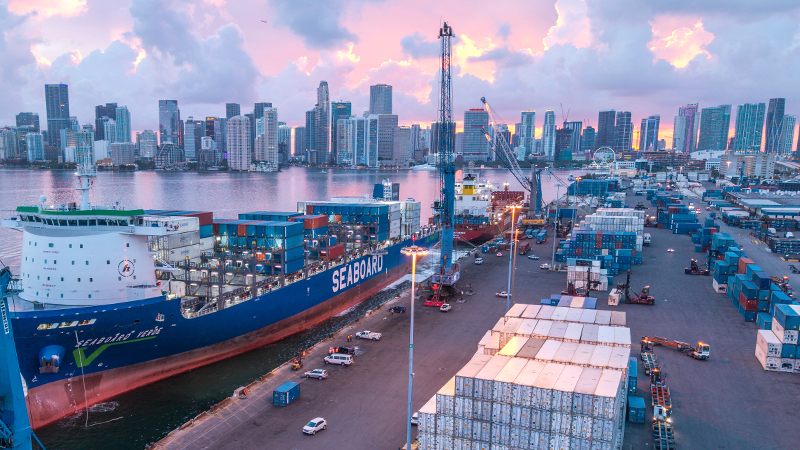
Meanwhile, Seaboard Marine provides international shipping services from multiple ports, including primary vessel operations at PortMiami.
Appealing to Businesses and Tourists Alike
Florida’s ports are major cruise hubs, serving a state where tourism is an essential part of the economy.
The state’s appeal goes well beyond tourism. Many people who come to visit ultimately choose to stay. The state is a retirement mecca, of course, but students are part of the equation, too. Florida Polytechnic attracts students with its cutting-edge logistics and STEM programs, and many elect to remain in the state to launch their careers after graduation, says Taj, noting the university’s growing role in logistics education.
“People are moving into Florida daily,” he notes. Florida gained approximately 201,000 residents through net migration in the year ending July 2025, according to U.S. Census Bureau estimates—an average of roughly 550 people per day.
Enhancing Transportation Assets
“Transportation-related industries are among the fastest-growing industries in Florida,” Taj says.
With a nominal gross domestic product (GDP) of approximately $1.8 trillion in 2025, Florida has an economy comparable in size to those of some nations, according to data from the U.S. Bureau of Economic Analysis.

Public officials—from local and regional leaders to the governor’s office and state policymakers—understand how the state’s extensive transportation infrastructure contributes to Florida’s economic success.
That recognition is reflected in practical investments in the transportation network. Along the I-4 corridor, for example, FDOT is advancing plans for a new 100-space truck parking facility in Polk County to help address parking shortages along a critical freight route.
Investments of this kind help keep freight moving efficiently and support the state’s broader logistics network.
Port Tampa Bay Invests and Expands
Infrastructure investment is a priority at Port Tampa Bay, a recognized leader in the maritime industry and a rising force in Florida’s container market.
“The port is investing in its capacity to meet growing demand, including expanding our container yard and adding two post-Panamax cranes,” says Port Tampa Bay President and CEO Paul Anderson. “These investments are complemented by significant commitments from public- and private-sector partners, including new and expanded facilities and infrastructure improvements that strengthen Port Tampa Bay’s capacity to support continued regional growth. Together, these efforts reflect a shared commitment to preparing the port’s infrastructure and supply chains to meet the region’s evolving needs.”
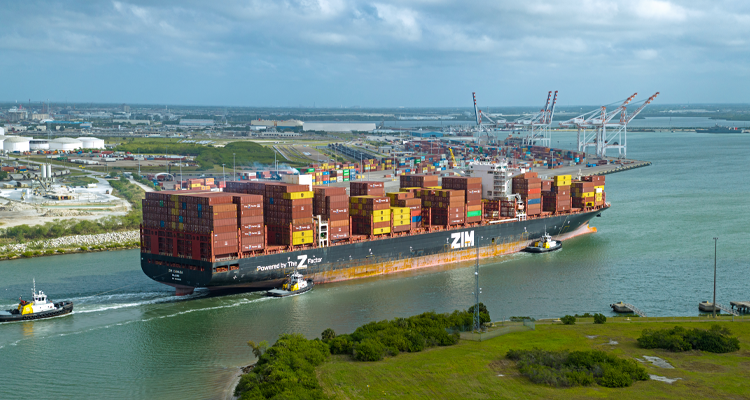
Port Tampa Bay is a critical gateway for goods that sustain West Central Florida’s economy and support growth statewide.
Port Tampa Bay is a critical gateway for goods that sustain West Central Florida’s economy and support growth statewide. Its location near the I-4 and I-75 corridors provides access to major population centers, distribution hubs, and markets across the region and beyond.
The port handles diverse cargo, including fuel, construction materials, agricultural products, and containerized goods. Its leadership is focused on sustaining and expanding that impact.
“There is a tremendous amount of activity at Port Tampa Bay,” Anderson says. “The nearly 100-acre container terminal expansion is expected to become operational by the end of 2026, significantly increasing the port’s capacity to handle growing cargo volumes.”
The new ship-to-shore cranes will bring the port’s total to six, further strengthening its ability to accommodate larger container ships. Port Tampa Bay also secured a $24-million federal grant for a berth extension at Port Redwing. The $40-million project includes a $16-million port contribution and adds 800 feet of berth space.
Increasing Global Prominence
With such investments at Port Tampa Bay and elsewhere, Florida will continue to expand its influence across the global logistics network, notes Anderson.
“Florida is well-positioned to strengthen its role as a major logistics and distribution center over the next five to 10 years, but realizing that potential will require continued investment in infrastructure, technology, and workforce development,” he says. “As experienced maritime and logistics professionals approach retirement, attracting and training the next generation of workers will be essential to preserving industry expertise and preparing for the future. At the same time, advances in technology and automation offer opportunities to improve efficiency, enhance safety, and optimize cargo handling throughout the supply chain.”
Preparing for the Future
Such priorities take on added importance as national attention on strengthening America’s maritime industry—including domestic shipbuilding and ship repair—increases.
“Florida has an opportunity to build on its existing maritime capabilities, skilled workforce, and strategic location to support these efforts. By bringing together infrastructure investment, technological innovation, and workforce development, we can strengthen supply chains and position Florida to remain competitive for decades to come,” Anderson says.
Looking ahead, Anderson identifies the Tampa Harbor Navigation Improvement Project as one of the port’s most significant priorities. The generational investment would deepen the shipping channel from 43 to 47 feet along a 42-mile stretch, allowing larger vessels to access the port, improving shipping efficiency and strengthening supply chains as Florida grows.
“It is a critical step toward ensuring our maritime infrastructure keeps pace with the region’s needs and supports its economic growth for decades to come,” Anderson says.
Seaboard Marine Strives to Lead
An international player headquartered since inception in Florida, Seaboard Marine is a premier ocean transportation company providing direct, regular service between North America, the Caribbean Basin, and Central and South America. A subsidiary of Seaboard Corporation, Seaboard Marine is a trade leader with a fleet of nearly 25 vessels serving nearly 40 ports.
“We proudly provide service to more than 25 countries, with each office and location contributing to our success as a trade promoter throughout the Western Hemisphere,” says Bruce Brecheisen, executive vice president. “Our mission is to be a leader in ocean transportation and logistics, where employees partner with customers to provide the highest level of service without exception.”
Seaboard Marine is a wholly owned subsidiary of Seaboard Corporation, which established Seaboard Marine in 1983 to offer scheduled container shipping between the United States and international markets.
“Our founders saw a need for reliable, efficient, customer-focused transportation to Central America,” adds Brecheisen. “South Florida has served as the foundation for a business that has since expanded across the Western Hemisphere.”
After establishing its headquarters, Seaboard Marine began vessel calls at West Palm Beach and moved primary vessel operations to PortMiami in 1987.
“This progression is a key part of our history in Florida,” Brecheisen says, adding that Miami’s proximity to the Caribbean and Latin America, along with its historic commercial and cultural ties, makes it an ideal base for Seaboard Marine’s regional network.
Asked to cite the primary characteristics that make Florida a premier site for logistics, Brecheisen notes the state offers a strategic location and extensive seaport, highway, and rail infrastructure. The state also benefits from a high concentration of knowledgeable freight forwarders, customs brokers, and other experienced businesses supporting international trade, he adds. These assets seamlessly connect overseas markets with customers in Florida and across the United States.
Adding to Florida’s Logistics Assets
Seaboard Marine contributes to Florida’s logistics assets through its ocean transportation capacity and terminal operating expertise. “As PortMiami’s largest carrier by cargo volume, we also support trucking, warehousing, and distribution businesses that rely on a productive port,” Brecheisen says. “Our refrigerated cargo capabilities are especially valuable for transporting fresh produce and other temperature-sensitive goods.”
Strengthening Connections
Investment has been and will be key to the company’s growth in the Sunshine State. “We expect our role to grow through ongoing investment in larger vessels, terminal infrastructure, and refrigerated cargo capabilities,” Brecheisen says. “Our focus is on helping customers move goods efficiently and access new markets through Florida. As supply chains evolve, we aim to strengthen the regional connections that make Miami a key gateway for trade across the Western Hemisphere.”
The company’s PortMiami modernization plans include expanded electric infrastructure for refrigerated containers and an upgraded truck gate complex. “These projects will strengthen cold chain capacity, improve truck flow, and support more efficient terminal operations,” Brecheisen says. “We have also recently invested in new mobile harbor cranes at our PortMiami terminal to enhance cargo handling and vessel productivity. Together, these investments support our long-term growth in Florida.”
Brecheisen is upbeat about the state’s ongoing leadership in logistics. “As a Miami-based company for 44 years, our continued investment reflects our confidence in Florida and in the customers, employees, and logistics partners who make these connections possible,” he says.
Making Palpable Progress
Florida Polytechnic logistics authority Shahram Taj says investment in Florida’s logistics industry is readily apparent. “Every day, I see new distribution centers and warehouses,” he says.
The state’s connections to world markets will grow even stronger as new technologies emerge and university education keeps pace with these advances. “Analytics and AI are going to be a big factor,” he says. “Technology is going to revolutionize logistics.”
Florida’s business culture emphasizes innovation and growth, while forward-looking government policies can help accelerate progress across sectors, including logistics. “I see a very bright future for Florida in terms of growth, in terms of increasing its GDP,” Taj says.
His perspective is shaped by broad-based research in logistics and related fields, including sustainability and business model innovation, the adaptation of lean production in China, and bank efficiency in Turkey.
From that world view, Taj’s confidence in Florida’s future is rooted in the state’s vast logistics assets and its well-established capacity to keep growing as a global center of commerce.
Florida Logistics By the Numbers
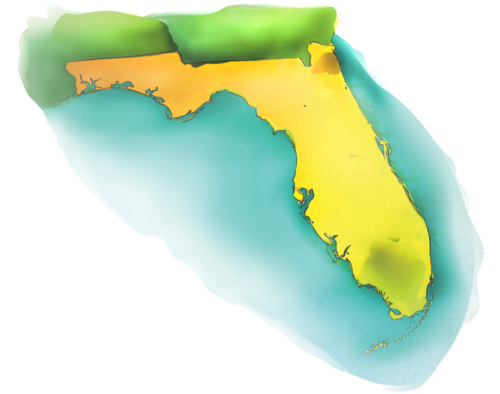 With the second-largest foreign trade zone (FTZ) network in the United States, Florida is an ideal location for logistics and distribution operations. Three keys:
• Florida ranks eighth in the nation in state-origin exports, which reached $57.2 billion in 2018. (U.S. Census Bureau)
• Widely recognized as a global hub for the Western Hemisphere, Florida accounts for 29% of total U.S. trade with Latin America and the Caribbean. (U.S. Census Bureau, Foreign Trade Division)
• Florida is the nation’s third most populous state, and multimodal infrastructure supports more than 20 million residents and more than 100 million tourists annually. (SelectFlorida)