
Kindness, Curiosity, and Featherweight Sewing Machines
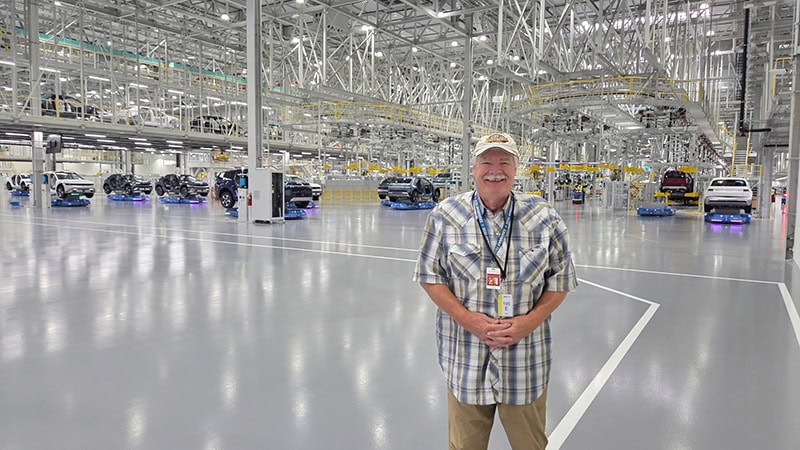
Bill Stankiewicz, the veteran managing director of Savannah Supply Chain, shares the personal lessons that shaped his compassionate and disciplined leadership style–from saving for college to famously saving an employee’s job.
Bill Stankiewicz is also known as the Savannah Supply Chain Guy. He is the managing director of Savannah Supply Chain, the consulting firm he formed in 2015, after more than 20 years in executive roles with several logistics and supply chain companies. An adjunct professor with Savannah Technical College, Stankiewicz has held board positions with multiple civic and industry organizations.
Stankiewicz’s busy schedule started early. While still in high school, he worked full-time on the second shift as a die-setter with a container company. When Stankiewicz was young, his dad died and his mom worked as a custodian. “We didn’t have much money, and I was saving for college,” he says.
Stankiewicz continued working after high school, while he also enrolled in trade school. After several years, he saved enough to transfer to DePaul University in Chicago, where he majored in personnel management, now called human resources.
His first job after graduating was as a warehouse supervisor. From there, he proceeded to roles with more responsibilities, remaining within the logistics and supply chain areas.
IL: What characteristics are critical for effective leaders?
Effective leadership requires clarity, resilience, and the ability to align people around shared goals. In today’s environment of rapid change, leaders must build adaptable systems, encourage cross-functional collaboration, and invest in talent that demonstrates curiosity and ownership. Sustainable success is not driven by reaction, but by disciplined planning and steady execution.
When you stick up for your people, it goes a long way. At one company, I worked in a high-traffic area that was near several large racks of material. Instead of bollards or bumpers to separate the areas, there was only a small fence.
A senior executive with the company delayed the purchase of safety guard rails. Sure enough, a forklift driver accidentally backed up into the racks, bringing down four rows. The executive wanted to fire the employee. I said ‘Nope. You will have to fire me first.’ The employee wasn’t fired, although he did receive more training on the forklift.
Hate and being mean are powerful motivators. They’re quick and you get immediate results. But the other motivator is kindness. Being kind goes a long way.
IL: What challenges keep you up at night?
I lose sleep over volatile supply chain disruptions, rising freight and fuel costs, on/off tariffs, and critical talent shortages.
The key to addressing these challenges is structured planning, cross-functional communication, and building resilient systems that can flex without breaking. Rather than reacting, I focus on disciplined scenario planning and leadership alignment.
IL: What qualities do you look for in potential job candidates?
I look for intellectual curiosity, an ownership mindset, and the ability to think beyond silos and understand how their role connects to broader organizational outcomes. Technical skill matters, but adaptability and judgment matter more. If a candidate is willing to learn, most jobs can be taught.
IL: What is an early lesson that has remained with you?
I was new at a company and on a sales call with multiple senior executives from both my company and the customer organization. This was in the 1980s, and we went through multiple slide decks. By the end, the customer looked like they were ready to fall asleep. We didn’t get the business.
After that, when I was invited to lead a sales meeting, I took just two slides. We got so much business, the president jokingly told me to stop selling because we had no one to manage operations.
IL: What was one unusual project you had to manage?
When I was several weeks into one job, my boss called me into his office and showed me all the paperwork he was dealing with. This was about 25 years ago. We needed multiple copies of every signed contract, so the copies could travel between the company, the customer, and the attorney. He said, ‘Stankiewicz, make the computer sign my name.’ I told him that would require changing some laws. He answered, ‘Hell, that’s part of your new job description.’
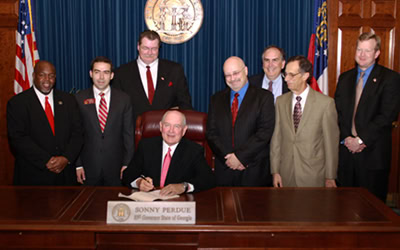
The 2011 signing of House Bill 451 with Sonny Perdue, Georgia’s then governor.
To even get a bill on the floor of the legislature—key to changing a law—you need to talk with your local legislators. They will say, ‘Great idea. We’ll start a committee.’ Then there’s another committee and another committee.
As part of this effort, I got to know the top attorneys working for big companies in Georgia at the time. I also worked closely with state representatives and the International Warehouse Logistics Association. All thought this change would be good. After more than a year of work, House Bill 451 passed in 2011, allowing electronic signatures on contracts. I was at the signing with Sonny Perdue, Georgia’s governor at the time.
IL: How do you approach workforce reduction challenges?
It’s difficult. One of my employers had built too many distribution centers throughout North America, and sales weren’t growing enough to support them all. As leases at different facilities came up for renewal, the company closed them and consolidated operations.
As news gets out, there’s always a risk that employees will start to jump ship, and then you can’t run the operation. Before that could happen, I would talk with the regional human resources representatives and the Department of Labor about programs that could help employees update their resumes and network. If you’ve built up trust and relationships, that goes a long way. But it’s still hard.
IL: How important is logistics and supply chain education?
You can never stop learning. Right now, some fear AI and the future. However, everyone needs to be ready and open to learning how to use these tools. Otherwise, someone who has learned them may take their place.
It’s important to help people quickly acquire new skill sets. For example, I use virtual reality tools for equipment operators. Compared to traditional classroom methods, you get higher trainee engagement and knowledge retention. That ultimately leads to improved operator confidence and greater safety.
IL: What do you do to remain inspired?
Every year, I try to do something new, like yoga, or cooking, or fixing Featherweight sewing machines. This forces me to work with another group of people and work another side of my mind. I always like to learn something different.
Unconventional Leadership Lessons
Bill Stankiewicz, the “Savannah Supply Chain Guy,” credits his compassionate and disciplined leadership to a few unexpected lessons. He famously saved an employee’s job after a forklift accident, championing kindness over meanness as a motivator.
His unyielding curiosity led him to successfully lobby the Georgia legislature to pass House Bill 451, legalizing electronic signatures on contracts.
To stay inspired, Stankiewicz annually takes on a new hobby, including fixing antique Featherweight sewing machines, which forces him to work “another side of my mind.”