
Two Electric Vehicle Updates & Other Supply Chain News

Electric Trucks Earn Their Keep
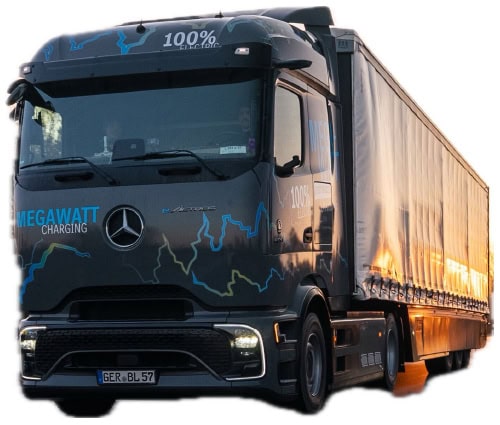 Early adopters in Europe are making a strong case for electrifying freight.
The Öko-Institut surveyed 57 German companies that had been running heavy electric trucks for at least one year, and 93% of respondents report being satisfied or very satisfied with their vehicles. Survey respondents are customers of Daimler Truck’s European commercial vehicle brands. Their electric trucks range from 3.5-metric-ton vans to 18-ton long-haul rigs.
Survey respondents praise the trucks for their reliability, driver comfort, and lower fuel costs. On reliability specifically, about 71% of operators say electric trucks performed on par with or better than more traditional options. About 25%, however, report more frequent issues.
Charging infrastructure remains the biggest operational headache. Depots carried an average grid connection of 1,115 kW, with average installed charging capacity at 629 kW. Public charging accounted for roughly 8% of energy consumed across all respondents, largely because existing infrastructure is not designed around large commercial vehicles. High prices and unclear cost structures at public stations add to operator frustration.
Despite these friction points, more than 90% of respondents expect electric trucks to be the dominant vehicle type in their fleets by 2030.
OVERHEARD

Shippers should pay attention to carriers’ safety practices, documented compliance, and financial stability in the wake of the U.S. Supreme Court decision in Montgomery v. Caribe Transport II, LLC, which ruled that freight brokers can be held liable for state-law negligence claims arising from motor-vehicle accidents.
Testing a Lithium-ion Replacement

Materials handling company Jungheinrich deployed sodium-ion batteries in real-world customer applications to test the performance and reliability of the new technology—a potential alternative to lithium-ion batteries. After building and testing the first prototypes in forklift trucks, the company is now validating its performance under a range of operating conditions at customer sites.
Greater availability of raw materials, lower costs, and a better environmental footprint make the technology promising. Sodium is widely available as a raw material worldwide and is not subject to geopolitical constraints. It also offers resource-efficient production and recyclability.