
Supply Chain Trends: RFID, AI Robots, Reverse Logistics & More
RFID Rollout: Embedding Sensing In Supply Chains
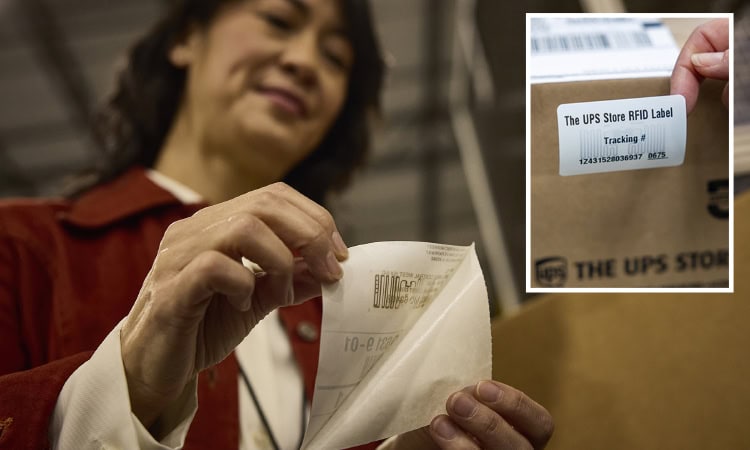
To phase out manual scanning, UPS is rolling out radio frequency identification (RFID) package sensing across its U.S. small package network, expanding shipment visibility from pickup through delivery.
The technology is now in U.S. package delivery vehicles and delivery facilities, as well as on every package shipped through more than 5,500 The UPS Store locations. “By integrating RFID technology to automate its U.S. small package network, spanning billions of items, UPS is delivering an industry-first use case at scale,” says Julie Vargas, VP/GM, enterprise intelligent labels growth at Avery Dennison. UPS has invested more than $100 million to develop and implement the technology.
The rollout marks a shift from scanning to sensing. Since the early 1990s, package tracking has relied on barcode scans at specific handoff points. With RFID embedded in package labels and installed in vehicles and loading bays, packages can be automatically sensed as they move through the network. In short, the rollout enables continuous, automated visibility.
For shippers and enterprise supply chain leaders, this has the potential to improve data accuracy, reduce blind spots, and support more predictive, responsive logistics operations, particularly in high-volume environments, notes Vargas.
Helium Crunch: What Chipmakers Can Expect
 A helium supply shock linked to conflict in the Middle East is drawing renewed attention to a niche but critical input in semiconductor manufacturing, according to a recent Moody’s Ratings report.
Helium is used in several stages of chip manufacturing, including for wafer cooling, as a carrier gas, and for leak detection. There is no scalable substitute, which makes the industry sensitive to supply interruptions.
The report notes that Qatar accounts for roughly 30% of global high-purity helium output. Disruptions at the Ras Laffan complex led Air Liquide’s Airgas unit to declare force majeure, raising the risk that contracted volumes could be delayed or reduced.
Despite the risk, near-term disruption appears contained. Semiconductor manufacturers entered 2026 with several months of inventory in some regions, and large industrial gas suppliers maintain significant storage infrastructure. Companies including Air Liquide, Linde, and Air Products have invested in storage caverns designed specifically to smooth supply shocks.
That buffer is reinforced by market conditions entering the year. Global helium supply exceeded demand in 2025, creating a surplus that encouraged storage. Those inventories are now helping absorb pressure, even as prices move higher.
The Moody’s report also highlights several mitigation tools available to chipmakers, including partial recycling of helium in certain process steps, supplier prioritization during constrained supply periods, and incremental reductions in consumption through process optimization. These approaches were also used during prior gas shocks, including the 2022 neon shortage.
Despite these techniques, a prolonged disruption in Qatar would likely keep the market tight because helium is so difficult to replace.
As AI infrastructure spending accelerates, helium availability is gaining relevance. Hyperscalers are committing hundreds of billions to data center buildouts that depend on steady semiconductor output, and, by extension, on a small set of concentrated industrial gases like helium.
A Humanoid Walks Into A Warehouse
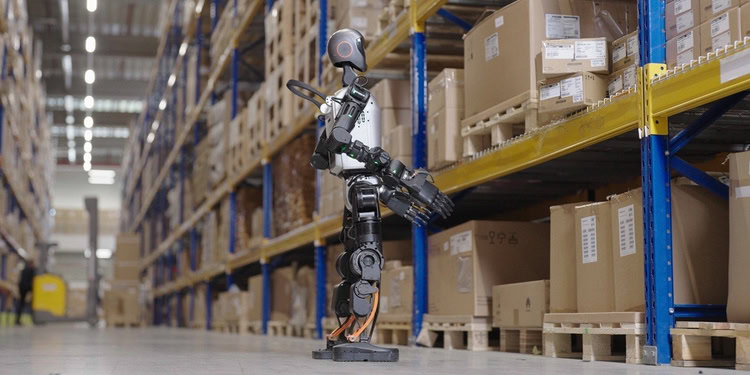
A humanoid robot checks for misplaced or improperly stacked items.
Accenture is piloting the use of humanoid robotics in warehouses, unveiling a program with SAP and telecommunications company Vodafone Procure & Connect.
Presented in April 2026 at the Hannover Messe event, the pilot program was conducted at Vodafone Procure & Connect’s warehouse in Duisburg, Germany, where humanoid robots were deployed to operate alongside existing warehouse systems. Receiving inspection tasks through the SAP Extended Warehouse Management System, they autonomously carried out visual inspections across the facility.
During the pilot, humanoid robots identified operational inefficiencies, safety risks, and optimization opportunities across warehouse processes. They detected misplaced or damaged products, assessed pallet stacking and weight distribution, highlighted unused storage space, and identified potential hazards such as obstacles in aisles or misaligned pallets. The robots reported their findings and recommendations to the SAP system.
SAP led the integration of the robots into the warehouse management system, while Accenture designed and deployed the robot intelligence and operational framework. The humanoid robots are powered by Accenture’s Robot Brain solution, enabling them to interact naturally with human operators through voice, gestures, and text.
The robots are trained in digital twins of warehouse environments, built on Accenture’s Physical AI Orchestrator, which uses NVIDIA Omniverse libraries, the Mega NVIDIA Omniverse Blueprint, and the NVIDIA Metropolis libraries and Blueprint. This allows them to go beyond single repetitive functions and learn new skills through imitation and reinforcement learning.
LONG-TERM OUTLOOK: The initiative reflects a growing focus on applying advanced robotics and physical AI in real-world industrial environments, helping organizations move from experimentation to practical deployment at scale.
Freight Snapshot: Over-the-Road Moves to Make
From diversifying carrier partnerships to developing mini-bids, here’s what shippers can do to prepare for a tighter Q2 in 2026, according to Uber Freight:
- Anticipate—and prepare for—further market tightening through June, driven by DOT week and the surge in summer produce volumes. Historically, spot rates have climbed 8% during this April-to-June window.
- Conduct stress tests on routing guides to prepare for potential exits of smaller or marginal carriers.
- Proactively diversify carrier partnerships on essential lanes to avoid reactive sourcing.
- Regularly assess carrier compliance readiness as a standard component of performance evaluations.
- Develop targeted mini-bids rather than counting on continued market stability.
- Keep a close watch on fuel costs, decouple fuel from linehaul, and implement a fuel matrix wherever feasible.
- Capitalize on the pricing lag between intermodal and truckload sectors by shifting appropriate lanes to intermodal transport.
- Enhance trailer utilization and eliminate inefficiencies by reducing empty miles wherever possible.
Source: Mazen Danaf, Senior Economist and Applied Scientist, Uber Freight
Top 12 Warehouse Challenges
Warehouse managers report the following biggest pain points, according to a recent Kardex Remstar survey:
1. Inventory control
2. Space constraints
3. Pick accuracy
4. Inventory visibility
5. Supply chain instability from delays, shifting tariffs, and lead time surprises
6. Managing demand spikes from peak seasons and viral products
7. Rising labor costs
8. Inventory replenishment
9. Labor shortages
10. Ergonomics and safety
11. Returns management
12. Global trade uncertainty, such as international disruptions
About the survey: Materials handling provider Kardex Remstar collected data from more than 100 customers across North America, representing industries such as manufacturing, ecommerce, pharmaceuticals, and logistics.
OVERHEARD
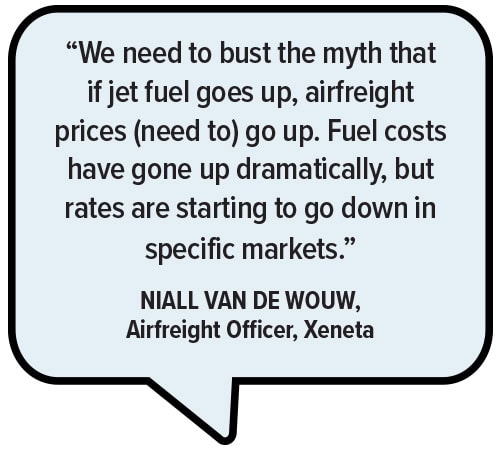
Some welcome news: While global air cargo spot rates surged 30% year-on-year in April 2026 to reach their highest level since October 2022, the worst may be over for shippers as capacity returns on routes most affected by the Middle East conflict, and market fundamentals start to regain control of airfreight pricing, according to Xeneta analysts.
How to Turn Reverse Logistics Into a Profit Driver
 By Colin Chapman, Senior Vice President, Services, Flex
Reverse logistics remains a reactive function designed to process returns quickly and contain cost for many manufacturers and retailers. With margin pressure rising and product complexity continuing to increase, supply chain leaders should take these practical steps to elevate reverse logistics from an operational burden to a structured advantage:
1. Start with design for recoverability. Review high-return product categories and assess whether minor design adjustments could improve serviceability. Products designed for modularity, standardized components, and ease of disassembly are easier to repair, refurbish, or harvest for parts. Simplified fasteners, clearer labeling, and component standardization can reduce processing time and increase resale or reuse potential.
2. Implement structured triage. Establish clear triage protocols that quickly categorize returned goods based on condition, resale potential, and component value. The objective is speed with precision: routing each unit to the optimal disposition path as early as possible. Standardized inspection workflows and predefined decision trees reduce dwell time and preserve value.
3. Segment returns by value, not volume. Focus on value density, instead of return volume metrics. For example, a low-volume, high-value component may justify refurbishment and reintegration into inventory. However, high-volume, low-margin goods may be better suited for bulk liquidation or recycling.
Analyze historical return data to identify which categories consistently recover the highest percentage of original value, and prioritize operational resources around those streams. This ensures labor, space, and processing capacity align with financial impact rather than volume.
4. Activate secondary channels strategically. Beyond traditional liquidation, companies can leverage outlet channels, local pickup models, B2B resale platforms, and direct-to-consumer marketplaces. Evaluate which products are best suited for resale, which require refurbishment first, and which are better monetized in bulk. Clear segmentation avoids margin erosion in primary channels while maximizing recovery in secondary ones.
5. Close the loop with forward planning. Reverse logistics generates actionable intelligence that extends well beyond the warehouse. For instance, return reasons can reveal product design gaps. Meanwhile, repair frequency may signal supplier variability, and regional return trends can expose forecasting or allocation imbalances.
Organizations that feed reverse data back into design, sourcing, and inventory planning reduce future return rates and improve supply continuity. They establish cross-functional reviews where reverse metrics inform upstream decisions. These actions embed reverse logistics across the lifecycle, turning it from a cleanup function into a performance feedback engine and profit driver.