
USPS, DHL eCommerce Expand Long-Term Final-Mile Partnership With $10 Billion Parcel Delivery Agreement
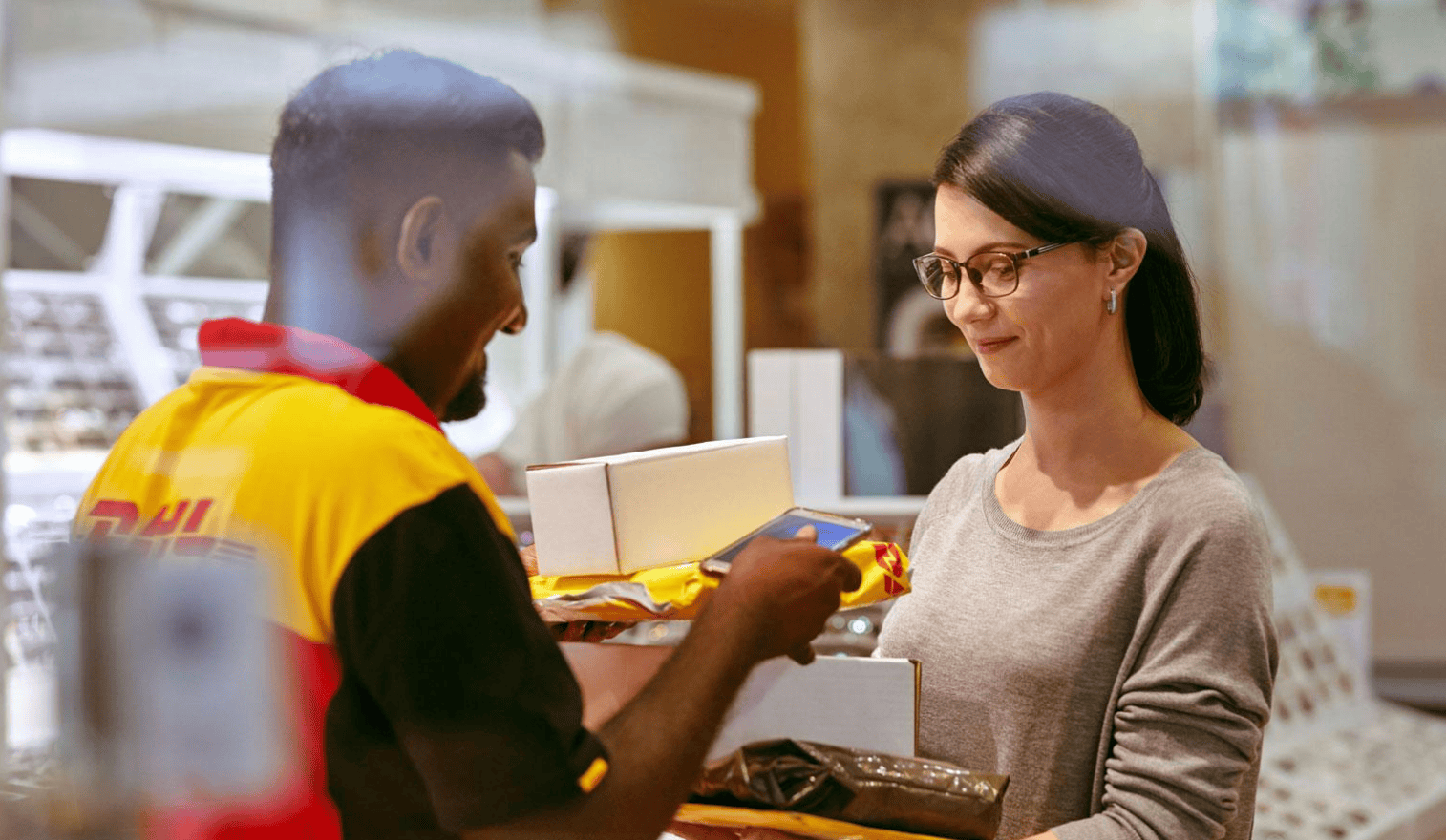
For USPS, the agreement offers stable parcel volume growth as the organization continues trying to offset structural declines in traditional mail. For DHL, the partnership avoids the substantial capital investment required to build a nationwide residential delivery operation from scratch.
By Amy Roach | May 28, 2026
The U.S. Postal Service and DHL eCommerce announced a long-term expansion of their parcel delivery partnership Thursday, formalizing a relationship both companies increasingly describe as foundational to their U.S. e-commerce strategies.
Under the agreement, DHL eCommerce will continue using USPS exclusively for final-mile delivery on its domestic parcel business in the United States. Executives said the deal, valued at more than $10 billion over its term, marks the first long-duration structure in the companies’ 25-year relationship and is intended to support major volume growth over the next decade.
The announcement underscores a broader shift underway in the domestic parcel market: carriers are increasingly separating upstream network control from the economics of residential delivery density.
DHL eCommerce will continue handling pickup, sortation, and linehaul transportation across its U.S. network of 19 automated hubs before inducting parcels deep into the USPS network for final delivery. USPS, meanwhile, is positioning its six-day residential network as a shared infrastructure layer for the broader e-commerce sector rather than simply a standalone parcel competitor.
“A company our size literally has every option at its disposal for last mile,” DHL eCommerce Americas CEO Scott Ashbaugh said during a media briefing announcing the agreement. “We could build it ourselves, we could buy someone who does it, or partner with a leader.”
Instead, DHL reaffirmed USPS as its exclusive U.S. final-mile provider, citing the Postal Service’s reach to more than 170 million addresses and more than 41,000 ZIP Codes nationwide.
For USPS, the agreement represents another step in Postmaster General David Steiner’s effort to reposition the organization as a more commercially integrated logistics operator as traditional mail volumes continue declining. Steiner said USPS has expanded parcel capacity roughly 40% over the last four years and is continuing to build capabilities across first-mile, middle-mile, and last-mile operations.
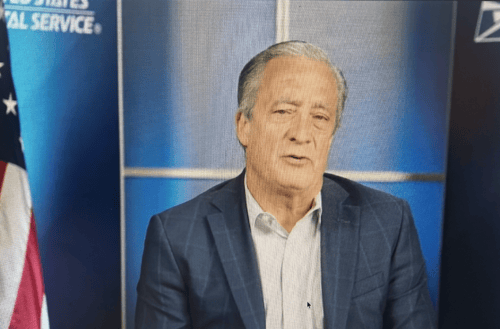
USPS Postmaster General and CEO David Steiner at the media briefing.
The deal also reflects the growing importance of network specialization inside parcel delivery. Rather than replicating costly residential route density, DHL is concentrating investment on automated processing, transportation, and deep network injection while relying on USPS’s existing carrier infrastructure for doorstep delivery.
“This agreement reflects exactly the kind of future I believe we should be building,” Steiner said during the briefing. “One rooted in trust, long-term relationships, and the smart use of the Postal Service’s unmatched strengths.”
Inside the USPS-DHL Delivery Model
During the webinar, DHL outlined a process in which parcels are scanned, dimensioned, weighed, and digitally routed through automated facilities before moving through the company’s air and ground linehaul system. Parcels are then injected into USPS processing facilities near destination markets, allowing USPS carriers to perform only the final segment of delivery.
DHL executives said most parcel volume currently enters the Postal Service through Local Processing Centers, with additional induction into Sorting and Delivery Centers expected as USPS continues expanding that network.
Steiner repeatedly emphasized the scale advantages USPS believes distinguish its network from private competitors. The Postal Service delivers to more than 170 million addresses six days a week and operates more than 33,000 retail locations nationwide.
“What we’re trying to do is create this end-to-end solution that every citizen of the United States can benefit from,” Steiner said.
The agreement also highlights how USPS is increasingly trying to reposition itself commercially beyond traditional mail operations. Steiner described a network strategy designed to support multiple customer models, including full end-to-end parcel services, middle-mile transportation, and standalone final-mile delivery.
The Postal Service’s largest last-mile commercial relationships currently generate more than $8 billion in annual revenue, Steiner said, referring to existing partnerships that include Amazon, FedEx, and DHL.
Industry analysts have increasingly viewed USPS less as a direct parcel competitor and more as foundational infrastructure embedded inside the U.S. e-commerce delivery ecosystem. The DHL agreement reinforces that role.
While parcel carriers continue competing for enterprise shipping accounts, operational partnerships increasingly underpin how residential delivery is executed, particularly as rising labor costs, suburban sprawl, and route inefficiencies continue pressuring last-mile economics.
DHL executives also positioned the USPS handoff model as both economically and operationally efficient. Ashbaugh said the company’s product portfolio complements existing USPS offerings, with service levels positioned between Priority Mail and Ground Advantage on both speed and cost.
The company plans to double its business by 2030, Ashbaugh said, making long-term certainty around last-mile execution increasingly important to its expansion strategy.
Parcel Delivery’s Infrastructure Shift
The arrangement also reflects a broader industry reality: parcel delivery networks are becoming increasingly interoperable even as carriers compete more aggressively for market share.
Rather than building parallel infrastructures across every segment of delivery, logistics providers are increasingly concentrating investment in the portions of the network where they hold the strongest operational advantage.
In that environment, USPS appears to be betting that its greatest long-term value lies not only in competing for parcels, but in becoming indispensable infrastructure for the companies that move them.