
3PL Longevity: How They Survive and Thrive Through the Decades (or Centuries)
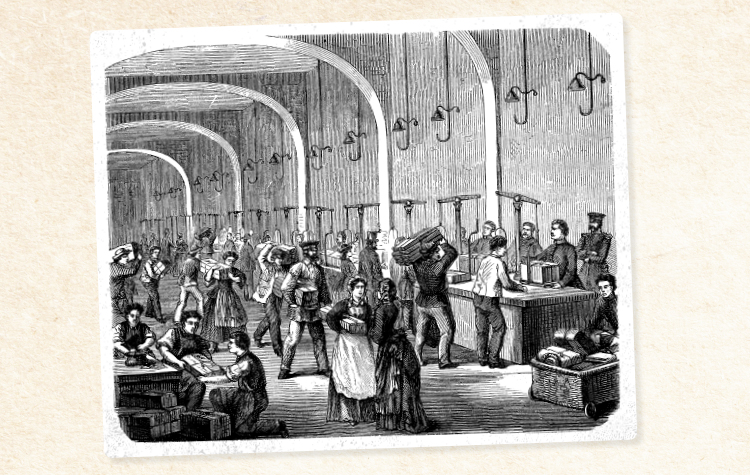
Here are the core strategies—from continuous disruption to customer focus—that have helped some leading third-party logistics providers grow and succeed for generations.
The average lifespan of the companies within the U.S. S&P 500 has shrunk to between 15 and 20 years. That’s down from 30 to 35 years in the 1970s, according to consulting firm Innosight.
Companies that survive and thrive for more than a few decades—prevailing through conflicts, pandemics, technological changes, and other disruptions—often credit their success to their ability to evolve and innovate. The goal is “continuous, thoughtful disruption of the business,” says Jim Mancini, vice president for customer success with C.H. Robinson.
Many corporate leaders need to weigh the benefits of remaining within their “lanes” or areas of expertise—where they presumably can operate most effectively—while also identifying and then pursuing growth, which often comes through other lines of business, says Brian MacAskill, president of Lynden Logistics, part of the Lynden family of companies. The key is to identify transferable expertise that can apply to an expansion, whether it’s geographical or in a service offering.
Other critical steps, according to leaders whose companies have thrived for generations, include working effectively with third parties, offering employees opportunities for growth, and deploying technology with an eye toward creating tangible value. To successfully pursue these multiple goals, organizations need to keep their customers front and center.
Here are the stories of several logistics providers that have followed these guidelines and prospered for decades—in one case, centuries.
Putting Customers First: Gebrüder Weiss
THE START: In 1487—several decades after the invention of the printing press—Lindau Couriers began traversing the Italian Alps to transport goods between Milan, Italy and Lindau, Germany.

An early airfreight operation illustrates Gebrüder Weiss’ ability to evolve.
Today, the company, now known as Gebrüder Weiss, brings more than five centuries of experience to its 180 offices in 36 countries, providing services across multiple logistics disciplines and transportation modes. Gebrüder Weiss’ ability to evolve has enabled it to prevail through World Wars, a Great Depression, and the dissolution of the Austrian-Hungarian Empire, among other geopolitical shifts.
“If you’re not part of the evolution, you’re going to be part of the revolution, and usually you get left behind,” says Mark McCullough, chief executive officer with Gebrüder Weiss North America.
Gebrüder Weiss’ commitment to putting the customer at the forefront of decisionmaking has also been key.
“It means listening and talking with customers about their needs and then letting that exchange guide what you do and how you make decisions,” McCullough adds.
When many companies were deciding to implement a “China-plus-one” strategy in 2016, Gebrüder Weiss invested more heavily in other areas in Southeast Asia. It also built out operations along both the northern and southern borders of the United States.
Like most logistics companies, Gebrüder Weiss relies heavily on carriers, delivery firms, and other third parties. Choosing partners that live up to the company’s standards and goals, and are similarly focused on integrity, service excellence, and a positive employee environment is essential, McCullough says. These attributes help ensure that Gebrüder Weiss’ message and brand are upheld and consistently communicated to its end customers.
When developing markets around the globe, Gebrüder Weiss looks for local experts. “To be successful, especially in the global business space, you need to delve in and enjoy different cultures,” McCullough says.
Gebrüder Weiss’ local leaders operate almost autonomously, while working to meet corporate objectives. “Corporate management encourages our entrepreneurial spirit, and empowers and offers us opportunities, the same way that we empower our people,” McCullough says.
Performing with Integrity and Consistency: Holman Logistics
THE START: In 1863, teenage brothers Edward and Jack Holman, looking to escape the sweatshops of New York, traveled to Portland, Oregon. One year later, they launched a modest transfer business, using two draft horses and a cart to haul goods for early Portlanders.
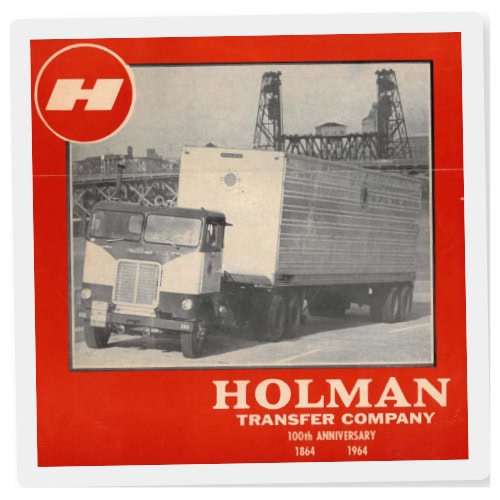
Holman Logistics grew from a modest transfer business to provide logistics and transportation services across the U.S.
Today, Holman Logistics’ warehousing and distribution network has operations in all major markets across the United States. Among other services, it offers manufacturing logistics, ecommerce fulfillment, and transportation solutions for consumer packaged goods (CPG), paper products, retail, food, and durable goods companies.
One attribute that has been key to Holman’s longevity is leadership’s commitment to remaining curious and willing to question the status quo.
“As CEO, my job is to make sure we perform with integrity and consistency with our team members, our customers, and our vendors,” says Brien Downie, chief executive officer. “Holman is older than electricity; older than the automobile. Our core values give us the vision to provide the extraordinary service our customers rely on.”
To that end, Downie and his colleagues strive to stay one step ahead of customers’ needs, keeping in mind that even Holman’s biggest competitors can’t out-think or out-work them.
When investing in new operations or technology, Holman seeks solutions that add value and can be justified based on a cost-benefit analysis, says Mike Gardner, president. For example, recognizing that tariffs would significantly impact many of its customers, Holman established foreign-trade zones (FTZs) at its U.S. facilities. It has seen significant growth.
“We try to anticipate and provide new service offerings that meet customers’ needs and respond to the environment,” Gardner adds.
This entrepreneurial approach benefits both customers and team members. For example, a team member at a Holman distribution center gained an opportunity to challenge himself when he developed a proprietary information management system, including a digital signature capture application for bills of lading.
“The next 10 to 15 years will get wild,” Downie says. The company’s legacy of empowerment and relationship-managed service has stood the test of time.
Every Shipment is an Audition: C.H. Robinson
THE START: Soon after the tracks for the transcontinental railroad were laid in North Dakota in the late 1800s, Charles Henry Robinson moved his family to Grand Forks. Robinson recognized that settlers in Dakota Territory would need merchandise and food. In 1905, he incorporated C.H. Robinson Company to transport and distribute perishable products before they spoiled.

From its start in 1905 shipping perishables, C.H. Robinson now serves 83,000 customers and manages 37 million annual shipments.
That company has since grown into a powerful logistics platform that’s trusted by 83,000 customers and 450,000 carriers, and that manages 37 million shipments annually. C.H. Robinson also has deployed more than 30 artificial intelligence (AI) agents.
C.H. Robinson has always been eager to engage in thoughtful disruption, Mancini says, noting that industry analysts have called the company a “disruptor in the industry.” Successful disruption requires staying close to customers and developing capabilities that can address the challenges they currently face, as well as those likely to arise.
And when evaluating potential AI solutions, C.H. Robinson deploys a “lean AI” approach, using the rigor of the LEAN operations model to ensure that its investments focus on real business challenges. “It allows us to not fall victim to ‘shiny object syndrome,’” Mancini says.
One result of this discipline is C.H. Robinson’s dynamic pricing engine, which replaces a historically manual process that often depended on the tribal knowledge of specific employees. “There was not a ton of science behind it, and the process could take minutes or hours,” Mancini says. Today, the dynamic pricing engine can respond to quotes, including from unstructured documents such as emails, within 32 seconds.
Also critical to the company’s success is how employees treat every shipment as an audition, Mancini says. This thinking creates a sense of urgency that forces them to address problems as they occur and focus on meeting customers’ needs.
“We quickly identify where the gaps are and build countermeasures to solve them,” he adds. “There’s a huge sense of pride in being a company that has been around for as long as we have, and being thought of as a disruptor.”
Tackling the Tough Stuff: Lynden
THE START: In 1906, Ed Austin started Lynden Transfer. With a wagon and team of horses, he hauled goods from the rail station in Lynden, Washington, to local businesses. Ethel, his wife, handled the bookkeeping.
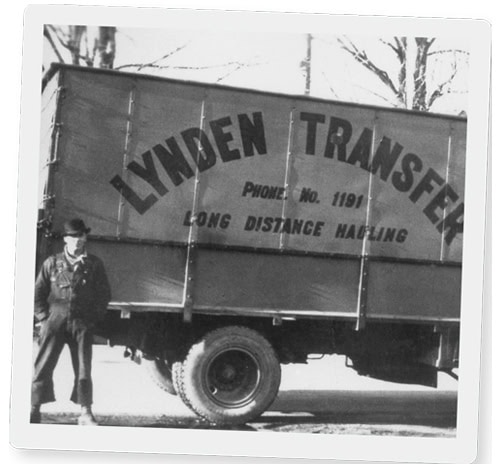
Ed Austin started Lynden Transfer in 1906. The company found its niche in providing service in challenging markets like Alaska.
In 1940, Hank Jansen became one of Lynden’s regular drivers and later purchased the company. Jansen believed that the best opportunity for growth would come by expanding service north to Alaska. Despite much skepticism from others, Jansen lined up customers. In 1954, drivers Oscar Roosma and Glen Kok made the first grueling trip, delivering a load of fresh meat in perfect condition. This was the start of more than 70 years of service to Alaska.
As Lynden has grown into a multi-modal provider of transportation and logistics services, the willingness—even eagerness—to operate in difficult markets continues today, MacAskill says. “There’s a pride within Lynden about our ability to do the tough stuff,” he says.
Much of Lynden’s business is Alaska centric. Serving remote locations, often during harsh weather, requires creativity and the use of everything from cargo planes to barges to hovercraft. Lynden also operates in Hawaii, managing the logistics required to move cargo to islands in the middle of the Pacific.
For instance, ever since Typhoon Halong hit Alaska’s southwest coast in early October 2025, unleashing record winds and flooding and displacing more than 1,000 people, Lynden has worked with relief organizations to provide transportation and logistics services.
“It’s part and parcel of Lynden’s ability to be flexible and adaptable, especially during emergencies,” MacAskill says.
Remaining adaptable and flexible requires great partners and strong collaborations, as well as a willingness to develop multiple plans that can address different scenarios. “The sooner you can identify where the ball is going to go, the better chance you have of developing a game plan to get there,” MacAskill says.
As important is recognizing that the ball won’t stay in one place for very long. “We always consider multi-modal approaches that allow us to be flexible as customer needs or market conditions change,” he adds.
Adaptability and People: ArcBest
THE START: In 1923, ArcBest began as a local freight hauler in Arkansas.
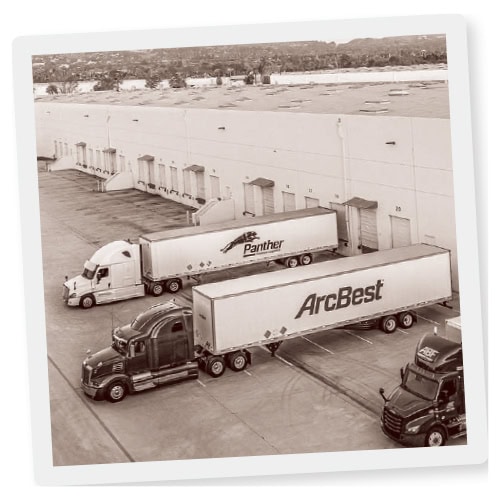
Starting in 1923 as a local Arkansas freight hauler, ArcBest is a logistics powerhouse with 14,000 employees across 250 campuses and service centers.
Slightly more than one century later, ArcBest has grown into a global, multibillion-dollar integrated logistics company, with 14,000 employees across 250 locations. Among other services, it offers ground, air, and ocean transportation through a broad network of capacity providers, including ArcBest’s premium LTL carrier ABF Freight, the truckload service MoLo, and its expedite fleet, Panther Premium Logistics.
Through its managed logistics solution, ArcBest collaborates with customers to develop strategies that enhance operational efficiency and deliver deeper supply chain insights. ArcBest Technologies, the company’s dedicated innovation team, delivers custom-built solutions, advanced analytics, and cutting-edge technology.
Adaptability and people are key to longevity. “The industry is constantly evolving—whether it’s technology, customer expectations or global supply chain dynamics—and companies that thrive are those that embrace change and innovate quickly,” says Seth Runser, president and CEO-elect.
To deliver smarter, more efficient solutions, ArcBest continually invests in innovation and leverages technology and process improvements. That has been key, as consumers increasingly expect fast delivery and real-time visibility into their shipments, Runser says.
ArcBest also helps customers adapt to changing market conditions and supply chain dynamics before issues arise. “We listen to their needs while paying close attention to what’s going on in the market so we can help them adjust quickly,” Runser says.
Logistics is a people-driven business, so investing in training and developing employees is also critical. “When you equip your team with the skills, knowledge and technology they need to succeed, you build resilience and create a foundation for long-term growth,” he says.
Where Employees are the Frontline: Mallory Alexander International Logistics
THE START: Launched in 1925 as Memphis Compress and Storage Company to meet the storage and handling needs of cotton merchants and producers in the area, Mallory Alexander has grown into a full-service logistics provider with expertise in freight forwarding, customs brokerage, warehousing and distribution, and other services.
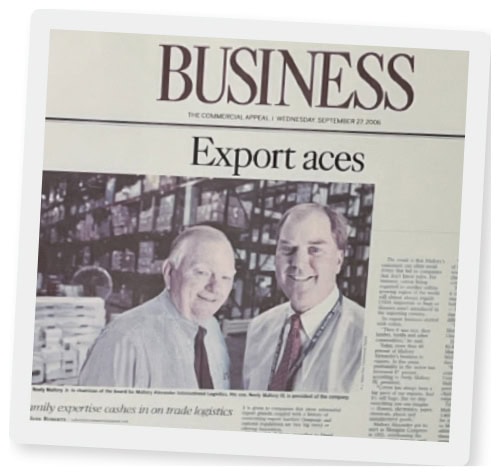
Global logistics expert Mallory Alexander was originally established as Memphis Compress and Storage Company, meeting the storage and handling needs of area cotton merchants and producers.
CoPilot Global Logistics and Endeavour acquired the company in September 2025.
Mallory Alexander has carved out a thriving niche working with middle-market customers. Some logistics providers spend time and energy chasing Fortune 100 companies that often turn to them only for specific transactions, says CEO Paul Svindland. In contrast, middle-market customers are more likely to work closely and in multiple ways with their 3PLs. “We become a key component to their supply chain,” he says.
Successful logistics providers also take care of their employees. “They’re your frontline,” Svindland says. He credits Mallory’s low customer turnover rate in large part to employees who are reliable and accountable, and continually looking to create solutions.
“In global freight forwarding, customers always face challenges. We have to be ready to address them,” he says.
A willingness to be open and transparent with customers, including when operations don’t go as planned, is also essential. “Mistakes happen; it’s life in the freight world. We need to be transparent about it,” Svindland says.
With the resources provided by the acquisition, Mallory Alexander is looking at technology investments to streamline operations and at acquisitions that can expand its service offerings and geographical coverage.
“We want to be small enough to provide the hands-on service our customers desire, while also having enough scale to access solid buying power with all relevant transportation modes,” Svindland says.
Knowing When to Pivot: Ruan Transportation Management Systems
THE START: John Ruan was a student at Iowa State University when he lost his father and the Great Depression hit. He could not afford to return for his sophomore year. Instead, the family sold its car, and John purchased a truck. He moved his first load of gravel on July 4, 1932. Two years later, John, just 19 years old, was running a fleet of one dozen trucks.

Ruan moved his first load of gravel in 1932; his company is now one of the largest family-owned transportation management companies in the United States
Ruan currently operates 4,000 power units and 10,000 trailers for its dedicated contract transportation business. In addition, the company manages about two million square feet of dedicated warehouse space and an additional $750 million in managed transportation spend.
Flexibility has enabled Ruan to thrive for 93 years. “It’s knowing that it’s time to pivot,” says Marty Wadle, chief commercial officer. Among other shifts, Ruan has pivoted from hauling petroleum and from leasing equipment, while also adding service lines that complement its dedicated transportation business.
Determining when and how to pivot requires listening to customers and understanding their challenges, while also keeping an eye on the broader market. For instance, Ruan entered the warehousing business because a customer needed a warehouse partner. “That’s allowed us to grow our warehousing business,” he says.
Ruan strives to know its customers’ businesses as well as they do, so it can bring information and solutions that help them improve.
Ruan prides itself on maintaining stable pricing for its services. When the pandemic hit, Ruan kept rates in line and focused on strengthening relationships and growing with its customers. “We didn’t look for the quick rate gain,” Wadle says.
To continue to thrive, Ruan is expanding its ability to handle cross-border transactions and international shipping. It’s also committed to investing in tools such as AI and robotic process automation to pursue continuous improvement and enhance customer relationships.
“If we don’t proactively help our customers improve their supply chains, we will fall behind,” Wadle says.
Keys to Decades of 3PL Success
In an era where the average corporate lifespan is shrinking, a select group of third-party logistics (3PL) providers has found a formula for generational longevity. Their survival through wars, economic shifts, and technological disruptions points to a consistent focus on a few core strategies:
Embrace continuous evolution. Longevity demands continuous, thoughtful disruption of the business model. Leading 3PLs actively evolve and innovate, identifying transferable expertise to expand services—geographically or into new lines—rather than staying confined to old ‘lanes.’ This adaptability is crucial to navigate market changes.
Relentless customer focus. Success is grounded in keeping customers front and center. This means proactively listening to their needs, guiding all decision-making based on that exchange, and striving to stay one step ahead of their emerging challenges. Stable pricing and transparency, even when mistakes happen, strengthen these relationships.
Strategic investment in people and technology. Logistics is a people-driven business. Thriving companies invest in training, development, and empowering their employees, who are the frontline of service. Simultaneously, they deploy technology—from AI to automation—with a sharp eye toward creating tangible value for the customer, avoiding the trap of “shiny object syndrome.”
Maintain integrity and flexibility. A strong foundation of integrity and consistency with customers, vendors, and employees is non-negotiable. This is paired with an eagerness to be flexible and adaptable, ready to pivot business models (such as adding new service lines like warehousing) or tackle the tough stuff in difficult markets.