
Articles
Legislation, Public Policy, Regulations

The Race is On: Chain of Custody in the Pharmaceutical Supply Chain
New regulations ensuring the integrity of the pharma supply chain are nearing the finish line. While some companies have taken an early lead to compliance, others are late getting out of the gate. Which team are you on?
Read More
Five Customs Compliance Tips for Aerospace Companies
Aerospace manufacturers and distributors who move shipments across international borders face an often-complicated, high-stakes process as they navigate export rules and local customs regulations. Fines for non-compliance can amount to millions of dollars. That makes understanding guidelines a vital business priority. For some companies, the hassles associated with customs can dissuade them from expanding into […]
Read More
Trends—February 2015
The Jones Act: Time to Change Course? Debate over the Keystone XL Pipeline Act has raised a new regulatory specter. The U.S. maritime industry fears that an amendment recently introduced by U.S. Senator John McCain (R-AZ) will counter the pro-jobs pipeline bill by gutting the Jones Act and existing cabotage regs. The senator’s amendment seeks […]
Read More
The Kings of ACE
When it came time to face the ACE, HW St. John bet on an automated solution that streamlines processes and deals customers a winning hand.
Read More
Customs Compliance: Small Mistakes Can Lead to Big Problems
Diverse, evolving global trade regulations require companies to implement systems and procedures that ensure strict adherence. Large businesses have in-house compliance staff, but those responsibilities might hold a more vague spot in small enterprises. With stiff penalties at stake—penalties that could put some organizations out of business—small companies must take an aggressive stance on compliance. […]
Read More
Regulatory Update: Playing by the Rules
Mark our words: Legislative and regulatory resolutions could spell trouble for shippers and carriers in 2015.
Read More
Trends—December 2014
10 Best Practices Of SmartWay Shippers Since 2004, the U.S. Environmental Protection Agency’s (EPA) SmartWay Transport Partnership has given organizations that ship freight a set of tools to measure their supply chain’s carbon footprint and make better decisions about how to reduce it. To mark SmartWay’s 10th anniversary, several shipper partners share their best tactics […]
Read More
Four Reasons Retailers Should Pay Attention to Reverse Logistics
Many retailers have long emphasized agility and cost-efficient movement of freight to stores or customers. However, they often neglect reverse logistics, resulting in missed opportunities for the entire consumer goods supply chain. The multi-channel model—which enables consumers to buy anytime, anywhere—has significantly impacted the retail industry and given rise to the following reasons why retailers […]
Read More
Food Safety Modernization Act: Safe Travels
The Food Safety Modernization Act will have a huge impact on food supply chains. Here’s your passport to preparation.
Read More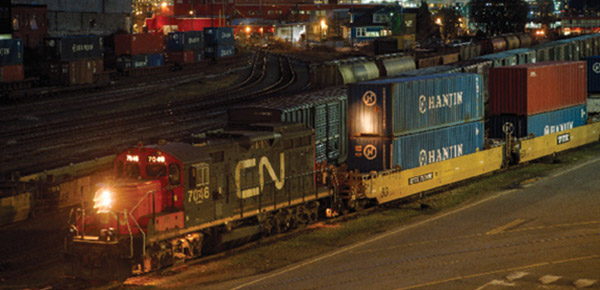
Trends—November 2014
Competitive Switching: Between a Rock and a Railroad Competitive switching—a directive that would require railroads to switch a customer’s freight to a competitor’s line within a reasonable distance—has been a "third rail" conversation among captive shippers and railroads ever since the threat of re-regulation started ringing through Congressional hallways. More pressing safety and security concerns […]
Read More
Global Logistics—November 2014
Middle East Airfreight Ascent: Mecca or Mirage? It wasn’t long ago that media and markets alike were ready to anoint the Middle East as the world’s next airfreight hub. Gulf carriers and airports, once the exclusive backdrop for oil business, have experienced their own boom over the past several years thanks to continued investment in […]
Read More
Flexibility Key to Success in Liquor Logistics
The next time you settle down after a hard day with a glass of wine or a mixed drink to help you unwind, take a moment to understand how that alcoholic beverage came to fill your glass. A lot depends on which country you are drinking it in and the many tariffs designed to protect […]
Read More
How to Prepare for the Food Safety Modernization Act
When President Obama signed the U.S. Food and Drug Administration’s (FDA) Food Safety Modernization Act (FSMA) in January 2011, it marked the first time in more than 70 years that the U.S. government introduced any significant legislative change to the food industry. The motive was clear: Educate and instruct public and private sectors on how […]
Read More
Making Hazmat Regulation Compliance Less Hazardous
Hazardous material (hazmat) transport regulations can often seem like a foreign language. An abundance of unique terms leaves many shippers perplexed. Even the phrase "hazardous materials" can be confusing because the term "dangerous goods" is standard outside the United States. And with regulations constantly shifting and changing, it gets increasingly harder for shippers to remain […]
Read More
Intermodal: Too Much of a Good Thing?
The growing popularity of intermodal transportation leaves more shippers planning their way around equipment shortages and traffic jams.
Read More
Understanding Capacity Constraints
The trucking industry faces capacity constraints, but there are solutions available to help shippers minimize the impact.
Read More
From the Outside In: Supply Chain as Strategic Advantage
Even non-supply chain executives appreciate the value of flexible and agile operations.
Read More
Regulation as an Opportunity
Manufacturers are facing an increasing number of regulations in a variety of areas from increasing food safety to meeting specific ground-level ozone policies. The FDA Food Safety Modernization Act of 2010, signed into law in 2011, is just one example of recent legislation. Resulting from widespread cases of tainted eggs and peanut butter, the sweeping […]
Read More
Trends—September 2014
HCS Updates: Asked and Answered The Occupational Safety and Health Administration‘s (OSHA) 2012 Hazard Communication Standard (HCS) is sure to elicit a supply chain reaction from chemical manufacturers, distributors, and end users. The updates to HCS 1994, OSHA’s previous convention, feature some cosmetic changes—"material safety data sheets" are now referred to as "safety data sheets"— […]
Read More
A National Standard for Hiring ‘Safe’ Motor Carriers
Q: Is there confusion over what constitutes a safe carrier when screening and contracting for shipments? A: Most definitely. Unfortunately, the courts are deciding safety standards for carriers, and their opinions vary widely from state to state. This puts contractors—shippers, brokers, forwarders, and receivers—in an awkward position, particularly when something goes wrong, such as a […]
Read More