
Articles
Supply Chain

Get The Scoop: The Ice Cream Supply Chain
From flavor variations to temperature monitoring, when it comes to delivering this sweet treat, ice cream companies have it down cold.
Read More
Balancing Inventory for a Better Customer Experience
Q: How is e-commerce impacting inventory management for retailers? A: Inventory is a costly investment for retailers. With the growth of e-commerce, retailers have identified a potential opportunity to reduce working capital by thinning inventory at brick-and-mortar stores—opting instead to maintain major portions of inventory at distribution centers upstream. By adopting this strategy, retailers are […]
Read More
Truckload Capacity: There is Always a Truck Going That Way
Hundreds of calls, page by page through the carrier listings. Ninety-nine percent of the replies are, "Sorry, we don’t hire out." But through all the searching, you always find one. That gem in the rough who runs the lane. They are booked out for the week, but now you have them in your pocket. Success! […]
Read More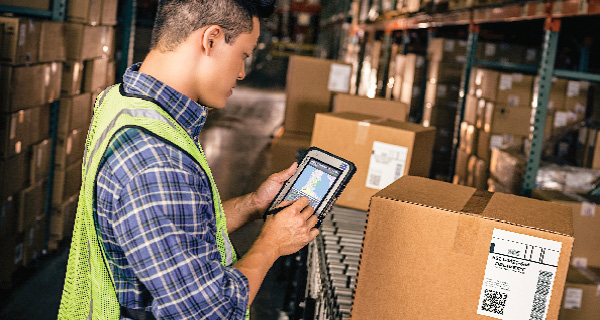
6 Technologies Guaranteed to Disrupt Your Supply Chain
As innovative technological solutions continue to shake up logistics, managing the supply chain is no longer business as usual.
Read More
How to Stand Out From the Crowd
The changing needs of today’s manufacturers, coupled with the intense challenges third-party logistics (3PL) providers face—from greater reliance on just-in-time inventory and the increasing role of technology, to port congestion and the truck driver shortage—have led to a landscape ripe with competition. Arguably more diversified and sophisticated than ever, the 3PL sector is seeing an […]
Read MoreIncreased Visibility
The strength of any supply chain is in its individual links. For shippers of all types of freight, that means having visibility into accurate and timely load locations. For shippers, carriers, brokers and third party logistics services providers, the MacroPoint freight tracking solution is proving to be the answer. Today as well, shippers are requiring […]
Read More
3PL Partnerships: How to Ink the Deal
How to form a relationship with your 3PL that’s so productive and strong, you’ll want to put it in a heart and wear it where everyone can see.
Read More
How to Be Fashionably Green
The retail industry’s tectonic shift toward sustainability is real, with a renewed focus on clothing made from raw, organic materials, and nontoxic dyes or bleaches, with low water usage, and produced under socially responsible conditions. Yet this shift is only part of the story of how the retail and fashion industry is becoming greener. Other […]
Read More
Preparation: The Key to Successful Business…and Procurement Projects
Shippers everywhere are enjoying the "summer of ’16." Carrier capacity is abundant, and rates, particularly in the truckload spot market, have fallen by double-digit percentages relative to last year. Contrast this with the "winter of ’14" when the Polar Vortex drove spot rates to all-time highs. Since that time, decreasing fuel costs, coupled with favorable […]
Read More
3PL Perspectives 2016
MORE TO THE STORY: Perspectives Methodology 3PLs At A Glance 2016 Top 100 3PLs Ever get a tattoo? You don’t just go to the first place you stumble across. It usually takes some shopping around to find the right parlor. You ask your friends and acquaintances for recommendations. You go on the internet and read […]
Read More
Supply Chain Execs Shift Focus From Sustenance to Survival
While we usually reserve 1990’s nostalgia for fashion, film, and music, a glimpse back at the technology landscape is just as jarring. Many remember a time before the internet was a necessity, but what about the pre-SCM age? For today’s large manufacturers, distributors, and retailers, supply chain management (SCM) has become such an indispensable area […]
Read More
Import Express LCL Service
In an industry where speed of information is constantly improving, it is ironic that the actual speed of the various modes used to move cargo (airplanes, trucks, ships, and trains) has improved very little. That makes even the smallest improvement to the speed of delivery an important consideration. Improvements in speed of delivery typically involve […]
Read More
Readers’ Choice: Top 10 3PL Excellence Awards 2016
The global supply chain is ever changing. International trade deals, wars, embargoes, company failures, start-ups, and increasing regulations don’t even begin to complete the list of things shippers have to stay on top of. Many companies just don’t have the specialized knowledge in house to successfully manage complex logistics operations. MORE TO THE STORY: 3PLs […]
Read More
Who Are You Doing Business With?
In our ever-connected and increasingly global economy, aggregated, real-time global trade data—such as denied party screening results—helps businesses ensure protection and compliance. Denied party screening is critical in shipping and international trade, and essential for minimizing business risk today. Country governments and international organizations maintain lists of people, organizations, and countries they are prohibited from […]
Read More
Keeping an Eye on Cost Management
The transportation and logistics industry is currently experiencing an acceleration of mergers and acquisitions, which is causing dramatic changes to the supply chain. Are you prepared to manage through this ever-changing environment while keeping a focus on managing cost? The 80/20 Rule of Logistics tells us that 80 percent of supply chain cost and efficiency […]
Read More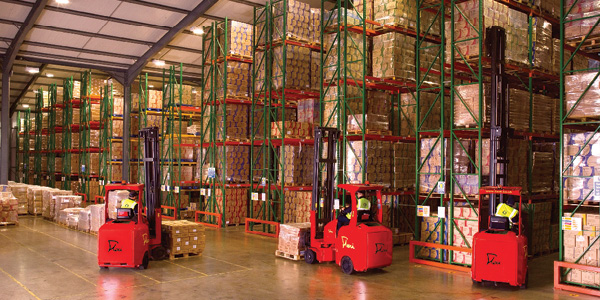
Materials Handling Equipment Kicks Into High Gear
From narrow aisle configurations to self-guided robotic vehicles, innovation in today’s materials handling equipment is on the fast track.
Read More
Physics of a Customer-Centric Supply Chain
The supply chain strategy shift from business cost efficiency to customer purchase location flexibility is similar to the Copernican Revolution. Many companies are becoming customer-centric and putting the customer’s experience at the center of business objectives. Nicolaus Copernicus’ Revolution was the creation of a heliocentric model where the sun—instead of the earth—is the center of […]
Read More
What You Need to Know About the New SOLAS Regulation
With the introduction of the new Safety of Life at Sea (SOLAS) regulation, there has been much discussion about what the new ruling entails, and what it will mean for the industry. There has also been a lot of confusion, particularly regarding who is responsible for implementing the changes and enforcing the ruling. To clear […]
Read More
Project Logistics: Going the Distance
When logistics professionals are tasked with a special project, no matter how enormous, no matter how infeasible, they’re expected to go the extra mile.
Read More
Prepare Today for the Workforce of Tomorrow
In the past decade, consumers have embraced the internet to gain control of the shopping landscape. Shoppers no longer clip coupons or wander big box stores without information. Instead, they compare prices, seek out deals, and research and review products on their smartphones—from wherever they happen to be. In response, retailers have to increase consumer […]
Read More